
AI-powered SEO for agencies is quickly becoming the difference between firms that scale profitably and firms that drown in manual audits. Instead of chasing every algorithm update by hand, agencies now lean on automated platforms that fix technical errors, generate schema, and track AI citations across dozens of client sites at once. This shift matters because search itself is changing. Google’s AI Overviews, ChatGPT, and other answer engines increasingly deliver direct answers before a searcher ever clicks a traditional blue link. As a result, agencies that understand AI-powered SEO for agencies today are the ones that will still be winning client renewals two years from now.
Direct answer: AI-powered SEO for agencies combines automated technical fixes, AI-generated content, structured schema, and AI visibility tracking so marketing agencies can manage many client sites efficiently without a proportional increase in staff hours.
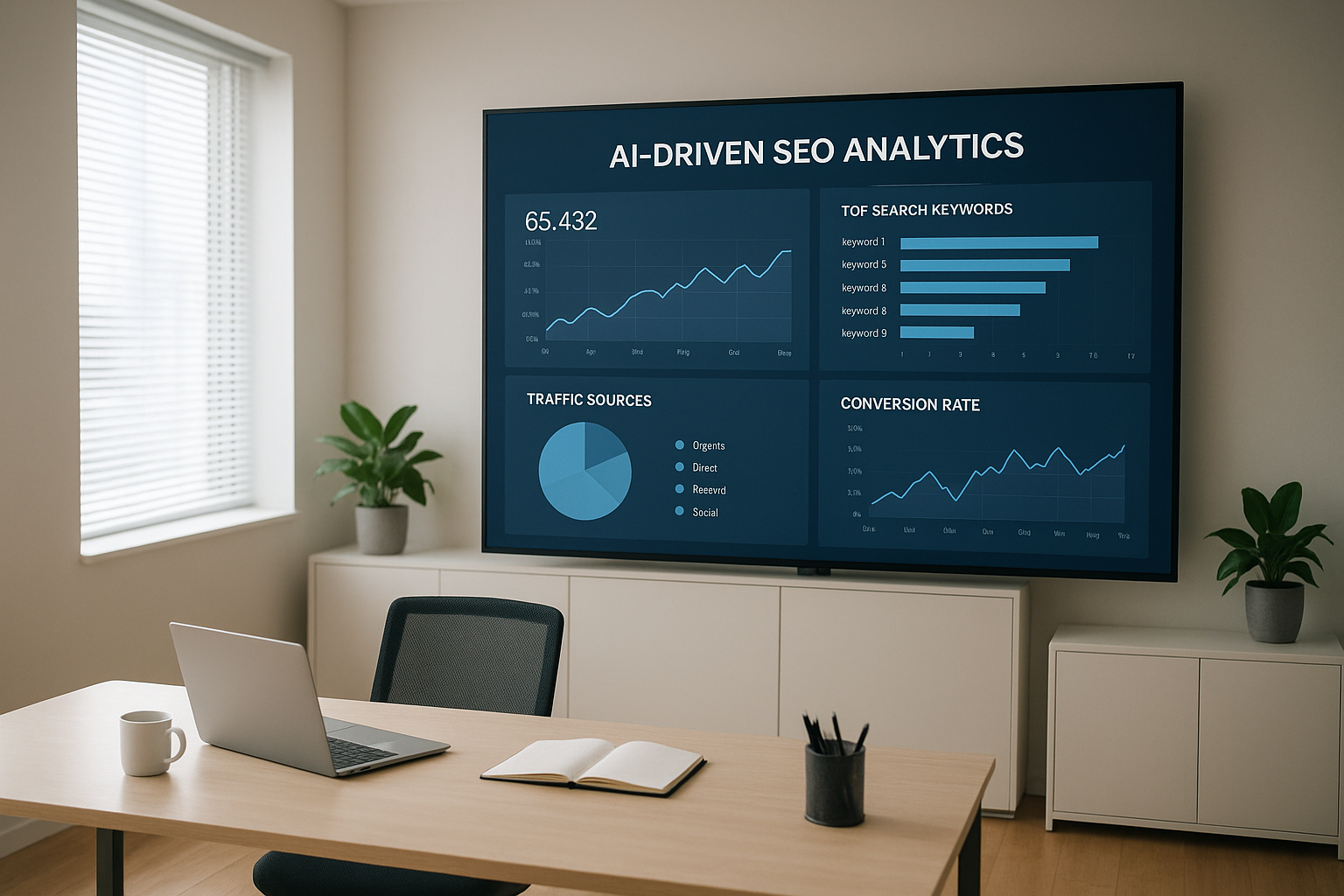
An agency dashboard showing AI-powered SEO for agencies data in real time.
What Is AI-Powered SEO for Agencies?
AI-powered SEO for agencies is the use of automation, machine learning, and generative AI tools to plan, execute, and monitor search optimization campaigns across multiple client sites simultaneously. Rather than performing audits, keyword research, and technical fixes by hand for every account, agencies deploy software that scans sites continuously, applies fixes automatically, and reports results in real time.
In practice, this approach usually combines three layers. First, technical SEO automation handles page speed, broken links, and structured data. Second, AI content generation produces optimized articles and landing pages at scale. Third, AI visibility monitoring tracks whether client content actually gets cited inside tools like ChatGPT and Perplexity, not just ranked on a search results page. According to Wikipedia’s overview of search engine optimization, the discipline has always evolved alongside how search engines retrieve and rank information, and this latest shift toward AI answer systems is simply the next stage of that evolution.
Why Agencies Are Shifting to AI-Driven Search Optimization
Client expectations have changed dramatically over the last two years. Agencies are no longer judged solely on keyword rankings; they are judged on whether a client’s brand shows up when a prospect asks an AI assistant a question. Consequently, AI-driven search optimization has moved from a nice-to-have to a core service offering.
Industry research from Gartner has projected that traditional search engine volume could decline meaningfully by 2026 as more users turn to AI chatbots for answers instead of typing queries into a search bar. In addition, agencies managing ten or more clients simply cannot keep pace with manual audits, schema updates, and content refreshes for every account without automation. As a result, tools that combine technical fixes with AI citation tracking, such as the resources detailed in this guide to SEO software built for scaling agency client rankings, have become standard operating equipment rather than optional add-ons.
How AI-Powered SEO Tools Automate Agency Workflows
AI-powered SEO tools typically work by crawling a client site, comparing it against known ranking factors, and then applying fixes automatically instead of generating a static report that a human still has to act on. This is the core difference between older SEO audit software and newer automation platforms.
For example, a platform might detect a missing meta description, generate a compliant one, and push it live without requiring a developer ticket. Similarly, broken internal links can be identified and rerouted automatically through topical siloing systems. Agencies interested in this specific workflow can review a practical breakdown in this complete guide to SEO automation for context on how automated fixes compare to manual processes.
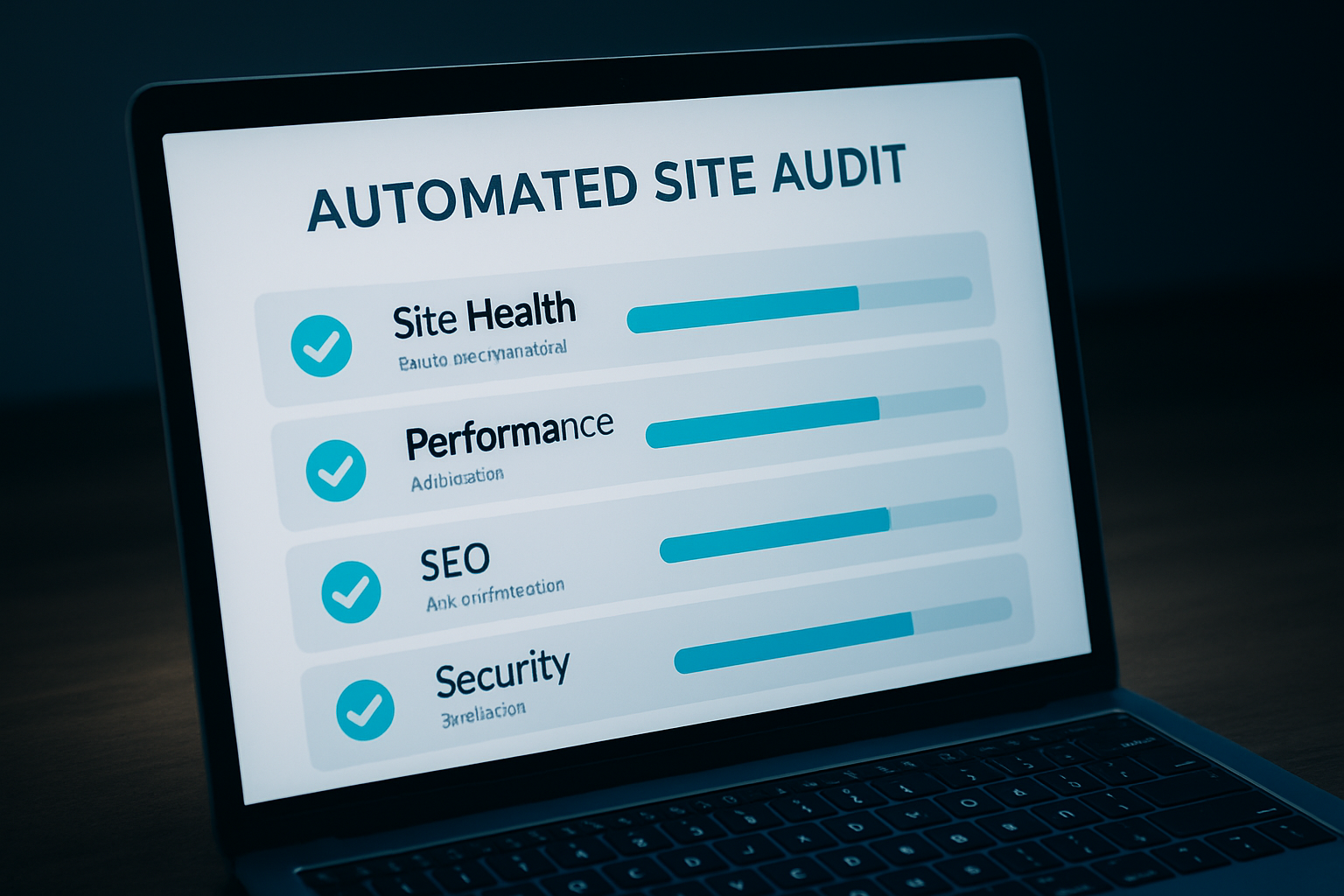
Automated audits form the foundation of AI-powered SEO for agencies.
Key Benefits of Automated SEO for Marketing Agencies
Automated SEO for marketing agencies delivers benefits that go beyond simple time savings. Above all, it lets a small team manage a large client roster without sacrificing quality on any single account.
- Faster turnaround on technical fixes, often within hours instead of weeks.
- Consistent schema markup deployment across every client site.
- Visibility into whether content gets cited by AI answer engines, not just ranked.
- Lower cost per managed client, which improves agency profit margins.
- Clearer client reporting through consolidated dashboards and score tracking.
Furthermore, agencies that centralize reporting can respond to client questions faster, since data from every account lives in one place instead of scattered spreadsheets. This is particularly useful when demonstrating progress during quarterly business reviews, as outlined in this resource on engaging clients using automated SEO reporting.
GEO and AEO: The New Frontier for Agency Search Visibility
Generative Engine Optimization, known as GEO, structures content so generative AI systems can find, understand, and cite it as a source. In contrast, Answer Engine Optimization, or AEO, focuses more narrowly on structured data and concise answer formatting designed to win featured snippets and AI-generated answer boxes.
Both disciplines rely heavily on schema markup, which helps machines interpret page content accurately. For technical reference, Google’s own documentation on structured data explains how properly formatted markup can make content eligible for rich results. Agencies that pair GEO and AEO with traditional SEO are essentially optimizing for three audiences at once: search engines, AI answer systems, and human readers.
Choosing the Right Platform for Your Agency
Not every AI SEO platform fits every agency’s workflow. Therefore, agencies should evaluate platforms based on multi-client dashboard support, depth of automation, and whether the tool integrates with common content management systems such as WordPress, Shopify, or Webflow.
Platforms like RankAuthority approach this by combining one-click technical fixes, GEO artifact page generation, automated schema deployment, and AI visibility monitoring inside a single system built specifically for agencies managing several client accounts. This kind of consolidation reduces the number of separate tools an agency needs to license and maintain, which in turn lowers overhead per client. Agencies weighing whether one platform can realistically replace several point solutions can review this analysis of managing SEO for multiple clients using one tool for a deeper comparison.

Selecting the right platform is central to scaling AI-powered SEO for agencies.
5 Steps to Implement AI SEO Automation for Agency Clients
Rolling out automation across a client roster works best as a structured process rather than an ad-hoc experiment. The following steps outline a practical sequence agencies can follow.
- Run a full AI visibility and technical audit. Begin by scanning the client’s site with an automated audit tool to identify technical errors, missing schema, broken links, and gaps in AI citation visibility across major answer engines.
- Deploy automated technical and on-page fixes. Use one-click automation to resolve site speed issues, meta tag problems, and structured data errors without manually editing code on every single page.
- Build GEO-optimized artifact pages. Create purpose-built content pages structured specifically for AI systems to cite, using clear definitions, data points, and formatting that answer engines can easily parse.
- Automate internal linking and topical silos. Organize the site into logical topic clusters and connect related pages with descriptive internal links so both search engines and AI crawlers understand content relationships.
- Monitor AI citation tracking and adjust. Continuously track how often the client’s content is cited inside ChatGPT, Perplexity, and Google AI Overviews, then refine underperforming pages based on the data.
Agencies looking for a broader strategic view of this rollout process can reference this collection of SEO insights for agencies scaling client rankings faster, which covers pacing and sequencing across larger client portfolios.
Frequently Asked Questions About AI-Powered SEO for Agencies
What is AI-powered SEO for agencies?
AI-powered SEO for agencies is the use of automation and machine learning to plan, execute, and monitor search optimization across multiple client accounts at once. It replaces manual audits and fixes with software that scans sites, applies changes, and reports results continuously.
How does AI-powered SEO differ from traditional SEO?
Traditional SEO relies heavily on manual audits and one-off fixes performed by a specialist. In contrast, AI-powered SEO automates repetitive tasks and adds AI visibility tracking, so agencies can scale work across dozens of clients without proportionally scaling headcount.
How much does AI-powered SEO software cost for agencies?
Pricing varies depending on the number of sites, features, and automation level, typically ranging from under one hundred dollars monthly for small toolsets to several hundred dollars for full-platform automation. Agencies should compare cost per managed client rather than sticker price alone.
How long does it take to see results from AI-powered SEO?
Technical fixes and schema deployment can show measurable crawl and indexing improvements within two to four weeks. However, ranking and AI citation gains usually take eight to twelve weeks, depending on competition and site history.
Can one agency use AI SEO tools to manage multiple clients?
Yes, most AI SEO platforms are built specifically for multi-client management, offering dashboards that separate reporting, audits, and content by account. This is one of the biggest advantages for agencies scaling beyond a handful of clients.
What is Generative Engine Optimization (GEO)?
Generative Engine Optimization, or GEO, structures content so generative AI systems like ChatGPT and Google AI Overviews can find, understand, and cite it as a source. It focuses on clear definitions, data points, and well-organized answer formatting.
What is Answer Engine Optimization (AEO)?
Answer Engine Optimization, or AEO, structures content and schema markup so it can appear directly in featured snippets and AI-generated answers. It works alongside GEO but focuses more narrowly on structured data and concise answer blocks.
What common mistakes do agencies make when adopting AI SEO tools?
The most common mistake is fully automating content without human review, which can produce generic pages that fail to rank. In addition, agencies often skip AI visibility tracking, missing whether their content is actually being cited by answer engines.
What is the best practice for combining AI automation with human oversight?
Best practice is to let automation handle repetitive technical and schema work while strategists review content angles, client positioning, and competitive gaps. This hybrid approach preserves quality while still gaining speed.
Does AI-powered SEO replace SEO specialists at agencies?
No, it shifts specialists away from repetitive manual audits toward strategy, client communication, and quality control. Agencies still need human judgment to interpret data and make positioning decisions.
How does schema markup automation help agencies scale?
Automated schema generation applies structured data across hundreds of pages in minutes instead of hours of manual coding. As a result, this improves eligibility for rich results and helps AI systems parse page content accurately.
What should agencies look for when choosing an AI SEO platform?
Agencies should prioritize multi-client dashboards, automated technical fixes, schema generation, AI citation tracking, and CMS integrations with platforms like WordPress and Shopify. Clear client reporting also matters greatly during renewal conversations.
The Bottom Line
In summary, AI-powered SEO for agencies is no longer an experimental add-on; it is fast becoming the operational backbone of modern agency work. Agencies that combine automated technical fixes, GEO artifact pages, AEO-ready schema, and AI citation tracking can manage far more clients without sacrificing quality. Meanwhile, those still relying on entirely manual workflows risk falling behind competitors who deliver faster results at lower cost. Ultimately, the agencies that treat AI-powered SEO for agencies as a core capability, rather than a side experiment, will be the ones best positioned to grow client rosters profitably in the years ahead.