

Automated website ranking solutions are transforming how small businesses and agencies approach search visibility, replacing slow manual audits with algorithm-driven fixes that work around the clock. Instead of waiting weeks for a consultant to patch technical errors, these platforms scan, diagnose, and repair issues automatically. As a result, site owners gain time back while their pages climb faster in traditional search and AI-driven answer engines alike.
Direct answer: Automated website ranking solutions are software platforms that use AI to handle technical SEO fixes, schema markup, content optimization, and rank tracking without manual intervention. They exist to help businesses improve visibility across Google, generative AI tools, and answer engines simultaneously.
What Are Automated Website Ranking Solutions?
In short, automated website ranking solutions are digital platforms that apply artificial intelligence to the ongoing work of search engine optimization (SEO), which is the practice of improving a site’s visibility in organic search results. Rather than a human manually crawling pages for errors, the software does it continuously, flagging and often fixing problems in real time.
These platforms typically combine several functions: technical audits, on-page corrections, schema markup generation, and performance monitoring. Furthermore, many now extend beyond traditional SEO into Generative Engine Optimization (GEO) and Answer Engine Optimization (AEO), which prepare content specifically for citation by AI tools like ChatGPT and Gemini.
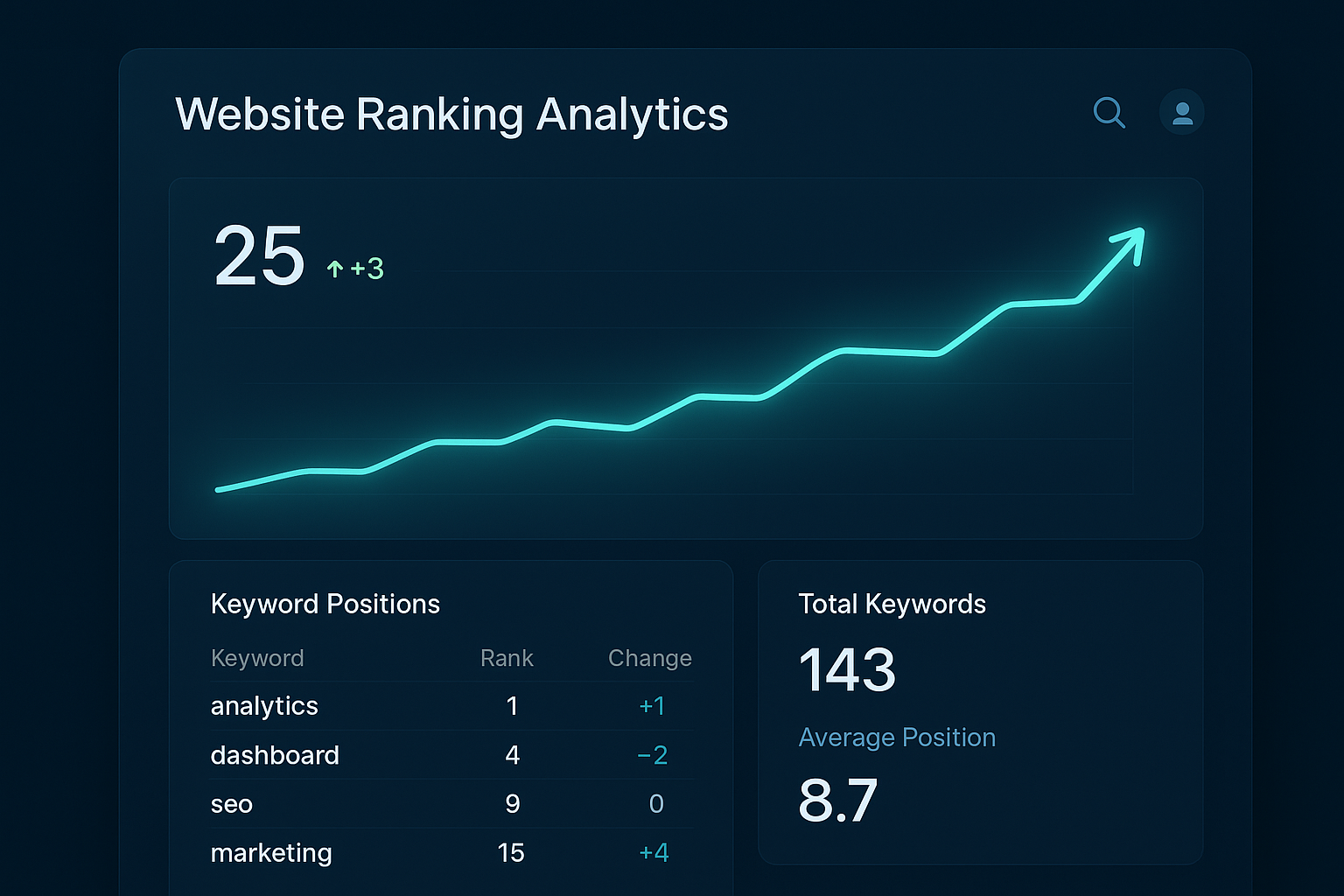
A visual example of automated website ranking solutions tracking performance metrics in real time.
Why Businesses Are Turning to Automated SEO Tools
Small business owners and marketers rarely have unlimited hours to spend on optimization. Consequently, automated SEO tools have become attractive because they compress work that once took days into minutes. For example, a single scan can identify hundreds of broken links, missing meta tags, and slow-loading pages that would otherwise require a manual crawl.
According to industry research from Moz, technical SEO issues account for a significant share of ranking underperformance, and fixing them quickly often produces measurable gains within weeks. In addition, automation reduces human error, since algorithmic checks apply the same standard consistently across every page of a site.
Above all, automated platforms free up time for strategic work. Agencies, in particular, benefit because they can manage more client sites simultaneously without expanding headcount.
How Automated Website Ranking Solutions Work
Most platforms follow a similar operational sequence, whether the goal is traditional SEO, GEO, or AEO. The process below outlines a typical workflow used by automated website ranking solutions such as those offered through Rank Authority.
- Run a diagnostic scan. The platform crawls the site to detect technical errors, missing schema, and speed issues.
- Connect your CMS. Integrations with WordPress, Shopify, Wix, or Webflow allow fixes to deploy directly.
- Enable automated fixes. One-click automation applies corrections and generates schema markup across pages.
- Build GEO and AEO assets. Structured content is created specifically for AI citation and featured snippets.
- Monitor rankings and AI citations. Dashboards track keyword movement and AI visibility over time.
Key Features to Look For
Not every automated platform offers the same depth of functionality. Therefore, it helps to compare features before committing to one system. The most valuable capabilities typically include automated technical audits, schema markup generation, competitor analysis, and rank tracking automation, which you can read more about in this rank tracking automation guide.
Additionally, platforms that provide free diagnostic tools, such as an AI Visibility Checker or Backlink Checker, allow site owners to test capabilities before purchasing a full subscription. Consider trying a free Rank Authority Score to see where a site currently stands.
Automated Ranking Tools vs. Manual SEO
Manual SEO still has a role, particularly for creative strategy and nuanced content decisions. However, automated ranking tools consistently outperform manual methods for repetitive, time-sensitive tasks like schema deployment and technical error correction. In contrast, manual work tends to be slower and more prone to inconsistency across large sites.
For a deeper comparison of platforms and methods, this complete guide to automated search ranking tools breaks down the tradeoffs in more detail.

Automated website ranking solutions handle repetitive fixes faster than manual review alone.
GEO and AEO: The New Frontier of Automation
Search behavior is shifting. Specifically, more users now ask questions directly to AI tools instead of typing keywords into Google. As a result, GEO and AEO have become essential extensions of automated ranking platforms.
GEO focuses on building artifact-style pages designed for AI citation, while AEO structures answers and schema so they surface in featured snippets and AI-generated responses. Similarly, both approaches rely heavily on structured data, a topic explained well by MDN’s documentation on structured data formats.
Businesses that combine traditional SEO with GEO and AEO automation position themselves to appear across search engines and AI answer platforms simultaneously, rather than relying on a single traffic source.
Choosing the Right Automated Ranking Platform
When evaluating options, it’s worth checking whether a platform offers a diagnostic score, such as an RA Score, to benchmark current performance. In addition, look for CMS integrations that match your existing website builder, since seamless deployment avoids manual reconfiguration.
Consequently, platforms offering combined SEO, GEO, and AEO automation tend to deliver broader visibility than tools focused on a single discipline. For further reading on evaluating automated analytics, see this piece on automated analytics for smarter rankings.
Common Mistakes to Avoid
Even with strong automation, mistakes happen. One frequent error is enabling automated fixes without periodically reviewing output quality, which can lead to over-optimized or repetitive content. Another mistake is ignoring internal linking structure; unchecked automation can create duplicate topical coverage instead of a clean site silo, a problem addressed in this RankLink and internal linking overview.
Finally, some site owners set up automation and never check AI visibility tracking, missing valuable insight into how often their brand appears in AI-generated answers. Regular monitoring, ideally weekly, helps catch issues before they affect rankings broadly.
Frequently Asked Questions
What are automated website ranking solutions?
Automated website ranking solutions are software platforms that use AI and algorithms to handle SEO tasks like technical fixes, content optimization, schema markup, and rank tracking without manual effort. They save time by automating repetitive optimization work.
How do automated ranking tools improve SEO?
They continuously scan a site for errors, apply on-page and technical fixes, generate structured data, and monitor keyword positions. This consistent, real-time optimization helps pages rank faster than manual updates alone.
Are automated website ranking solutions better than manual SEO?
Automated solutions are faster and more consistent for repetitive tasks, while manual SEO still adds value for strategy and creative content. Most successful sites combine both approaches for best results.
How much do automated SEO platforms cost?
Pricing varies widely, from free diagnostic tools to monthly subscriptions ranging from around $50 to several hundred dollars depending on features. Enterprise-level automation with GEO and AEO tools typically costs more.
How long does it take to see ranking improvements?
Most sites notice initial technical improvements within a few days, while keyword ranking changes typically appear within 4 to 12 weeks. Timelines depend on site age, competition, and crawl frequency.
What is GEO in the context of automated ranking tools?
GEO, or Generative Engine Optimization, refers to structuring content so AI answer engines like ChatGPT and Gemini can cite it directly. Automated platforms build GEO-ready pages designed specifically for AI citation.
What is AEO and why does it matter?
Answer Engine Optimization (AEO) formats content and schema so it can appear in featured snippets and AI-generated answers. It matters because more searches now end without a traditional click-through.
Can automated ranking tools fix technical SEO issues?
Yes, most platforms automatically detect and repair issues like broken links, missing schema, slow page speed, and crawl errors. This removes the need for manual code edits in many cases.
What common mistakes should I avoid with automated SEO?
A common mistake is relying entirely on automation without reviewing content quality or checking for over-optimization. Another is ignoring AI visibility tracking, which shows how often a brand appears in AI answers.
Do automated website ranking solutions work for small businesses?
Yes, automation is especially valuable for small businesses that lack dedicated SEO teams. It lets owners apply enterprise-level optimization without hiring specialists.
How do I choose the right automated ranking platform?
Look for platforms offering technical fixes, schema automation, GEO and AEO support, and transparent reporting like an RA Score. Free diagnostic scans are a helpful way to test a platform before committing.
What is an RA Score?
An RA Score, or Rank Authority Score, is a diagnostic rating that measures a site’s overall SEO, GEO, and AEO health. It helps site owners understand where optimization gaps exist.
Do automated tools integrate with platforms like WordPress and Shopify?
Most modern automated ranking platforms offer direct integrations with WordPress, Shopify, Wix, GoDaddy, Webflow, and GoHighLevel. This allows fixes to deploy automatically without manual coding.
Is automated schema markup generation reliable?
Automated schema generation is generally reliable when the platform validates output against schema.org standards. Reviewing a sample of generated markup periodically is still good practice.
What is AI visibility tracking?
AI visibility tracking monitors how often and where a website is cited across AI answer platforms like ChatGPT, Gemini, and Perplexity. It gives businesses insight into their presence beyond traditional search results.
Final Thoughts
Ultimately, automated website ranking solutions offer a practical way to keep pace with search algorithms that update constantly and AI answer engines that are reshaping discovery. By combining technical automation with GEO and AEO strategies, businesses can strengthen visibility across both traditional search results and AI-generated answers. Therefore, whether managing a single site or dozens of client accounts, adopting automated website ranking solutions is becoming less of an option and more of a necessity for staying competitive in 2025 and beyond.

