
Search engine ranking automation is changing how businesses compete online by replacing slow, manual SEO tasks with intelligent, repeatable systems. Instead of hand-checking every page for technical errors or formatting content by trial and error, automated platforms scan, fix, and monitor sites at scale. As of 2026, this shift matters even more because visibility no longer stops at Google’s results page — it now extends into AI-generated answers, chat assistants, and featured snippets.
Businesses that rely purely on manual optimization often fall behind competitors who automate the repetitive groundwork. In addition, the growing complexity of ranking factors, including schema markup and structured answers, makes automation less of a luxury and more of a baseline requirement for staying competitive.

Search engine ranking automation consolidates audits, fixes, and monitoring into one dashboard.
What Is Search Engine Ranking Automation?
Search engine ranking automation is the use of software to identify and fix the technical, structural, and content issues that affect where a website appears in search results. Rather than manually auditing pages one by one, automated systems scan an entire site, apply corrections, and track performance continuously.
Consequently, this approach removes much of the manual labor traditionally associated with search engine optimization, often shortened to SEO — the practice of improving a site so it ranks higher in organic search results. According to Wikipedia’s overview of search engine optimization, ranking factors span technical performance, content relevance, and link authority, all of which automation can now help manage at scale.
Modern platforms go further by extending automation into Generative Engine Optimization (GEO) and Answer Engine Optimization (AEO), which structure content specifically so AI systems and answer boxes can cite it directly. As a result, businesses gain visibility across both traditional search and next-generation answer engines from a single workflow.
How Search Engine Ranking Automation Works
Most automation platforms follow a similar sequence, even though feature sets differ. Understanding this process helps businesses evaluate whether a given tool fits their needs.
- Run a full site audit to uncover technical errors, missing schema markup, thin content, and broken internal links.
- Apply automated fixes for metadata, page speed, mobile usability, and structured data across the affected pages.
- Structure key content with direct answers and schema so AI answer engines and featured snippets can cite it accurately.
- Monitor keyword rankings and AI citation appearances, then refine the site based on ongoing performance data.
For example, Rank Authority’s 1-Click AI AutoPilot follows this exact pattern, scanning a site and streamlining approved technical and on-page fixes without requiring manual coding. Meanwhile, tools like RankLink automate topical siloing and internal linking, and RankFast analyzes competitor pages to identify what higher-ranking rivals are doing differently.
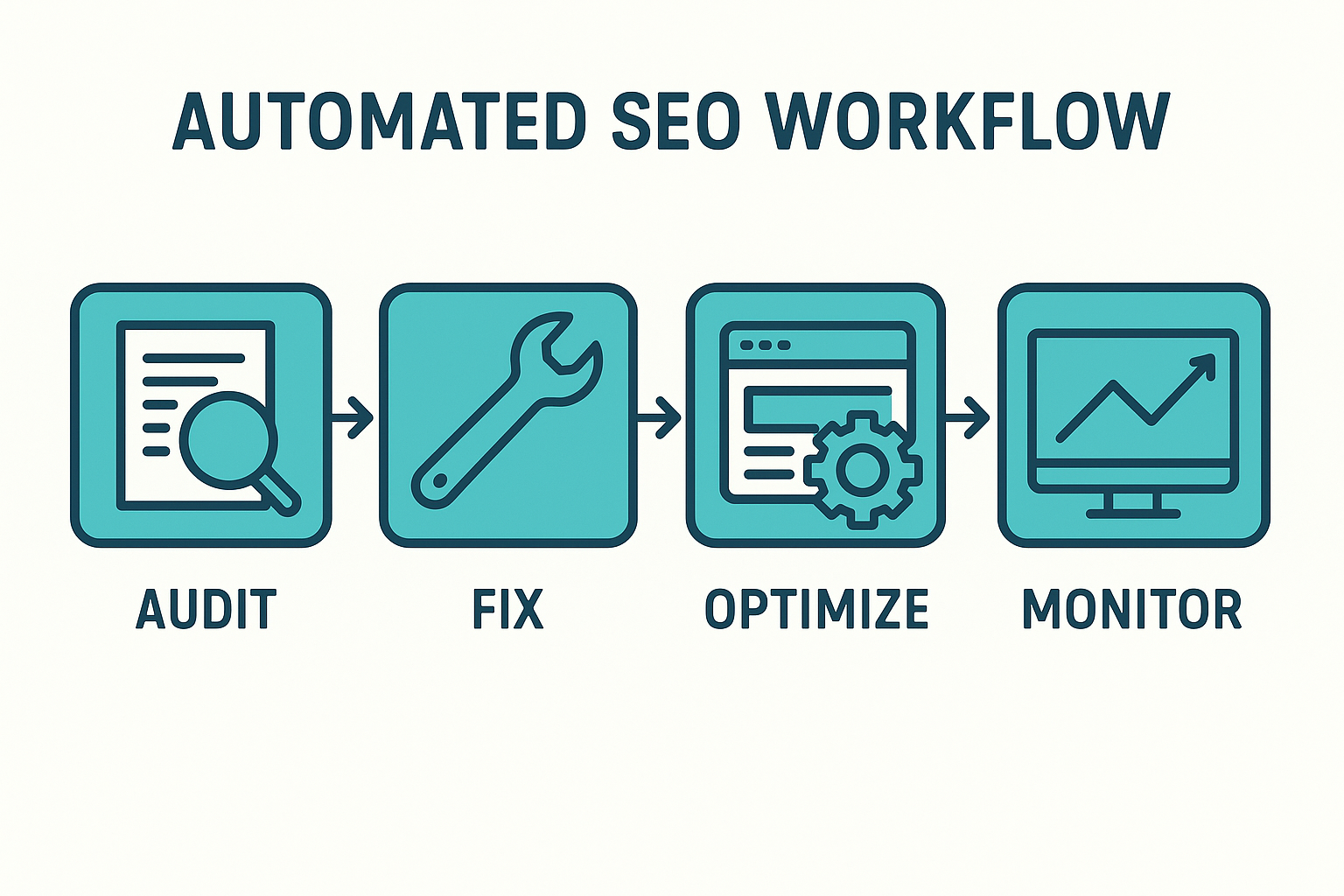
A typical search engine ranking automation workflow moves from audit to ongoing monitoring.
Key Benefits of Automated Search Ranking Tools
Automating ranking tasks offers several advantages, particularly for businesses without a dedicated SEO team. First, it saves time by handling repetitive audits and fixes that would otherwise take hours per page. Second, it scales easily across large sites or multiple client properties, which matters for agencies managing many domains at once.
In particular, automation reduces the learning curve typically required to understand technical SEO concepts such as schema markup, crawl errors, and topical authority. Furthermore, consistent monitoring means issues get caught earlier, rather than being discovered months later during a manual review.
Google alone processes billions of search queries every day, according to Internet Live Stats, which illustrates why consistent technical health and content structure matter at scale. Missing even small optimization opportunities across a large site can compound into significant lost visibility over time.
Individual results vary. Ranking improvements depend on factors such as niche competition, site history, and how quickly recommended fixes are implemented.
GEO and AEO: The AI Search Optimization Layer
Traditional SEO automation focuses on ranking in classic search results, but AI-powered answer tools now shape a growing share of how people find information. That’s where Generative Engine Optimization (GEO) and Answer Engine Optimization (AEO) come in.
GEO focuses on building content specifically designed for citation by AI systems, while AEO structures answers and schema so featured snippets and voice assistants can surface them directly. Together, they extend automated ranking work beyond Google into platforms like AI chat assistants and generative search summaries.
Rank Authority combines these disciplines with traditional SEO automation in one platform, tracking AI citation and visibility alongside standard keyword rankings. This dual focus helps businesses avoid optimizing for yesterday’s search landscape while AI-driven discovery keeps expanding.
Choosing a Search Ranking Automation Platform
Not all automation tools offer the same depth. Therefore, it helps to compare platforms based on a few core criteria before committing.
- Does it cover both technical SEO and AI visibility, or only one?
- Can it deploy fixes directly, or does it only generate reports?
- Does it integrate with your CMS, such as WordPress, Shopify, or Webflow?
- Does it include competitor and keyword-gap intelligence?
For readers comparing options in more depth, resources like this guide to SEO automation software and this overview of search engine ranking software break down leading tools and strategies side by side.
Common Mistakes When Automating SEO
Even reliable automation can go wrong if implemented carelessly. A frequent mistake is deploying fixes without any review, which occasionally introduces content errors on complex sites. Another is treating automation as a one-time setup instead of an ongoing process; rankings shift constantly, so monitoring matters just as much as the initial fix.
Similarly, some businesses automate technical SEO but ignore AI visibility entirely, missing opportunities in generative search results. For further reading on avoiding these pitfalls, see this breakdown of using automation to improve SEO quickly and this guide on using AI to enhance website SEO.

Ongoing monitoring keeps search engine ranking automation aligned with shifting AI search behavior.
Getting Started With Automated Ranking Tools
Businesses evaluating automation should start with a diagnostic scan before committing to any paid platform. Free tools such as an AI Visibility Checker, Site Audit Checker, or Domain Authority Checker can reveal baseline issues at no cost, which helps prioritize what to fix first.
From there, platforms like Rank Authority offer a risk-free seven-day trial, allowing teams to test 1-Click AI AutoPilot, RA Score reporting, and AI Blog Builder before deciding whether the platform fits their workflow. For a broader comparison of performance-focused options, this roundup of performance-driven SEO tools is a useful next step.
Frequently Asked Questions
What is search engine ranking automation?
Search engine ranking automation is the use of software to handle technical SEO fixes, content structuring, schema markup, and monitoring tasks that would otherwise require manual work. It reduces the time and expertise needed to improve visibility in search results.
How does search engine ranking automation work?
It works by scanning a website for technical and content issues, then applying or recommending fixes automatically. Advanced platforms also structure content for AI answer engines and track ranking changes over time.
Why should small businesses use automated SEO tools?
Small businesses often lack in-house SEO expertise, so automation closes that gap by handling audits, fixes, and monitoring without hiring specialists. This makes competitive visibility more accessible on limited budgets.
What’s the difference between automated SEO and manual SEO?
Manual SEO relies on a person to research, implement, and track every change, which is slower and harder to scale. Automated SEO uses algorithms to detect issues and deploy fixes continuously across many pages at once.
How much does search engine ranking automation cost?
Costs vary widely depending on features, ranging from basic diagnostic tools that are free to full platforms with monthly subscriptions. Many providers, including Rank Authority, offer a risk-free trial period before committing.
How long does it take to see results from ranking automation?
Technical fixes can show measurable improvements within a few weeks, while competitive keyword rankings often take several months. Individual results vary based on niche, competition, and site history.
What common mistakes do businesses make with automated SEO?
A common mistake is automating fixes without reviewing them, which can lead to unintended content or technical errors. Another is ignoring AI search visibility while focusing only on traditional Google rankings.
What are best practices for search engine ranking automation?
Best practices include auditing your site regularly, structuring content for direct answers, and monitoring both traditional rankings and AI citations. Combining automation with periodic human review produces the most reliable results.
Can automation completely replace an SEO strategist?
Automation handles repetitive technical and structural work efficiently, but strategic decisions about positioning and messaging still benefit from human oversight. Most businesses use automation to reduce workload, not eliminate strategy entirely.
Does search engine ranking automation help with AI search results?
Yes, modern platforms extend automation beyond Google to Generative Engine Optimization (GEO) and Answer Engine Optimization (AEO), formatting content so AI tools can cite it directly. This helps brands appear in AI-generated answers, not just search listings.
What tools are typically used in search engine ranking automation?
Common tools include site audit scanners, schema markup generators, internal linking automation, and AI visibility trackers. Platforms often bundle these into a single dashboard for easier management.
Is search engine ranking automation safe under Google’s guidelines?
Reputable automation tools follow Google’s published Search Essentials guidelines and focus on legitimate technical and content improvements. Problems typically arise only when automation is used to spam or manipulate rankings dishonestly.
What is a Rank Authority Score and why does it matter?
The Rank Authority Score, or RA Score, is a diagnostic rating that reflects a site’s overall search and AI visibility health. It helps businesses track progress and prioritize which issues to fix first.
How does schema markup relate to ranking automation?
Schema markup is structured code, defined by the Schema.org vocabulary, that helps search engines and AI systems understand page content more precisely. Automated platforms generate and deploy this code without requiring manual coding knowledge.
Who benefits most from search engine ranking automation?
Small business owners, digital marketers, entrepreneurs, and agencies managing multiple sites benefit most, since automation reduces manual workload across many pages. It is especially useful for teams without dedicated in-house SEO staff.
Final Thoughts
Search engine ranking automation has moved from a nice-to-have advantage to a practical necessity as both Google’s algorithms and AI answer engines grow more complex. By automating audits, technical fixes, schema deployment, and AI-focused content structuring, businesses can maintain visibility without needing a full in-house SEO team.
Ultimately, the businesses that combine automation with occasional strategic review tend to adapt fastest as search continues shifting toward AI-driven discovery. Whether managing one website or dozens of client properties, starting with a diagnostic scan and a trial period, such as the one offered by Rank Authority, is a practical first step toward stronger, more sustainable search visibility.