
How to automate SEO monitoring and reporting is a question more business owners are asking as search shifts across Google, Bing, and AI answer engines all at once. Manually logging into five different tools to check rankings, crawl errors, and backlinks every week simply doesn’t scale. Automation replaces that routine with software that works in the background, continuously scanning your site and compiling the results into clear reports. Below, you’ll find a practical breakdown of how this works, the exact steps to set it up, and how a platform like Rank Authority handles the technical heavy lifting through its 1-Click AI AutoPilot technology.
Quick answer: Automating SEO monitoring and reporting means connecting your site to a platform that continuously tracks rankings, crawls for technical issues, and generates reports on a schedule, typically through a single dashboard. This eliminates manual spreadsheet tracking and frees up time for strategy instead of data collection.
What Is SEO Monitoring and Reporting Automation?
SEO monitoring and reporting automation uses software to track the signals that influence your search visibility and then package that data into readable reports without manual input. Search engine optimization (SEO) traditionally required someone to pull ranking data, check analytics, and audit technical health separately. Automation consolidates those steps into one workflow.
In practice, this means a platform crawls your site on a schedule, compares current rankings against historical data, and flags new issues like broken links or missing schema markup. It then compiles everything into a report, often alongside a composite score such as a Rank Authority Score, so you can gauge overall site health at a glance. For agencies managing several client sites, this same process scales across dozens of domains without multiplying the workload.
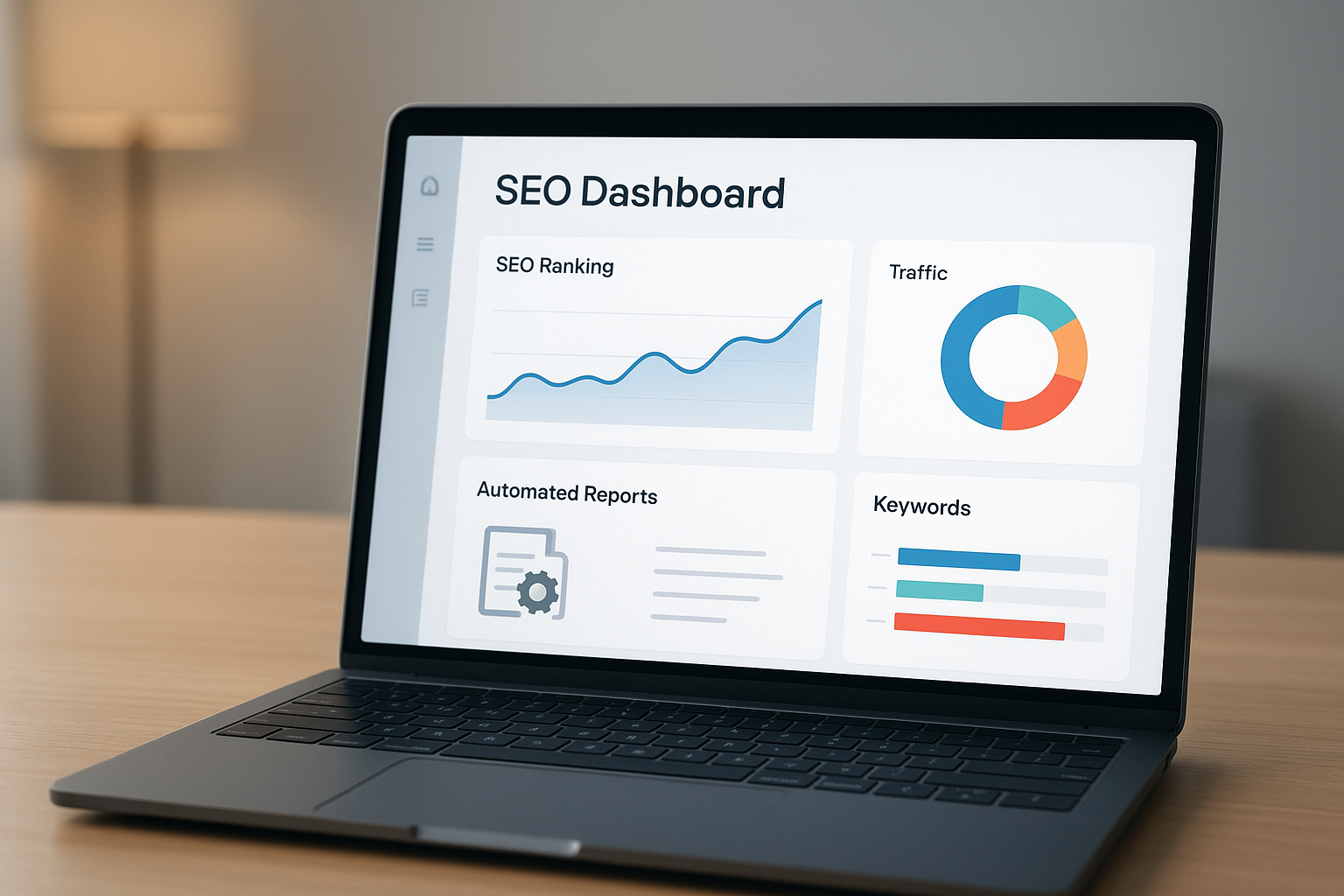
An automated dashboard is central to understanding how to automate SEO monitoring and reporting efficiently.
How to Automate SEO Monitoring and Reporting: A Step-by-Step Process
Setting up automation does not require advanced technical skills. Instead, it follows a logical sequence that most AI-driven platforms streamline into a guided setup. Here’s how the process typically unfolds:
- Connect your website and Google Search Console or analytics account to an AI SEO automation platform so it can access ranking, traffic, and technical data in real time.
- Run a full site audit to establish a baseline Rank Authority Score, identifying technical errors, missing schema, and content gaps that need fixing first.
- Set up automated rank tracking for your target keywords so the platform checks positions daily across Google and emerging AI answer engines.
- Schedule recurring reports, weekly or monthly, that summarize ranking changes, indexing status, and new opportunities without manual spreadsheet work.
- Enable automated alerts for critical issues like broken links, dropped rankings, or indexing errors so your team can respond before traffic is lost.
- Review AI-generated recommendations regularly and approve the fixes you want deployed automatically through tools like 1-Click AI AutoPilot.
As outlined by Google Search Central, technical health and crawlability directly affect how pages are indexed and ranked, which is why step two matters so much. For a more detailed walkthrough of connecting tools, see this guide on simplifying your website’s SEO with automation.
Why Automated SEO Reporting Matters for Growing Businesses
Search is no longer a single-channel game. With more than 8.5 billion searches processed daily, according to Internet Live Stats, keeping up with ranking shifts manually is nearly impossible for small teams. Automated SEO reporting gives businesses continuous visibility instead of a once-a-month snapshot.
Furthermore, automation reduces the chance of missing a sudden ranking drop or a technical error that quietly erodes traffic over weeks. Consequently, teams can react within hours rather than discovering problems during a quarterly review. This is especially valuable for small business owners and entrepreneurs who don’t have a dedicated SEO specialist on staff but still need measurable results.
Similarly, agencies benefit because automated reporting scales across client accounts without multiplying hours spent compiling spreadsheets. In short, automation turns SEO from a reactive chore into a proactive, data-driven habit.
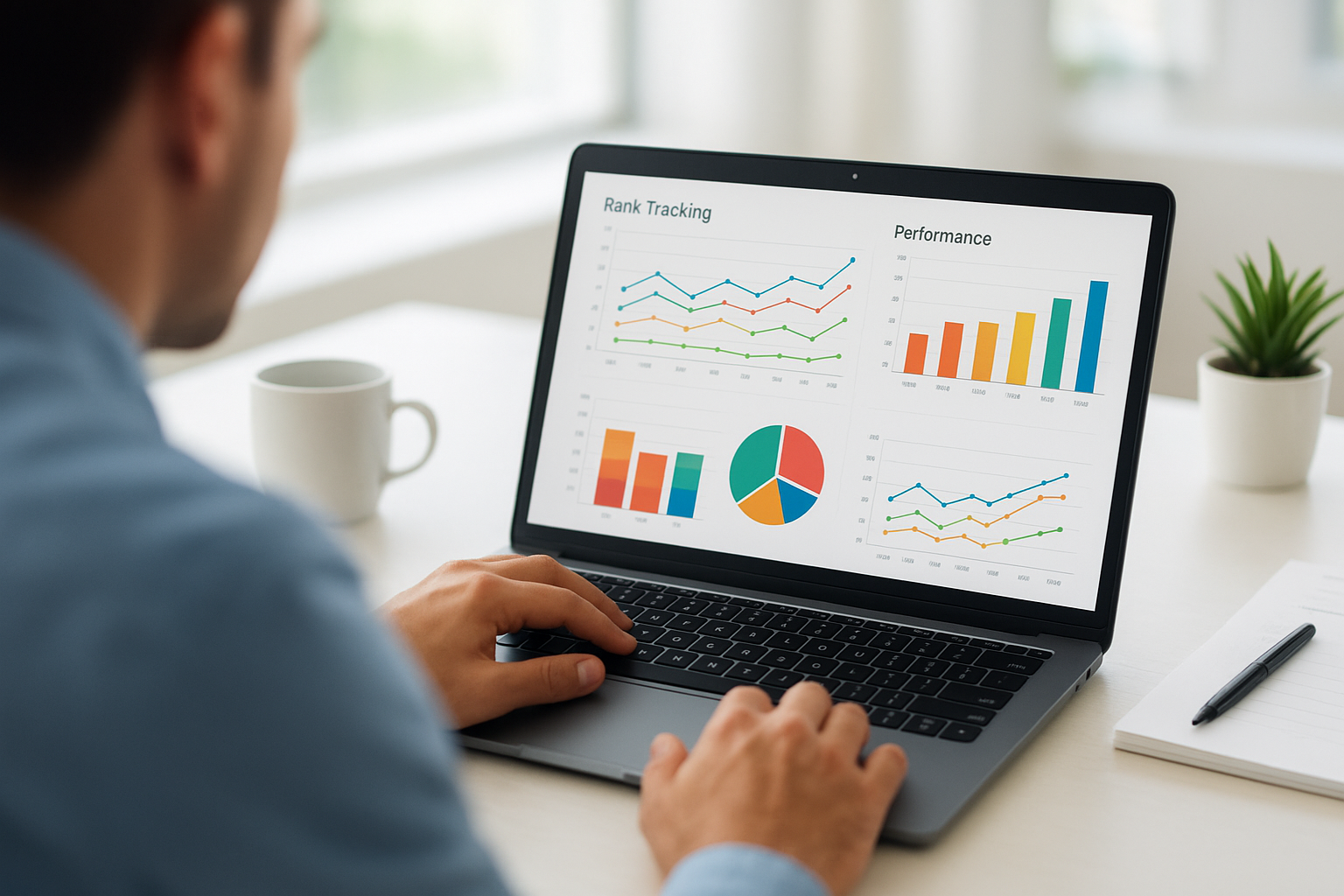
Automated rank tracking charts help teams spot ranking changes before they affect traffic.
Tools That Make Automated Rank Tracking and Reporting Possible
Several categories of tools work together to make automation possible. For example, AI visibility checkers track whether your brand appears in AI-generated answers, while traditional rank trackers monitor Google and Bing positions. Technical audit tools scan for broken links, slow page speed, and missing schema markup, which is structured data that helps search engines understand your content.
Rank Authority combines these functions through nine AI platforms, including RankFast for competitor analysis and page rebuilding, RankLink for internal linking automation, and the AI Blog Builder for publishing optimized content automatically. Readers exploring their options can also compare approaches in this overview of the easiest way to automate SEO or this breakdown of automating SEO processes end to end.
In addition, automated indexing submission tools can send updated pages to search engines faster, though it’s worth noting that Google alone determines whether and when a page is actually indexed. For a deeper look at continuous tracking, see this resource on tracking rankings 24/7 with AI.
Common Mistakes When Automating SEO Monitoring
Even with strong tools, a few mistakes can limit results. Avoiding these helps ensure automation actually improves visibility rather than generating reports no one reads.
- Setting up automated reports but never reviewing the recommendations they generate.
- Tracking only Google rankings while ignoring AI answer engine citations.
- Letting technical errors accumulate instead of approving automated fixes promptly.
- Choosing a tool without checking CMS compatibility, such as WordPress, Shopify, or Webflow.
- Assuming automation guarantees rankings rather than supporting a broader strategy.
As a related resource from Moz points out, SEO success depends on consistent execution over time, not a single setup step. For more on saving time while tracking performance, see this guide on rank tracking automation.
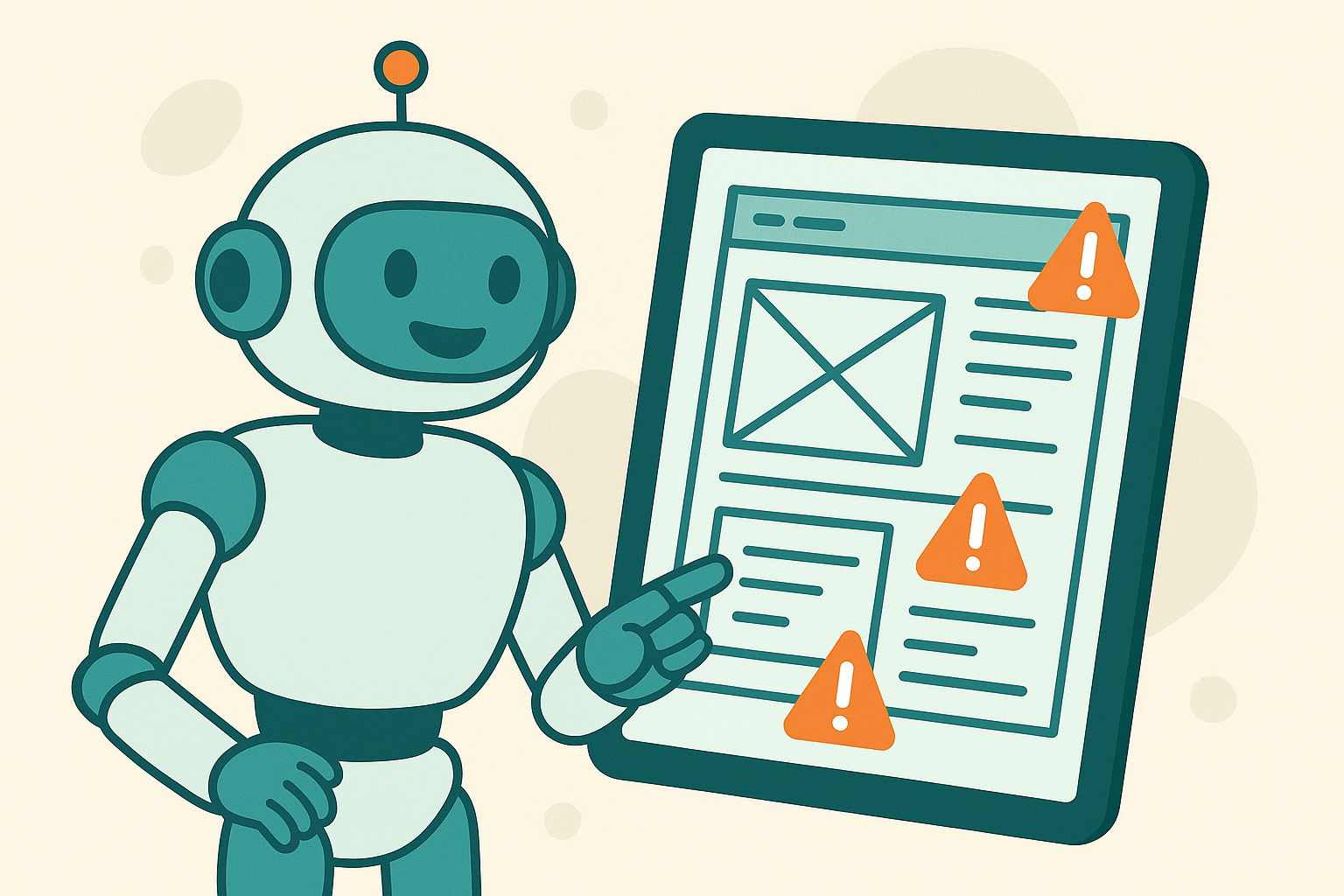
AI-driven scans identify technical issues before they affect rankings.
Frequently Asked Questions About How to Automate SEO Monitoring and Reporting
What does it mean to automate SEO monitoring and reporting?
Automating SEO monitoring and reporting means using software to continuously track rankings, crawl your site for errors, and compile performance data into reports without manual effort. Platforms like Rank Authority handle this through a dashboard that updates on a set schedule.
How long does it take to set up automated SEO reporting?
Most AI-powered platforms can connect to your website and begin generating baseline reports within minutes after you grant access to your site and analytics accounts. Full configuration of alerts and custom report schedules usually takes less than an hour.
Why should small businesses automate SEO monitoring instead of doing it manually?
Manual tracking across spreadsheets and multiple tools is time-consuming and prone to missed issues. Automation gives small businesses the same consistent visibility larger companies have, without needing an in-house SEO specialist.
What is the difference between SEO monitoring and SEO reporting?
SEO monitoring is the ongoing process of tracking rankings, traffic, and technical health in real time, while reporting is the summarized output shared on a schedule. Automated platforms combine both so monitoring data feeds directly into readable reports.
How much does automated SEO monitoring software typically cost?
Pricing varies widely depending on features, with entry-level plans often available for small sites and higher tiers built for agencies managing multiple properties. Many platforms, including Rank Authority, offer a risk-free ten-day trial so you can evaluate the fit before committing.
Can automated tools track AI search visibility, not just Google rankings?
Yes, modern platforms now monitor citations across AI answer engines in addition to traditional search rankings. This is often called AI visibility tracking, and it helps businesses see where they are mentioned in generative search responses.
What metrics should an automated SEO report include?
A strong automated report should cover keyword rankings, organic traffic trends, indexing status, technical errors, and backlink changes. Including a visibility score, such as a Rank Authority Score, also helps track overall progress at a glance.
How often should automated SEO reports run?
Weekly reports work well for active campaigns, while monthly summaries suit businesses focused on long-term trends. Automated alerts should run continuously so urgent issues like broken links or ranking drops are flagged immediately.
What’s the biggest mistake businesses make when automating SEO monitoring?
The most common mistake is setting up automation and never reviewing the recommendations it generates. Automation handles the data collection, but someone still needs to approve fixes and interpret trends for strategic decisions.
Is automated SEO monitoring as accurate as manual tracking?
Automated monitoring is generally more accurate than manual tracking because it checks rankings and technical signals consistently, removing human error from the process. Individual results vary depending on site complexity and competitive landscape.
How does automated indexing differ from guaranteed ranking success?
Automated indexing submission tools can send pages to search engines for crawling faster, but Google alone determines whether and when a page is indexed. Indexing is not the same as ranking, and strong content and signals still matter.
What tools are best for automating SEO monitoring and reporting?
Look for platforms that combine rank tracking, technical audits, schema automation, and AI visibility monitoring in one dashboard. Rank Authority’s AI AutoPilot, RankFast, and RankLink are examples of tools designed to handle these tasks together.
Can agencies use SEO automation for multiple client sites?
Yes, agencies commonly use automated platforms to manage reporting and monitoring across many client websites from a single dashboard. This reduces the workload of manual audits while keeping each client’s data organized and current.
Final Thoughts
Ultimately, learning how to automate SEO monitoring and reporting comes down to connecting the right tools, setting clear schedules, and reviewing the recommendations they surface. Rather than replacing strategy, automation removes the repetitive data-gathering work so you can focus on decisions that move rankings forward. As search continues shifting toward AI-powered answer engines, platforms like Rank Authority make it possible to monitor both traditional and generative search visibility from a single dashboard. Individual results vary, but a consistent, automated approach gives businesses of any size a realistic path to stronger, more measurable search performance.