

How to generate structured data for featured snippets is one of the most practical skills in modern search optimization, especially now that Google and AI answer engines pull short, direct answers straight from a page’s markup. Structured data is organized code added to your HTML that explicitly tells search engines what your content means, not just what it says. When formatted correctly, it gives search engines a clear way to extract your answer, use it in a featured snippet, and sometimes cite it directly inside an AI Overview or chatbot response.
Quick answer: To generate structured data for featured snippets, add Schema.org markup, such as FAQPage, HowTo, or Article schema, to the HTML of pages that directly answer a search query, then validate it with Google’s Rich Results Test before publishing. This signals exactly which text block answers the question, which raises the odds that block gets pulled into position zero.
What Is Structured Data for Featured Snippets?
Structured data for featured snippets is machine-readable code, usually written in JSON-LD, that labels the parts of your page content so search engines understand their meaning. Instead of guessing which paragraph answers a question, the engine reads the markup and knows precisely where the definition, step, or figure lives.
As a result, structured data acts like a translator between your content and the algorithms deciding what to feature. Google’s own documentation confirms that structured data makes pages eligible for enhanced display features, including rich results and, indirectly, snippet-style answers. Similarly, AI answer engines rely on clean markup to summarize pages accurately rather than misreading context.

Careful markup is the foundation of learning how to generate structured data for featured snippets effectively.
Why Schema Markup Matters for Featured Snippets and AI Visibility
Featured snippets occupy a prime position above standard organic results, and industry research has found they can appear for roughly 12% to 15% of search queries, making that placement one of the more direct visibility opportunities available. Because the snippet box is pulled from existing page content, schema markup for featured snippets helps search engines trust which section deserves that spotlight.
Furthermore, AI search tools apply similar logic when deciding what to cite. In particular, Generative Engine Optimization (GEO) and Answer Engine Optimization (AEO) both depend on content being structured clearly enough for a machine to extract and repurpose. Without that structure, even accurate, well-written content can be overlooked in favor of a competitor’s cleaner markup.
How to Generate Structured Data for Featured Snippets (Step by Step)
Generating usable structured data follows a repeatable process rather than guesswork. Below is a six-step sequence that applies to most content types, from blog answers to how-to guides.
- Identify snippet-worthy queries. Audit your target keywords for ones already showing a featured snippet, people-also-ask box, or AI Overview, since these formats confirm the search engine already extracts short answers for that topic.
- Write a direct, extractable answer. Place a concise 40 to 60 word answer immediately after the heading that answers the question in plain language, structured as a definition, list, or step sequence the engine can lift verbatim.
- Choose the right schema type. Select FAQPage, HowTo, Article, or Table schema based on your content format, matching the markup type to how the answer is actually presented on the page for accurate extraction.
- Add the JSON-LD markup to your HTML. Insert the schema as a script tag using Schema.org vocabulary, and make sure every property value matches the visible page text exactly, since mismatches commonly trigger validation errors.
- Validate with Google’s Rich Results Test. Run the page through Google’s free testing tool to confirm the markup parses correctly and qualifies for the rich result type you are targeting before publishing it live.
- Monitor and refine using Search Console. Track impressions, clicks, and rich result eligibility over several weeks, then adjust wording or markup based on real performance data rather than assumptions.
Consequently, this sequence turns an abstract technical task into a repeatable workflow. Tools such as the Rank Authority platform automate several of these steps, generating and deploying schema automatically rather than requiring manual code edits for every page.
Schema Types That Frequently Win Featured Snippets
Not every schema type suits every content format. The table below outlines the most common options and when to use each one.
| Schema Type | Best For | Typical Snippet Format |
|---|---|---|
| FAQPage | Direct question-and-answer content | Expandable Q&A result |
| HowTo | Step-by-step processes | Numbered step list |
| Article | General informational pages | Paragraph snippet with source |
| Table | Comparison or pricing data | Data table rich result |

Tracking performance after you generate structured data for featured snippets helps confirm what is working.
How to Test and Validate Your Structured Data
Before relying on any markup, it is worth confirming that search engines can actually read it. Google’s Rich Results Test, available through Google Search Central’s structured data guidelines, checks syntax and flags eligibility issues in seconds.
In addition, the Schema Markup Validator maintained by the broader Schema.org vocabulary project confirms that properties match accepted standards rather than custom or outdated fields. For readers who want deeper background on how structured data works conceptually, the Wikipedia entry on structured data offers useful context. Platforms that explain how schema markup automation tools work can also help teams skip repetitive manual validation.
Common Mistakes That Keep Structured Data From Working
Even well-intentioned markup often fails for predictable reasons. First, schema that does not match the visible on-page text confuses search engines and can trigger manual review. Second, choosing the wrong schema type, such as marking a product page as an Article, wastes the eligibility it could have earned.
Similarly, teams frequently forget to update schema after editing content, leaving outdated markup that contradicts the current page. Finally, duplicate or conflicting schema blocks on one page often cause validation tools to reject both, so it is best to keep markup centralized and reviewed after every content change.
How Rank Authority Automates Structured Data for Featured Snippets
Manually writing and testing schema across dozens of pages is time-consuming, which is why automated platforms exist. Rank Authority’s 1-Click AI AutoPilot scans a site, identifies pages missing schema, and generates appropriate JSON-LD based on the content already present, reducing the technical workload typically required for this task.
Beyond markup generation, the platform’s featured snippet optimization service pairs schema with AI visibility tracking, so businesses can see where their content is being cited across AI answer platforms as well as traditional search. The AI Overview optimization guidance and automated meta description tools work alongside schema automation to strengthen the surrounding on-page signals. Rank Authority can submit structured data changes for indexing, but Google alone determines whether and when a page is indexed, and individual results vary based on competition and existing site authority.
For a broader view of how these pieces fit together, the guide to AI search optimization explains how GEO, AEO, and traditional SEO automation combine into one visibility strategy.
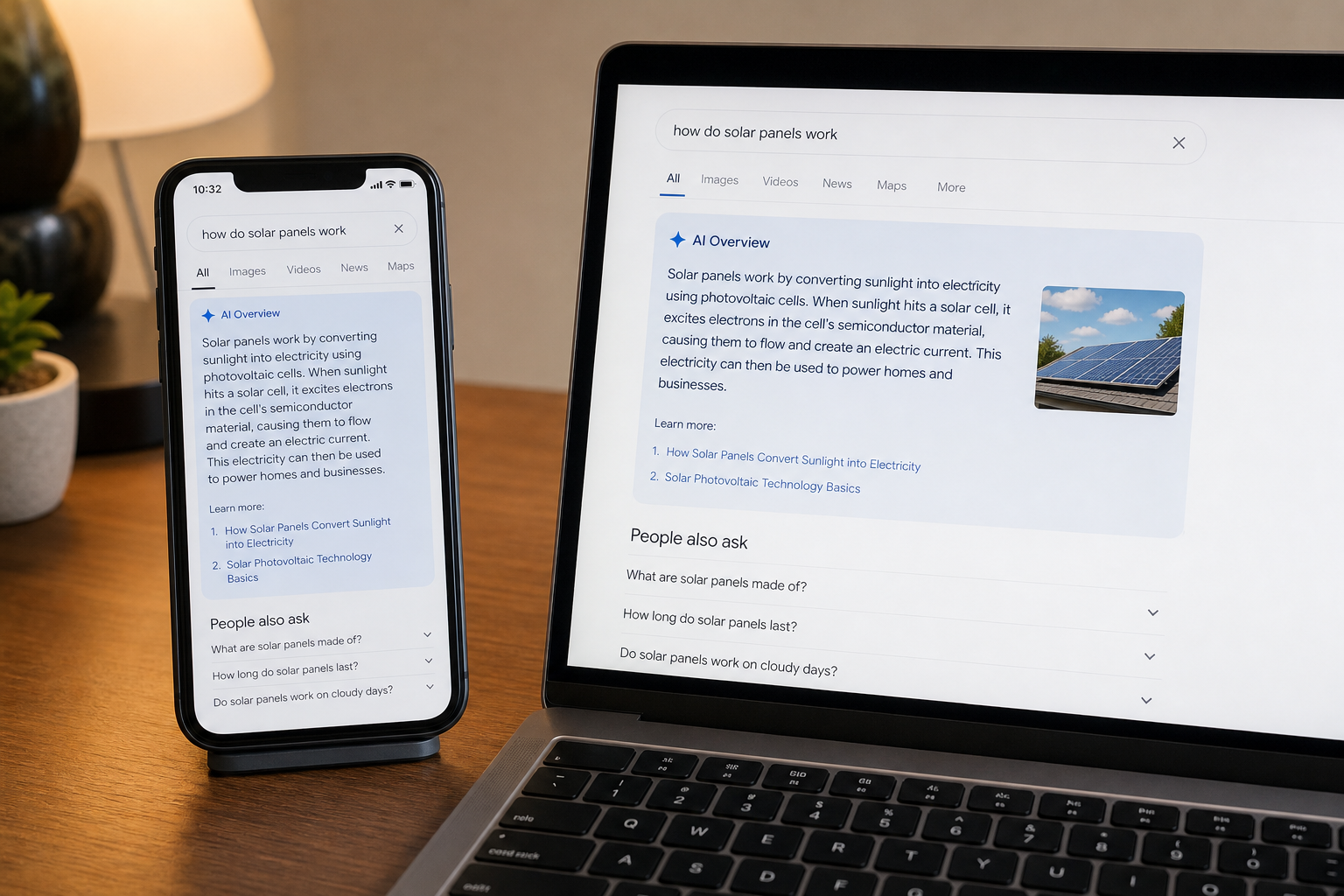
Consistent markup across devices supports every stage of structured data for featured snippets.
Frequently Asked Questions About How to Generate Structured Data for Featured Snippets
What is structured data for featured snippets?
Structured data for featured snippets is standardized code, usually written in JSON-LD using Schema.org vocabulary, that labels the meaning of content on a page so search engines can extract and display it as a short answer. It helps Google and AI answer engines identify definitions, steps, or lists worth featuring.
How to generate structured data for featured snippets without hiring a developer?
You can generate structured data for featured snippets using free schema generator tools or automated platforms that create and deploy JSON-LD code for you. Many content management systems also offer plugins that add FAQPage or HowTo schema automatically when content is formatted correctly.
Which schema type is best for featured snippets?
FAQPage and HowTo schema tend to perform best for question-based and process-based featured snippets, while Article schema supports general informational content. The right choice depends on whether your content answers a direct question or walks through sequential steps.
Does adding schema markup guarantee a featured snippet?
No, structured data does not guarantee a featured snippet; it improves eligibility by making content easier for search engines to parse and extract. Ranking well for the target query and providing a clear, concise answer still matter just as much.
How long should my answer be to win a featured snippet?
Most winning featured snippet answers run between 40 and 60 words for paragraph snippets, though list and table snippets can be longer. Keeping the answer tight and placing it right after the heading improves extraction accuracy.
What is the difference between structured data and a featured snippet?
Structured data is the behind-the-scenes code describing a page’s meaning, while a featured snippet is the visible search result box that displays an extracted answer. Structured data increases the chance of earning a snippet but is not the snippet itself.
How much does it cost to add schema markup to a website?
Basic schema markup can be added for free using manual code or free generator tools, while automated platforms that handle schema at scale typically charge a monthly subscription. Costs vary based on site size and how much automation is required.
How long does it take to see featured snippet results after adding structured data?
Search engines can recrawl and reassess a page within days, but featured snippet placement often takes several weeks to a few months to stabilize. Individual results vary depending on competition, existing rankings, and content quality.
Can structured data help with AI Overviews and AI search answers too?
Yes, well-structured data makes content easier for generative AI systems to parse, summarize, and cite in AI Overviews or chatbot answers, which is part of what Generative Engine Optimization (GEO) focuses on. Clear schema plus concise answers supports both traditional snippets and AI citations.
What tools can I use to validate structured data?
Google’s Rich Results Test and the Schema Markup Validator are the two most widely used tools for checking JSON-LD syntax and rich result eligibility. Automated SEO platforms often include built-in schema validation as part of a broader site audit.
What common mistakes break featured snippet schema?
Common mistakes include markup that does not match the visible page text, using the wrong schema type for the content format, and forgetting to update schema after editing content. Duplicate or conflicting schema blocks on the same page also cause validation errors.
Do I need separate schema for mobile and desktop snippets?
No, structured data is device-agnostic since it lives in the page’s HTML rather than its visual layout, so one implementation serves both mobile and desktop search results. Just confirm the underlying content itself displays correctly on both formats.
How does structured data relate to Answer Engine Optimization (AEO)?
Answer Engine Optimization (AEO) is the practice of formatting and marking up content so answer engines can extract it directly, and structured data is one of its core technical building blocks. Proper schema, concise answers, and clear headings all work together under an AEO strategy.
Final Thoughts on Structured Data and Featured Snippets
Ultimately, learning how to generate structured data for featured snippets comes down to a simple pairing: clear, concise answers backed by accurate schema markup. Once that foundation is in place, search engines and AI answer platforms have everything they need to extract, feature, and cite your content with confidence.
Whether handled manually through code or accelerated with automation platforms like Rank Authority, the same principle applies: structure first, then validate, then monitor. Businesses that commit to this process consistently position themselves for stronger visibility across both traditional search results and the growing landscape of AI-generated answers.