
How to configure AI SEO tools for startups is one of the most pressing questions facing new businesses heading into 2026, as traditional search results increasingly share space with AI-generated answers. Startups that skip this setup often miss early opportunities to appear in AI Overviews, chatbot answers, and voice search results. Fortunately, configuring these tools does not require a dedicated SEO team or years of technical experience. With the right platform and a clear setup sequence, a founder or small marketing team can connect a website, automate technical fixes, and start building visibility across both traditional and AI-powered search within days.
Direct answer: Configuring AI SEO tools for startups means auditing your site, connecting your CMS to an automation platform, enabling schema markup, and activating AI-driven fixes for both traditional SEO and newer AI answer engines. Most platforms, including Rank Authority, allow this setup to be completed in under an hour using a free site scan and guided automation.
Why AI Search Optimization Matters for New Businesses
Search behavior has shifted dramatically in a short period. For example, Google has reported that AI Overviews now reach well over a billion users every month, inserting AI-generated summaries directly above traditional organic listings. As a result, a startup that only optimizes for classic blue-link rankings risks becoming invisible in a growing share of searches. Similarly, AI answer engines pull information from pages that are structured clearly and backed by credible schema markup, which acts as a translation layer between your content and machine readers.
Startups, in particular, feel this shift acutely because they typically lack the backlink history and domain authority of established competitors. However, this also creates an opportunity: a well-configured AI SEO setup can help a new site earn citations in AI answers faster than it could climb traditional rankings alone. Therefore, learning how to configure AI SEO tools for startups early is not just a technical exercise, it is a competitive growth strategy worth adopting before competitors catch up.

Setting aside time to configure AI SEO tools for startups early can help a new site compete for AI-driven visibility sooner.
How to Configure AI SEO Tools for Startups: A Step-by-Step Setup Guide
Although every platform looks slightly different, the underlying setup process for AI SEO tools follows a predictable sequence. In particular, the steps below outline how to configure AI SEO tools for startups using an automated platform rather than manual, line-by-line optimization.
- Audit your current site using a free AI visibility checker to identify SEO, GEO, and AEO gaps before changing anything on the website.
- Connect your CMS, such as WordPress, Shopify, Wix, GoDaddy, Webflow, or GoHighLevel, to your chosen AI SEO platform for automated deployment of fixes.
- Enable automated schema markup generation so search engines and AI answer engines can clearly understand your pages’ structure and content.
- Activate 1-Click AI AutoPilot to review and approve recommended technical and on-page fixes without manually editing any code yourself.
- Build GEO-focused artifact pages designed specifically to be cited by generative AI answer engines when users ask related questions.
- Set up AI visibility monitoring and RA Score tracking to measure citation growth across AI answer platforms over time.
Once these steps are complete, most startups can expect their site to be actively monitored and incrementally optimized without further manual intervention. That said, ongoing review is still recommended, since AI answer engines continuously reassess which sources deserve a citation.
What Is Generative Engine Optimization (GEO)?
Generative Engine Optimization (GEO) is the practice of structuring and publishing content so that generative AI systems, such as ChatGPT or Google’s AI Overviews, can understand, trust, and cite it in their answers. Unlike traditional SEO, which targets ranking positions on a results page, GEO focuses on becoming a cited source inside an AI-generated response.
For startups specifically, this often means creating focused “artifact” pages that directly answer a narrow question with clear structure, supporting data, and minimal fluff. Consequently, a small site with a handful of well-built GEO pages can sometimes earn citations faster than a larger competitor with thin, unfocused content.
Setting Up Answer Engine Optimization (AEO) for Startups
Answer Engine Optimization (AEO), meanwhile, focuses on formatting content so it can be lifted directly into featured snippets, voice assistants, and AI chat answers. In practice, configuring AEO involves adding FAQ schema, using question-based headings, and writing direct answers in the first one to three sentences beneath each heading, similar to the structure used throughout this guide. Consequently, startups that configure both GEO and AEO together tend to appear across more AI-driven answer surfaces than those focusing on only one.
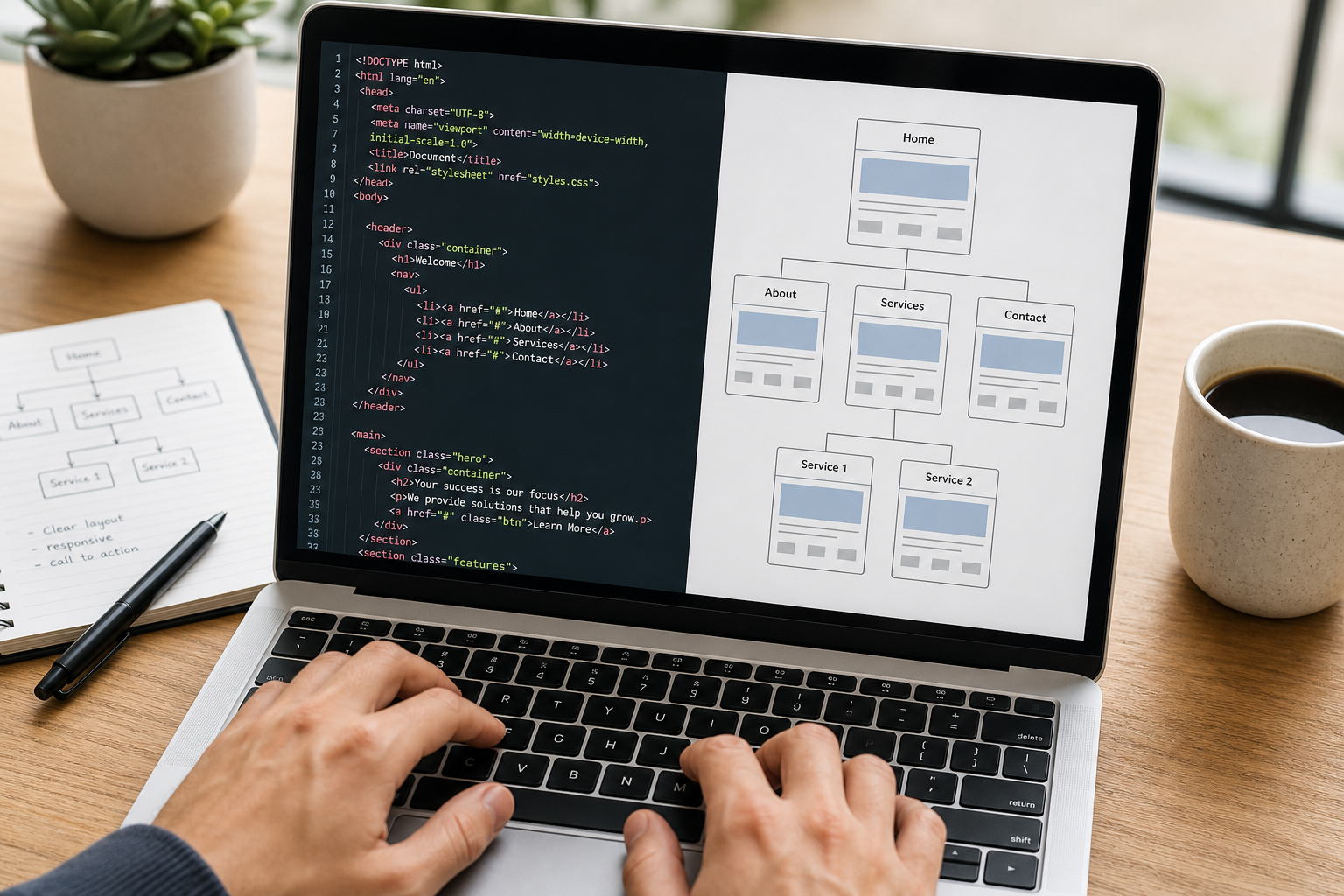
Structured schema markup helps both search engines and AI answer systems read a page correctly.
Choosing and Configuring the Right AI Visibility Platform
Selecting a platform is just as important as the configuration steps themselves. For small businesses weighing their first automation purchase, this guide on whether automated SEO is worth the investment for startups breaks down the cost-benefit tradeoffs in more detail. In general, look for a platform that combines traditional SEO automation with dedicated GEO and AEO features rather than treating AI visibility as an afterthought.
Rank Authority, for example, bundles several specialized tools, including 1-Click AI AutoPilot for technical fixes, RankFast for rewriting pages to outperform competitor content, RankLink for automating internal linking and topical structure, and an AI Blog Builder for publishing ongoing GEO- and AEO-optimized articles. In addition, free diagnostic tools such as the AI Visibility Checker and Schema Markup Reader let startups test their current standing before committing to a paid plan. For a broader walkthrough, this AI-powered SEO growth guide for startups covers platform selection in more depth, while this easy AI SEO platform guide for small businesses compares entry-level options. Agencies and entrepreneurs managing multiple client sites may also want to review this SEO solutions guide for entrepreneurs and this breakdown of AI SEO software strategy and real-world results before standardizing on one toolset.
Common Mistakes When Setting Up AI SEO Automation
Even with automation, startups can undermine their own setup. Above all, avoid activating every available feature at once without reviewing recommended changes first, since not every automated suggestion suits every industry or content type. Similarly, skipping the initial site audit often leads to duplicate schema markup or conflicting metadata, which can confuse both traditional search engines and AI crawlers.
In addition, many founders forget to fully connect their CMS, for example leaving a WordPress or Shopify integration half-configured, which prevents automated fixes from deploying correctly. Furthermore, some teams treat GEO and AEO as one-time tasks rather than ongoing processes; because AI answer engines continuously re-evaluate sources, content needs periodic updates to stay cited. Finally, it is worth noting that a platform can submit pages for indexing, but Google alone determines whether and when a page is indexed, so patience and realistic expectations matter during the first few weeks.
Measuring Results After You Configure AI SEO Tools
Once setup is complete, measurement becomes the next priority. Specifically, a Rank Authority Score (RA Score) summarizes technical health, content quality, and AI citation readiness into a single benchmark that founders can track over time. Below is a simple overview of what to monitor during the first quarter after configuration.
| Metric | What It Shows | Check Frequency |
|---|---|---|
| RA Score | Overall technical and AI readiness | Weekly |
| AI Citation Tracking | Mentions across AI answer platforms | Monthly |
| Organic Traffic | Traditional search visibility | Monthly |
| Indexed Pages | Pages confirmed in search engines | Bi-weekly |
Many startups report meaningful visibility gains within the first few months of consistent monitoring. However, individual results vary, and reviews reflect individual user experiences rather than guaranteed outcomes for all users, since results depend on niche competitiveness, content quality, and site age. For a closer look at how automated monitoring works in practice, Rank Authority’s platform at rankauthority.com provides a free starting point through its site scan tools.

Ongoing monitoring helps startups see whether their AI SEO configuration is earning new citations over time.
Frequently Asked Questions About How to Configure AI SEO Tools for Startups
What is the best way to configure AI SEO tools for startups?
The best approach to configure AI SEO tools for startups is to run a free site audit first, connect your CMS to an automation platform, enable schema markup, and then activate automated fixes for both traditional SEO and AI answer visibility.
How long does it take to set up AI SEO automation for a new website?
Most startups can complete the initial setup, including CMS connection and schema deployment, within an hour. However, meaningful visibility gains typically develop over several weeks as search and AI systems re-crawl the site.
Do startups need both GEO and AEO, or just traditional SEO?
Startups generally benefit from combining all three. Traditional SEO builds ranking foundations, GEO improves the odds of being cited in AI-generated answers, and AEO formats content for featured snippets and voice assistants.
What is schema markup and why does it matter for AI search?
Schema markup is structured code that describes page content in a format search engines and AI systems can read directly. It matters because clearly labeled content is easier for AI answer engines to understand, trust, and cite.
How much does AI SEO software typically cost for small businesses?
Pricing varies widely by platform and feature set, ranging from free diagnostic tools to monthly subscriptions for full automation suites. Many platforms, including Rank Authority, offer a risk-free ten-day trial to test value before committing.
Can I use free tools to check my AI visibility before investing in a platform?
Yes. Free diagnostic tools such as an AI Visibility Checker, Site Audit Checker, or Schema Markup Reader can show existing gaps before you commit to a paid automation plan.
What’s the difference between SEO, GEO, and AEO?
SEO targets ranking positions on traditional search results pages. GEO focuses on being cited inside AI-generated answers. AEO formats content so it can be lifted directly into featured snippets and voice responses.
How do I know if my startup is already appearing in AI answers?
AI visibility monitoring tools track citations across major AI answer platforms, showing when and where your content is referenced. Without this tracking, most businesses have no visibility into AI citation activity at all.
What are common mistakes when configuring AI SEO tools for startups?
Common mistakes include skipping the initial audit, activating every automation feature at once, leaving CMS integrations half-connected, and treating GEO or AEO as one-time tasks instead of ongoing processes.
Should startups hire an SEO expert or use automation software?
This depends on budget and complexity. Automation software reduces the expertise and time required for setup, making it a practical starting point before scaling into dedicated expert support as the business grows.
How does Rank Authority’s AI AutoPilot simplify setup?
1-Click AI AutoPilot scans a site, identifies technical and content gaps, and applies approved fixes automatically, removing much of the manual work typically required to configure AI SEO tools for startups.
How often should startups update their AI SEO configuration?
Because AI answer engines continuously re-evaluate sources, reviewing configuration and content monthly is a reasonable baseline, with deeper audits recommended quarterly or after major site changes.
Does Google guarantee indexing after submitting through automated tools?
No. Automated platforms can submit pages for indexing, but Google alone determines whether and when a page is actually indexed, so some patience is required after setup.
What metrics should startups track after configuring AI SEO tools?
Key metrics include an overall visibility score such as an RA Score, AI citation tracking, organic traffic trends, and the number of pages confirmed as indexed over time.
Is a 10-day trial enough time to evaluate an AI SEO platform?
A ten-day trial is typically enough time to complete setup, run an initial audit, and review early recommendations, though full visibility results usually take longer to materialize. Individual results vary.
In summary, learning how to configure AI SEO tools for startups comes down to a handful of repeatable steps: audit, connect, automate schema and fixes, build GEO-ready content, and monitor results consistently. Rather than requiring a full in-house SEO team, today’s automated platforms let founders and small marketing teams handle technical SEO, GEO, and AEO from a single dashboard. As AI search continues to reshape how customers discover new businesses, startups that configure these tools early position themselves to earn citations and visibility well before slower-moving competitors catch up.