
Complete 2025 Strategy Guide — Updated July 2026, Rank Authority editorial team
SEO Action Plan for Small Businesses: The Complete Step-by-Step Roadmap
A structured, prioritized roadmap covering technical SEO, keyword research, on-page optimization, local SEO, content strategy, link building, tracking, and budget planning — built specifically for small business owners who need results without wasting time or money.
An SEO action plan for small businesses is a structured, sequenced roadmap that tells you exactly what to do, in what order, and how to measure whether it’s working — so you can improve organic rankings, attract qualified local traffic, and grow revenue without guesswork. Whether you run a local bakery, a law firm, a home services company, or an e-commerce boutique, this guide gives you a complete, actionable path forward that works within the real constraints of a small operation: limited time, limited budget, and a team that wears many hats. Last updated: 2026-07-30. Author: Rank Authority editorial team.
Quick Answer
An SEO action plan for small businesses is a step-by-step strategy covering technical SEO health, keyword targeting, on-page optimization, local SEO, content creation, link building, and performance tracking. Executing it consistently over 3–6 months produces measurable ranking improvements and sustainable organic traffic growth — even on a tight budget.
What Is an SEO Action Plan for Small Businesses — and Why Does It Matter?
An SEO action plan for small businesses is a prioritized, sequenced checklist of SEO activities organized by impact and dependencies, designed to deliver the fastest, most durable results within a constrained budget. It differs fundamentally from generic SEO advice or a vague “SEO strategy” because it specifies what to do, in what order, why that order matters, and how to know when it’s working.
Without a structured plan, small business owners typically waste months bouncing between disconnected tactics — publishing a few blog posts, tweaking title tags, chasing backlinks — and seeing little to no improvement. A proper action plan eliminates that randomness. It treats SEO as a system: each phase builds on the last, and every task has a measurable outcome.
According to the U.S. Small Business Administration, digital presence is one of the most cost-effective investments a small business can make. SEO sits at the heart of that presence because it delivers compounding returns — unlike paid advertising, which stops the moment your budget runs out. A well-executed SEO action plan builds an asset that keeps generating traffic and leads for years.
The plan outlined in this guide spans eight core pillars: technical SEO audit, keyword research, on-page optimization, local SEO, content strategy, link acquisition, performance tracking, and budget planning. Each is covered in full below, with specific, actionable instructions you can begin implementing today.
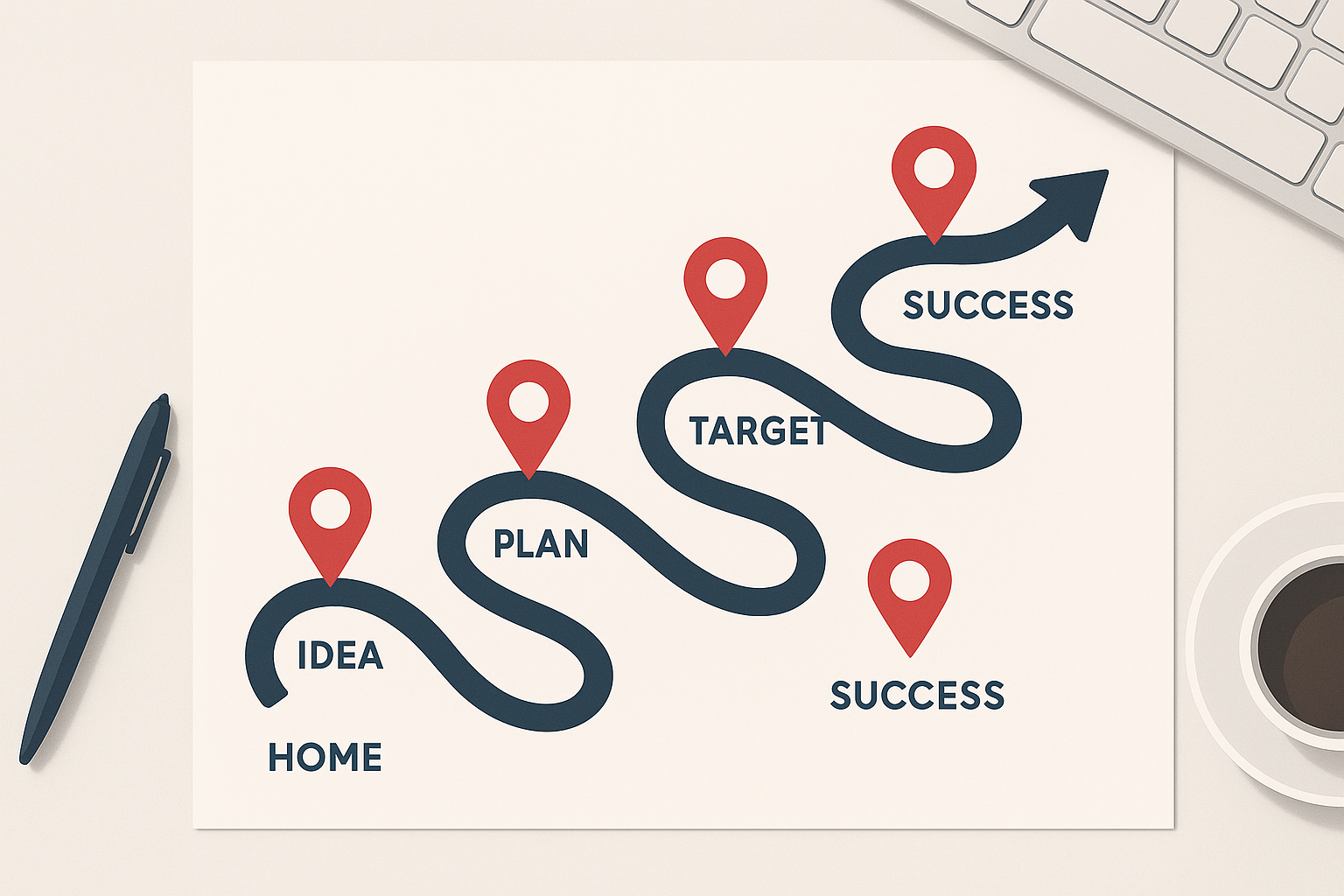
A well-structured SEO action plan for small businesses moves through clear phases, each building on the previous one.
Step 1 — Conduct a Full SEO Audit Before Touching Anything Else
Every effective SEO action plan for small businesses begins with an honest, systematic audit of your current situation. You cannot fix what you cannot see, and you cannot prioritize what you haven’t measured. Skipping the audit and jumping straight into content or link building is one of the most common and costly mistakes small business owners make. For a deeper walkthrough, see our What Is an SEO Agent? How It Works and Why You Need One.
A thorough audit surfaces every category of problem that might be holding your site back: broken links, missing or duplicate title tags, thin or duplicate content, slow page load times, mobile usability errors, crawl blocks in your robots.txt, pages that are accidentally noindexed, and missing XML sitemaps. Each of these issues acts as a drag on your rankings — and some of them, like accidental noindex tags on important pages, can completely prevent you from ranking at all.
Technical Audit Tools for Small Businesses
Google Search Console (free) should be your first stop. It shows you every crawl error Google has encountered on your site, identifies which pages are indexed, reveals manual penalties, and reports your current click-through rates by query — an invaluable window into how Google actually sees your site.
Google PageSpeed Insights (free) diagnoses Core Web Vitals issues — including Largest Contentful Paint (LCP), Cumulative Layout Shift (CLS), and Interaction to Next Paint (INP) — that Google uses directly in its ranking algorithm. A poor mobile page speed score alone can suppress your rankings across the board.
For ongoing automated monitoring, Rank Authority’s real-time SEO issue alerts flag critical problems the moment they appear on your site, giving small business owners the kind of proactive monitoring previously reserved for enterprise teams with dedicated technical staff. For a deeper walkthrough, see our What Should I Know Before Using SEO Automation?.
Complete SEO Audit Checklist
- Crawlability: Review robots.txt — ensure it’s not blocking important pages
- XML Sitemap: Confirm it exists, is submitted in Search Console, and lists all key pages
- Indexation: Check that your most important pages are indexed (use site:yourdomain.com in Google)
- Page Speed: Target under 2.5 seconds on mobile; LCP under 2.5s, CLS under 0.1
- HTTPS: Verify SSL certificate is active and all pages redirect from HTTP to HTTPS
- Duplicate Content: Identify and consolidate thin or duplicate pages with canonical tags or 301 redirects
- Mobile Usability: Test every key page with Google’s Mobile-Friendly Test tool
- Broken Links: Find and fix both internal broken links and broken inbound links
- Missing Metadata: Identify every page missing a title tag or meta description
- Structured Data: Check for existing schema markup errors using Google’s Rich Results Test
How to Prioritize Audit Findings
Not all audit findings are equal. Use this priority framework to decide what to fix first:
- Critical (fix immediately): Accidental noindex tags on key pages, blocked crawl paths, missing SSL, manual penalties
- High (fix within week 1): Missing title tags, broken links on high-traffic pages, 404 errors on linked pages, redirect chains
- Medium (fix within month 1): Slow page speed, missing meta descriptions, duplicate content, missing image alt text
- Low (ongoing improvement): Schema markup gaps, internal link optimization, structured data enhancements
Step 2 — Research Keywords That Match Real Buyer Intent
Keyword research is the intelligence layer of your SEO action plan. Small businesses consistently make the same mistake: targeting high-volume, highly competitive head terms like “plumber” or “wedding photographer” — terms dominated by national aggregators, large directories, and well-funded competitors. The result is zero rankings and zero traffic.
The winning strategy for small businesses is to focus on long-tail keywords that signal clear purchase intent and carry realistic competition levels. “Emergency plumber Austin open Sunday” has far less competition than “plumber” — and the person searching it is ready to hire someone right now. That’s a far more valuable visitor than someone casually searching a broad term.
The Three Types of Keywords Every Small Business Needs
Informational
Targets users researching a topic. Builds brand awareness and topical authority. Drives early-funnel awareness. Example: “how to choose a local plumber.”
Transactional
Targets users ready to buy, book, or call. Drives direct revenue. Highest conversion rates. Example: “hire emergency plumber Austin tonight.”
Local Intent
Targets users searching in your service area. Critical for brick-and-mortar and service-area businesses. Example: “best Italian restaurant near downtown Denver.”
Keyword Research Tools and Process
Use Google Keyword Planner, Ubersuggest, or AnswerThePublic to discover the exact phrases your customers type. For each keyword, assess three factors: monthly search volume, keyword difficulty (competition), and search intent alignment. A keyword with 200 monthly searches and low difficulty will generate more traffic than a 10,000-search keyword you’ll never rank for.
Once you’ve built your keyword list, organize it into keyword clusters — groups of semantically related terms that can support a dedicated page or article. For example, “emergency plumber Austin,” “24-hour plumber Austin,” and “plumber Austin open Sunday” might all cluster together to support a single service page. This prevents keyword cannibalization (multiple pages competing against each other for the same term) and creates a logical site architecture that search engines reward with higher rankings.
Competitor Keyword Gap Analysis
One of the most powerful and underused keyword research tactics for small businesses is competitor gap analysis. Use tools like Ubersuggest or Semrush’s free tier to see which keywords your local competitors rank for that you don’t. These are your fastest opportunities — proven keywords with demonstrated local demand where you can enter and compete with a well-optimized page. Enter your top three local competitors’ domains, pull their ranking keywords, and filter for terms with commercial or local intent that your site is not currently targeting.
Step 3 — Apply On-Page SEO Fundamentals to Every Key Page
On-page SEO is the practice of optimizing the elements within each individual page to clearly communicate its topic to both search engines and visitors. Done correctly, strong on-page SEO dramatically increases your ranking probability without requiring any external links — making it one of the highest-ROI activities in any small business SEO action plan.
The goal is not to stuff keywords into your content — that approach has been penalized by Google for over a decade. The goal is to make each page’s topic unmistakably clear through natural, purposeful use of your target keyword and its semantic variants, while simultaneously delivering content that genuinely satisfies the reader’s intent.
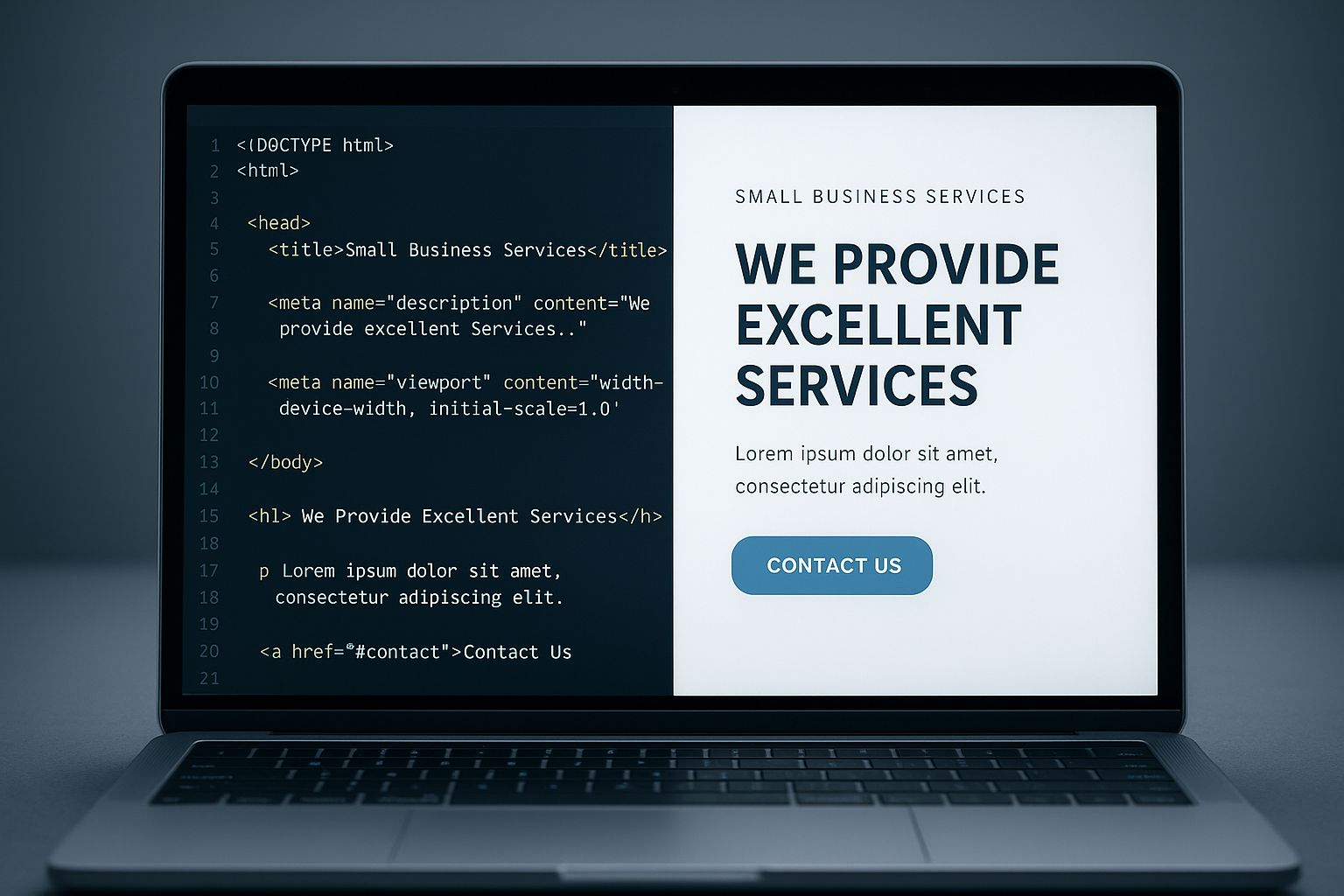
On-page optimization ensures every page clearly communicates its topic to both search engines and human visitors.
On-Page SEO Checklist for Every Key Page
- Title Tag: Write a unique, keyword-rich title (50–60 characters). Place the primary keyword toward the front. Every page needs a different title tag.
- Meta Description: Write a compelling summary (120–156 characters) that includes the target keyword and a clear value proposition. While not a direct ranking factor, a well-written meta description improves click-through rates — which does influence rankings.
- H1 Tag: Each page should have exactly one H1 tag that includes the primary keyword naturally. It should match or closely mirror the title tag intent.
- First 100 Words: Use your primary keyword naturally within the first 100 words of body content. This confirms relevance to search engines immediately.
- H2 and H3 Headings: Structure your content with descriptive subheadings that include semantic variations of your target keyword. These help both readers and search engines navigate your content.
- Image Alt Text: Write descriptive alt text for every image that includes a natural keyword reference where relevant. This improves accessibility and image search visibility.
- Internal Links: Link from each page to 2–4 other relevant pages on your site using descriptive anchor text. Internal linking distributes page authority and helps search engines understand your site’s topical structure.
- URL Structure: Keep URLs short, descriptive, and keyword-inclusive. Use hyphens between words. Avoid parameter-heavy or auto-generated URLs.
- Content Length: Match or exceed the depth of top-ranking pages for your target keyword. Thin pages (under 400 words) rarely rank for competitive terms.
- Schema Markup: Add appropriate structured data (LocalBusiness, FAQPage, HowTo) to help Google display rich results for your pages.
The Role of E-E-A-T in On-Page Optimization
Google’s quality evaluator guidelines emphasize E-E-A-T: Experience, Expertise, Authoritativeness, and Trustworthiness. For small businesses, this means every page should demonstrate your real-world expertise. Include specific local knowledge, mention your years in business, add team bios with credentials where appropriate, show real photos of your work, and display customer testimonials near relevant service pages. These signals tell Google — and human visitors — that you’re a legitimate, knowledgeable provider, not a thin content farm.
Step 4 — Dominate Local Search With Google Business Profile and Local SEO
For most small businesses, local SEO delivers the fastest, highest-converting organic traffic of any channel. When someone searches “dentist near me,” “coffee shop open now,” or “best HVAC company in [city],” Google’s local pack — the map results with three listings that appear above the standard organic results — generates more clicks than everything below it combined. Earning a spot in that pack is the single most impactful SEO outcome for most local businesses.
The local pack is controlled by a combination of three factors: relevance (how well your listing matches the search query), distance (how close your business is to the searcher), and prominence (how well-established and reputable your business appears online). You can’t control distance, but you can dramatically improve relevance and prominence through deliberate local SEO actions.
Optimizing Your Google Business Profile
Claim and verify your Google Business Profile (GBP) immediately if you haven’t already. Then complete every single available field — this alone puts you ahead of the majority of local businesses that leave their profiles partially filled out. Fill in your business name (exactly as it appears on your storefront and website), address, phone number, website URL, business hours (including holiday hours), primary and secondary business categories, service descriptions, and service areas.
Upload at least 10 high-quality photos: your exterior (so customers recognize you), interior, team members, products or completed work, and menu or service boards where applicable. Businesses with more photos receive significantly more direction requests and website clicks than those with few or no images.
Publish a GBP post at least once per week — announce promotions, share helpful tips, highlight completed projects, or announce seasonal hours. Each post keeps your profile fresh and signals activity to Google. Respond to every review — positive and negative — within 24 hours. Thoughtful responses to negative reviews often impress prospective customers more than a string of five-star reviews with no business response.
Local SEO Power Moves
- Build consistent citations on Yelp, Bing Places, Apple Maps, and top industry directories
- Ensure your NAP (Name, Address, Phone) is identical across every listing — even minor inconsistencies erode trust signals
- Embed a Google Map on your Contact page
- Create dedicated location-specific landing pages for every city or neighborhood you serve
- Earn reviews strategically — ask at the moment of highest customer satisfaction, provide a direct GBP review link, and focus on both volume and recency
- Add LocalBusiness schema markup to your homepage and key location pages
- Build local links from chambers of commerce, community organizations, and local news outlets
- Use locally relevant keywords (city name, neighborhood names) naturally throughout your site content
NAP Consistency: Why It Matters and How to Audit It
Your NAP (Name, Address, Phone number) must be identical across every platform where your business appears: your website, Google Business Profile, Yelp, Facebook, industry directories, and anywhere else your business is listed. Even small inconsistencies — “St.” vs. “Street,” a missing suite number, an old phone number — create conflicting signals that reduce Google’s confidence in your business’s legitimacy and suppress your local rankings.
Use a free tool like Moz Local or BrightLocal’s citation audit to scan the web for all existing mentions of your business. Correct every inconsistency you find. This single cleanup task frequently produces noticeable improvements in local pack rankings within 60 days.
Location Pages: How to Build Them Correctly
If your business serves multiple cities or neighborhoods, create a dedicated landing page for each one. Each page should include: the city/area name in the title tag, H1, and throughout the content; specific information about your service in that area (unique content — not just a template with the city name swapped in); local customer testimonials where possible; an embedded map; and your local phone number prominently displayed. Google penalizes thin “doorway pages” that are clearly just templates, so invest in making each location page genuinely useful and distinctive.
Step 5 — Build a Content Strategy That Earns Traffic and Establishes Authority
Content marketing is the engine that powers long-term SEO growth. Every piece of well-optimized content you publish creates a new entry point for organic traffic — a page that can rank for dozens of related queries, earn backlinks, and funnel visitors toward contacting you. For small businesses, the most effective content strategy focuses relentlessly on answering the specific questions your customers ask before, during, and after making a purchase decision.
The “They Ask, You Answer” Framework
The single most effective content framework for small businesses is what Marcus Sheridan popularized as “They Ask, You Answer.” The premise is simple: identify every question your customers and prospects ask — in person, via phone, in email, in reviews — and answer each one thoroughly in a dedicated piece of content. This approach generates highly targeted, intent-matched content that ranks because it precisely matches what searchers are typing.
Start by compiling a list of the 20–30 most common questions your customers ask. Then map each question to a specific keyword (use AnswerThePublic or Google’s “People Also Ask” boxes to find the exact phrasing people use) and create a dedicated page or article for each one. Prioritize the questions that include commercial or transactional intent — those are most likely to produce bookings, calls, or purchases.
Content Format and Publishing Cadence
Aim for one to two substantial pieces of content per month — depth and quality decisively beat frequency. A 1,500–2,500 word guide that thoroughly, helpfully, and accurately answers a real question will consistently outperform five shallow 300-word posts on the same topic. Use your keyword clusters to map each piece of content to a specific search intent, and always include a clear call to action that moves the reader toward contacting you or exploring your services.
Beyond blog posts, consider these high-impact content formats for small businesses:
- Service pages: A dedicated, detailed page for each individual service you offer — not a single page listing all services
- Comparison guides: “X vs. Y: Which is right for you?” — high commercial intent, excellent for mid-funnel searchers
- Local resource pages: Neighborhood guides, “best of” lists, or local event roundups that earn natural links from local organizations
- Case studies: Before-and-after or problem-solution stories from real clients that demonstrate expertise and build trust
- FAQ pages: Structured question-and-answer pages that can earn Google Featured Snippets and “People Also Ask” placement
Content Refresh Strategy
Publishing new content is only half the battle. Existing content that has slipped in rankings or traffic — what SEOs call “content decay” — can often be revived with strategic updates. Every quarter, audit your top 10–15 existing pages in Google Search Console. If a page has dropped in average position or click-through rate, update it: add new information, expand thin sections, add current statistics, improve the introduction, and update the publish date. Google favors fresh, regularly updated content, particularly for topics where timeliness matters.
Step 6 — Earn Backlinks That Build Your Site’s Authority
Backlinks — links from other websites pointing to yours — remain one of Google’s most powerful ranking signals. Each high-quality backlink from a relevant, trustworthy website acts as a vote of confidence, telling Google that your content is credible and worth ranking highly. For small businesses, the goal is not to acquire hundreds of links but to earn a smaller number of highly relevant, genuinely authoritative links that meaningfully raise your site’s domain authority.
High-ROI Link Building Strategies for Small Businesses
- Local Chamber of Commerce: Join and get listed on their member directory — these links carry high local relevance and are among the fastest, easiest wins available
- Industry Associations: Most trade and professional associations maintain member directories with followed links
- Supplier and Partner Pages: Ask suppliers, distributors, and business partners to link to you from their websites (and reciprocate where appropriate)
- Local News and Blogs: Pitch yourself as a local expert source for stories in your industry — a single mention in a respected local publication can drive both links and direct referral traffic
- Guest Posting: Write genuinely helpful guest articles for respected industry blogs or local business publications — focus on providing real value, not just getting a link
- Shareable Local Resources: Create a free, genuinely useful local resource — a neighborhood guide, a service area map, a how-to tool — that local organizations and media will naturally link to
- Unlinked Brand Mentions: Use Google Alerts or a tool like Ahrefs to find existing web mentions of your business name that don’t include a link, then reach out and ask for one to be added
- Scholarship or Community Sponsorships: Sponsoring a local school event or sports team often results in a link from the organization’s website — with high local relevance
What to Avoid: Link Building Red Flags
Avoid any link building tactic that involves paying for links, participating in private blog networks (PBNs), spammy directory submissions, or excessive reciprocal link exchanges. Google’s algorithms are highly sophisticated at identifying manipulative link patterns, and a manual penalty for unnatural links can set back your SEO efforts by months or years. The safest and most durable links are always those earned through creating genuine value — content, relationships, and community involvement.
Step 7 — Track Performance and Adjust Your Plan Monthly
An SEO action plan that doesn’t include systematic performance tracking is just a to-do list. Measuring your results transforms your plan from a list of tasks into a feedback loop: you learn what’s working, double down on it, identify what isn’t, and course-correct before you’ve wasted months on ineffective activities. For small businesses, monthly tracking is the right cadence — frequent enough to catch problems early, but not so frequent that you’re reacting to normal day-to-day fluctuations.
The Essential SEO Metrics to Track Monthly
- Organic Sessions (Google Analytics): Total non-paid visits from search engines — your primary growth indicator
- Keyword Rankings (Google Search Console): Average position for your target keywords — track movement over time, not just current position
- Click-Through Rate (Google Search Console): The percentage of searchers who click your result — low CTR often signals a meta title or description that needs improvement
- Impressions (Google Search Console): How many times your pages appear in search results — rising impressions signal growing visibility even before rankings improve
- Conversions from Organic Traffic: Calls, form submissions, bookings, or purchases generated by organic visitors — the metric that connects SEO to revenue
- Page Speed Scores (PageSpeed Insights): Monitor monthly to catch regressions after plugin updates or design changes
- Backlink Profile (Google Search Console’s Links report or Ahrefs): New links acquired, lost links, and overall domain authority trend
- Local Pack Rankings: Track your position in the Google local map pack for your key target keywords
Setting Up Your Monthly SEO Review Process
Set aside 60–90 minutes at the start of each month for a structured SEO review. Pull your metrics from Google Search Console and Google Analytics. Compare the current month to the previous month and to the same period last year (to account for seasonality). Identify your top three performing pages (double down on them — add more internal links, expand the content), your three biggest underperformers (diagnose and update them), and any technical errors that have appeared since last month’s review. Then set three specific, measurable SEO goals for the coming month.

Tracking your results monthly is essential — a good SEO action plan for small businesses always includes structured performance reviews tied to specific goals.
Step 8 — Budget Planning: What Does Small Business SEO Actually Cost?
One of the most common and most frustrating gaps in small business SEO content is the complete absence of any budget discussion. SEO costs money — either real dollars paid to tools, freelancers, or agencies, or the real cost of your own time. Understanding the true cost of a small business SEO action plan helps you set realistic expectations, allocate resources intelligently, and avoid wasting money on services that don’t fit your stage of growth.
DIY SEO: The Time Budget
If you handle SEO yourself using primarily free tools, expect to invest approximately 8–12 hours per month at a minimum to execute this plan meaningfully. That time breaks down roughly as: 2–3 hours on content creation, 1–2 hours on technical monitoring and fixes, 1–2 hours on Google Business Profile management and review responses, 1 hour on link building outreach, and 1 hour on performance tracking and planning. The financial cost with free tools (Google Search Console, Google Analytics, Google Keyword Planner, Google PageSpeed Insights) is essentially zero.
Paid Tools Worth Considering
- Ubersuggest ($29–$49/month): Affordable keyword research, competitor analysis, and basic site audit functionality — well-suited for small business budgets
- Semrush or Ahrefs ($99–$129/month): Professional-grade keyword research, backlink analysis, and rank tracking — worth it if SEO is a significant growth channel for your business For a deeper walkthrough, see our How to Simplify Your Website’s SEO with Automation.
- BrightLocal ($29–$49/month): Specialized local SEO tracking, citation management, and review monitoring — excellent value for brick-and-mortar businesses
- Screaming Frog SEO Spider (free up to 500 URLs, £199/year): Best-in-class technical audit tool for crawling your site and surfacing on-page issues
Agency and Freelancer SEO Costs
If you decide to hire professional help, typical small business SEO pricing in 2025 ranges from $500–$2,000 per month for a local SEO retainer from a reputable agency, or $75–$150 per hour for a specialist freelancer. Be extremely cautious of any provider offering SEO services for under $300/month — at that price, you are almost certainly getting automated, low-quality work that can actively harm your rankings. For a comprehensive evaluation of small business SEO service options, the Rank Authority SEO services guide for small businesses offers a thorough breakdown of what to look for and what to avoid.
Your 90-Day Small Business SEO Action Plan Timeline
Understanding what to do is one thing. Knowing when to do it — and in what sequence — is where most small businesses struggle. The following 90-day timeline gives you a concrete, week-by-week implementation schedule so that every action is taken in the right order, with the foundation properly laid before moving to the next phase.
Month 1 — Foundation (Weeks 1–4)
- Week 1: Complete full technical SEO audit; fix critical and high-priority issues
- Week 2: Complete keyword research; build your keyword cluster map
- Week 3: Audit all existing pages for on-page issues; begin metadata optimization
- Week 4: Claim and fully optimize Google Business Profile; audit and fix NAP consistency
Month 2 — Content and Citations (Weeks 5–8)
- Week 5: Publish first content piece targeting a high-priority keyword cluster
- Week 6: Build 10–15 local citations; set up Google Analytics and Search Console goals
- Week 7: Begin outreach for first backlinks (Chamber of Commerce, suppliers, partners)
- Week 8: Publish second content piece; begin collecting customer reviews for GBP
Month 3 — Growth and Optimization (Weeks 9–12)
- Week 9: Complete first monthly performance review; update any underperforming pages
- Week 10: Publish third content piece; continue link building outreach
- Week 11: Create or optimize location-specific landing pages
- Week 12: Add schema markup to key pages; conduct second technical audit for regressions; set 90-day goals for next quarter
Common SEO Mistakes Small Businesses Make (and How to Avoid Them)
Understanding what not to do is just as valuable as knowing what to do. These are the most common and most costly SEO mistakes small businesses make — and they all have straightforward solutions.
- Targeting keywords that are too broad and too competitive: Focus on long-tail, locally qualified keywords where you can realistically compete within 3–6 months
- Neglecting technical SEO in favor of content: Content you can’t get Google to crawl and index generates zero traffic — always fix technical issues first For a deeper walkthrough, see our What SEO Challenges Can Automation Solve?.
- Inconsistent NAP across local directories: A single afternoon spent auditing and correcting NAP inconsistencies frequently produces visible ranking improvements within 60 days
- Ignoring Google Business Profile after setup: An unclaimed or stale GBP is a massive local SEO opportunity left on the table — update it weekly
- Publishing thin, low-quality content: Google’s Helpful Content system explicitly demotes content written primarily for search engines rather than humans — every piece you publish must be genuinely useful
- Buying cheap backlinks: Low-quality paid links are the fastest way to trigger a Google penalty — invest in legitimate relationship-based link building instead
- Expecting results in 30 days: SEO is a 3–12 month investment. Set realistic timelines and don’t abandon your plan before it has time to produce results For a deeper walkthrough, see our What Should I Know Before Starting SEO Automation?.
- Never reviewing your analytics: Without monthly performance reviews, you have no way to know what’s working, what’s not, or where to focus your effort next
Frequently Asked Questions About the SEO Action Plan for Small Businesses
Putting Your SEO Action Plan Into Motion: Next Steps
Executing a complete SEO action plan for small businesses is not a one-time project — it is an ongoing discipline that compounds in value over time. The businesses that consistently dominate organic search in their local markets are those that audit regularly, publish consistently, build relationships that earn links, monitor their performance monthly, and adapt intelligently when Google updates its algorithm.
The eight steps in this guide — audit, keyword research, on-page optimization, local SEO, content strategy, link building, performance tracking, and budget planning — give you a complete, proven sequence. Each phase produces results independently, but their combined, compounding effect over 6–12 months produces the kind of organic presence that generates consistent leads and revenue without ongoing ad spend.
Start with what you can control today: claim and optimize your Google Business Profile if you haven’t already, run a free technical audit with Google Search Console, fix any critical blocking issues you find, and publish one high-quality piece of content targeting a long-tail keyword your customers are actively searching for. Small, consistent actions taken in the right sequence accumulate into significant, durable organic rankings that your competitors will struggle to displace.
Ready to Accelerate Your Small Business SEO Results?
Get expert guidance, real-time monitoring, and a custom SEO strategy built specifically for your business size and budget.

