
Quick Answer
A page-level SEO comparison service benchmarks your individual web pages against the exact competitor pages outranking you — signal by signal — so you can close the measurable gaps holding your rankings back. Instead of guessing what top-ranking pages do differently, you get a precise, data-driven map of every on-page advantage your competitors hold, prioritized by estimated ranking impact.
If you have ever published what felt like a thorough, well-optimized page only to watch it stall on page two or three of Google, you understand the problem. A page-level SEO comparison service exists precisely to solve it. Instead of broad site-wide audits that surface generic warnings, this methodology zooms into the specific page competing for a specific keyword and measures it directly against every page winning that race. The result is an actionable, prioritized gap analysis you can act on today — not a hundred-item technical checklist with no clear starting point.
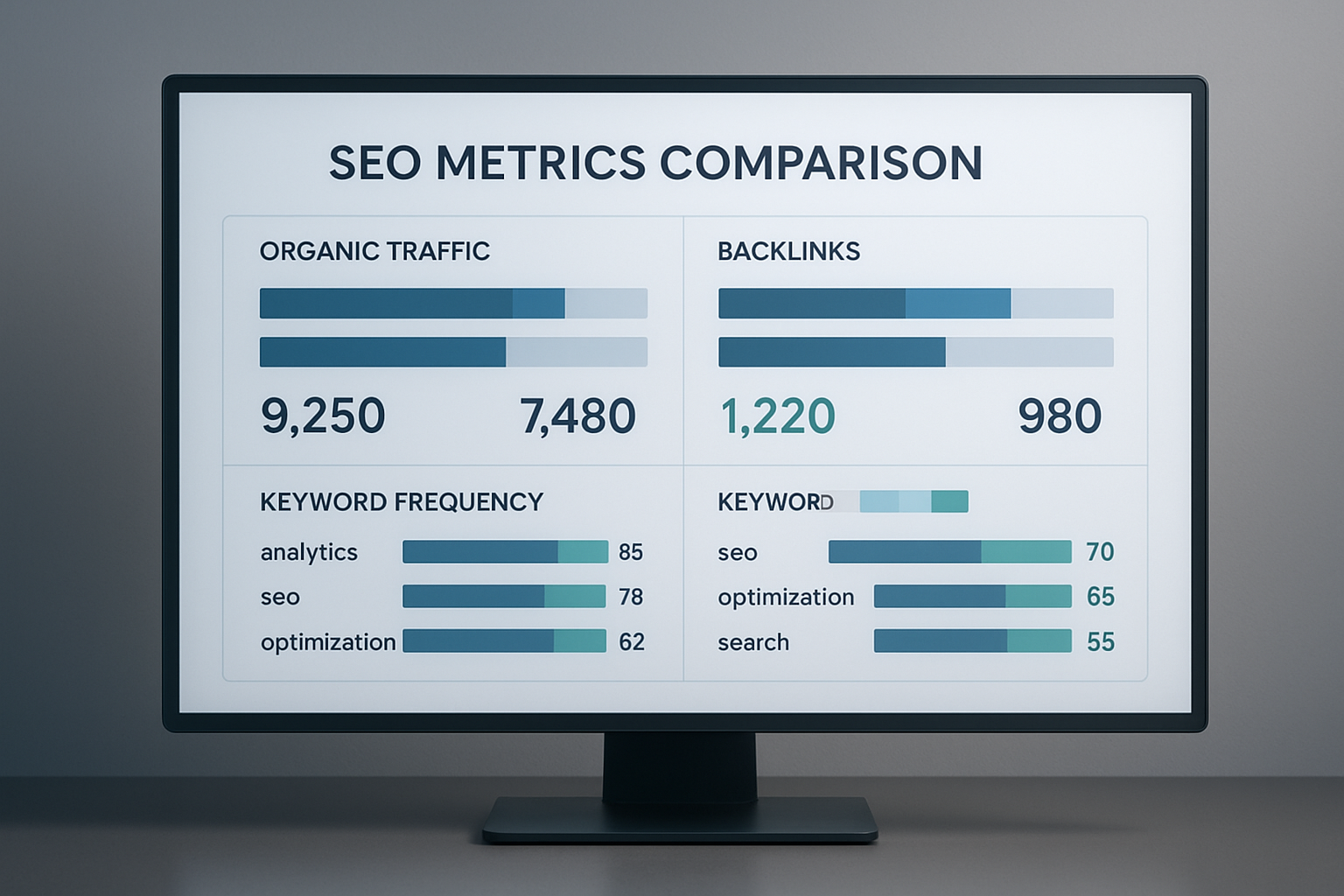
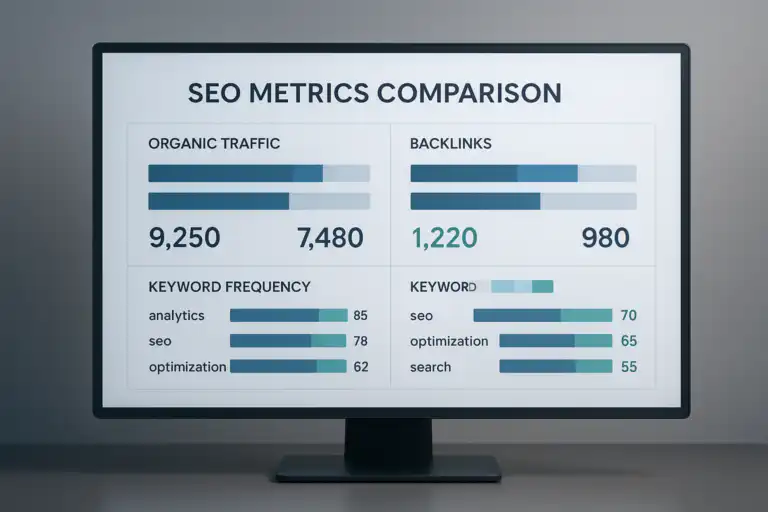
A page-level SEO comparison service surfaces the exact on-page signals separating your page from the current top-ranking results.
What Is a Page-Level SEO Comparison Service?
A page-level SEO comparison service is a specialized analysis platform — or managed service — that performs a granular, side-by-side evaluation of the on-page SEO signals present on your target URL versus the URLs currently ranking above it for a defined keyword. Unlike a traditional site audit that scans your entire domain for crawl errors and structural issues, a page-level comparison is laser-focused on a single competitive battleground: the SERP for one specific query.
According to Wikipedia’s overview of search engine optimization, on-page factors — including content relevance, heading structure, keyword usage, and internal linking — remain foundational ranking signals. A page-level comparison service quantifies exactly how your page performs on each of those factors relative to the pages already earning top positions, then ranks the gaps by their estimated impact on rankings.
The distinction from a general on-page audit tool is critical: most on-page audit tools evaluate your page in isolation and flag issues against a universal rulebook. A true page-level SEO comparison service evaluates your page against the empirical reality of what is actually winning in the SERP right now. That difference — context-aware benchmarking versus rule-based checklist — is what makes the output immediately actionable rather than generically theoretical.
Page-Level SEO Comparison vs. Standard Site Audits: Why It Matters
Site-wide audits have genuine value — they surface orphaned pages, redirect chains, crawl budget waste, and global technical debt. But they cannot answer the one question that actually determines whether a specific page ranks: why is this page losing to these specific competitors for this specific keyword? That requires a fundamentally different methodology.
Consider a concrete example: your article on “best ergonomic office chairs” ranks in position 8. A site-wide audit might flag a missing meta description on an unrelated blog post or a page speed score of 72. Neither insight moves you from position 8 to position 1. A page-level SEO comparison, however, would reveal that the top-ranking pages average 2,600 words while yours is 900, that they each include the target keyword in three heading tags while yours uses it once, that they all embed a structured FAQ schema block you have not implemented, and that they average 14 internal links pointing to the page while yours has four. Those are the real levers — and they are invisible to a site-wide audit.
Page-Level SEO Comparison vs. On-Page Audit Tool — At a Glance
| Feature | Page-Level Comparison Service | Standard On-Page Audit Tool |
|---|---|---|
| Analysis scope | Single page vs. specific SERP competitors | Your page vs. universal best-practice rules |
| Benchmark source | Live top-ranking competitor pages | Static guidelines and scoring rubrics |
| Output format | Prioritized gap report by ranking impact | List of issues with pass/fail scoring |
| Keyword specificity | Tied to one target keyword per analysis | Generic — not keyword-context-aware |
| Best used for | Closing the exact gaps preventing ranking | General on-page health maintenance |
Key On-Page Signals Analyzed in a Page-Level SEO Comparison
A comprehensive page-level SEO comparison service does not limit itself to the three or four signals most on-page tools measure. The most effective platforms analyze every signal category that contributes to how Google evaluates page quality and relevance for a specific query. Here is what a thorough comparison covers:
Content Depth and Topical Coverage
Word count is a proxy, not a goal — but it matters as a benchmark. If the top five pages for your keyword average 2,800 words and your page has 950, that gap is a strong signal of insufficient topical coverage. More importantly, a good comparison service identifies which topics and subtopics the competing pages cover that yours omits entirely. This semantic gap analysis goes far beyond raw word count and reveals the specific content additions most likely to improve rankings.
Title Tag and Meta Description Optimization
Where the target keyword appears in your title tag — and how competitors structure theirs — has measurable ranking impact. A page-level comparison evaluates keyword placement (front-loaded vs. buried), total character length, and click-through optimization patterns across all competing pages, giving you a precise model to follow or improve upon.
Heading Hierarchy and Keyword Integration
How competitors use H1, H2, and H3 tags — and how frequently the target keyword and its semantic variants appear in those headings — is a consistently underestimated ranking factor. A page-level SEO comparison maps the exact heading structure of each competing page so you can see not just how many headings they use but which topics those headings address.
Keyword Frequency and Semantic Term Coverage
Exact-match keyword density is one metric, but the more valuable signal is semantic coverage — the related terms, entities, and concepts that signal topical authority to Google. A strong page-level SEO comparison service uses natural language processing to identify the semantic terms present in top-ranking pages that are absent from yours, giving you a roadmap for content enrichment rather than keyword stuffing.
Schema Markup and SERP Feature Eligibility
Schema markup directly determines which SERP features your page can earn — FAQ boxes, How-To rich results, review stars, and more. A page-level comparison identifies which schema types the competing pages implement and which SERP features they are capturing as a result, revealing immediate structured data opportunities for your page.
Internal Linking Patterns and Anchor Text
How many internal links point to a competing page, and what anchor text those links use, contributes to both PageRank distribution and topical relevance signals. A page-level comparison benchmarks your internal link profile for the target page against the internal link profiles of the pages outranking you, revealing whether you are under-investing in internal equity for your most important pages.
Page Experience and Core Web Vitals
Page experience signals — Largest Contentful Paint (LCP), Cumulative Layout Shift (CLS), and Interaction to Next Paint (INP) — factor into Google’s ranking considerations. A full-spectrum page-level SEO comparison service includes these signals so you know whether a technical performance gap is contributing to your ranking deficit or whether the gap is purely a content and structure issue.
Complete Signal Checklist: What a Page-Level SEO Comparison Covers
- Title tag keyword placement and character length
- Meta description relevance and CTR optimization
- H1, H2, H3 structure and keyword inclusion
- Word count and content depth vs. competitors
- Semantic keyword and entity coverage gaps
- Topic and subtopic coverage analysis
- Internal linking volume and anchor text patterns
- External link quality and outbound citation patterns
- Image alt text optimization and image count
- Schema markup types and SERP feature capture
- Core Web Vitals (LCP, CLS, INP)
- Readability and content structure scores
- Table of contents and content navigation signals
- URL structure and keyword inclusion
- Author expertise signals (E-E-A-T indicators)
- Content freshness and last-modified dates
How a Page-Level SEO Comparison Service Works: Step by Step
Understanding the mechanics helps you get the most from any page-level SEO comparison service and sets realistic expectations for what the output will — and will not — tell you.
-
1
Define the Target Keyword and URL
You input the specific keyword you are targeting and the URL of your page. The service queries live search results for that keyword in your target geographic market to identify the current top-ranking pages — typically the top 5, 10, or 20 results depending on the platform. This live SERP pull is critical: it means your comparison reflects who is actually winning today, not who was winning six months ago.
-
2
Crawl and Extract On-Page Signals
The platform crawls your page and each competing page simultaneously, extracting dozens of on-page signals including content length, heading structure, keyword usage, schema markup types, internal and external link counts, image attributes, and Core Web Vitals. This extraction is the analytical foundation — the richer and more accurate the signal extraction, the more reliable the gap report that follows.
-
3
Calculate Competitor Averages and Identify Gaps
Rather than comparing your page to a single competitor — which introduces the risk of benchmarking against an outlier — the best services calculate the mean or median value for each signal across all top-ranking pages. This averaged benchmark is far more reliable as an optimization target. Your page is then scored against this benchmark for each signal, and gaps are surfaced and ranked.
-
4
Generate a Prioritized Gap Report
The service produces a prioritized gap report showing exactly where your page underperforms relative to the competitor average, ranked by estimated ranking impact. The best reports do not just list every gap — they weight gaps by significance, so you know whether to fix your schema markup first or address your 1,500-word content deficit first. This prioritization is what separates actionable intelligence from overwhelming data dumps.
-
5
Implement, Monitor, and Re-Compare
You apply the recommended changes and track ranking movement. Advanced platforms like Rank Authority’s real-time SEO alert system notify you immediately when signal changes affect your page’s competitive standing — whether because you improved your own page or because a competitor updated theirs. Re-running the comparison after changes closes the feedback loop and confirms whether your optimizations moved the needle.
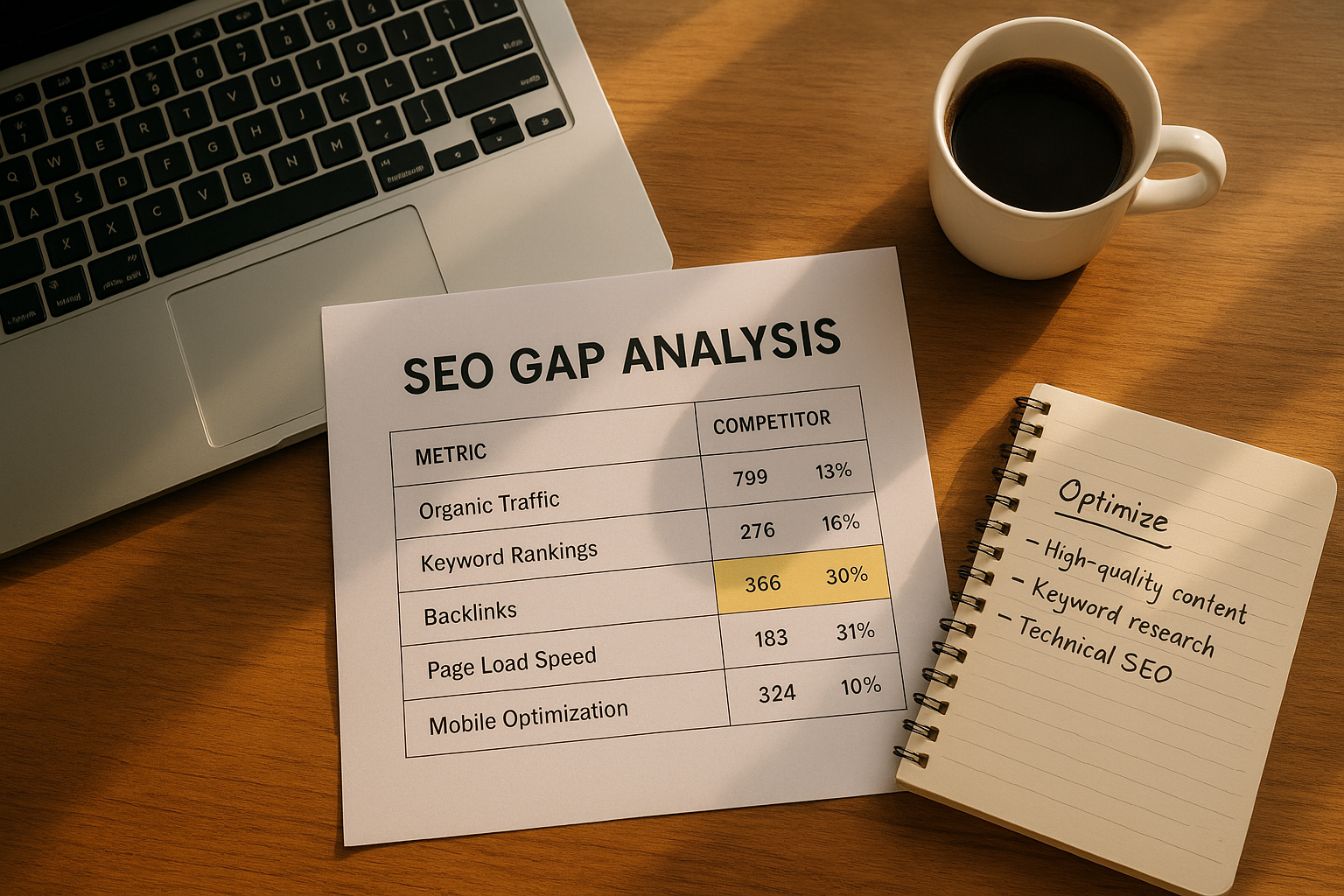
Running a structured page-level SEO comparison turns vague ranking frustration into a clear, prioritized action plan.
How to Interpret Your Page-Level SEO Comparison Report
Receiving a gap report packed with data is only useful if you know how to read it. The most important principle: treat the competitor average as a floor, not a ceiling. If top-ranking pages average 2,400 words, your goal is not to write 2,401 words — your goal is to write the most genuinely useful, comprehensive piece on the topic, which naturally tends to exceed the average.
Focus on High-Impact Gaps First
Not all gaps are created equal. A missing FAQ schema block is likely a higher-priority fix than a meta description that is four characters too short. Well-structured gap reports rank their findings by estimated impact — follow that prioritization, especially if your time for optimization is limited. Content depth gaps (missing subtopics, insufficient word count, absent semantic terms) are almost always in the top tier of impact alongside schema and heading structure gaps.
Distinguish Structural Gaps from Content Quality Gaps
A page-level SEO comparison measures structural and quantitative signals — word count, heading count, keyword frequency. These are reliable proxies for quality, but they are not quality itself. When you close a structural gap — say, adding the missing subtopics your competitors cover — do it with genuinely better information, original insight, more current data, or clearer explanation. Padding your page to hit a word count target without improving the actual usefulness of the content is a short-term tactic that erodes long-term trust signals.
Watch for Outlier Competitors
One common pitfall with page-level comparisons is that a single outlier competitor can skew the average. If nine competing pages have 1,800 words and one has 12,000, the average will overstate what is actually needed. Good platforms handle this by reporting both mean and median values — and by letting you toggle individual competitors in and out of the benchmark calculation. If your platform only shows averages, scan the individual competitor data to identify and discount outliers.
Choosing the Right Page-Level SEO Comparison Service
Not all platforms approach page-level comparison with the same rigor. These are the differentiating features that separate genuinely useful services from tools that generate noise:
What Separates Good Page-Level SEO Comparison Services from Great Ones
- Benchmarks against the average of the top 10 results, not just one competitor
- Refreshes competitor data in real time — not from stale crawl snapshots
- Prioritizes gaps by estimated ranking impact, not alphabetically or arbitrarily
- Provides semantic keyword gap analysis — related terms and entities, not just exact-match frequency
- Flags schema markup opportunities specific to the SERP feature landscape for that keyword
- Integrates with rank tracking to measure improvement after changes are implemented
- Covers E-E-A-T indicators alongside traditional on-page signals
- Offers both mean and median competitor benchmarks to protect against outlier skew
- Delivers output as a prioritized action list, not a raw data table
Managed Service vs. Self-Serve Tool
Page-level SEO comparison is available both as a self-serve SaaS tool and as a managed service where analysts run the comparisons and interpret the results for you. Self-serve tools give you speed and scalability — you can run comparisons on hundreds of pages independently. Managed services deliver deeper interpretation: an experienced analyst can identify contextual factors the data alone does not surface, such as whether a competitor is ranking on brand authority rather than on-page strength, which would change your optimization strategy entirely.
If you are evaluating platforms, the comparison between SEO Juice and Rank Authority is a useful reference point for understanding how different tools approach page-level analysis, what features matter most, and how each platform handles the benchmarking methodology that determines the quality of its gap reports.
For a deeper walkthrough, see our Page Rank Moz: Complete Guide to Domain Authority.
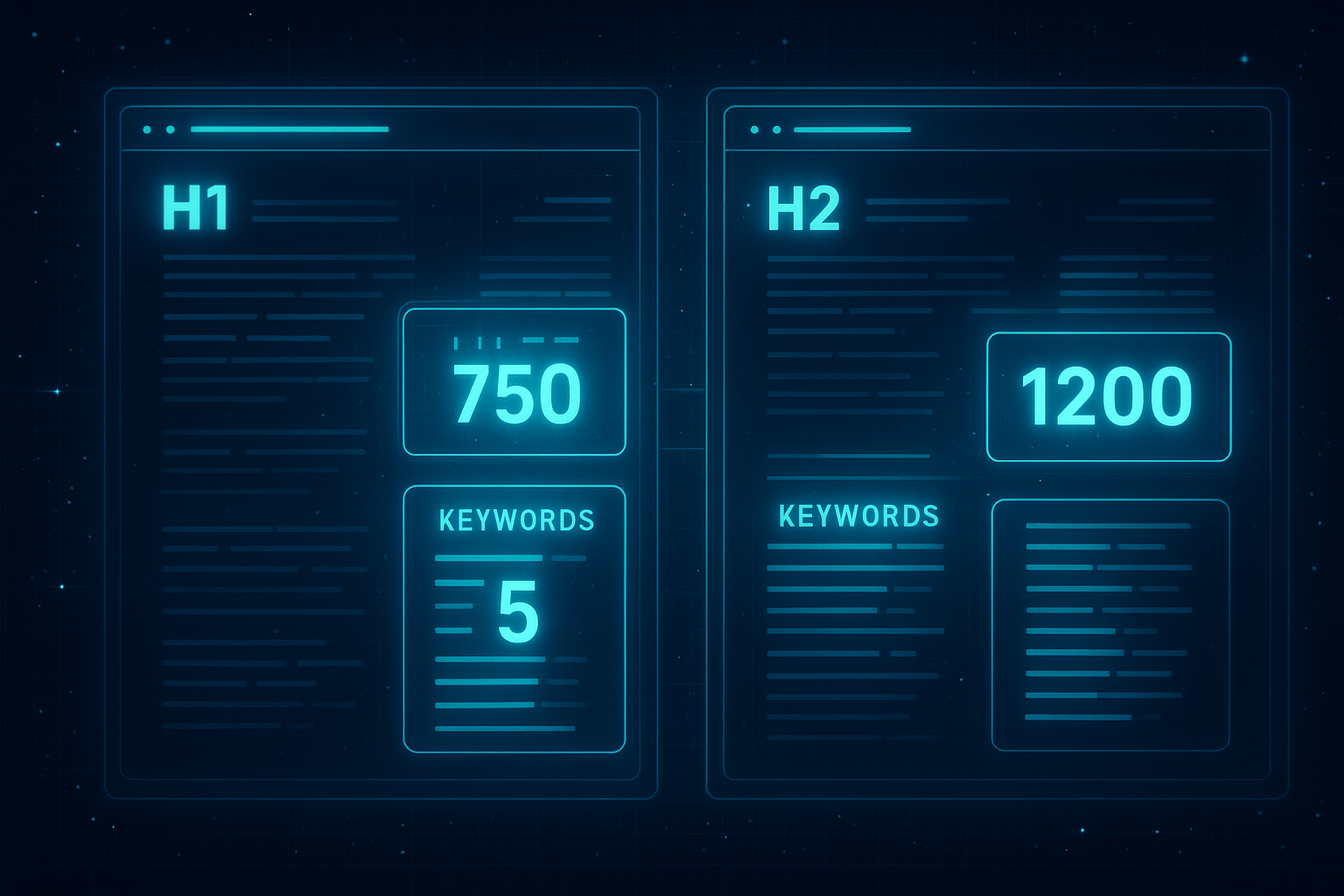
Visualizing on-page signal differences side by side makes optimization priorities immediately clear.
Common Mistakes When Using Page-Level SEO Comparisons
The best data in the world can still produce poor outcomes if it is misapplied. Here are the most consequential mistakes practitioners make when working with page-level comparison outputs:
Mistake 1: Treating the Comparison as a Replication Blueprint
The most common error is mechanically replicating what competitors are doing rather than using the data to identify where you can exceed them. If every competing page has 2,200 words, writing 2,200 words is not a competitive strategy — it is a participation certificate. Use the benchmark as a minimum threshold and then find the angles, depth, and original value that the competing pages lack. That differentiation is what earns rankings and retains visitors.
Mistake 2: Over-Indexing on Quantity Signals at the Expense of Quality
Word count, heading count, and keyword frequency are measurable proxies for quality — not quality itself. Google’s ranking systems are sophisticated enough to distinguish between a 3,000-word page that comprehensively answers a user’s query and a 3,000-word page padded with repetitive filler to hit a target. Use comparison data to identify structural and content gaps, but close those gaps with genuinely better, more useful, more original content.
Mistake 3: Comparing Against the Wrong Competitor Set
Not every page ranking for your target keyword is a meaningful benchmark. Wikipedia, Reddit, and major news domains often rank for head terms on pure domain authority, not on-page optimization strength. Including them in your competitor average can skew your benchmarks dramatically. A good page-level SEO comparison service should let you exclude domain-authority outliers from your benchmark set so you are comparing yourself against pages you can realistically outrank through on-page improvements.
Mistake 4: Running the Comparison Once and Never Revisiting
SERPs are dynamic. Competitors update their pages, Google updates its ranking algorithms, and new pages enter the competitive landscape constantly. A page-level SEO comparison is most powerful as a recurring process — not a one-time exercise. For competitive keywords, a monthly re-comparison — or a re-run after any significant content update — is the minimum cadence. High-stakes pages in volatile niches warrant weekly monitoring.
Mistake 5: Ignoring E-E-A-T Signals in the Comparison
Experience, Expertise, Authoritativeness, and Trustworthiness (E-E-A-T) signals are increasingly important ranking factors, particularly for YMYL (Your Money or Your Life) content. A page-level comparison that only measures structural signals — and ignores author credentials, cite quality, source diversity, and editorial transparency — is leaving a significant part of the ranking picture unmeasured. Look for services that include E-E-A-T assessment in their comparison framework.
Page-Level SEO Comparison for Different Page Types
The specific signals that matter most in a page-level comparison shift depending on the type of page you are optimizing. Here is how to calibrate your analysis across the most common page types:
Blog Posts and Informational Content
For blog posts, the most impactful comparison signals are content depth (word count and subtopic coverage), semantic term usage, FAQ schema presence, and internal linking patterns. Informational content competes heavily on topical comprehensiveness — pages that answer follow-up questions and address related subtopics tend to earn more featured snippets and sustain higher rankings than narrowly focused posts.
Product and Category Pages
For e-commerce pages, page-level comparison should focus on product schema implementation, review markup, unique product description length versus templated copy, and breadcrumb structure. Category pages additionally benefit from comparing the presence and depth of introductory editorial content, which distinguishes content-rich category pages from thin listing pages in Google’s evaluation.
Service and Landing Pages
Service pages competing for local or transactional keywords benefit most from comparing LocalBusiness or Service schema implementation, trust signals (testimonials, credentials, accreditations), conversion-oriented content elements (clear CTAs, pricing transparency), and the depth of the service explanation itself. Thin service pages that describe a service in three paragraphs frequently lose to pages that explain the service, the process, the pricing, the FAQs, and the qualifications in depth.
Frequently Asked Questions About Page-Level SEO Comparison Services
Conclusion: Make Every Page Earn Its Ranking
Ranking on the first page of Google is not a mystery — it is a measurement problem. The pages above you have specific, identifiable on-page advantages that can be found, quantified, and closed. A page-level SEO comparison service transforms that measurement problem into a solvable one: it hands you a clear, prioritized roadmap from your current position to the ranking you are targeting, grounded in the empirical reality of what is winning today.
Whether you are optimizing a blog post, a product page, or a service landing page, the core principle is identical: know precisely how your page stacks up against every page outranking it, close the highest-impact gaps first, and monitor the results continuously. A one-time comparison is a start — a recurring comparison process is a competitive advantage.
Platforms like Rank Authority are built around exactly this philosophy — combining page-level analysis with ongoing real-time monitoring to ensure your optimization work translates into lasting ranking gains, not just temporary lifts that erode when competitors adapt. The goal is not to match the competition. It is to make the competition irrelevant.
The Bottom Line
Stop guessing why your pages are not ranking. A page-level SEO comparison service gives you the exact data you need — benchmarked against the real pages winning your target keywords right now — so you can outperform competitors on the signals that matter most. One page, one keyword, one clear and prioritized action plan at a time.

