

AI Search Visibility · Complete Playbook 2025
How to Get Cited by ChatGPT: The Definitive Guide to AI Search Visibility
Every day, tens of millions of users ask ChatGPT for expert recommendations, trusted sources, and factual answers. The brands and websites that get cited by ChatGPT are capturing a new category of search traffic — one that bypasses the traditional results page entirely. This guide gives you every proven tactic, content trait, and technical requirement to become a source ChatGPT reaches for, quotes, and trusts.
Direct Answer
To get cited by ChatGPT, you must combine topical authority, answer-first content structure, entity consistency across the web, high-quality editorial backlinks, original data, and proper technical SEO — including allowing OpenAI’s GPTBot crawler. ChatGPT favors content that is factual, clearly structured, widely referenced by other trusted sources, and directly answers the questions users ask.
What Does It Mean to Get Cited by ChatGPT?
Getting cited by ChatGPT means your content, brand name, or domain appears as a reference inside ChatGPT’s generated responses. When a user asks a question and ChatGPT answers by naming your site, quoting your data, or recommending your product, you have been cited.
This happens through two distinct channels:
- Training data citations: Information absorbed into the model’s weights during pre-training. ChatGPT surfaces this knowledge without live browsing — your brand is encoded as a trusted entity because it appeared frequently across high-quality sources in the training corpus.
- Live browsing citations: In browsing-enabled mode (available in ChatGPT Plus and via the Bing-powered web search), ChatGPT actively retrieves current web pages and cites specific URLs in its answers. This channel is closer to traditional SEO and responds faster to optimization.
Unlike a Google result where a user still decides whether to click, a ChatGPT citation embeds your brand inside a conversational answer that feels authoritative and complete. Users rarely question it. That trust is the prize — and understanding how ChatGPT differs from Google and Bing is essential before you can optimize for it effectively.

Structured, authoritative content is the foundation for getting cited by ChatGPT in AI-generated responses.
How ChatGPT Decides What to Cite: The Ranking Logic Behind LLM Citations
ChatGPT does not use a keyword-matching algorithm or a traditional PageRank-style scoring system. Its citation behavior emerges from two interconnected mechanisms:
1. Training Data Frequency and Co-occurrence
During pre-training, large language models learn associations between concepts, entities, and sources. Sources that appear frequently, in consistent and authoritative contexts, across many distinct domains in the training corpus become encoded as trusted references. According to large language model research, the model essentially learns “who is credible about what” by observing how the web talks about different entities.
This means your goal for training-data citation is omnipresence — being mentioned, quoted, and referenced by other authoritative sources across many contexts, not just being well-optimized on your own site.
2. Browsing-Mode Retrieval Signals
When ChatGPT uses live web browsing, citation selection closely mirrors traditional organic search signals: domain authority, content relevance, page speed, structured data, and recency all influence which pages are retrieved and quoted. Pages that rank in Google’s top results for a query are significantly more likely to be surfaced and cited in browsing mode.
Your strategy therefore needs to operate on two parallel tracks: long-term brand authority building for training data inclusion, and active technical SEO for live browsing visibility.
⚡ Critical Insight
ChatGPT is significantly more likely to cite sources that are mentioned across multiple trusted domains — not just sources that are well-optimized in isolation. Third-party mentions in news articles, academic references, industry roundups, and press coverage all feed into the model’s perception of your brand as a credible, citable entity. Your off-site presence matters as much as your on-site content.
The Content Traits LLMs Quote Most: What Makes Content Citation-Ready
Research into which content types appear most frequently in LLM outputs — including ChatGPT’s responses — reveals clear, consistent patterns. Content that gets cited by ChatGPT shares a predictable set of structural and substantive traits. Understanding these traits is the most direct path to becoming a cited source.
Trait 1: Clear, Direct Answer Structure
Content that leads with a direct answer to a specific question — before any elaboration — mirrors the structure of how ChatGPT itself generates responses. LLMs are trained on and optimized for producing helpful, concise answers. Content that follows the same pattern is structurally compatible with how the model absorbs and re-surfaces information.
What to do: Place the core answer in the first 40–60 words of each section. Use bold definitions, summary boxes, and direct Q&A formatting throughout your content.
Trait 2: Factual Precision and Verifiability
Vague, opinion-heavy content is far less likely to be quoted. ChatGPT favors content that makes specific, verifiable claims — named statistics, dated studies, measurable outcomes, and attributable quotes. The more your content reads like a trusted reference document rather than a general overview, the more citable it becomes.
What to do: Back every major claim with a specific number, study, or named expert. Avoid hedging language (“might,” “could possibly”) on factual matters where precision is available.
Trait 3: Authoritative Sourcing and Citations Within Your Content
Content that itself cites authoritative external sources — peer-reviewed research, government data, established industry reports — signals that the author operates at a high standard of evidence. This is a strong trust marker in LLM training data. Content that cites quality sources is more likely to be treated as quality source material itself.
Trait 4: Structured Formatting with Scannable Hierarchy
Numbered lists, clear H2/H3 heading hierarchies, comparison tables, and bullet-point summaries are not just user experience improvements — they are machine-readability signals. LLMs trained on well-structured content learn to associate that structure with reliable, segmented information. Pages with clear formatting are parsed more accurately during training data ingestion.
Trait 5: Comprehensive Depth Without Padding
Content that covers a topic exhaustively — anticipating follow-up questions and addressing related subtopics — signals topical authority. But padding (generic filler sentences that add words without adding information) is the opposite of citable. Every paragraph should add a new piece of information or a new angle. Thin sections actively lower your citation probability.
Trait 6: Named Authorship and Demonstrated Expertise
Content authored by named experts with verifiable credentials and external recognition performs better in LLM citation patterns. This aligns with Google’s E-E-A-T (Experience, Expertise, Authoritativeness, Trustworthiness) framework. Author bio pages, bylines linked to professional profiles, and author mentions in third-party publications all strengthen the trust signal.
10 Proven Strategies to Get Cited by ChatGPT
These strategies address both citation channels simultaneously — training data inclusion and browsing-mode retrieval — and are ranked roughly in order of impact.
Strategy 1: Build Laser-Focused Topical Authority
Scattered content across unrelated topics dilutes your entity signal. Instead, publish deep content clusters around a single core subject. If your site contains 30–50 high-quality, interlinked articles on one topic, ChatGPT’s training pipeline begins to associate your domain with that topic as a primary authority — dramatically increasing citation probability.
Action step: Identify your primary topic area. Map every subtopic, question, and related concept. Create a content calendar that systematically fills every gap in that topical cluster over the next 90 days.
Strategy 2: Architect Every Page Around the Answer-First Format
LLMs reward content that mirrors their own output format. Structure every page so the most important answer appears in the first 50 words, followed by supporting context. Use question-based H2 headings, definition boxes, and summary callouts. This structure is processed and re-surfaced by the model more reliably than flowing editorial prose.
Action step: Audit your 10 highest-traffic pages. For each one, rewrite the opening paragraph to directly answer the primary question in the page title. Add at least one definition block or summary box per 500 words.
Strategy 3: Earn High-Quality Backlinks From Authoritative Domains
Editorial backlinks from industry publications, academic institutions, and established news outlets signal credibility to both search engines and AI training pipelines. A single link from a DA 70+ domain carries more AI citation weight than 100 links from low-quality directories. The goal is to become the canonical reference other trusted sources point to.
Action step: Identify the top 20 editorial publications in your niche. Develop a targeted outreach strategy — guest articles, expert commentary, data contributions — to earn contextual links from each. Track progress monthly.
Strategy 4: Implement Comprehensive Schema Markup
Schema markup tells machines — including AI browsing agents — exactly what your content is about, who created it, and what questions it answers. Implement FAQPage, Article, HowTo, Organization, and SoftwareApplication schema wherever applicable. Schema improves your visibility in featured snippets, AI Overviews, and Bing AI chat — all of which feed into ChatGPT’s browsing-mode citation pool.
Action step: Use Google’s Rich Results Test to audit your current schema implementation. Prioritize adding FAQPage schema to any page that answers multiple questions — these are the highest-leverage pages for AI citation.
Strategy 5: Build a Powerful, Consistent Entity Presence
ChatGPT’s knowledge graph is fundamentally entity-based. Your brand needs to exist as a coherent, consistently described entity across multiple authoritative sources. This includes your own website (About page, structured data), Wikipedia and Wikidata entries (if eligible), Google Business Profile, LinkedIn, Crunchbase, and relevant industry directories. Every mention should use consistent name, description, and category.
Action step: Conduct an entity audit. Search your brand name across 10–15 major platforms. Fix any inconsistencies in how your name, description, or category is listed. Create a Wikidata entry if one does not exist and your brand meets the notability threshold.

A well-structured content strategy is essential for brands looking to increase their AI search presence and get cited by ChatGPT.
Strategy 6: Pursue Third-Party Mentions Aggressively
Training data is scraped from across the entire web — not just your own site. When journalists, independent bloggers, analysts, and industry publications mention your brand by name in their content, those mentions directly feed ChatGPT’s perception of your entity as a credible reference. The more widely your brand is mentioned in high-quality, topically relevant content, the more embedded your entity becomes in the model’s knowledge.
Action step: Run a targeted digital PR campaign. Contribute expert quotes to Help A Reporter Out (HARO) or Qwoted requests. Submit your brand to curated “best of” lists in your niche. Participate in podcast interviews, industry reports, and roundtable articles.
Strategy 7: Publish Original Research, Data, and Statistics
Original data is a citation magnet for both human writers and AI models. When you publish a unique, well-executed study or survey, other websites reference it — multiplying your entity mentions across the web exponentially. ChatGPT’s training corpus is dense with articles that cite statistics; becoming the original source of those statistics puts your brand at the root of citation chains that compound over time.
Action step: Identify the most-cited statistics in your niche. Conduct an original survey or study that produces updated, more comprehensive data on the same topic. Publish with a dedicated landing page, embed code, and outreach kit to maximize pickup.
Strategy 8: Optimize for Featured Snippets and AI Overviews
Featured snippets are a strong proxy signal for AI citation potential. Content that wins featured snippets in Google — paragraph snippets, list snippets, and table snippets — is formatted and structured in exactly the way LLMs prefer to absorb and re-surface information. Google’s AI Overviews and Bing’s AI chat both draw heavily from featured snippet-eligible content, and these systems directly inform ChatGPT’s browsing-mode citations.
Action step: Use an SEO tool to identify featured snippet opportunities in your niche where you rank in positions 2–10. Reformat those pages with concise 40–60 word answer paragraphs immediately following the target question heading.
Strategy 9: Demonstrate E-E-A-T Signals Throughout Your Content
Google’s E-E-A-T framework (Experience, Expertise, Authoritativeness, Trustworthiness) is not just a search ranking factor — it is a proxy for the signals LLMs use to assess source quality. Content that demonstrates first-hand experience, attributes claims to named experts, shows institutional credibility, and provides transparent sourcing is treated as higher-quality training data.
Action step: Add detailed author bios with professional credentials, external publication links, and LinkedIn profiles to every key content page. Add a transparent editorial policy page and a clearly described methodology section to research-based content.
Strategy 10: Monitor Your AI Citation Visibility and Iterate
You cannot optimize what you do not measure. Actively testing ChatGPT’s responses to queries in your niche — and noting which competitors are cited and why — gives you direct intelligence on what content traits are winning citations right now. Use real-time SEO issue alerts to catch technical failures that could be silently preventing your content from being indexed and cited.
Action step: Create a monthly AI visibility audit. Run 20–30 target queries in ChatGPT. Document which sources are cited. Cross-reference with your backlink profile, content freshness, and schema implementation to identify patterns.
✅ High-Citation Content Traits
- Answer-first paragraph structure
- Specific statistics and named sources
- Clear H2/H3 heading hierarchy
- FAQPage and Article schema
- Named authors with credentials
- Original research and data
- Wide third-party mentions
- Consistent entity signals
❌ Low-Citation Content Traits
- Vague claims without data
- Thin or padded content
- Missing or broken schema
- Anonymous or uncredentialed authorship
- Inconsistent brand naming across web
- Blocked by robots.txt from GPTBot
- No external editorial mentions
- Duplicate or syndicated content
Technical SEO Requirements for AI Citation
Technical SEO is not optional when targeting AI citation. If your pages cannot be crawled, rendered, and indexed correctly, no AI system can access your content — regardless of how well it is written.
Allow GPTBot in Your robots.txt
OpenAI uses a crawler called GPTBot (user agent: GPTBot) to index web content for ChatGPT’s browsing feature and future training data updates. If your robots.txt file disallows this user agent — even inadvertently through a wildcard rule — your content is invisible to ChatGPT’s live browsing system. Check your robots.txt explicitly and whitelist GPTBot for your most important content directories.
Core Web Vitals and Page Speed
Slow-loading pages are deprioritized by both Google’s crawler and AI browsing agents. A page that times out or loads critical content via client-side JavaScript that bots cannot render may be skipped entirely. Target a Largest Contentful Paint (LCP) under 2.5 seconds, minimize render-blocking resources, and ensure all critical content is available in the initial server-rendered HTML.
XML Sitemaps and Canonical Tags
An accurate XML sitemap ensures every valuable page is discoverable without requiring discovery through internal linking alone. Canonical tags prevent AI crawlers from indexing duplicate or near-duplicate versions of your content, consolidating all authority signals to the preferred URL. Audit both monthly.
Content Freshness and Update Dates
In browsing mode, ChatGPT actively prefers recent, updated content for time-sensitive queries. Publishing dates and last-modified dates in your HTML and schema markup signal freshness. Implement a systematic content refresh schedule — updating statistics, adding new examples, and refreshing publication dates on high-value evergreen pages at least annually.
🔧 Technical Checklist: Is Your Site AI-Citation Ready?
- GPTBot is not blocked in robots.txt
- Core Web Vitals pass Google’s assessment
- XML sitemap is current and submitted to Google Search Console
- All key pages have appropriate schema markup
- No orphaned pages with zero internal links
- Critical content is available in server-rendered HTML (not JS-only)
- Canonical tags are properly implemented
- HTTPS is enforced site-wide
- Last-modified dates are accurate in schema and HTML
How to Get Cited by ChatGPT: A Step-by-Step Action Plan
The following sequential process consolidates the strategies above into an actionable workflow you can begin implementing immediately.
- Conduct an AI visibility audit. Run 20–30 queries in ChatGPT that your ideal customers would ask. Document every source cited. Identify which competitors appear consistently and analyze their content structure, schema implementation, and backlink profiles to understand what is currently working.
- Fix your technical foundation. Check your robots.txt for GPTBot blocking. Run a Core Web Vitals assessment. Audit schema markup with Google’s Rich Results Test. Ensure XML sitemaps are current. Resolve all crawl errors in Google Search Console before investing in content changes.
- Restructure your top content pages. Select your 10 highest-traffic pages. Rewrite every opening section to follow the answer-first format. Add a definition block, summary box, or Q&A section. Implement FAQPage schema. Update the page’s last-modified date after publishing changes.
- Publish original research. Identify the most-referenced statistics in your niche. Design and execute an original survey or data study. Create a dedicated, schema-rich landing page. Develop an outreach campaign to earn placements in industry publications, news outlets, and relevant blogs.
- Execute a digital PR and entity-building campaign. Submit your brand to Wikidata. Ensure consistency across Google Business Profile, LinkedIn, Crunchbase, and industry directories. Respond to HARO and Qwoted queries to earn branded mentions in authoritative publications. Set a target of earning 5 new editorial mentions per month.
- Build your topical content cluster. Map every subtopic, question, and related concept within your primary topic area. Create a 90-day editorial calendar that fills every content gap. Interlink all cluster articles to your cornerstone content. Maintain publishing consistency — frequency signals topical commitment.
- Measure, iterate, and expand. Re-run your AI visibility audit monthly. Track changes in citation frequency for your brand and competitors. Identify new content gaps based on what ChatGPT is citing that you don’t cover. Continuously invest in the strategies showing the strongest citation return.
Generative Engine Optimization vs. Traditional SEO: What’s Different
Generative Engine Optimization (GEO) is the emerging practice of optimizing content for AI-powered answer engines — ChatGPT, Perplexity, Google AI Overviews, and Bing Copilot — rather than (or in addition to) traditional search engine result pages. Understanding the differences between GEO and traditional SEO is essential for building a comprehensive AI visibility strategy.
| Factor | Traditional SEO | Generative Engine Optimization (GEO) |
|---|---|---|
| Primary Goal | Rank on page 1 of SERPs | Be cited inside AI-generated answers |
| Key Signals | Backlinks, relevance, Core Web Vitals | Entity authority, factual precision, cross-domain mentions |
| Content Format | Keyword-optimized, long-form | Answer-first, structured, highly specific |
| Authorship | E-A-T signals important | Named experts and institutional credibility critical |
| Schema Markup | Helpful for rich results | Essential for AI machine readability |
| Off-site Presence | Backlinks are the primary currency | Brand mentions (linked and unlinked) across trusted domains |
| Measurement | Rankings, organic traffic, CTR | Citation frequency in AI responses, AI-referred traffic |
The good news: the two disciplines share a strong foundation. High-quality content, technical health, and authoritative backlinks benefit both. The divergence is in emphasis — GEO requires significantly more attention to entity building, factual specificity, answer formatting, and cross-domain brand presence than traditional SEO.
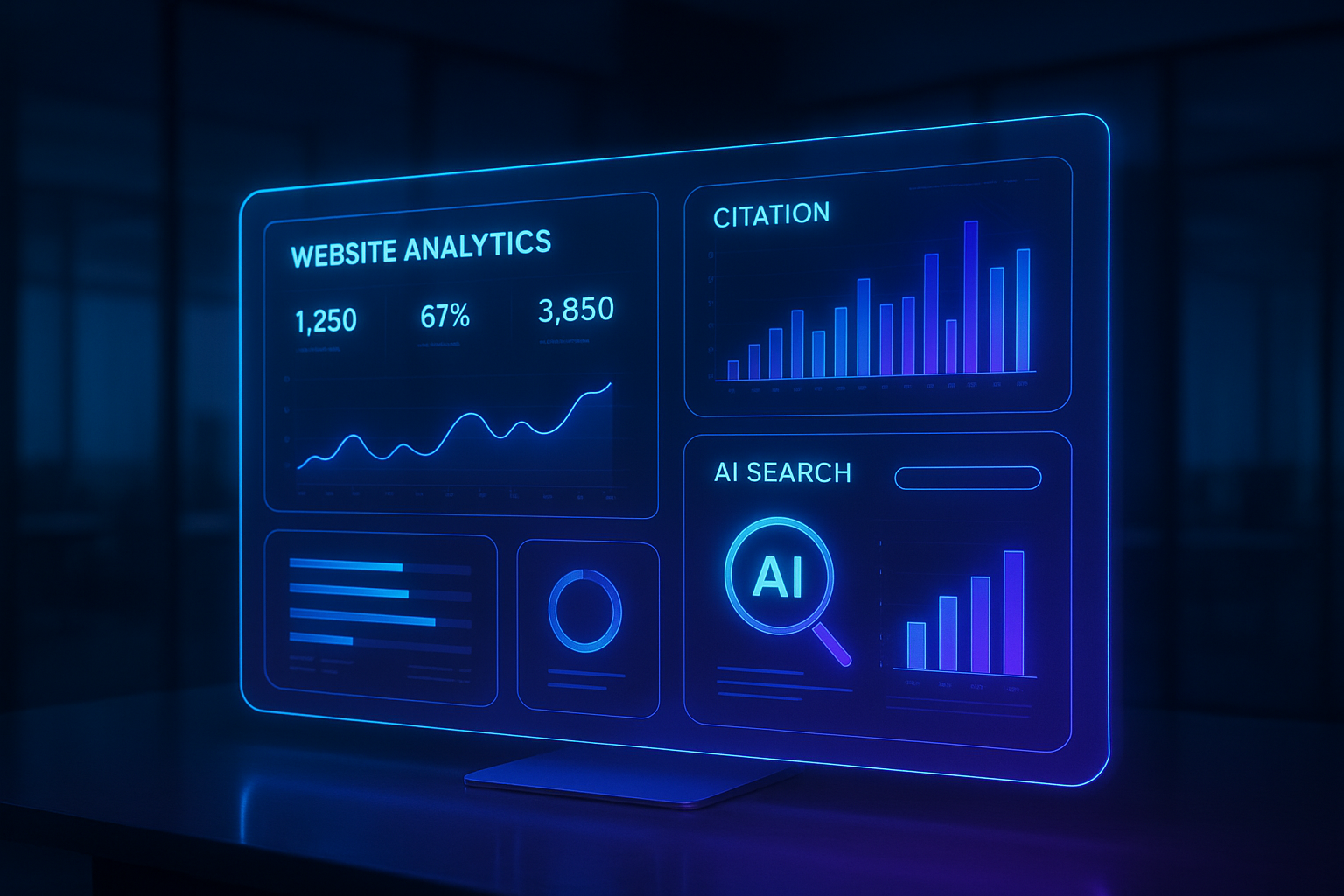
Monitoring AI citation metrics and search performance data is essential to iterating your GEO strategy effectively.
Frequently Asked Questions About Getting Cited by ChatGPT
How long does it take to get cited by ChatGPT after optimizing content?
There is no fixed timeline. Training data citations depend on when OpenAI updates the model’s training corpus — which happens periodically, not in real time. Live browsing citations can respond faster, often within weeks of content improvements, if your pages improve in search rankings and are indexed by GPTBot. Consistent optimization over 60–90 days is typically needed before measurable results appear.
Does having high Google rankings help you get cited by ChatGPT?
Yes, strongly — especially for browsing-mode citations. When ChatGPT’s live browsing retrieves content, it draws primarily from top-ranking search results. Pages ranking in the top 5 for a given query are significantly more likely to be retrieved and cited. Strong Google rankings are not the only factor, but they are one of the most reliable predictors of browsing-mode AI citation.
What type of content is most likely to be cited by ChatGPT?
Factual, well-structured, authoritative content that directly answers specific questions is most likely to get cited by ChatGPT. Content featuring clear definitions, numbered lists, specific statistics with named sources, expert quotes, and answer-first paragraph structure consistently outperforms general overviews in both training data absorption and live browsing citations.
What is the difference between generative engine optimization and traditional SEO?
Generative engine optimization (GEO) focuses on making content citable and trustworthy to AI language models like ChatGPT, while traditional SEO targets search engine ranking algorithms. Both share a foundation of quality content, technical health, and authority signals — but GEO places additional emphasis on entity consistency, factual precision, answer-first structure, and cross-domain brand mentions rather than keyword density and click-through optimization.
Can a small or new website get cited by ChatGPT?
Yes, but it requires a focused strategy. Smaller sites achieve AI citation by dominating a very specific niche topic rather than competing broadly. Build a complete, authoritative topical cluster around one narrow subject, earn a small number of high-quality editorial backlinks, publish original data, and maintain entity consistency. Depth beats breadth for new or smaller domains pursuing AI citation.
Does ChatGPT cite specific URLs or just general knowledge?
Both. In standard (non-browsing) mode, ChatGPT draws on general knowledge from training data without citing specific URLs — your brand may be mentioned without a link. In browsing-enabled mode, ChatGPT retrieves specific URLs and cites them directly with links in its responses. Optimizing for both channels is essential for maximum AI citation coverage.
How do I know if ChatGPT is already citing my brand?
Run a systematic prompt test: ask ChatGPT 20–30 questions that your target audience would ask about your topic area. Note every source cited. Search for your brand name and domain directly in ChatGPT. Additionally, monitor your web analytics for referral traffic from ChatGPT.com — this is a direct indicator of live browsing citations driving actual visits to your site.
Conclusion: Becoming a Source ChatGPT Trusts and Cites
The opportunity to get cited by ChatGPT is not exclusive to large corporations or high-authority domains with decades of history. It is available to any brand that commits to genuine topical depth, structural clarity, and a consistent entity presence across the web. The brands winning AI citations today are those that understood this before it became a crowded competitive priority.
The path forward is clear: fix your technical foundation, restructure your best content around answer-first formatting, publish original data that earns cross-domain mentions, build entity consistency everywhere your brand appears, and measure your AI citation visibility every month. Each of these steps compounds — the more your brand is mentioned, cited, and linked to by other trusted sources, the more deeply it becomes embedded as a credible reference inside the model itself.
Start with Rank Authority for in-depth resources on generative engine optimization, AI search strategy, and the technical SEO foundations that underpin long-term citation authority. The AI search landscape is evolving monthly — the brands that stay current with its mechanics will own the answers that millions of users receive every day.
Ready to Get Cited by ChatGPT?
Explore in-depth guides, tools, and AI search strategy resources at Rank Authority — built for marketers competing in the era of generative AI search. For a deeper walkthrough, see our How to Get Keywords From a Website (Complete Guide).

