

Direct Answer: An AI SEO content creator produces researched, search-optimized drafts to accelerate publication while preserving editorial oversight.
An AI SEO content creator is a AI SEO software platform that uses artificial intelligence — combining natural language processing, machine learning, and real-time search data — to research, draft, and optimize content engineered to rank in search engines. It compresses hours of manual work into minutes while keeping content aligned with search intent.
The rise of the AI SEO content creator has fundamentally shifted how marketers, publishers, and SEO professionals approach organic growth. Where teams once spent days researching keywords, drafting outlines, and iterating on copy, modern AI-powered platforms now handle much of that heavy lifting — producing structured, search-optimized content at a scale that was unimaginable just a few years ago. This guide breaks down exactly what these tools are, how they work, what they get right, and where human expertise remains irreplaceable. Learn more about AI SEO software.
What Is an AI SEO Content Creator?
An AI SEO content creator is a tool or suite of tools that automates the research, generation, and on-page optimization of AI content writing for SEO with the explicit goal of improving search engine rankings. Unlike basic AI writing assistants that simply generate text, a true AI SEO content creator integrates keyword intelligence, competitor analysis, semantic topic modeling, and readability scoring into a unified workflow.
These platforms typically pull live data from search engine results pages (SERPs), analyze what the top-ranking pages share in common — word count, heading structure, internal linking patterns, related entities — and use that intelligence to guide AI-based SEO content tools. The result is a first draft that is structurally aligned with what search engines currently reward.
Key Insight: According to Wikipedia’s overview of SEO, search engine optimization involves both technical and content-driven signals. AI content tools are increasingly capable of addressing both layers simultaneously — making them a significant force multiplier for content teams.

A modern AI SEO content creator centralizes keyword research, content drafting, and optimization into a single intelligent workflow.
How AI SEO Content Creators Actually Work
The engine behind most AI SEO content platforms combines several AI SEO for content creators technologies working in concert:
🔍 SERP Analysis
The tool scrapes and analyzes the top 10–20 ranking pages for a target keyword, extracting structural and topical patterns that correlate with high rankings.
🧠 NLP & Semantic Modeling
Natural language processing identifies related entities, LSI keywords, and topic clusters that search engines associate with authority on a given subject.
✍️ Content Generation
Large language models generate structured drafts — complete with headings, introductions, body sections, and conclusions — guided by the SERP intelligence gathered (see AI content writing).
📊 Optimization Scoring
Real-time scoring surfaces gaps in keyword usage, heading structure, internal linking, and content depth — guiding editors toward a publish-ready state.
The Role of Content Quality and Usefulness
Speed and scale are compelling, but they mean nothing if the output fails Google’s core quality signals. Every piece of content — AI-assisted or not — must satisfy genuine user intent and demonstrate real value. This is why understanding why content usefulness matters is foundational to any AI content strategy. Thin, generic output that merely strings together keywords will not sustain rankings.
Google’s Helpful Content system specifically targets content created primarily for search engines rather than people. The best AI SEO content creators are designed with this in mind — they scaffold human expertise rather than replace it. The workflow should be: AI generates the structure and first draft, a subject-matter expert enriches it with original insight, and an editor refines tone and accuracy before publication.

Effective use of an AI SEO content creator always involves human editorial oversight to ensure accuracy, depth, and genuine helpfulness.
Supplementary Content: The Overlooked Ranking Signal
One area where many AI content strategies fall short is supplementary content. While AI tools excel at producing main body content, the surrounding page architecture — related resources, navigation aids, contextual links, and supporting tools — plays a significant role in how search engines assess page quality. See AI-driven SEO optimization for optimization tactics that strengthen supplementary content.
Understanding how supplementary content affects rankings can give AI-generated pages a meaningful edge. When your main content is surrounded by relevant, well-structured supporting material, it signals to Google that the page belongs to a thoughtfully organized, authoritative site — not a content farm churning out isolated articles.
Can AI-Generated Content Rank on Google?
Yes — with important caveats. Google’s official guidance is clear: the search engine evaluates content on the basis of quality, helpfulness, and demonstrated expertise, not on whether it was written by a human or a machine. Content that exhibits strong E-E-A-T (Experience, Expertise, Authoritativeness, and Trustworthiness) signals will rank regardless of its production method.
The practical implication: AI-generated content that is factually accurate, thoroughly covers a topic, matches user intent, and is supported by credible sources and internal linking structures can and does rank well. The failure mode is AI content published without review — riddled with hallucinations, lacking original perspective, and offering nothing beyond what already exists in the top search results.
Best Practice Framework
- Use AI to generate structure and first drafts — never final copy
- Always verify facts, statistics, and claims against primary sources
- Add original data, case studies, or expert commentary
- Optimize for search intent, not just keyword density
- Build robust supplementary content around every core page
- Monitor performance and iterate based on real ranking data
Limitations You Must Understand
No AI SEO content creator is a complete solution in isolation. The most significant limitations include:
Factual Hallucinations: Large language models can confidently generate incorrect information. Every statistic, quote, and claim requires verification before publication.
Generic Voice: AI tends toward the median — producing competent but unremarkable prose. Differentiation requires human editorial input that reflects a brand’s unique perspective and voice.
No Original Research: AI cannot conduct interviews, run surveys, or generate proprietary data. These remain the most powerful differentiators in competitive content markets.
Rapidly Changing SERPs: AI tools trained on historical data may not reflect the most current algorithmic preferences or emerging SERP features.
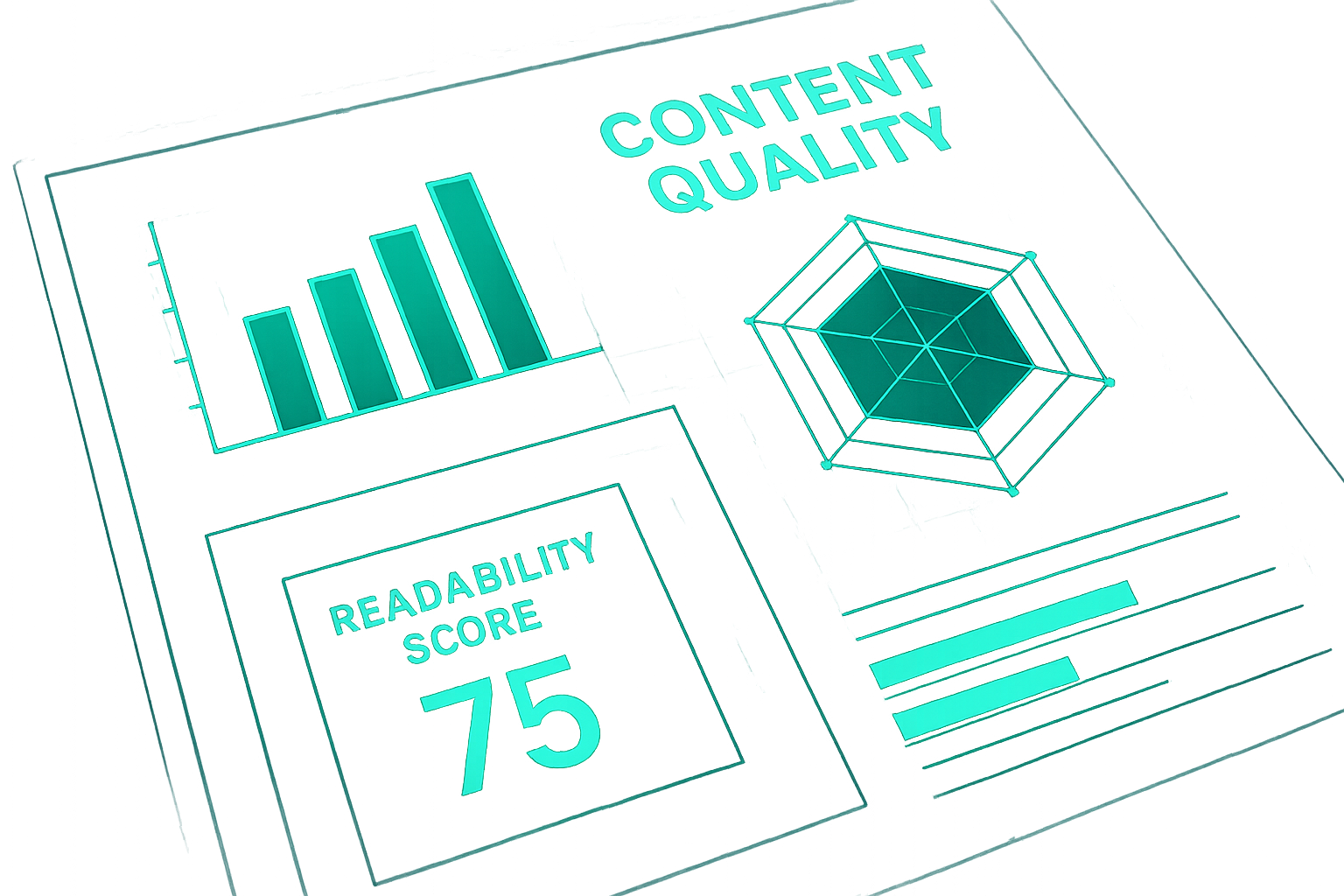
Advanced AI SEO platforms provide real-time content scoring across multiple quality dimensions to guide optimization before publishing.
Frequently Asked Questions
Conclusion: The Strategic Edge of an AI SEO Content Creator
The AI SEO content creator is not a shortcut to rankings — it is a force multiplier for teams that already understand what great content looks like (learn more about AI-driven SEO optimization). When used strategically, these tools compress research and drafting timelines dramatically, surface keyword and topical opportunities that manual research might miss, and ensure that content structure aligns with what search engines currently reward.
The teams winning with AI content in 2025 are not those publishing the most volume — they are those combining AI efficiency with genuine human expertise, original insight, and a rigorous commitment to content quality. For deeper guidance on building that kind of authoritative content strategy, AI SEO for content creators offers practical frameworks and examples.
The future belongs to those who treat AI as a skilled collaborator — not a replacement for the human judgment, creativity, and expertise that search engines ultimately reward.
This article is part of an ongoing series on AI-driven content strategy at rankauthority.com. All content is reviewed by SEO professionals before publication. Author: [Add author name, role]. Short bio: [Add 1–2 sentence credentials]. Last updated: 2026-04-05.

