
Quick Answer: Ahrefs domain comparison is the process of using Ahrefs’ toolset to evaluate two or more websites side by side across key SEO metrics — including Domain Rating, backlinks, referring domains, and organic traffic — to identify competitive gaps and prioritize growth opportunities.
If you want to understand exactly where your website stands against rivals, ahrefs domain comparison is one of the most powerful techniques in any SEO professional’s toolkit. Rather than guessing why a competitor outranks you, this approach gives you hard data: who links to them, which keywords they dominate, and how wide the authority gap truly is. In this guide, you’ll learn every step of the process — from setting up your first comparison to turning the insights into actionable wins.
What Is Ahrefs Domain Comparison?
Ahrefs domain comparison is a structured analysis method that uses multiple tools within the Ahrefs platform — primarily Site Explorer, Competing Domains, and Link Intersect — to place your website and up to four competitors into a single comparative view. The result is a data-rich snapshot that reveals authority differences, backlink gaps, and keyword overlap in a way that isolated site audits simply cannot.
According to search engine optimization principles, understanding your competitive landscape is foundational to any effective strategy. Ahrefs makes this possible at scale, turning weeks of manual research into a workflow that takes under an hour.

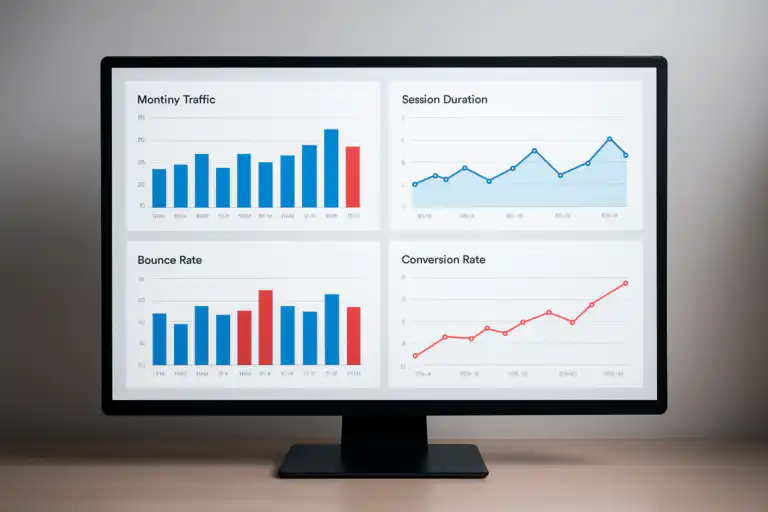
A well-structured ahrefs domain comparison dashboard puts competitor metrics in direct contrast, making gaps immediately visible.
Why Domain Comparison Matters for Your SEO Strategy
Most SEO campaigns fail not because of poor on-page optimization, but because of a misunderstanding of the competitive environment. Without benchmarking your domain against those already ranking on page one, you’re essentially flying blind. Here’s what a thorough domain comparison reveals:
- Authority gap: The difference in Domain Rating (DR) between you and competitors signals how much link building effort is required before you can realistically compete.
- Keyword overlap: Understanding which keywords you share with competitors — and which you’re missing — shapes your content roadmap.
- Backlink opportunities: Sites linking to multiple competitors but not to you are warm prospects for outreach.
- Traffic value benchmarks: Comparing estimated traffic value helps you prioritize which competitor to model first.
💡 Pro Insight: The quality of your content directly influences how many backlinks you attract, which in turn affects your domain comparison scores. Explore how content length impacts SEO rankings to ensure your pages are built to earn links naturally.
Step-by-Step: How to Run an Ahrefs Domain Comparison
Step 1 — Identify Your True Competitors
Navigate to Site Explorer → Competing Domains and enter your domain. Ahrefs will surface the sites that rank for the most overlapping keywords. Choose three to five that most closely mirror your niche, business model, and target audience — not necessarily the biggest brands in your space.
Step 2 — Compare Core Metrics in Batch Analysis
Go to Batch Analysis under the main toolbar. Enter all selected domains simultaneously. The resulting table displays Domain Rating, URL Rating, backlinks, referring domains, organic keywords, and estimated monthly traffic in one exportable view. Export this to a spreadsheet and highlight the columns where competitors hold a significant lead — these become your priority areas.
Step 3 — Use Link Intersect to Find Backlink Gaps
The Link Intersect tool is where ahrefs domain comparison truly earns its reputation. Enter your domain in the “But doesn’t link to” field, and add your competitors in the “Show domains that link to” fields. The output is a list of referring domains that link to your competitors but not to you — sorted by Domain Rating for easy prioritization. These are your highest-value outreach targets.
Step 4 — Analyze the Content Gap
Under Site Explorer → Content Gap, compare keyword coverage between your domain and competitors. Filter for keywords where two or more competitors rank but you do not. These represent content opportunities that are already validated by search demand — your competitors are the proof of concept.

Translating ahrefs domain comparison data into a written action plan bridges the gap between analysis and execution.
Understanding Domain Rating: The Core Metric
Domain Rating (DR) is Ahrefs’ proprietary metric that scores a website’s backlink profile strength on a logarithmic scale from 0 to 100. It is calculated based on the number of unique referring domains linking to a site and the DR of those linking domains. Because the scale is logarithmic, moving from DR 20 to DR 30 requires far less effort than moving from DR 70 to DR 80.
DR 0–29
New or low-authority sites. Focus on foundational link building and content creation.
DR 30–59
Growing authority. Competitive for mid-tail keywords. Prioritize referring domain diversity.
DR 60–79
Strong authority. Capable of competing for high-volume head terms with quality content.
DR 80–100
Elite authority. Reserved for major publishers, brands, and established media outlets.
Turning Comparison Data Into an Action Plan
Raw data from an ahrefs domain comparison is only valuable when it drives decisions. Here is a practical framework for converting your findings into a 90-day action plan:
- Prioritize link building targets — Export your Link Intersect results and filter for referring domains with DR 40+. Contact the top 20 sites with a personalized pitch tied to a specific piece of content.
- Build missing content — For every keyword cluster identified in the Content Gap analysis, create a dedicated, comprehensive page. Remember that keeping existing pages updated is just as important as publishing new ones — learn more about updating content for SEO at Rank Authority.
- Monitor DR trajectory — Re-run your batch analysis monthly to track whether the authority gap is narrowing. A widening gap signals that competitors are outpacing your link acquisition.
- Audit anchor text distribution — Review the anchor text profiles of top-ranking competitors. If they have a more diverse distribution than yours, adjust your outreach to request varied anchor text.
Frequently Asked Questions About Ahrefs Domain Comparison

Reviewing domain authority scores and backlink data on-screen is a core part of any ahrefs domain comparison workflow.
Common Mistakes to Avoid
Even experienced SEOs make avoidable errors when conducting domain comparisons. Watch out for these pitfalls:
- Comparing the wrong competitors: Benchmarking against a global media brand when you run a local service business skews every metric and leads to unrealistic targets.
- Treating DR as the only signal: A competitor with DR 55 but 90% of links from a single domain is far weaker than their score suggests. Always check referring domain diversity.
- Ignoring traffic quality: High estimated traffic from irrelevant keywords inflates perceived competitor strength. Filter by keyword relevance before drawing conclusions.
- Running comparisons only once: SEO is dynamic. A comparison done six months ago may no longer reflect the current landscape. Build monthly reviews into your workflow.
Conclusion: Make Ahrefs Domain Comparison a Monthly Habit
Mastering ahrefs domain comparison transforms guesswork into a precise, repeatable competitive intelligence process. By regularly benchmarking your Domain Rating, backlink profile, and keyword coverage against the sites you actually compete with, you gain the clarity to allocate resources where they matter most — whether that’s a targeted link building campaign, a content gap initiative, or a site authority overhaul.
The most successful SEO practitioners don’t just run comparisons — they act on them consistently. Schedule your first analysis today, document your baseline metrics, and revisit them every 30 days. Over time, the data will tell a clear story of progress, and your rankings will follow.
Ready to go deeper?
Explore more data-driven SEO strategies at Rank Authority — including guides on content strategy, technical SEO, and link building that complement everything you’ve learned here.

