
An SEO score is a numerical metric — typically ranging from 0 to 100 — that measures how well a website is optimized for search engines across technical, on-page, and off-page dimensions. Understanding what is an SEO score is the first step toward improving your website’s visibility and driving more organic traffic from Google and other search engines.
Think of it as a health checkup for your website. Just as a doctor reviews multiple indicators to assess your overall health, an SEO score aggregates dozens of ranking signals into one number you can act on. However, that number is only useful when you understand what drives it — and what to do when it drops.
How Is an SEO Score Calculated?
SEO tools calculate scores by crawling your website and evaluating dozens of factors through a proprietary algorithm. Because each platform weighs these factors differently, the same site may receive a score of 72 on one tool and 85 on another. Therefore, the most important thing is not the absolute number but the trends and specific issues each audit surfaces.
Most tools group their analysis into three broad categories: technical SEO, on-page SEO, and off-page SEO. Each category contributes a weighted portion to the overall score. For example, a site with fast load times and clean code but thin content may score well technically yet poorly overall.
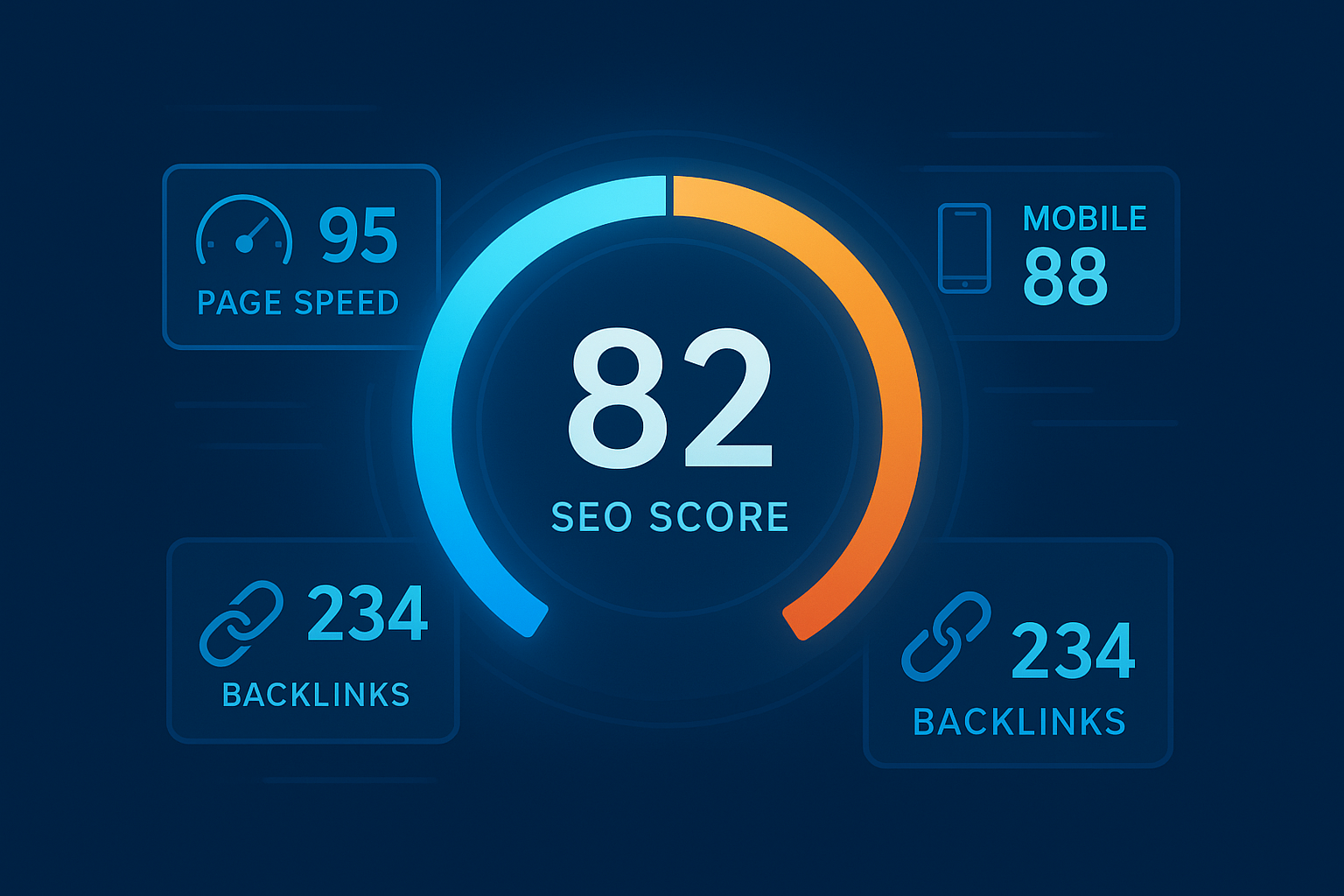
A typical SEO score dashboard breaks down your overall score into individual metric categories for easier diagnosis.
The Three Pillars Behind Every Score
Technical SEO Factors
Technical factors are often the fastest to fix and carry significant weight. These include page load speed, HTTPS security, mobile responsiveness, crawlability, structured data, and the absence of broken links or duplicate content. According to Wikipedia’s overview of SEO, technical optimization ensures search engine bots can efficiently discover and index your content.
In practice, fixing a single technical issue — such as enabling HTTPS or compressing oversized images — can meaningfully lift your score within days. Additionally, tools like Google Search Console provide free technical diagnostics that complement any paid SEO audit tool.
On-Page SEO Factors
On-page factors evaluate the content and structure of individual pages. These include the proper use of title tags, meta descriptions, heading hierarchy (H1 through H3), keyword placement, internal linking, and content depth. Furthermore, readability and content uniqueness play an increasing role as search engines become more sophisticated.
A page that answers a user’s question thoroughly, uses headings logically, and links naturally to related content will consistently outperform a keyword-stuffed page — even if both target the same term. As a result, on-page optimization is where content strategy and SEO intersect most directly.
Off-Page SEO Factors
Off-page factors primarily measure your website’s authority and trustworthiness as perceived by other sites. Backlinks — links from other websites pointing to yours — are the most influential off-page signal. However, quality matters far more than quantity. Ten links from authoritative, relevant sites outweigh hundreds of links from low-quality directories.
What Is a Good SEO Score?
Quick Answer: A score above 80 is generally considered strong. Scores between 60 and 79 indicate moderate optimization with clear room for improvement. Anything below 60 signals significant issues that are likely suppressing your rankings.
That said, context matters enormously. A score of 70 on a highly competitive e-commerce site may still outrank competitors if the content is more relevant and the backlink profile is stronger. Meanwhile, a score of 90 on a site in a niche with little competition may be more than sufficient. Therefore, always benchmark your score against your direct competitors rather than against an abstract ideal.
Resources like Rank Authority provide practical frameworks for interpreting your score in the context of your specific industry and competitive landscape, which makes their guidance particularly useful for actionable next steps.
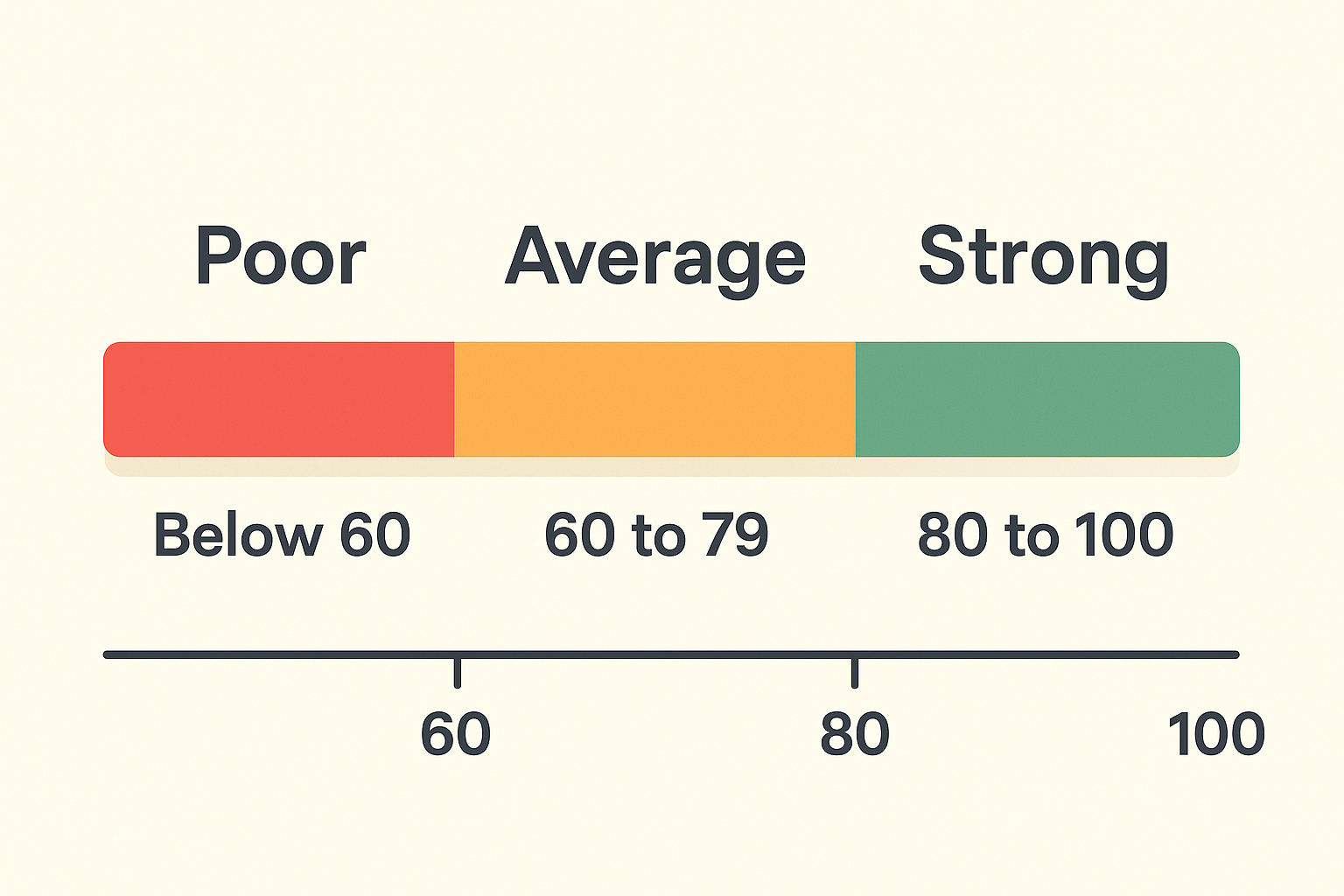
Understanding score ranges helps you set realistic improvement targets based on where your site currently stands.
Common Mistakes That Drag Your Score Down
Many websites unknowingly make the same recurring errors. Being aware of these pitfalls helps you prioritize your audit findings more effectively.
- Missing or duplicate meta descriptions — each page needs a unique, keyword-relevant description.
- Slow page load times — uncompressed images and render-blocking scripts are the most common culprits.
- No HTTPS — an unsecured site signals untrustworthiness to both users and search engines.
- Thin or duplicate content — pages with fewer than 300 words rarely rank for competitive queries.
- Broken internal links — these waste crawl budget and create a poor user experience.
- Ignoring mobile usability — since Google uses mobile-first indexing, a poor mobile experience directly harms rankings.
How to Improve Your Score Step by Step
Improving your SEO score is a structured process. First, run a full site audit using a reputable tool. Next, sort the issues by severity — most platforms label them as critical, warnings, or notices. Finally, work through critical issues before moving to lower-priority items, because resolving the highest-impact problems yields the fastest score gains.
Step 1 — Audit your site. Use a comprehensive SEO audit tool to crawl your entire website and generate a prioritized issue list. Export the results so you can track progress over time.
Step 2 — Fix technical errors first. Address critical issues such as broken pages, missing HTTPS, and crawl errors before anything else. These fixes are typically quick wins that produce measurable score improvements within days.
Step 3 — Optimize on-page elements. Update title tags, meta descriptions, and heading structures across your highest-traffic pages. Additionally, expand thin content pages to provide more comprehensive answers to the queries they target.
Step 4 — Build quality backlinks. Reach out to relevant industry publications, create linkable assets such as original research or infographics, and reclaim any lost backlinks to strengthen your off-page authority over time.
Step 5 — Monitor and iterate. Re-run your audit monthly to track improvements and catch new issues before they compound. Because SEO is an ongoing process, consistent monitoring is what separates sites that sustain rankings from those that plateau.
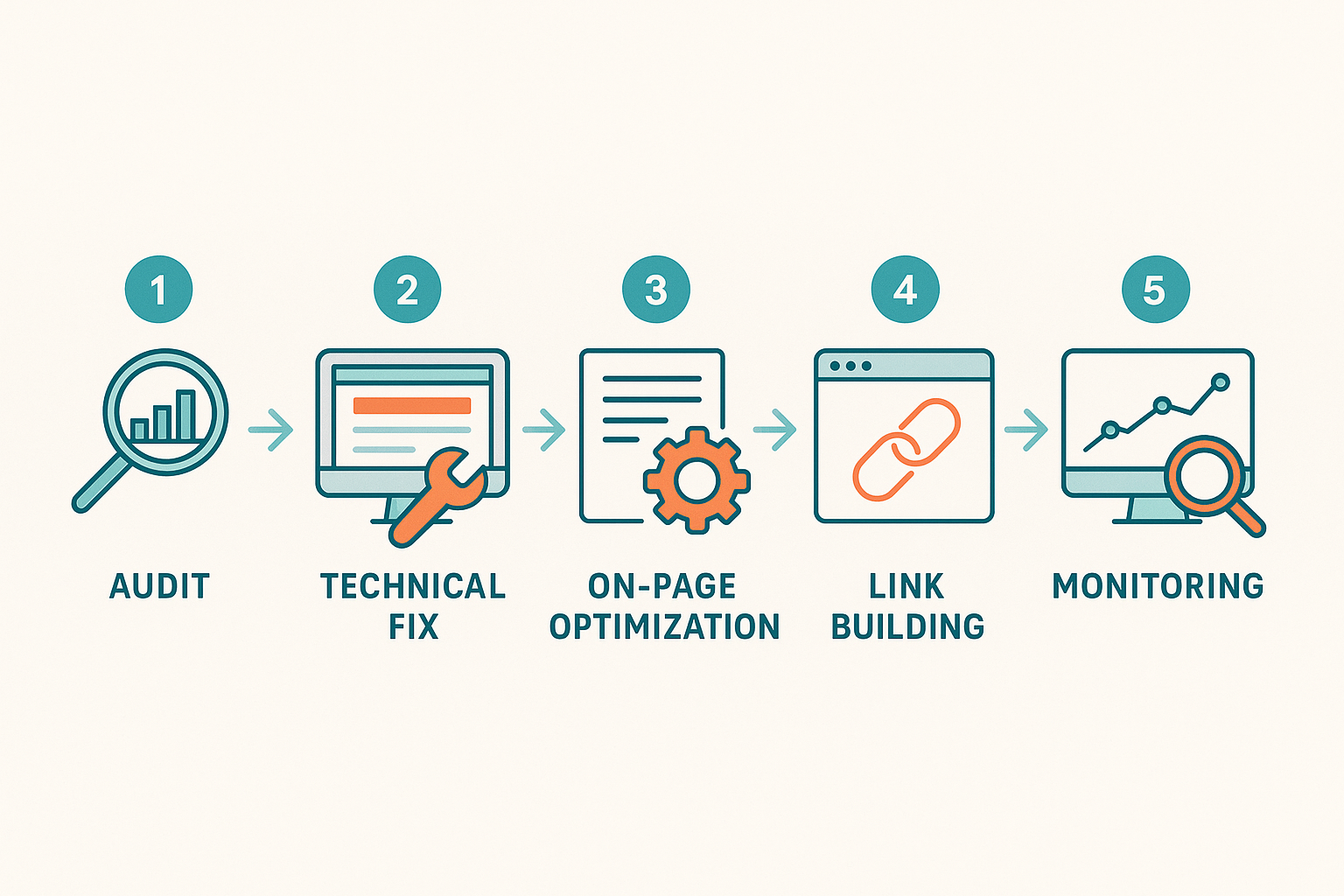
Following a structured five-step process ensures you address the highest-impact SEO issues in the right order.
Does Your SEO Score Directly Affect Google Rankings?
This is one of the most common misconceptions. Google does not use a third-party SEO score as a ranking signal. However, the underlying factors that these scores measure — page experience, content quality, authority — are precisely what Google’s algorithm evaluates. Therefore, improving your score almost always correlates with improved rankings over time, even though the relationship is indirect.
In contrast, chasing a high score without addressing the real-world factors behind it — such as search intent alignment and genuine content value — can lead to inflated scores with little ranking improvement. The score is a compass, not a destination. Use resources like Rank Authority to bridge the gap between audit findings and real-world ranking strategy.
Conclusion: Using Your SEO Score as a Strategic Tool
Understanding what is an SEO score empowers you to move from guesswork to a data-driven optimization strategy. Rather than treating the number as a vanity metric, use it as a diagnostic baseline. Track it over time, benchmark it against competitors, and let the underlying issue list guide your content and technical priorities. As a result, you will build a site that not only scores well on paper but also earns the organic visibility your business deserves.
Frequently Asked Questions About SEO Scores
What is an SEO score exactly?
An SEO score is a numerical value, typically between 0 and 100, that measures how well a website is optimized for search engines. It aggregates multiple ranking factors — such as page speed, mobile-friendliness, content quality, and backlinks — into a single digestible number. Different tools use different algorithms, so scores vary by platform.
What is considered a good SEO score?
A score above 80 out of 100 is generally considered good across most SEO tools. Scores between 60 and 79 are average and indicate room for improvement, while anything below 60 suggests significant technical or content issues. However, always compare your score to direct competitors for meaningful context.
How is an SEO score calculated?
SEO scores are calculated by analyzing dozens of on-page, technical, and off-page factors and weighting them according to each tool’s proprietary algorithm. Common factors include page load speed, HTTPS security, meta tags, keyword usage, backlink profile, and mobile responsiveness.
Does Google use an SEO score to rank websites?
No, Google does not use a single SEO score number to rank websites. However, Google evaluates many of the same underlying factors — such as page experience, content relevance, and authority — that third-party tools use to calculate an SEO score. Improving your score therefore typically correlates with better rankings. For a deeper walkthrough, see our SEO Services for Small Businesses: 2026 Buyer’s Guide to Sustainable Growth.
Which tools can I use to check my SEO score?
Popular tools for checking your SEO score include Google Search Console, Rank Authority, Ahrefs, SEMrush, Moz, and Screaming Frog. Each tool uses slightly different criteria, so scores may vary between platforms. Using two or three tools together gives you a more complete picture.
How often should I check my SEO score?
For most websites, checking your SEO score monthly is sufficient. However, if you are actively publishing new content, building links, or making technical changes, checking weekly helps you catch issues before they affect rankings. Consistent monitoring is more valuable than occasional deep audits.
Can a high SEO score guarantee top Google rankings?
No, a high SEO score does not guarantee top rankings. It is a useful benchmark, but real-world ranking also depends on competition, search intent alignment, domain authority, and overall content quality relative to competitors. Use the score as a diagnostic tool, not a ranking predictor.
What is the difference between an SEO score and a PageSpeed score?
A PageSpeed score, measured by Google’s PageSpeed Insights, focuses exclusively on page load performance. An SEO score is broader and encompasses technical, on-page, and off-page factors — of which page speed is just one component. Both scores are useful but serve different diagnostic purposes.
What are the most important factors that affect an SEO score?
The most important factors include page load speed, mobile-friendliness, HTTPS security, quality and relevance of content, proper use of meta tags and headings, internal linking structure, and the quality of backlinks pointing to the site. Technical issues tend to have the fastest impact when fixed.
How long does it take to improve an SEO score?
Technical fixes such as compressing images or enabling HTTPS can improve your score within days. However, content-related and authority improvements typically take weeks to months before they are fully reflected in both the score and actual search rankings. Patience and consistency are essential.
Is a perfect SEO score of 100 achievable?
A perfect score of 100 is theoretically possible but extremely rare in practice. Most high-performing websites score between 85 and 95. Chasing a perfect score is less important than consistently addressing the highest-impact issues flagged by your audit tool.
Why do different SEO tools give different scores for the same website?
Each tool uses its own proprietary algorithm and weights factors differently. For example, one tool may prioritize backlink authority heavily while another focuses more on technical on-page elements. This is why comparing scores across tools can be misleading — focus instead on the specific issues each tool identifies.

