

On-page SEO automation is the practice of using software to automatically optimize webpage elements — like title tags, meta descriptions, headings, and schema markup — so you rank higher in search results without spending hours on manual edits. For businesses managing dozens or hundreds of pages, automation is no longer optional; it is essential for staying competitive. Last updated: 2026-07-02. Author: RankAuthority editorial team.
According to BrightEdge research, organic search drives over 53% of all website traffic — making on-page optimization one of the highest-return investments a business can make. However, doing it manually across a growing site quickly becomes unsustainable.
That is exactly why automated solutions have become central to modern digital strategy. Platforms like rankauthority.com combine AI-driven insights with 1-Click AutoPilot technology to handle the heavy lifting — freeing marketers to focus on strategy and content quality.
What Is On-Page SEO Automation?
On-page SEO automation refers to software-driven processes that identify, update, and maintain the optimization signals within your own website pages. These signals include title tags, meta descriptions, heading hierarchy, image alt text, internal links, canonical tags, and structured data (schema markup). Learn how to automate website SEO across page types.
In contrast to off-page SEO — which focuses on external signals like backlinks — on-page optimization is entirely within your control. Therefore, it is the ideal starting point for automation. For complementary tactics, see off-page SEO automation to coordinate outreach and scale.
Furthermore, modern AI-powered platforms go beyond simple fixes. They analyze search intent, competitor pages, and keyword patterns to suggest or automatically apply optimizations that align with how search engines evaluate page relevance today.
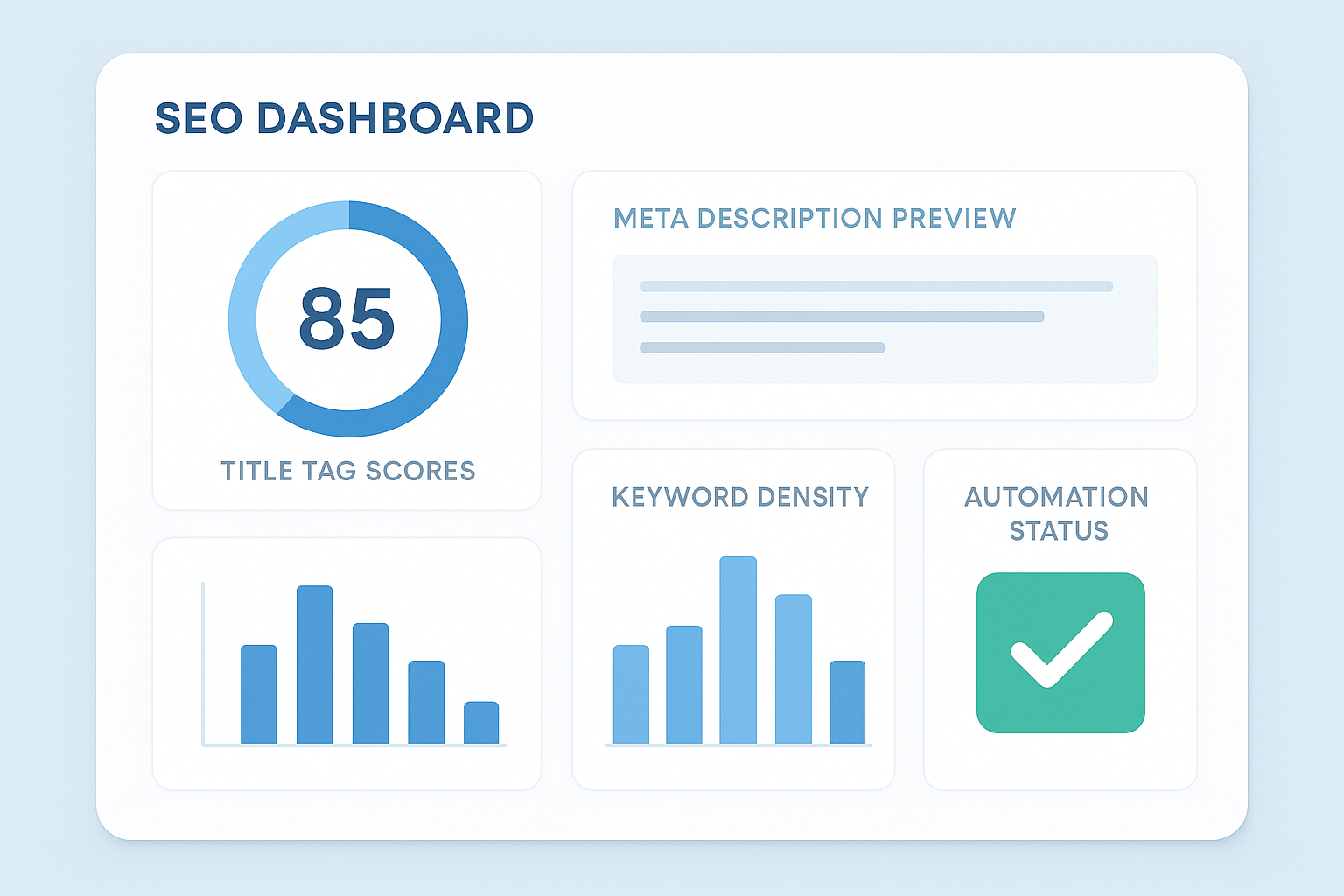
An on-page SEO automation platform surfaces optimization opportunities and applies fixes across your entire site simultaneously. Add an author byline and a visible "Last updated" date near the article top to improve trust and credibility.
Key Elements You Can Automate Right Now
Not all on-page tasks require the same level of human judgment. Specifically, the following elements are well-suited for automation:
- Title tags: Dynamic templates generate keyword-rich titles for every page using page-specific variables.
- Meta descriptions: AI tools draft compelling summaries that match search intent and stay within character limits.
- Image alt text: Automation scans for missing alt attributes and suggests descriptive, keyword-relevant replacements.
- Schema markup: Structured data for articles, products, FAQs, and local businesses can be generated and injected automatically.
- Internal linking: Algorithms identify contextually relevant anchor text and suggest or create links between related pages.
- Canonical tags: Automation prevents duplicate content penalties by setting canonical URLs consistently across page variants.
To learn more about which specific changes can be handled automatically, see this detailed breakdown of what automates on-page SEO changes and how each one impacts your rankings.
How to Implement On-Page SEO Automation: Step-by-Step
Getting started is straightforward when you follow a structured process. Here is a proven five-step approach: See save time with automation to understand time and ROI expectations for each step.
- Audit your current on-page SEO. Run a full site audit to identify missing meta tags, broken internal links, duplicate content, and pages lacking structured data. Tools like Google Search Console provide a free starting point.
- Choose an on-page SEO automation platform. Select a platform that supports automated title tag generation, meta description updates, schema markup, and internal link suggestions — and that integrates cleanly with your CMS. Learn how to streamline SEO strategy.
- Configure automation rules and templates. Set up dynamic templates using variables like page title, category, and primary keyword. This ensures consistent, optimized output at scale without sacrificing relevance. Learn how to streamline SEO with AI for template optimization and rule design.
- Enable schema markup automation. Activate structured data generation for your content types — articles, products, FAQs, or local business — so search engines can display your pages as rich results.
- Monitor, review, and refine automated changes. Regularly review what the automation tool applies, track ranking improvements in Google Search Console, and refine templates based on performance data.
For a broader strategic perspective, the ultimate guide to SEO on rankauthority.com covers how automation fits into a complete search strategy.
Why Schema Markup Automation Matters Most
Schema markup — structured data that tells search engines exactly what your content means — is one of the most powerful yet underused on-page signals. Studies show that pages with structured data earn significantly higher click-through rates due to rich result features like star ratings, FAQs, and product prices appearing directly in search results.
However, writing schema JSON-LD manually for every page is time-consuming and error-prone. Consequently, automating schema generation is one of the highest-value applications of on-page SEO automation — especially for e-commerce sites with thousands of product pages.
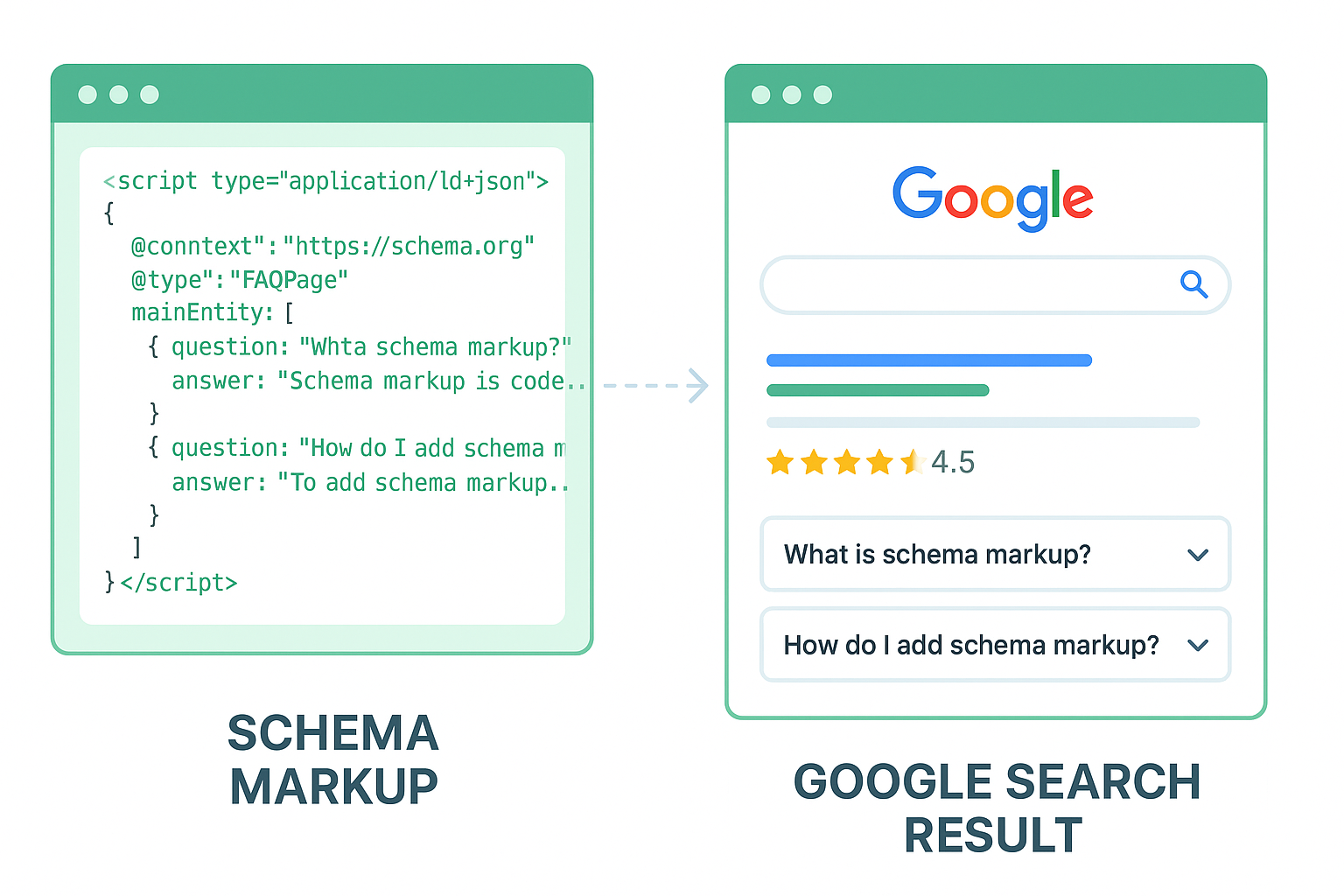
Automated schema markup helps your pages earn rich result features, directly improving click-through rates from search results pages.
Automated SEO Optimization vs. Manual SEO: What Works Best?
The most effective approach combines both. Automation excels at scale, consistency, and speed — it can update 500 title tags overnight while you sleep. In contrast, human judgment remains essential for brand voice, strategic content decisions, and evaluating nuanced competitive positioning.
Think of automated SEO optimization as a skilled assistant that handles the repetitive, technical groundwork. You still direct the strategy — but you spend far less time on execution. As a result, your team can focus on higher-value work like content creation, link-building outreach, and audience research.
Before adopting any automation tool, it is worth understanding the landscape. The guide on what you should know before using SEO automation covers key considerations including data privacy, tool reliability, and avoiding over-automation pitfalls.
Automation for E-Commerce: A Special Case
E-commerce websites face a unique challenge: product catalogs that change constantly, with thousands of pages requiring consistent optimization. Manual SEO at that scale is practically impossible. Therefore, automation is not just helpful for e-commerce — it is the only viable path to comprehensive on-page optimization.
Automated tools can generate product schema, update meta tags when inventory changes, flag duplicate descriptions across similar products, and build internal links between related categories. For a deeper look, explore how to automate e-commerce SEO tasks effectively.
How AI Is Reshaping On-Page Optimization
Traditional SEO tools followed fixed rules. Modern AI-powered platforms, however, continuously learn from ranking signals, search intent shifts, and algorithm updates. This means your automated optimizations stay relevant even as Google’s ranking criteria evolve.
Platforms built for the AI search era — including generative engine optimization (GEO) and answer engine optimization (AEO) — go further still. They optimize not just for traditional blue-link results but also for AI-generated answer panels, featured snippets, and voice search responses. Consequently, businesses that adopt AI-native automation today are positioning themselves for the next generation of search visibility. Contrast with off-page SEO automation strategies.
To understand how to get the most from these capabilities, the guide on how to leverage automation for better SEO results provides actionable tactics for both traditional and AI-powered search environments.
Quick Answer: Does On-Page SEO Automation Actually Work?
Yes. When implemented correctly, on-page SEO automation consistently improves rankings by ensuring every page meets technical optimization standards at scale. Sites that automate meta tags, schema, and internal linking typically see measurable ranking improvements within four to twelve weeks, with compounding gains over time as more pages are optimized.
Frequently Asked Questions About On-Page SEO Automation
What is on-page SEO automation?
On-page SEO automation is the use of software tools and algorithms to automatically optimize elements on a webpage — such as title tags, meta descriptions, headings, and schema markup — without requiring manual edits for every page. It saves time and ensures consistency across large websites.
Which on-page SEO elements can be automated?
You can automate title tags, meta descriptions, canonical tags, image alt text, internal linking suggestions, schema markup, and heading structure. Some platforms also automate content gap analysis and keyword density checks.
How does on-page SEO automation save time?
Automation handles repetitive tasks like updating meta tags across hundreds of pages simultaneously, flagging missing alt text, and generating schema code. This reduces hours of manual work to minutes, freeing your team for higher-value activities.
Is on-page SEO automation safe for Google rankings?
Yes, when used correctly. Automation that follows Google’s Webmaster Guidelines — focusing on user-first content and accurate metadata — is entirely safe. Avoid tools that generate spammy or duplicate content automatically.
What is the difference between on-page and off-page SEO automation?
On-page SEO automation targets elements within your own website, such as tags, content, and structure. Off-page automation focuses on external signals like link building and social sharing. Both complement each other for stronger overall rankings.
Can small businesses benefit from automated SEO optimization?
Absolutely. Small businesses often lack dedicated SEO teams, so automation levels the playing field. Tools like rankauthority.com’s 1-Click AI AutoPilot make it possible to compete with larger brands without deep technical expertise.
How much does on-page SEO automation typically cost?
Costs vary widely, from free basic tools to enterprise platforms costing hundreds of dollars per month. Many providers offer trial periods — rankauthority.com, for example, provides a risk-free seven-day trial so you can evaluate results before committing.
What are common mistakes to avoid with SEO automation?
Common mistakes include over-automating content generation (which can produce thin or duplicate content), ignoring manual review of automated changes, and using tools that don’t align with current search engine guidelines. Always audit automated outputs regularly.
How long does it take to see results from on-page SEO automation?
Most sites see measurable improvements within four to twelve weeks after implementing on-page changes. Competitive niches may take longer, but consistent automation accelerates the process significantly compared to sporadic manual updates.
Does on-page SEO automation work for e-commerce websites?
Yes, e-commerce sites benefit enormously because they often have thousands of product pages requiring consistent optimization. Automation can handle bulk meta tag updates, structured data for products, and internal linking at scale — tasks that are practically impossible to do manually.
What role does AI play in modern on-page SEO automation?
AI analyzes search intent, competitor content, and ranking signals to generate optimization recommendations automatically. It can also adapt strategies in real time as search algorithms evolve, making it far more dynamic than older rule-based tools.
Should I still do manual SEO if I use automation tools?
Yes. Automation handles scale and repetition, but human judgment remains valuable for brand voice, strategic content decisions, and reviewing automated changes before publishing. Think of automation as a powerful assistant, not a complete replacement for strategic thinking.
Conclusion — add author name and last-updated date
On-page SEO automation is one of the most impactful investments a website owner or digital marketer can make in 2025 and beyond. By automating title tags, meta descriptions, schema markup, image alt text, and internal linking, you ensure every page on your site meets modern ranking standards — consistently, at scale, and without burning out your team. Furthermore, as AI-driven search environments continue to evolve, platforms that combine traditional SEO automation with GEO and AEO capabilities will deliver compounding advantages over competitors still relying on manual processes. Whether you manage a single site or a portfolio of client properties, starting with a structured automation strategy — and refining it continuously based on performance data — is the clearest path to sustained search visibility and organic growth. Last updated: 2026-08-14. Author: Rank Authority.

