

GEO solutions for marketers are automated platforms designed to help brands AI search solutions rank inside AI-driven search experiences, including Google AI Overviews, ChatGPT, and Perplexity. As a result, marketing teams no longer need to manually decode how generative engines choose which sources to cite. In fact, traditional SEO tactics alone often fail to earn visibility inside AI-generated answers, which is exactly the gap these tools close. This guide explains what GEO solutions for marketers actually do, how they work, and what to look for before you invest in one.

GEO solutions for marketers turn complex AI ranking signals into a simple visual dashboard. Learn about complementary AI marketing tools.
What Are GEO Solutions for Marketers?
GEO solutions for marketers are software platforms or services that automate Generative Engine Optimization (GEO) — the practice of structuring content, data, and technical signals so AI systems can understand, trust, and cite a brand. Unlike manual SEO audits, these tools continuously scan content, suggest structural fixes, and monitor visibility inside AI-generated answers.
Because generative engines summarize information rather than list links, marketers need a different toolkit. Specifically, GEO platforms focus on structured data, clear answer formatting, and entity clarity — the signals large language models rely on when generating a response. For a deeper look at how large language models process content, this distinction becomes much clearer. See the AISEO AI guide for related AI-driven optimization methods.
Why Generative Engine Optimization for Marketers Matters Now
AI search adoption is accelerating faster than most marketing teams can adapt to manually. For example, Gartner has projected that traditional search engine volume could drop by as much as 25% by 2026 as users shift toward AI chatbots and virtual assistants for answers, according to Gartner research. Consequently, brands that ignore this shift risk losing visibility even if their traditional rankings stay strong.
Furthermore, AI-generated answers often cite only a handful of sources per query, making competition for that limited “answer real estate” intense. As a result, marketers increasingly rely on automated GEO tools to keep pace, since manually optimizing for every generative platform simply is not scalable. In addition, agencies managing multiple client accounts face this pressure multiplied across every property they oversee. See which businesses benefit.
How This Differs From Traditional Search Marketing
Traditional search marketing optimizes for a ranked list of links. In contrast, generative engines compress an entire answer into a few sentences, often without a visible link at all. Therefore, entity clarity and answer-first formatting matter more than keyword density alone.
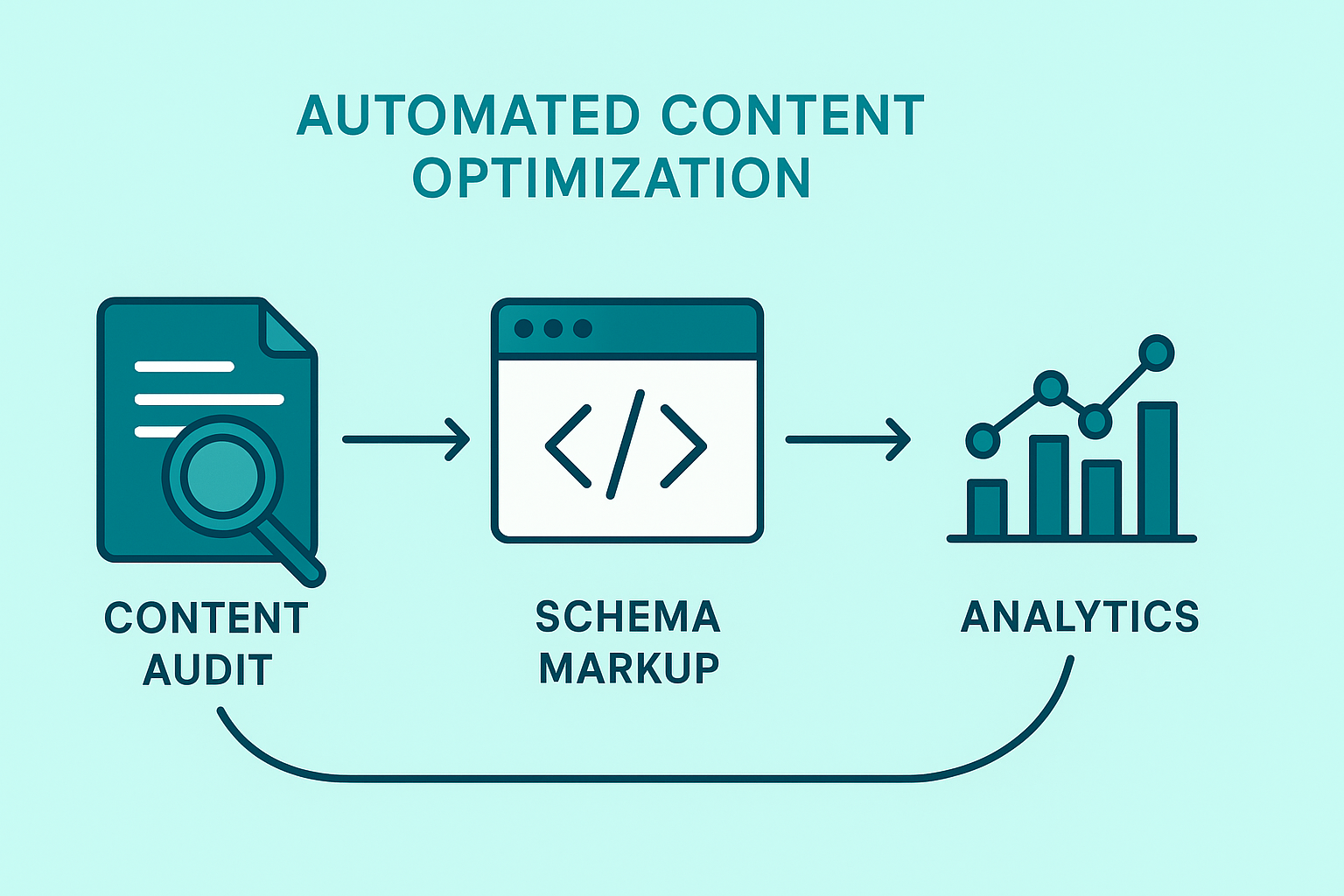
An automated GEO workflow moves content from audit to AI visibility tracking without manual coding.
How GEO Solutions for Marketers Work
Most GEO platforms follow a similar automated workflow, even though features vary between providers. Below is the general process behind this type of automation and how digital marketing AI tools fit into each step.
- Audit existing content for AI readiness. The platform scans pages for structural clarity, missing schema, and answer-friendly formatting that generative engines look for before citing a source.
- Optimize structure and answer blocks. The tool restructures headings, adds direct-answer paragraphs, and strengthens entity signals so AI systems can extract clear, quotable information.
- Deploy technical and schema signals automatically. Structured data, FAQ markup, and metadata are generated and applied without requiring manual coding or developer involvement.
- Monitor AI search visibility and iterate. Ongoing tracking shows whether the brand is being cited in AI Overviews, chat answers, or voice search, allowing continuous refinement.
Notably, platforms such as rankauthority.com’s 1-Click AI AutoPilot condense this entire workflow into a single automated process. As a result, teams avoid the steep learning curve that once made GEO inaccessible to smaller businesses. You can review the full approach at rankauthority.com.
Key Features to Look for in AEO and GEO Platforms
Not every platform offers the same depth of automation. Therefore, it helps to know which features actually move the needle before choosing one; see our Digital Marketing AI Tools buyer's guide.
- Automated schema generation — applies structured data following Google Search Central guidance without manual coding.
- Answer Engine Optimization tools — formats content so it can be directly quoted by AI assistants and voice search.
- Multi-property management — useful for agencies or multi-location brands running several sites at once.
- Visibility tracking across AI platforms — monitors citations inside ChatGPT, Perplexity, and AI Overviews, not just traditional rankings.
- Risk-free trial period — allows teams to test results before committing long-term.
In particular, marketers overseeing several client sites should prioritize platforms built for scale. For a closer look at which businesses gain the most from this approach, see what types of businesses can use GEO solutions and which businesses benefit most from GEO.
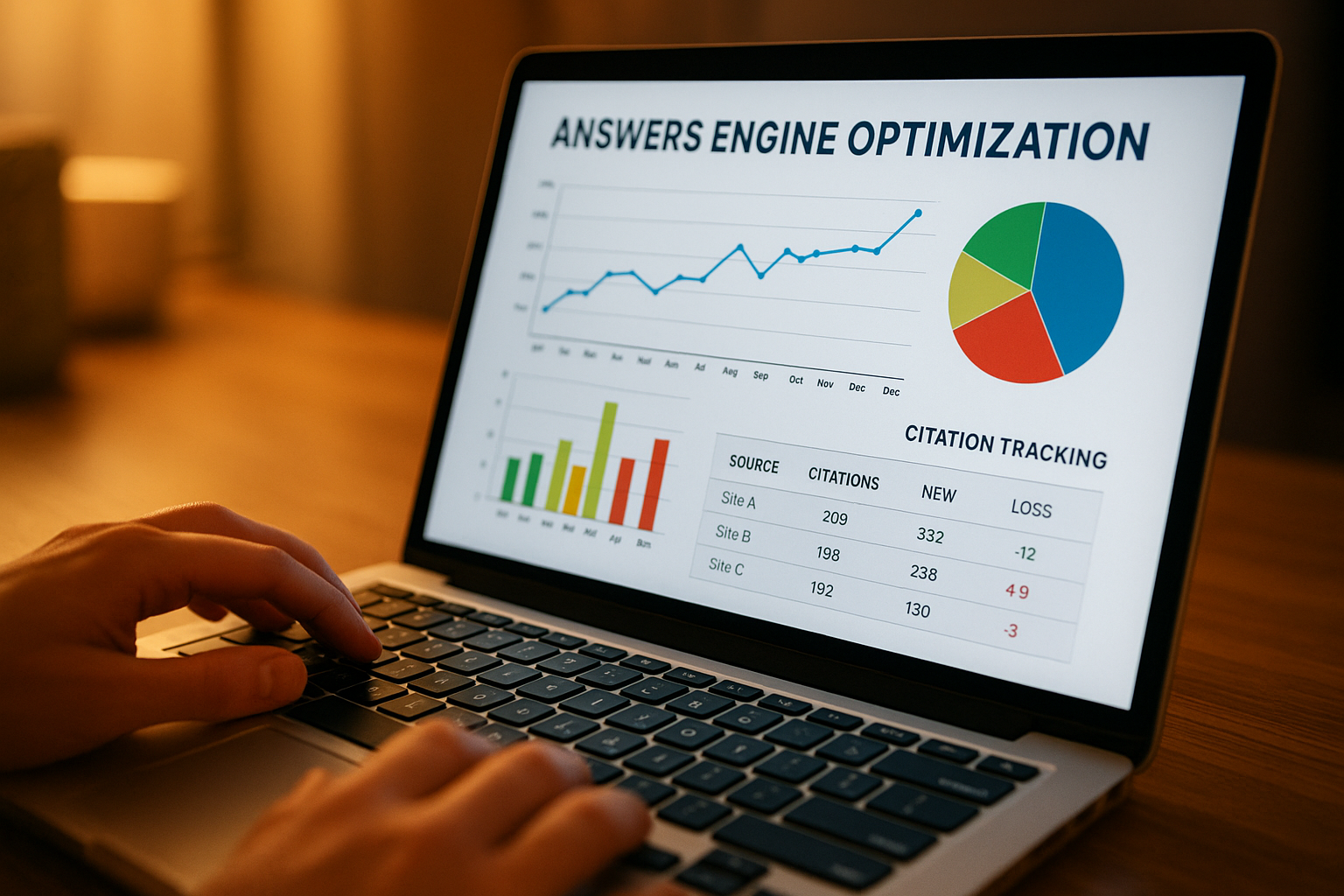
Answer engine optimization features, paired with GEO solutions for marketers, help brands track AI citations over time.
GEO Solutions for Multi-Location Brands and Marketing Agencies
Multi-location businesses face a unique challenge: every local page competes for the same AI-generated answer slots. Similarly, agencies managing dozens of client accounts need automation that scales without multiplying manual work. Learn about the role of GEO in digital marketing.
For this reason, dedicated GEO content optimization strategies for multi-location businesses focus on consistent entity signals across every location page while still allowing local differentiation. Meanwhile, agencies benefit from centralized dashboards that apply these tools across an entire client portfolio at once, rather than site by site.
Choosing the Right GEO Platform for Your Marketing Team
When evaluating providers, above all, look for transparency in how automation actually works rather than vague promises of “AI optimization.” Additionally, check whether the platform supports both GEO and AEO, since the two disciplines overlap but are not identical.
Rankauthority.com, for example, offers a 1-Click AI AutoPilot system built for small business owners, digital marketers, entrepreneurs, and agencies who need results without a steep learning curve. Its seven-day trial lets teams test outcomes firsthand before deciding whether the platform fits their workflow. To explore the broader value of this approach, the complete guide to Generative Engine Optimization benefits outlines what results teams can typically expect.
Common Mistakes Marketers Make With GEO Solutions
Even well-intentioned teams stumble when adopting GEO for the first time. Consequently, avoiding these pitfalls saves both time and budget.
- Treating GEO as identical to SEO. While related, generative engine optimization requires different formatting and answer-first content.
- Skipping structured data. Without schema markup, AI systems have less context to confirm what a page is actually about.
- Ignoring multi-location nuance. Applying one generic template across every location page weakens local relevance signals. Learn more about the which businesses benefit most from GEO.
- Failing to monitor AI citations. Teams that only track traditional rankings often miss whether they’re appearing in AI-generated answers at all.
Frequently Asked Questions About GEO Solutions for Marketers
What are GEO solutions for marketers?
GEO solutions for marketers are automated platforms that optimize content, structure, and technical signals so brands can use AI for search and rank inside AI-generated answers. They typically combine schema automation, content restructuring, and AI visibility tracking in one system.
How do GEO solutions differ from traditional SEO tools?
Traditional SEO tools focus on keyword rankings and backlinks, while GEO tools optimize for how generative engines summarize and cite information. In practice, GEO places more emphasis on answer clarity, entity signals, and structured data.
Why do marketers need GEO solutions right now?
Marketers need GEO solutions because AI-generated answers are increasingly replacing traditional search results for many queries. Without optimization for these formats, brands risk losing visibility even with strong conventional rankings.
How much do GEO solutions for marketers typically cost?
Pricing varies widely, from affordable monthly subscriptions for small businesses to enterprise plans for agencies managing many client sites. Many providers offer a risk-free seven-day trial so teams can evaluate value before committing.
How long does it take to see results from GEO?
Most teams notice early visibility changes within four to eight weeks, though full results depend on site size and competition. Consistent monitoring and iteration typically produce stronger results over three to six months.
What common mistakes do marketers make when starting with GEO?
The most frequent mistake is treating GEO as identical to SEO and skipping structured data entirely. Another common error is failing to track AI-specific citations separately from traditional search rankings.
Can small businesses realistically use GEO solutions for marketers?
Yes, small businesses are a primary audience for automated GEO platforms since automation removes the need for in-house technical expertise. Tools built around one-click automation are specifically designed to lower that barrier to entry.
What is Answer Engine Optimization, and how does it relate to GEO?
Answer Engine Optimization (AEO) focuses on formatting content so voice assistants and AI chat tools can quote it directly as an answer. GEO is the broader discipline, while AEO is one of its core components.
Do GEO solutions work for multi-location businesses?
Yes, GEO solutions can be tailored for multi-location businesses by balancing consistent brand-wide signals with page-specific local relevance. This approach helps each location page compete for local AI-generated answers.
What features should marketers look for in a GEO platform?
Look for automated schema generation, AI visibility tracking, multi-site management, and a trial period to test results. Platforms that clearly explain their automation process tend to be more trustworthy than vague AI claims.
How does the rise of AI Overviews and ChatGPT search change marketing strategy?
These tools shift competition away from ranking position toward being the cited source inside a generated answer. As a result, marketing strategy must include content structured for extraction, not just for human scanning.
Is a free trial available before committing to a GEO platform?
Many GEO providers, including rankauthority.com, offer a risk-free seven-day trial period. This allows marketers to test automated optimization firsthand before deciding on a longer commitment.
Final Thoughts on GEO Solutions for Marketers
In summary, GEO solutions for marketers automate the complex work of earning visibility inside AI-generated answers, from schema deployment to ongoing citation tracking. As AI search continues reshaping how consumers find information, marketers who adopt these tools early will likely maintain a competitive edge. Ultimately, choosing a platform with transparent automation, multi-site support, and a trial period — such as the resources available at rankauthority.com — gives teams a practical starting point. For more strategy breakdowns, explore the rankauthority.com blog. Add an author byline and a visible “Last updated: YYYY-MM-DD” note near the top or bottom of the article to signal expertise and freshness. Author: Bryan Dantonio — SEO strategist. Last updated: 2026-07-12.

