

Automated performance metrics are the real-time data points — rankings, traffic, AI citations, and technical health scores — that a software platform collects, calculates, and updates without anyone touching a spreadsheet. Instead of waiting for a monthly export, teams now watch ranking shifts, traffic swings, and AI search visibility change in near real time. This matters more than ever because AI Overviews and answer engines are rewriting the rules of how people find content online, and static reports simply can’t keep up.
In this guide, we’ll unpack exactly what automated performance metrics measure, why they matter for both classic SEO and next-generation AI search, and how to build a tracking system that actually gets used. We’ll also go further than most explanations do by covering how reliable these metrics really are, where they apply outside of marketing, and the mistakes that quietly waste teams’ time. Along the way, we’ll point to practical tools and resources, including the approach used by RankAuthority, to make the concept concrete.
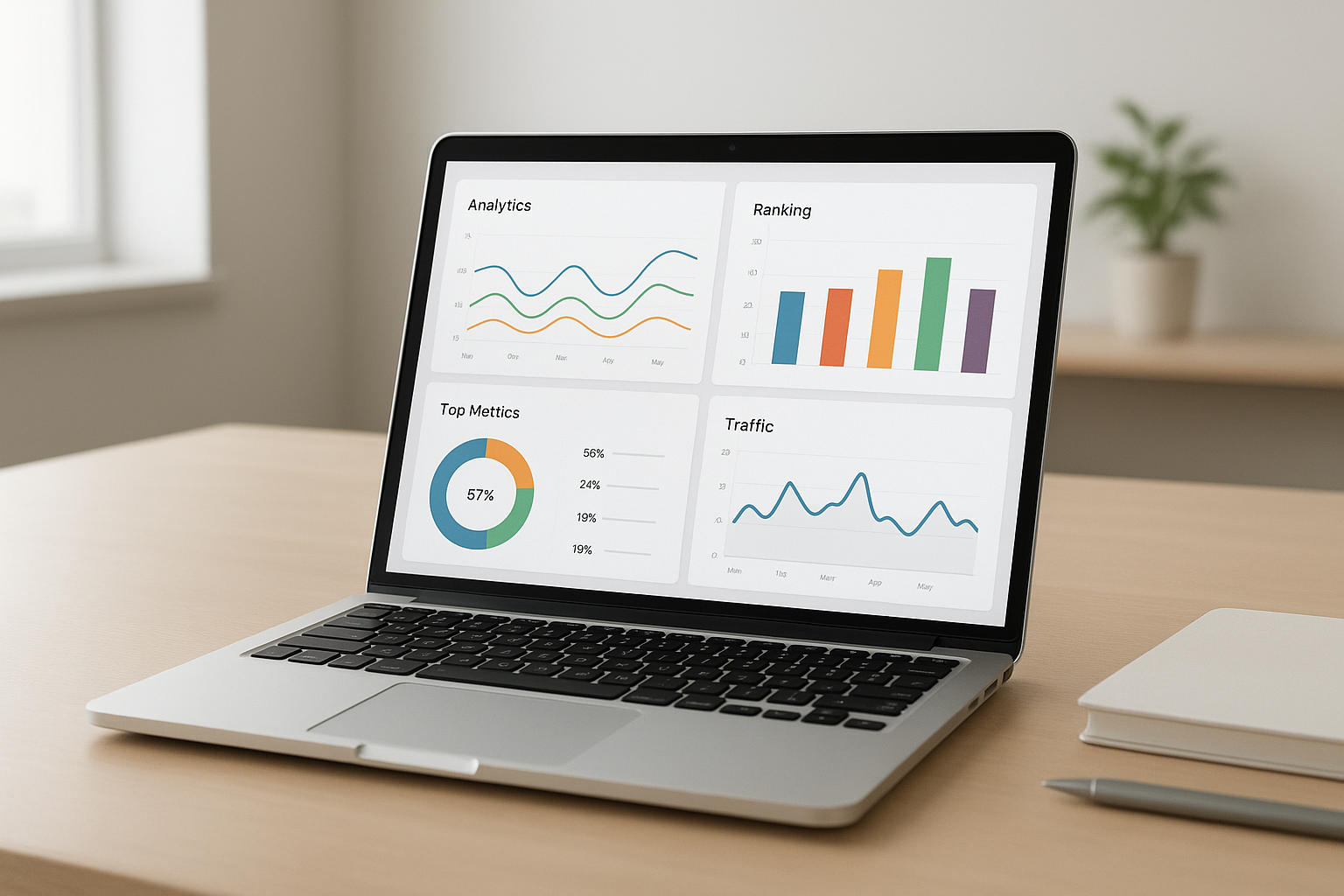
A live view of automated performance metrics tracking rankings and traffic in real time.
What Are Automated Performance Metrics?
In simple terms, automated performance metrics are search and marketing data points that a platform collects, processes, and reports without requiring a person to pull the numbers manually. They usually include keyword rankings, organic traffic, click-through rates, and, increasingly, AI search visibility signals such as citation frequency inside generative answers.
Because this data refreshes on its own, teams spend less time gathering numbers and more time acting on them. For example, a small agency managing ten client sites can rely on automated performance metrics to flag a sudden ranking drop overnight, rather than discovering the problem during a weekly manual check. Consequently, the gap between “something went wrong” and “we fixed it” shrinks from weeks to hours.
Why Automated Metrics Matter for AI Search Visibility
Search itself is changing quickly. According to Google Search Central, AI-generated summaries and answer boxes now influence a growing share of search results, which means traditional ranking reports alone no longer tell the full story.
As a result, businesses need automated performance metrics that also track whether their content appears in AI Overviews, chat-based assistants, and other generative engines. In contrast, static monthly reports simply can’t keep pace with how fast these AI-driven results shift from week to week.
Furthermore, tracking this data automatically means you catch visibility gaps before they cost you traffic. If a competitor starts appearing in AI answers where your brand used to show up, an automated system can flag that shift within a day rather than a month. For a deeper look at how this specific discipline works, this complete guide to AI-based performance metrics for 2025 expands on the mechanics.
Key Automated Performance Metrics to Track
Not every data point deserves equal attention. Specifically, the automated performance metrics below tend to have the biggest impact on decision-making:
- Keyword rankings: Position changes across target search terms, tracked daily or weekly.
- Organic traffic trends: Session and visitor counts pulled directly from analytics integrations.
- AI citation frequency: How often your content is referenced in AI Overviews or chatbot answers.
- Content authority scores: A composite measure of backlinks, engagement, and topical relevance.
- Technical health alerts: Automatic flags for crawl errors, broken links, or slow page speed, often powered by browser-level tools like the Performance API.
For a deeper breakdown of how these numbers connect to broader strategy, this complete guide to automated performance analysis walks through each category in more detail.

Reviewing automated performance metrics helps teams spot trends before they become problems.
How to Set Up Automated Performance Tracking
Setting up a tracking system doesn’t need to be complicated. Below is a simple, sequential process that gets a working dashboard live in under a day.
- Connect your accounts: Link your website, Search Console, and analytics accounts to your chosen automated performance metrics platform so it can begin pulling live data immediately.
- Define your scope: Choose the target keywords, priority pages, and known competitors you want the system to monitor on an ongoing, unattended basis.
- Set alert thresholds: Configure notifications for ranking drops, sudden traffic spikes, or changes in AI visibility so the system flags issues before they escalate.
- Review on a schedule: Check the automated dashboard consistently, ideally once a week, so patterns are caught early rather than discovered by accident.
- Refine your priorities: Adjust your content and technical roadmap based on the recurring patterns the dashboard reveals over several review cycles.
This same workflow is covered in more depth in a practical guide on tracking SEO performance effectively, which pairs well with the steps above.
Automated Metrics vs Manual Reporting: What’s the Difference?
Manual reporting relies on a person exporting spreadsheets, formatting charts, and interpreting trends by hand. This approach works, but it’s slow, and it’s easy to miss subtle shifts between reporting periods.
In contrast, automated SEO metrics run continuously in the background. Instead of a snapshot taken once a month, you get a living dataset that updates itself and flags anomalies as they occur. Similarly, agencies managing multiple clients benefit from automation because it removes the repetitive manual work of building the same report over and over, as outlined in this AI search performance reporting guide for agencies.
How Reliable Are Automated Performance Metrics?
A fair question to ask before trusting any dashboard is whether the numbers hold up. In measurement science, this comes down to two ideas: validity, meaning the metric actually measures what it claims to measure, and measurement reliability, meaning the metric produces consistent results under similar conditions.
Applied to automated performance metrics, this means a good platform cross-references multiple data sources rather than trusting a single API call. For instance, ranking position pulled from one search engine index should roughly agree with a second, independent check. Above all, discrepancies between sources are usually a sign of crawl delay or regional variance, not a broken system.
Therefore, when evaluating any tool, ask how often it updates, how many data sources it blends, and whether it shows historical trend lines rather than a single point-in-time snapshot. A metric measured once is a data point; the same metric measured consistently over weeks is evidence.
Automated Performance Metrics Across Industries: Beyond SEO
While this guide is centered on search and marketing, the underlying concept extends much further. Automated performance metrics also power clinical research dashboards that track patient outcomes, manufacturing systems that flag equipment drift before failure, and DevOps pipelines that monitor uptime and page load speed continuously.
Specifically, what all of these fields share is the same core benefit: replacing periodic, manual sampling with continuous, software-driven measurement. In healthcare and engineering research, for example, automated metrics are frequently validated against human-reviewed benchmarks to confirm they measure the intended outcome accurately, a practice worth borrowing when you evaluate any marketing analytics tool.
Consequently, if you’re comparing platforms and one only reports raw numbers while another explains how those numbers were validated, the second option is almost always the safer long-term choice for your business.
Common Mistakes When Using Automated SEO Metrics
Even with automation, mistakes still happen. Above all, the most common error is tracking vanity metrics, like raw page views, instead of numbers tied directly to business goals such as conversions or AI answer citations.
Another mistake is ignoring the alerts an automated performance metrics system generates. Setting up automation only works if someone actually reviews the notifications and acts on them. Additionally, some teams fail to connect their keyword strategy to their tracking setup, which weakens the value of otherwise strong data; this practical guide to automated keyword optimization software addresses that gap directly.
Finally, some businesses assume automation is only worthwhile at enterprise scale. In reality, this look at whether AI-driven optimization is cost-effective for smaller businesses shows the math often favors automation even for a single-location company.
Choosing the Right Automated Performance Analytics Platform
When comparing platforms, look for tools that combine traditional SEO tracking with AI search visibility data in a single dashboard. A statistic worth noting: industry research from web analytics studies shows that businesses reviewing performance data weekly identify optimization opportunities significantly faster than those relying on monthly reviews alone.
RankAuthority’s 1-Click AI AutoPilot technology, for instance, automates both the technical and strategic work of tracking search authority across traditional and AI-driven environments. Read our AISEO guide for deeper context. It’s built for small business owners, digital marketers, and agencies who want automated performance metrics without a steep learning curve, and it’s backed by a risk-free seven-day trial so teams can evaluate the results before committing.
For a broader look at how scoring systems tie these metrics together, this AI scorecard guide to smarter SEO is a useful next read.
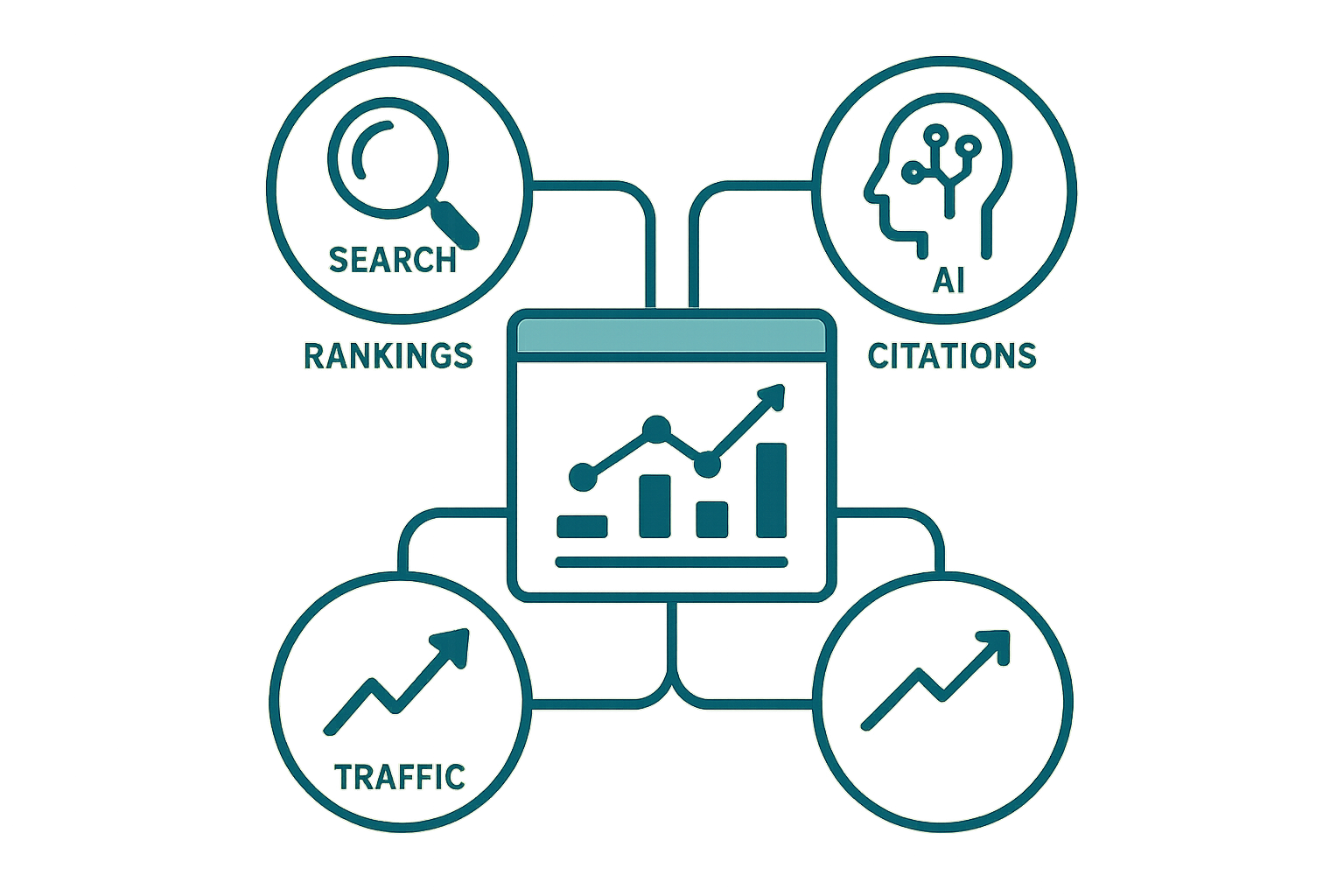
Automated performance metrics pull data from multiple sources into one unified view.
Frequently Asked Questions About Automated Performance Metrics
What are automated performance metrics?
Automated performance metrics are SEO and search visibility data points collected, updated, and reported without manual work. They typically cover rankings, traffic, AI search mentions, and content authority scores updated on a continuous schedule.
How do automated performance metrics differ from manual SEO reports?
Manual reports require someone to export data and interpret trends by hand, which can take hours weekly. Automated metrics refresh on their own and often include built-in trend analysis and alerts.
Why do businesses need automated performance metrics for AI search?
AI-powered search results change frequently, so static reports go stale fast. Automated tracking catches shifts in AI Overview inclusion and answer engine visibility as they happen.
What tools provide automated performance metrics?
Platforms like RankAuthority’s 1-Click AI AutoPilot, alongside general analytics suites, generate automated performance metrics for SEO and generative engine optimization. Most combine ranking, traffic, and citation tracking in one dashboard.
How much does automated performance tracking cost?
Pricing varies from free basic dashboards to enterprise suites costing hundreds monthly. Many platforms, including RankAuthority, offer a risk-free trial before committing to a paid tier.
How long does it take to set up automated performance metrics?
Basic setup usually takes under an hour once a website and keywords are connected. Full configuration with alerts and templates may take a day or two.
What common mistakes should I avoid with automated performance metrics?
A frequent mistake is tracking vanity metrics instead of ones tied to revenue or visibility goals. Another is ignoring automated alerts entirely, which defeats the purpose of real-time monitoring.
Can automated performance metrics track AI Overview rankings?
Yes, modern platforms increasingly monitor whether a page appears in AI Overviews and chat-based answers. This is a core part of Generative Engine Optimization.
Are automated performance metrics accurate?
Accuracy depends on data sources and update frequency, but reputable platforms cross-reference multiple signals to reduce errors. Most automated systems are as reliable as manual tracking, and less prone to human mistakes.
How often should automated performance metrics be reviewed?
Weekly reviews work well for most businesses, while high-traffic sites may benefit from daily checks. The advantage is that the data is always ready when you are.
What’s the difference between automated performance metrics and manual analytics?
Manual analytics rely on someone actively pulling data on their own schedule. Automated metrics run continuously and often flag anomalies before a human would notice them.
Do automated performance metrics work for small businesses?
Yes, small businesses often benefit the most since automation removes the need for a dedicated analytics team. Tools built for accessibility are specifically designed for solo owners and small marketing teams.
Can automated performance metrics be used outside of SEO and marketing?
Yes, the same continuous-measurement approach appears in healthcare research, manufacturing quality control, and software uptime monitoring. In each case, automated performance metrics replace periodic manual sampling with ongoing, validated tracking.
Final Thoughts
Automated performance metrics have moved from a nice-to-have to a necessity as AI reshapes how people search for information. Instead of waiting on monthly reports, businesses can now see ranking, traffic, and AI visibility changes in near real time, which means faster decisions and fewer missed opportunities.
Ultimately, the goal isn’t just collecting data automatically, but acting on it consistently. Whether you’re a solo site owner or an agency managing dozens of clients, building a habit around reviewing automated performance metrics will keep your strategy aligned with how search actually works today. Last updated: 2026-08-14. Author: RankAuthority editorial team. Add internal links from related guides to this page to improve discoverability and indexing.

