

Website search authority is the single biggest lever separating sites that dominate both Google’s results and AI-generated answers from sites that quietly disappear. It represents the level of trust, expertise, and relevance that search engines and AI systems like ChatGPT, Perplexity, and Google’s AI Overviews assign to your domain based on signals such as backlinks, content depth, and technical performance. Consequently, as search shifts toward generative engine optimization (GEO — the practice of getting content cited inside AI answers) and answer engine optimization (AEO), the playbook for building this authority is changing faster than most site owners realize. Below, we break down exactly what website search authority is, how it’s measured across different tools, and the precise steps that move the needle in 2025 — going deeper than a simple score lookup to show you what actually drives rankings and AI citations.
Quick answer: Website search authority is the combined measure of trust that search engines and AI systems place in your domain. You build it by fixing technical issues, publishing genuinely expert content, earning relevant backlinks, and structuring pages so both Google and AI answer engines can cite them clearly. Unlike a single third-party score, it’s a real-world signal that determines whether your site is found at all.
What Is Website Search Authority?
Website search authority is how credible, relevant, and trustworthy a site appears to search engines and AI answer engines. It is built from a combination of backlink quality, content depth, technical health, and user engagement signals. Therefore, the higher your authority climbs, the more likely your pages are to rank in traditional blue-link results and get quoted inside AI-generated summaries.
This concept traces back to early ranking systems like Google’s PageRank algorithm, which treated links as votes of confidence between pages. Today, third-party tools such as Moz’s Domain Authority score attempt to estimate this same underlying concept using their own proprietary formulas. However, no single number tells the whole story — a score is only ever an estimate of the real thing search engines calculate internally. As a result, most SEO professionals treat authority as a directional signal rather than an exact metric, and smart site owners look at multiple data points instead of chasing one score.
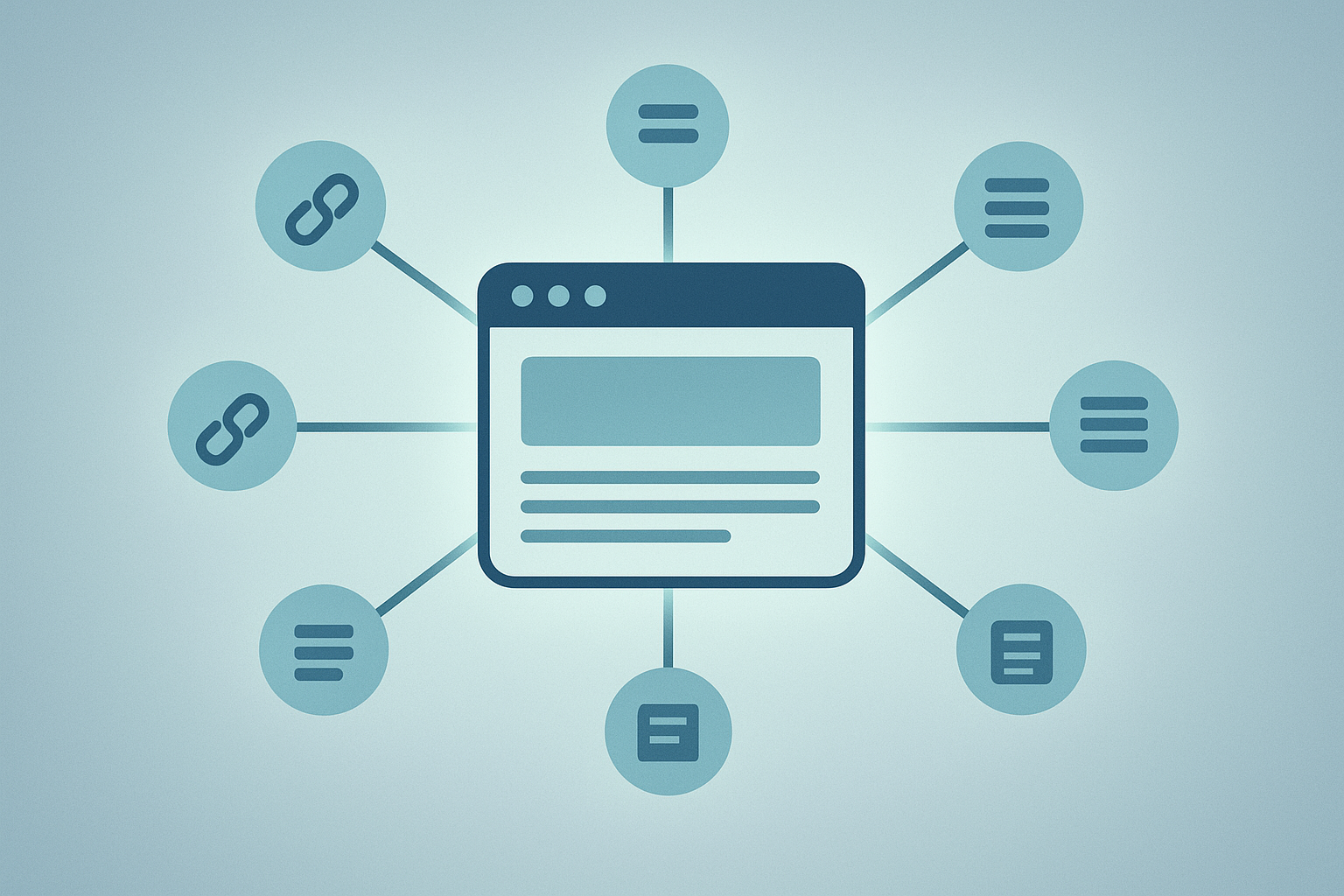
Visualizing how backlinks and content signals combine to build website search authority.
Website Search Authority vs. Domain Rating and Domain Authority
One of the most common points of confusion is treating a single vendor’s score as the definitive answer. In particular, tools like Ahrefs’ Domain Rating (DR) and Moz’s Domain Authority (DA) are both third-party estimates built from each company’s own backlink index — they are not metrics Google itself uses, and they can disagree with each other on the very same domain. Website search authority, by contrast, is the underlying reality those scores are trying to approximate.
- Domain Rating (DR): A 0–100 scale from Ahrefs based purely on the quantity and quality of unique linking domains — it says nothing about content quality or technical health.
- Domain Authority (DA): Moz’s equivalent metric, calculated with a different data set and formula, which is why the same site can show a DR of 55 and a DA of 40 simultaneously.
- Website search authority: The broader, real-world combination of backlinks, content expertise, technical performance, and AI citation readiness that actually determines visibility across Google and AI answer engines.
Consequently, relying on one checker score to judge your site’s health is like judging a car’s safety by only checking tire pressure. In contrast, a complete authority strategy looks at links, content, technical signals, and AI visibility together. For a deeper look at how ranking speed and authority interact, see this guide to search authority optimization for 2025.
Why Website Search Authority Matters in an AI-Search World
In the past, authority mainly determined blue-link visibility on a search results page. Today, however, that same authority also decides whether AI systems reference your content at all. For example, industry research has found that AI-generated overviews now appear on a large and growing share of eligible Google searches, fundamentally reshaping how people discover information online.
As a result, brands with weak authority signals risk becoming invisible in both classic rankings and AI-generated answers. In contrast, sites that consistently strengthen their domain authority and content credibility tend to earn citations in tools like ChatGPT, Perplexity, and Google’s AI Overviews. This is precisely why GEO and AEO have become essential companions to traditional SEO rather than optional extras — and it’s also where most authority-checker tools fall short, since they only measure backlinks and ignore whether your content is actually structured for AI extraction.
How to Improve Website Search Authority: A Step-by-Step Roadmap
There is no shortcut that replaces consistent effort, but there is a reliable order of operations. Below is the exact process we recommend, whether you manage one site or a portfolio of client properties.
- Audit current authority signals. Review your backlink profile, indexed pages, and technical health so you can establish a clear, measurable baseline before making any changes to the site.
- Fix technical SEO foundations. Resolve slow load times, broken links, and crawl errors first, since technical problems quietly undermine even the best-written content and waste crawl budget.
- Publish expert-backed content. Create original, well-researched articles that demonstrate first-hand expertise and direct experience instead of recycling generic advice that already exists everywhere else online.
- Earn high-quality backlinks. Pursue links from relevant, reputable sites through outreach, partnerships, or original research that other publishers genuinely want to cite in their own articles.
- Optimize for AI answer engines. Structure content with clear definitions, direct answers, and scannable formatting so AI systems can easily extract and quote your site accurately.
- Monitor and automate ongoing optimization. Track authority metrics monthly and use automation to catch new technical issues quickly as search algorithms and AI models continue to evolve.
If you’d rather move faster, this practical walkthrough on enhancing your website’s authority quickly expands on steps one through four in more detail. Similarly, if you’re building a longer roadmap, this guide covering how to achieve long-term rankings with SEO shows how these six steps fit into a sustainable, multi-quarter strategy rather than a one-time push.
Key Ranking Factors That Build Domain Authority
Several factors consistently influence domain authority, and understanding them helps you prioritize your effort correctly. Backlink quality remains one of the strongest signals; Google’s own Search Central documentation confirms that link context and topical relevance matter far more than sheer volume.
Content freshness and depth also play a major role, since outdated pages steadily lose relevance over time. Meanwhile, site structure, internal linking, and page speed determine how easily both crawlers and readers can find and trust your content. In particular, sites that combine all four factors — links, content, structure, and speed — tend to see the fastest authority gains, rather than sites that optimize only one dimension in isolation.
Google also weighs experience, expertise, authoritativeness, and trustworthiness — often shortened to E-E-A-T — when assessing whether a page deserves to rank. Specifically, Google’s own guidance on creating helpful, reliable, people-first content makes clear that author expertise and first-hand experience now carry real ranking weight, not just backlinks and keywords.
How Advanced Algorithms Affect These Signals
Modern ranking systems weigh these signals together rather than in isolation, which is why a site can have strong backlinks yet still underperform if its technical health is poor. This deeper breakdown of advanced algorithm optimization and its impact on rankings explains how machine learning models interpret these authority signals in combination rather than as separate scores.
A regular technical audit is one of the fastest ways to strengthen website search authority.
How to Check Your Website’s Search Authority Score
Before you improve anything, you need a starting point. Free authority checkers exist for exactly this reason, but they vary widely in what they actually measure. Some only count linking domains, while others factor in technical health, content signals, and AI-readiness as well.
If you want a fast, no-signup snapshot of where your domain currently stands, you can run a free website search authority test in under a minute. Unlike a bare link-count score, this kind of check should tell you not just a number, but what’s actually holding your authority back — whether that’s thin content, slow load times, or a lack of AI-citable structure.
Comparing Authority Metrics: What Each Score Actually Tells You
- Link-based scores (DR/DA): Useful for a quick backlink snapshot, but they say nothing about content quality, page speed, or AI citation potential.
- Technical health scores: Reveal crawl errors, broken links, and speed issues that quietly cap how high your authority can climb regardless of your backlinks.
- Content depth signals: Measure whether your pages demonstrate genuine expertise, or whether they read as thin, generic, and easily outranked.
- AI-citation readiness: Assesses whether your content is structured — with clear definitions, direct answers, and logical headings — so answer engines can quote it confidently.
Above all, no single score should drive your entire strategy. Instead, use a combination of checks — and revisit them quarterly — to see whether your improvements are actually translating into more visibility, not just a higher number on one dashboard.
Common Mistakes That Weaken Search Authority
Even experienced site owners make avoidable mistakes that quietly erode their standing. Thin, AI-generated content with no original insight is one of the most frequent offenders. Similarly, buying low-quality backlinks from irrelevant sites can do more harm than good, since search engines actively discount or penalize unnatural link patterns.
- Ignoring page speed and mobile usability, which frustrates both users and crawlers alike.
- Letting broken links and outdated pages accumulate across the site without regular cleanup.
- Writing content without clear answers, definitions, or structure that AI engines can extract confidently.
- Treating link building as a one-time project instead of an ongoing effort.
- Chasing a single third-party score instead of tracking real ranking and citation outcomes over time.
Above all, inconsistency is the biggest authority killer. Sites that publish sporadically and never revisit older content tend to plateau, while steady, incremental improvement compounds over time. For a longer-view perspective on avoiding this plateau, see what you can do to achieve long-term search rankings instead of chasing short-lived spikes.
Tools and Automation to Strengthen Website Search Authority
Manually tracking every authority signal across a growing site, or dozens of client sites, is impractical. This is where automation platforms come in. RankAuthority, for instance, offers 1-Click AI AutoPilot technology that continuously audits technical health, optimizes content for GEO and AEO, and monitors authority metrics without requiring deep SEO expertise.
The platform is built for small business owners, digital marketers, entrepreneurs, and agencies managing multiple properties, and it includes a risk-free seven-day trial period. As a result, teams can test automated authority-building without committing upfront. For teams specifically focused on AI visibility, the platform built to dominate AI search shows how automation extends beyond traditional rankings into answer-engine citations.
For a broader comparison of manual versus automated approaches, this guide on how to improve your website’s search rankings easily covers both paths in detail. If speed matters most, this resource on how you can improve your website’s authority quickly outlines a compressed timeline for teams under deadline pressure.
Competitive SEO tools can improve website search authority faster than manual audits alone.
Frequently Asked Questions About Website Search Authority
What does it mean to improve website search authority?
It means strengthening the trust and relevance signals search engines and AI answer engines use to rank your site, including backlinks, content depth, and technical health.
How long does it take to improve website search authority?
Most sites see measurable gains within three to six months, though competitive niches can take longer. Consistent publishing and link building speed up results considerably.
What is the difference between domain authority and search authority?
Domain authority is a third-party metric that estimates ranking potential, while search authority is the broader, real-world trust signal engines actually use when ranking pages.
Does it cost money to build search authority?
You can build it organically at low cost, but most businesses invest in content, outreach, or automation tools to accelerate results and free up internal time.
What are the biggest mistakes that hurt search authority?
Thin content, broken links, slow page speed, and low-quality backlinks are the most common mistakes that erode authority over time.
Can automation tools really improve website search authority?
Yes. Automation tools can continuously audit technical issues, identify content gaps, and optimize pages for AI answer engines at scale, far faster than manual review.
How does GEO differ from traditional SEO?
GEO focuses on getting content cited inside AI-generated answers, while traditional SEO focuses on ranking within standard search result lists.
Why do backlinks still matter for search authority?
Backlinks act as votes of confidence from other sites, and engines still weigh link quality heavily when calculating overall trust.
How often should I audit my site’s search authority?
A quarterly audit is a reasonable baseline for most sites, though fast-changing industries benefit from monthly checks instead.
Does content length affect search authority?
Length alone does not build authority; depth, accuracy, and originality matter far more than hitting a specific word count.
What role do AI answer engines play in search authority?
AI answer engines pull from sources they consider authoritative, so answer engine optimization has become a core part of search authority strategy.
How can I check my website’s current search authority?
You can review backlink profiles, crawl reports, and third-party authority scores, or run an automated audit through a platform like RankAuthority.
Is website search authority the same across every search engine and AI system?
No. Google, Bing, and AI systems like ChatGPT each weigh signals slightly differently, which is why a well-rounded strategy across links, content, and technical health outperforms optimizing for just one platform.
Final Thoughts on Website Search Authority
Ultimately, building lasting website search authority comes down to consistency: fix technical issues, publish genuinely useful content, earn relevant backlinks, and structure pages so AI systems can cite them clearly. In addition, monitoring your progress regularly ensures that gains are not lost to new algorithm updates or emerging AI search behaviors.
Whether you handle optimization manually or lean on automation, the fundamentals stay the same. As search continues shifting toward AI-driven answers, sites that invest early in strengthening their website search authority will be best positioned to stay visible, trusted, and discoverable well into the future.

