

AI content optimization tools are transforming how businesses create, refine, and rank content for both traditional search engines and emerging AI-driven answer engines. As a result, marketers can no longer rely on instinct alone to compete for visibility. In particular, these platforms combine natural language processing with real-time SEO signals to guide every piece of content toward better rankings. Learn how AI content optimization works.
Consequently, understanding how these systems work has become essential for small business owners, agencies, and in-house marketing teams alike. Below, we’ll explore what AI content optimization tools do, how they function, and what to look for before choosing one. For a broader look at automated GEO and AEO strategy, RankAuthority offers additional context worth reviewing. See our best SEO tool guide.
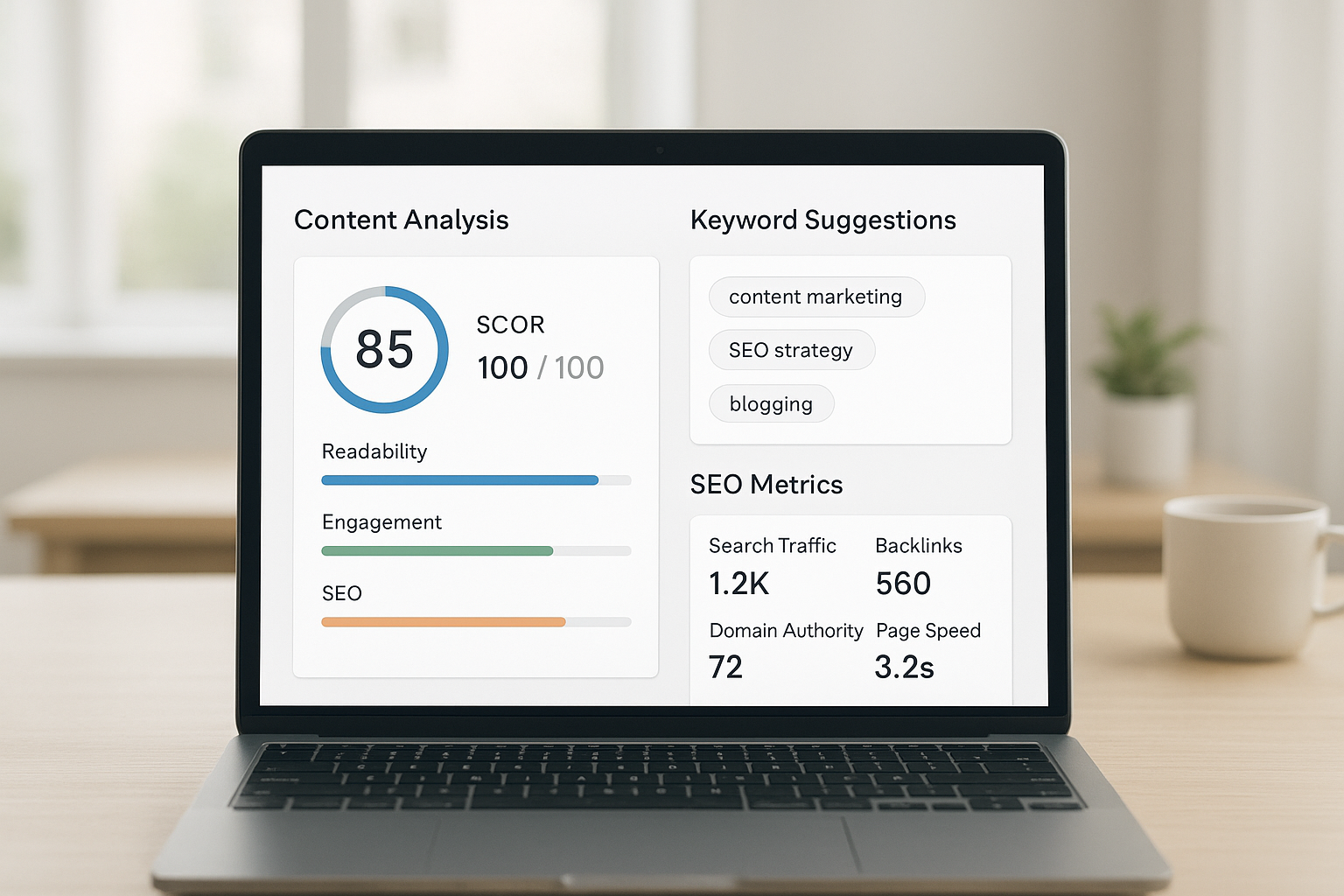
AI content optimization tools analyze content in real time to guide ranking improvements. See our AI SEO strategy guide.
What Are AI Content Optimization Tools?
In practice, these tools scan existing content against top-ranking pages and industry data. Additionally, they flag gaps such as missing subtopics, weak headings, or thin keyword coverage. Some platforms, like RankAuthority’s 1-Click AI AutoPilot, go further by automating the technical and strategic work entirely, which removes much of the guesswork involved in manual optimization. Learn about website optimization automation to expand on automation options.
Why AI-Powered Content Optimization Matters for Modern SEO
Search behavior has shifted dramatically over the past two years. For instance, a growing share of queries now surface inside AI-generated overviews, chatbots, and voice assistants rather than a traditional list of blue links. Therefore, content must be structured for both human readers and machine interpretation.
According to Google’s own documentation on creating helpful, people-first content, pages that clearly answer specific questions tend to perform better across AI-generated summaries. For example, Google has stated that AI Overviews now appear across more than a billion monthly searches worldwide, signaling a fundamental shift in how answers are surfaced. As a result, early optimization has become a genuine competitive advantage.
If you’re new to this space, our complete guide to AI tools for content optimization walks through the fundamentals in more depth.
How AI-Driven Content Optimization Works
Most AI content optimization tools follow a similar core process, even though individual features vary. Here’s a simplified breakdown of the typical workflow:
- Content Analysis: The tool crawls your existing page or draft and compares it against top-ranking competitors, identifying gaps in topic coverage, keyword usage, and structure.
- Semantic Scoring: Using natural language processing, the platform scores your content for relevance, readability, and topical depth, then highlights sections that need improvement.
- Optimization Recommendations: The system suggests specific edits, such as adding subheadings, adjusting keyword density, or expanding thin sections, based on data from top-performing pages.
- Automated or Guided Implementation: Depending on the platform, changes are either applied automatically, as with RankAuthority’s 1-Click AI AutoPilot, or presented as guided suggestions for manual editing.
- Ongoing Monitoring: Finally, the tool tracks ranking changes, AI citation frequency, and engagement metrics over time, refining recommendations as search algorithms evolve.
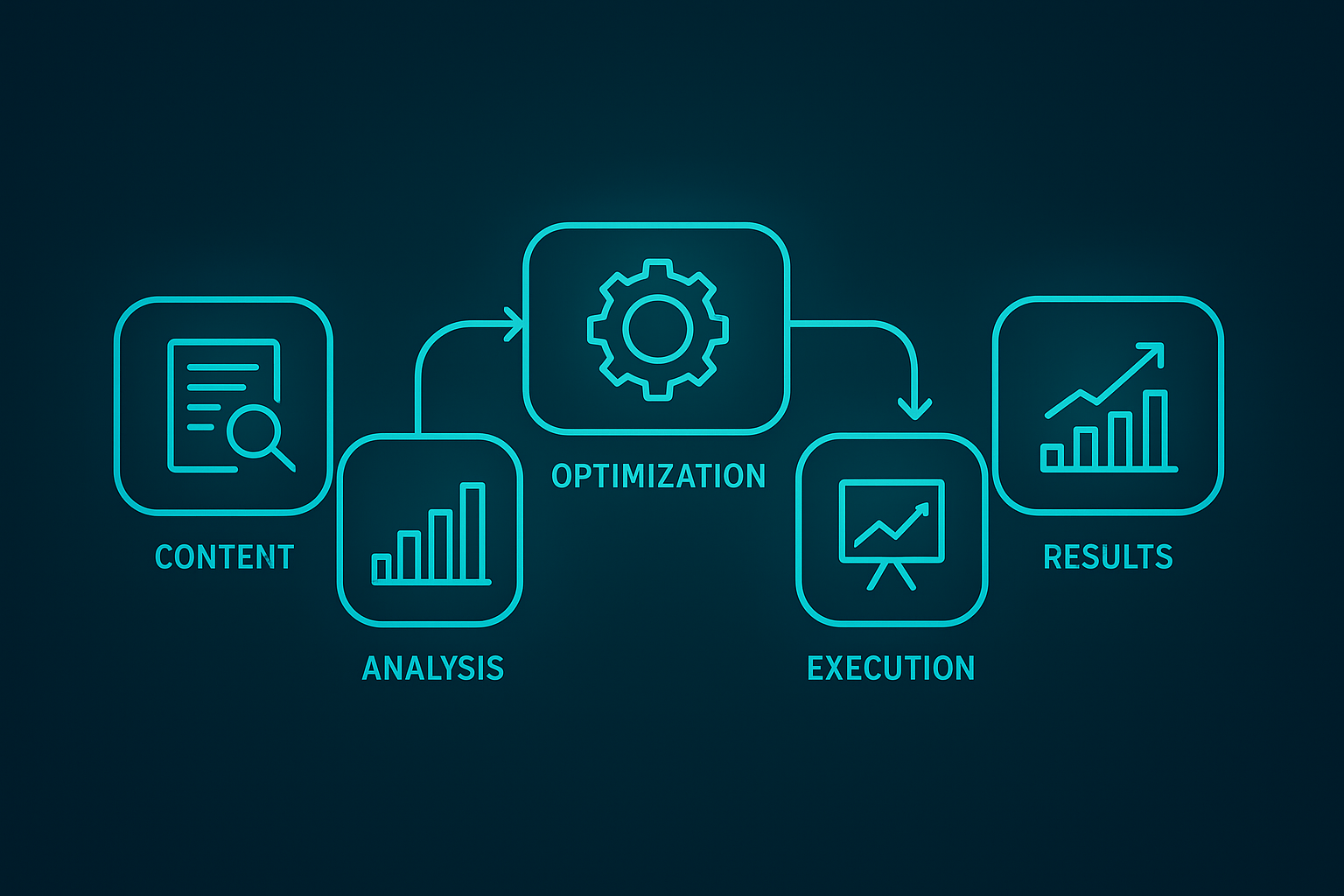
A typical automated optimization workflow, from analysis to ongoing monitoring.
Key Features to Look for in an AI SEO Optimization Tool
Not every platform needs every feature. However, certain capabilities consistently separate strong tools from basic ones:
- Real-time content scoring against live search results data
- Semantic keyword and entity suggestions, not just exact-match phrases
- Answer Engine Optimization (AEO) and Generative Engine Optimization (GEO) support for AI search visibility
- Automation options for teams managing multiple sites or client accounts
- Integration with existing content management and publishing workflows
- Transparent reporting on ranking performance and AI citation frequency
In particular, teams optimizing for AI-driven search environments should prioritize platforms with structured AEO and GEO support, since these environments often reward clearly answered questions over dense keyword usage. Our guide to best practices for AI-driven content optimization covers this in more detail.
Using These Platforms for Answer Engine Optimization and GEO
Generative Engine Optimization, or GEO, focuses on getting content cited or summarized inside AI-generated answers rather than simply ranked in a list of links. Similarly, Answer Engine Optimization, or AEO, targets voice assistants and direct-answer features. As a result, many AI content optimization tools now include specialized modules built specifically for these formats.
If you’re evaluating providers, this comparison of which service helps with answer engine optimization breaks down what to expect from different platforms. Notably, RankAuthority builds this functionality directly into its automation layer, aiming to strengthen visibility across both classic search engines and next-generation AI answer systems.
What Is the Difference Between GEO and Traditional SEO?
Traditional search engine optimization focuses on ranking in a results list, while GEO focuses on being cited inside an AI-generated response. In other words, the goal shifts from earning a click to earning a mention. Consequently, content structure, clarity, and direct answers matter more than ever.
Choosing the Right AI Content Optimization Platform
Selecting a platform ultimately depends on your team’s size, technical comfort, and how many sites you manage. Small business owners, for example, often prefer fully automated solutions that require minimal setup; learn how to use AI for search optimization in practical workflows. In contrast, agencies overseeing multiple client sites may need more granular control and reporting.
RankAuthority’s platform, for instance, offers a seven-day trial period, letting users test automated GEO and AEO optimization before committing to a paid plan. This kind of low-risk entry point can be especially useful for teams unfamiliar with AI-driven search strategy. For additional background, see our complete guide to AI content analysis for SEO and our 2025 guide to AI tools for content marketing.
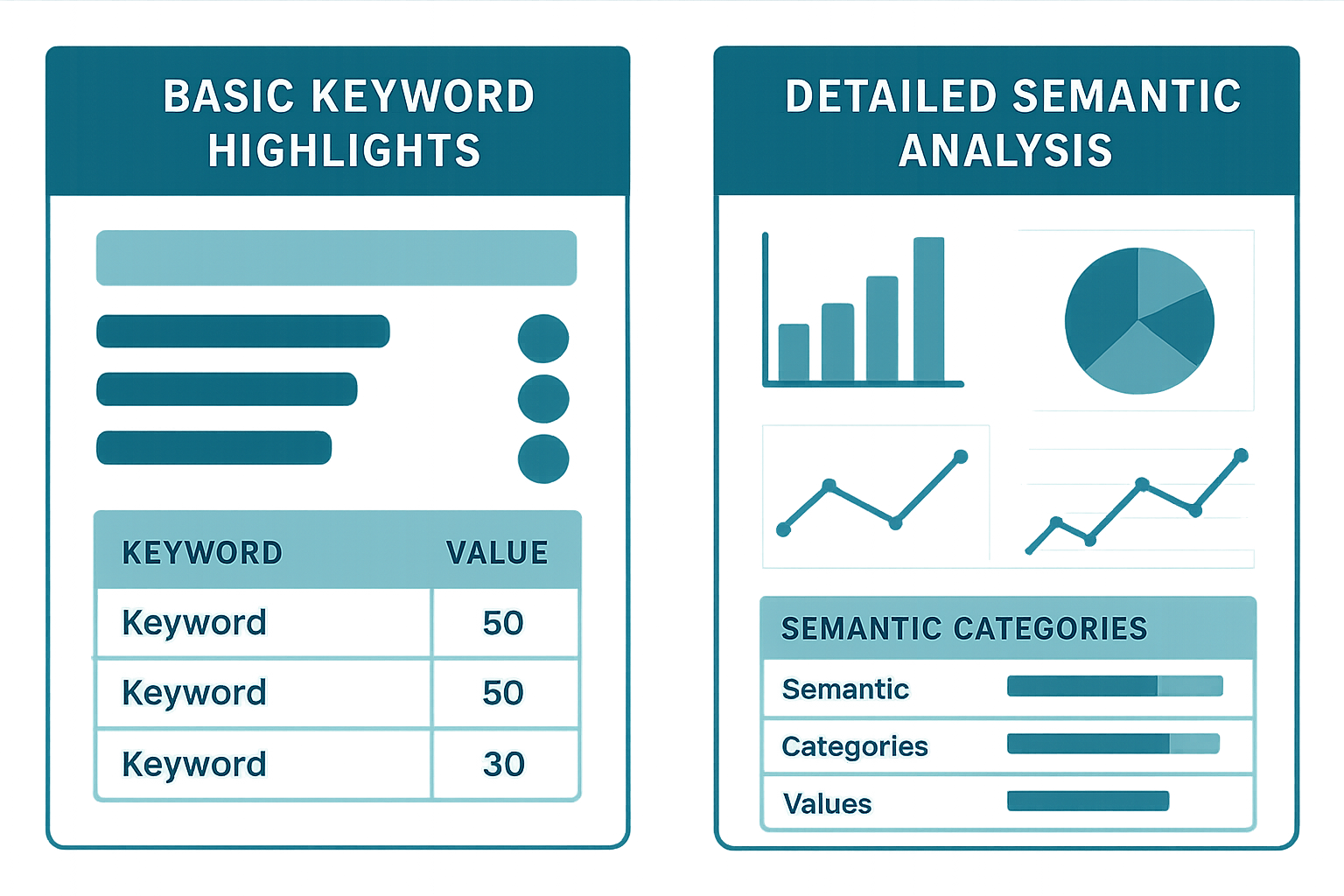
Comparing feature depth helps teams choose the right AI content optimization tools for their goals.
Common Mistakes to Avoid With Automated Content Tools
Even reliable automation can go wrong without oversight. Below are mistakes teams frequently make when adopting new software:
- Over-relying on automation without reviewing tone or factual accuracy
- Chasing keyword density instead of genuine topical depth
- Ignoring AEO and GEO signals in favor of legacy tactics only
- Failing to update older content after the initial optimization pass
- Not tracking AI citation performance alongside traditional rankings
Ultimately, the best results come from pairing automation with periodic human review. According to the NIST AI Risk Management Framework, human oversight remains a key safeguard even in highly automated systems. In this way, teams get speed and scale without sacrificing quality or accuracy.
Frequently Asked Questions About AI Content Optimization Tools
What are AI content optimization tools?
AI content optimization tools are software platforms that use machine learning and natural language processing to analyze, score, and improve content for search visibility. They evaluate keyword usage, structure, and semantic relevance, then recommend or apply changes automatically.
How do AI content optimization tools work?
They crawl your content, compare it to top-ranking pages, and score it for topical depth, readability, and keyword relevance. Based on that analysis, they generate recommendations or apply automated edits.
Why should small businesses use AI content optimization tools?
Small businesses often lack dedicated SEO staff, so automation fills that gap by handling technical analysis and optimization tasks. This lets owners focus on running their business while still competing for search visibility.
What is the difference between AI content optimization tools and traditional SEO software?
Traditional SEO software typically focuses on keyword tracking and backlink audits, while AI content optimization tools analyze content quality, semantic relevance, and structure. Many newer tools also optimize for AI-driven answer engines, not just classic search rankings; compare approaches in our website optimization automation guide.
How much do AI content optimization tools cost?
Pricing varies widely, from free basic plugins to enterprise platforms costing hundreds of dollars monthly. Many providers, including RankAuthority, offer a free trial period so teams can test results before committing.
How long does it take to see results from AI content optimization?
Most sites see measurable ranking or visibility changes within four to twelve weeks, depending on competition and how frequently content is updated; see our AI SEO strategy guide for practical steps. Answer engine and AI citation improvements can sometimes appear faster.
What common mistakes do people make with AI content optimization tools?
Common mistakes include over-relying on automation without reviewing tone, chasing keyword density instead of topical depth, and ignoring AEO or GEO signals. Failing to revisit older content is another frequent oversight.
What features should I look for in an AI content optimization tool?
Look for real-time content scoring, semantic keyword suggestions, AEO and GEO support, and clear reporting on ranking performance. Integration with your existing publishing workflow also matters for day-to-day usability.
Can AI content optimization tools help with Answer Engine Optimization?
Yes, many modern platforms include dedicated modules for structuring content so it can be cited or summarized by AI answer engines and voice assistants. This is often called Answer Engine Optimization, or AEO.
Do AI content optimization tools replace human writers?
No, these tools are designed to guide and enhance human writing, not replace it entirely. Human review remains important for accuracy, tone, and brand voice.
What’s the best way to measure success with AI content optimization tools?
Track organic ranking changes, click-through rates, and AI citation frequency alongside traditional traffic metrics. Comparing performance before and after optimization gives the clearest picture of impact.
Are AI content optimization tools safe for Google rankings?
Generally yes, as long as the tool focuses on genuine content quality rather than manipulative tactics like keyword stuffing. Google’s own guidance favors helpful, people-first content over automated shortcuts that ignore reader value.
Conclusion
In summary, AI content optimization tools have become essential for staying visible across both traditional search engines and AI-driven answer platforms. From semantic scoring to automated implementation, these tools remove much of the manual guesswork from modern SEO. Similarly, they help teams keep pace with how natural language processing continues to reshape search behavior. For practical tips, see AI search optimization.
Whether you’re a solo marketer or managing multiple client sites, choosing a platform that supports GEO and AEO, such as RankAuthority, can help future-proof your content strategy. As AI search continues to evolve, teams that adopt AI content optimization tools early will likely maintain a lasting advantage in visibility and discoverability. Learn how to automate your SEO.

