

AI-enhanced search visibility tools are software platforms built to help websites get discovered by both traditional search engines and newer AI answer engines like ChatGPT, Perplexity, and Google AI Overviews. As a result, businesses need more than keyword optimization to stay visible. These platforms combine automation, structured data, and content strategy so brands can earn citations wherever people now search for answers.
In particular, the shift toward conversational AI search has changed what “ranking” even means. Instead of competing only for a spot on page one of Google, businesses must also compete to be quoted, summarized, or recommended inside an AI-generated response. That is precisely the gap these newer tools are designed to close.
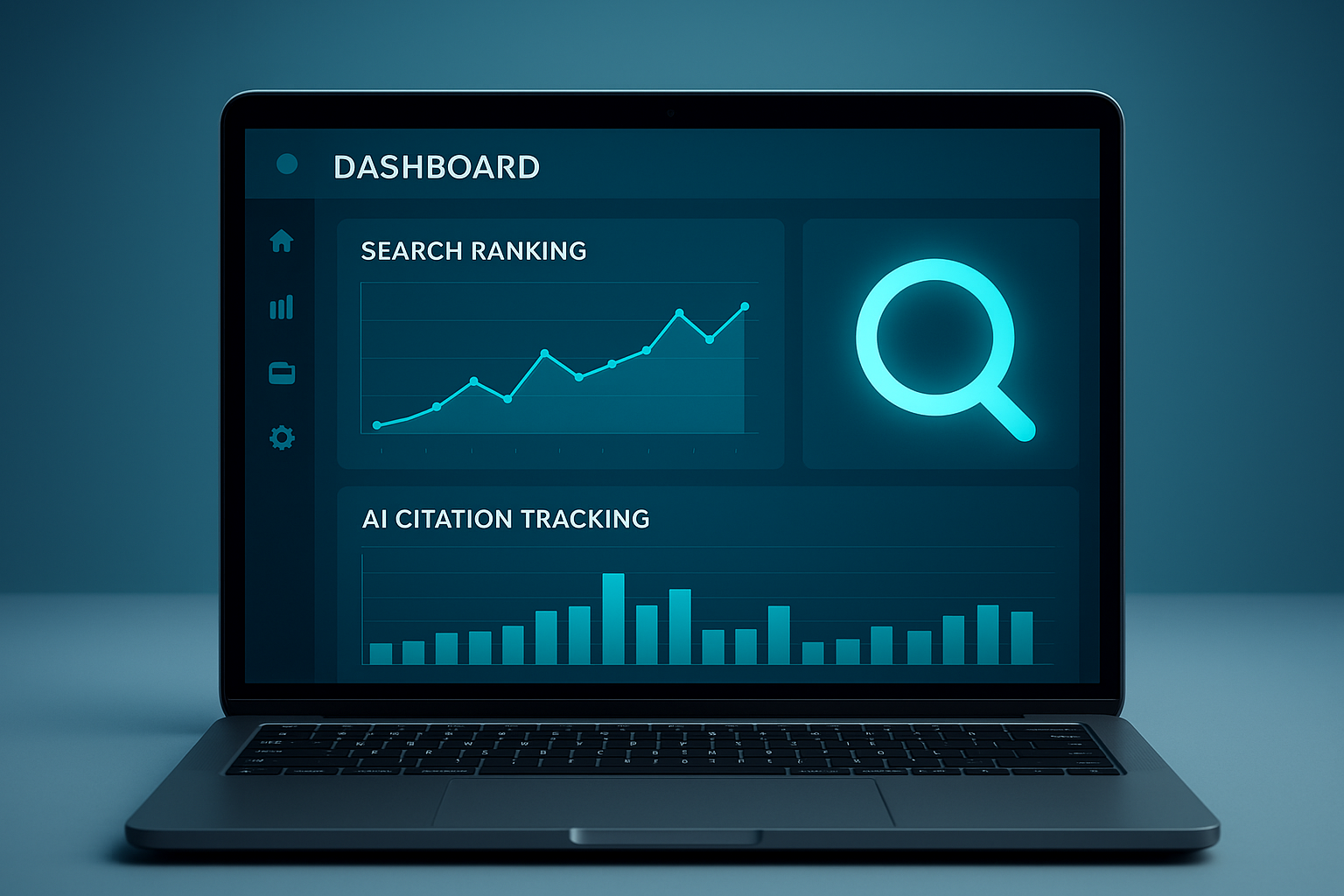
A visibility dashboard combining ranking data with AI citation tracking, a core feature of modern AI-enhanced search visibility tools.
What Are AI-Enhanced Search Visibility Tools?
AI-enhanced search visibility tools are platforms that combine automated technical SEO, structured data deployment, and AI-specific content formatting to help a website rank in Google and get cited by AI answer engines. Instead of only targeting blue-link rankings, they also optimize for Generative Engine Optimization (GEO) — structuring content so generative AI models can reference it — and Answer Engine Optimization (AEO), which formats content for direct answers and featured snippets.
Specifically, most platforms bundle several functions together: site audits, schema generation, competitor analysis, and citation monitoring. Consequently, a business owner no longer needs five separate tools and a specialist to manage each one. For example, Rank Authority’s AI visibility platform packages these functions into a single dashboard built around automation rather than manual configuration.
Why AI Search Visibility Matters Now
AI chatbots and answer engines have moved from novelty to daily habit for a large share of internet users. Industry surveys suggest that a growing proportion of online research now begins with an AI assistant rather than a traditional search box, a trend that has accelerated since Google rolled out AI Overviews to broader markets. As a result, a page that never appears in an AI-generated answer effectively becomes invisible to that growing segment of searchers, even if it still ranks well in classic search results.
Furthermore, the National Institute of Standards and Technology notes that AI systems are becoming deeply embedded in everyday information retrieval, which underscores why visibility strategy can no longer stop at traditional rankings. In contrast, businesses that adapt early position themselves to be cited as AI adoption continues to grow.
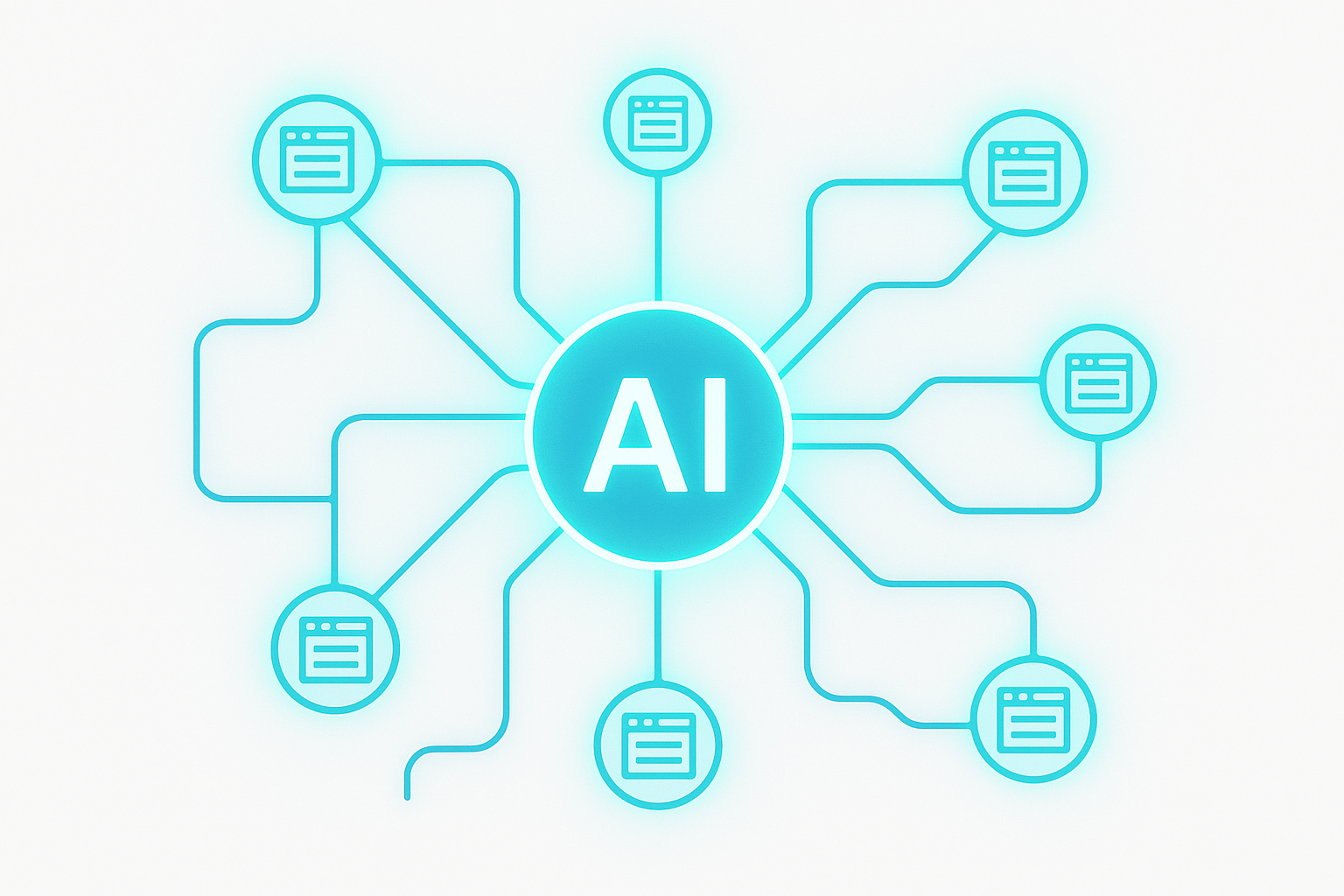
AI answer engines pull and cite content from clearly structured sources, which is why content formatting matters as much as keywords.
The Technology Stack Behind Modern AI Visibility Platforms
To understand how these platforms work, it helps to break down the three core technologies most of them rely on.
Generative Engine Optimization (GEO)
Generative Engine Optimization, or GEO, means structuring content specifically so generative AI models can extract and cite it accurately. In practice, this often involves building dedicated “artifact” pages that answer one clear question with well-organized facts, rather than burying the answer inside a long, meandering article.
Answer Engine Optimization (AEO)
Answer Engine Optimization, or AEO, formats content to directly answer a searcher’s question within the first few sentences. Therefore, a page optimized for AEO places its most useful answer near the top, then supports it with detail further down, which improves its odds of being pulled into a featured snippet or voice response.
Automated Schema Markup
Schema markup is structured code, defined by the shared vocabulary at schema.org, that labels page content in a format machines can read. According to Google’s own documentation, structured data helps pages qualify for rich results, and many AI-enhanced search visibility tools now generate and deploy this markup automatically across an entire site.
How to Strengthen Your AI Search Visibility: A 5-Step Process
Above all, improving visibility is a repeatable process rather than a one-time project. The following steps outline how most AI-enhanced search visibility tools approach the work.
- Run a full site audit and AI visibility check. Start by scanning your website for technical issues, missing schema, and content gaps that prevent search engines and AI models from understanding your pages.
- Deploy automated schema markup. Add structured data that clearly labels your products, services, FAQs, and business information so AI systems can parse and cite your content accurately.
- Build GEO-optimized content. Create artifact-style pages that directly answer common questions in your industry, since generative AI models tend to pull information from clearly structured, authoritative sources.
- Format content for AEO. Structure your answers using short direct responses near the top of each page, followed by supporting detail, so answer engines can extract concise responses.
- Monitor AI citations and rankings. Track how often your brand appears in AI-generated answers alongside traditional keyword rankings, then refine your content strategy based on what is and isn’t getting cited.
Choosing the Right AI-Powered Search Tools for Your Business
When comparing platforms, look for tools that automate the technical work rather than just reporting on it. For instance, Rank Authority’s 1-Click AI AutoPilot scans a site, identifies gaps, and streamlines approved fixes, while RankFast analyzes competitor pages to help rebuild and outrank them, and RankLink automates internal linking and topical siloing. Together, these features reduce the expertise and hands-on time typically required for optimization.
In addition, it helps to explore free diagnostic resources first. You can read more about which AI tools for search marketing actually work, review a breakdown of AI tools that boost search rankings, or see how next-gen tools are dominating AI search rankings. Similarly, agencies managing multiple client sites should prioritize platforms with reporting built around a clear authority score, such as the RA Score, so progress is easy to communicate.
What Is an AI Visibility Score?
An AI visibility score is a single metric summarizing how well a site is positioned to rank and be cited across search and AI environments. Specifically, it typically factors in technical health, schema coverage, content structure, and backlink signals into one easy-to-track number, which makes it simpler for business owners to measure progress over time without reading raw technical data.

Automated platforms let small business owners review AI-enhanced search visibility tools without hiring a dedicated SEO team.
Common Mistakes to Avoid With AI Search Visibility
Even with the right tools, certain habits undermine results. For example, skipping schema markup leaves AI systems guessing at context, while vague, generic content rarely gets quoted in a generated answer. Likewise, many businesses never check whether AI engines are actually citing them, which means they keep repeating the same ineffective approach. Finally, treating AI visibility as a one-time fix instead of an ongoing process tends to produce short-lived gains rather than sustained authority.
It’s also worth noting that automated indexing tools, including those built into Rank Authority, can submit pages for indexing more quickly, but search engines like Google alone determine whether and when a page is actually indexed. Individual results vary, and any outcome data referenced in case studies should be treated as an example rather than a guarantee.
Frequently Asked Questions About AI-Enhanced Search Visibility Tools
What are AI-enhanced search visibility tools?
AI-enhanced search visibility tools are software platforms that automate technical SEO, structured data, and AI-specific content formatting to help websites rank in search engines and get cited by AI answer engines. They typically combine site audits, schema generation, and content optimization in one dashboard.
How do AI-enhanced search visibility tools differ from traditional SEO software?
Traditional SEO software mainly focuses on keyword rankings and backlinks for classic search engines. In contrast, AI-enhanced search visibility tools also optimize content so it can be understood, summarized, and cited by generative AI models like ChatGPT and Google AI Overviews.
What is Generative Engine Optimization (GEO)?
Generative Engine Optimization, or GEO, is the practice of structuring website content so AI systems can easily extract and cite it in generated answers. It often involves clear formatting, factual accuracy, and dedicated pages built around specific questions.
What is Answer Engine Optimization (AEO)?
Answer Engine Optimization, or AEO, formats content to directly answer a searcher’s question in the first few sentences. This structure increases the chances of being selected for featured snippets, voice search answers, and AI-generated summaries.
Why does schema markup matter for AI search visibility?
Schema markup is structured code that tells search engines and AI systems exactly what a page is about, such as a product, service, FAQ, or review. Without it, AI models must guess at context, which reduces the likelihood of accurate citation.
How long does it take to see results from AI visibility optimization?
Most businesses see measurable changes in technical health and indexing signals within a few weeks, while meaningful visibility gains in AI answers and search rankings typically take one to three months. Individual results vary based on site size, competition, and existing authority.
How much do AI-enhanced search visibility tools cost?
Pricing varies widely, from free diagnostic tools like visibility checkers and site audits to paid platforms with monthly subscriptions that include automation, monitoring, and reporting. Many providers offer a low-risk trial period so businesses can test results before committing.
What common mistakes hurt AI search visibility?
Common mistakes include ignoring schema markup, writing vague content that doesn’t directly answer questions, and failing to monitor whether AI engines are citing the site. Relying solely on keyword stuffing instead of clear, well-structured answers also limits visibility.
Can small businesses use AI-enhanced search visibility tools without technical expertise?
Yes. Most modern platforms are built with automation in mind, so business owners can run audits, deploy schema, and publish optimized content without hiring a dedicated SEO specialist, lowering the barrier to competing with larger rivals.
How do I track whether my content is being cited by AI engines?
AI visibility monitoring tools track citations across major AI answer platforms by checking whether a brand or page appears in generated responses to relevant queries. This data helps identify which content performs well and which needs improvement.
What is the best practice for structuring content for AI answer engines?
Best practice is to lead with a short, direct answer of one to three sentences, then follow with supporting detail, examples, and context. Clear headings, numbered steps, and factual accuracy all improve the odds of being referenced.
Do AI-enhanced search visibility tools replace the need for traditional SEO?
No. Traditional SEO fundamentals like page speed, quality content, and backlinks remain important. AI-enhanced search visibility tools build on these fundamentals by adding GEO and AEO layers for next-generation search environments.
Can these tools guarantee higher rankings or more traffic?
No tool can guarantee specific ranking positions or traffic outcomes, since search engines and AI platforms control their own algorithms. Individual results vary, and any case studies or testimonials should be viewed as examples rather than typical outcomes.
Does automated indexing mean my pages will instantly appear in search results?
Automated indexing tools can submit pages for indexing faster, but search engines like Google alone decide whether and when a page is actually indexed. This process can take anywhere from a few hours to several weeks.
Final Thoughts
In summary, AI-enhanced search visibility tools give businesses a practical way to compete across both traditional search engines and emerging AI answer platforms without needing an in-house specialist for every task. By combining automated audits, schema deployment, GEO-focused content, and AEO formatting, these platforms address the technical and strategic work that visibility now requires. As AI search continues to reshape how people find information, as explored in this related piece on how AI optimization technology is reshaping search, businesses that adopt these tools early are better positioned to stay discoverable. For a deeper look at getting started, see this guide on how you can improve your online visibility using AI. Individual results vary, but the direction of search is clear: visibility now means being found by both humans and machines.

