
Learning how to deploy SEO automation in digital agencies starts with a clear plan, not just new software. Agencies juggling dozens of client sites face a familiar problem: too many technical tasks, too little time, and increasingly complex search environments shaped by AI. This guide walks through a practical, step-by-step framework for rolling out automated SEO, Generative Engine Optimization (GEO), and Answer Engine Optimization (AEO) workflows across an entire agency roster without overwhelming the team.
Quick Answer
To deploy SEO automation in digital agencies, agencies audit every client site, apply approved technical and schema fixes through automation rules, build GEO and AEO content assets, and then monitor AI visibility on an ongoing basis. Consequently, teams can manage far more client sites without proportionally increasing headcount.
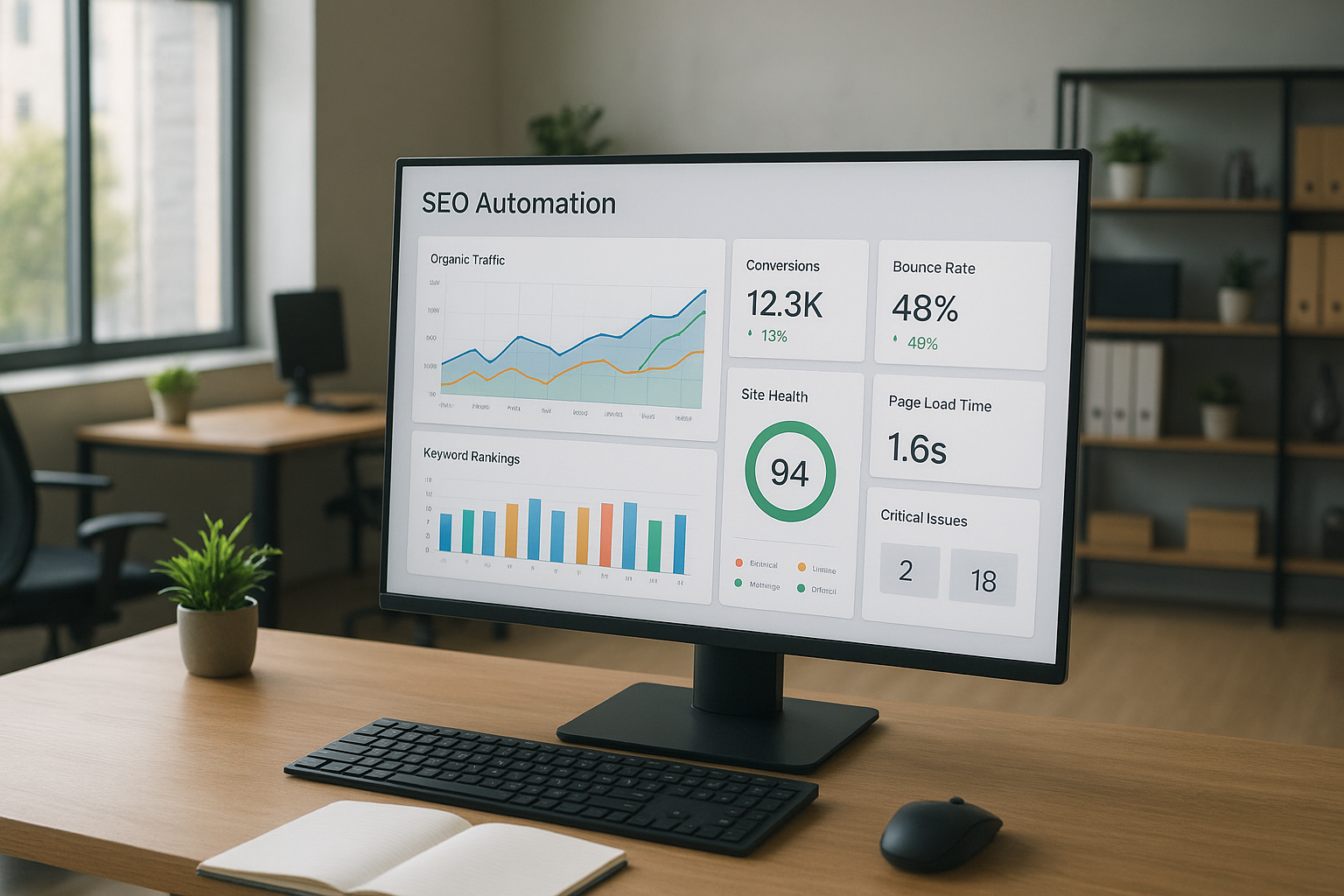
A centralized dashboard is often the first step agencies take when learning how to deploy SEO automation in digital agencies.
What Is SEO Automation for Digital Agencies?
SEO automation for digital agencies is the use of software platforms to handle repetitive technical SEO, schema, and content tasks across many client sites at once. Instead of manually auditing every page, agencies configure rules that apply fixes consistently, freeing specialists to focus on strategy rather than execution.
In practice, this includes automated site audits, 1-Click AI AutoPilot-style fixes for technical errors, structured data generation, and automated index submission. Importantly, automation does not remove human judgment entirely; instead, it removes the repetitive labor so account managers can review results and make strategic calls faster. As a result, agencies can scale their service offering without hiring an SEO specialist for every client.
Why Agencies Are Automating SEO, GEO, and AEO Now
Search is changing quickly. According to Wikipedia’s overview of search engine optimization, ranking factors have expanded well beyond keywords to include structured data, user experience signals, and now AI-driven answer generation. In turn, agencies that only optimize for traditional blue links risk losing visibility as AI Overviews and chat-based assistants summarize answers directly.
Platforms built for this shift, such as Rank Authority, combine traditional SEO automation with GEO and AEO in a single system. For instance, Rank Authority spans nine connected AI tools and integrates with 45 platforms, including WordPress, Shopify, Wix, Webflow, Squarespace and more. Because agencies often manage clients across different platforms, this breadth of integration matters more than it might first appear.
Furthermore, structured data standards maintained by Schema.org continue to influence how both traditional search engines and generative AI tools interpret page content. Agencies that automate schema deployment position every client site to be understood correctly by both audiences.
How to Deploy SEO Automation in Digital Agencies: A 6-Step Framework
Deploying automation across a client roster works best as a structured rollout rather than a single switch flip. The following sequence reflects how most agencies move from manual processes to a fully automated workflow.
- Audit every client site and set a baseline. Run a unified audit, such as a Rank Authority Score report, to capture technical health, schema gaps, and content issues before changing anything. This baseline makes it possible to later prove measurable progress.
- Configure automation rules and apply fixes. Decide which issues can be fixed automatically, such as broken links, missing metadata, and page speed problems, then let the platform apply those approved fixes at scale. Review the multi-site automation setup process if managing dozens of client domains at once.
- Build GEO content assets. Create purpose-built pages structured specifically so generative AI tools can extract, summarize, and cite the content as a reliable source in conversational answers.
- Format content and schema for AEO. Add direct-answer formatting and structured markup so client pages become eligible for featured snippets and AI-generated answer boxes.
- Automate internal linking and topical silos. Use tools such as RankLink to group related content into clear topical clusters, which strengthens topical authority signals across each client’s site.
- Monitor visibility and report results. Track AI citation frequency, indexing activity, and score changes continuously, then translate the data into client-facing reports. Note that automated tools can submit pages for indexing, but Google alone determines whether and when a page is indexed.
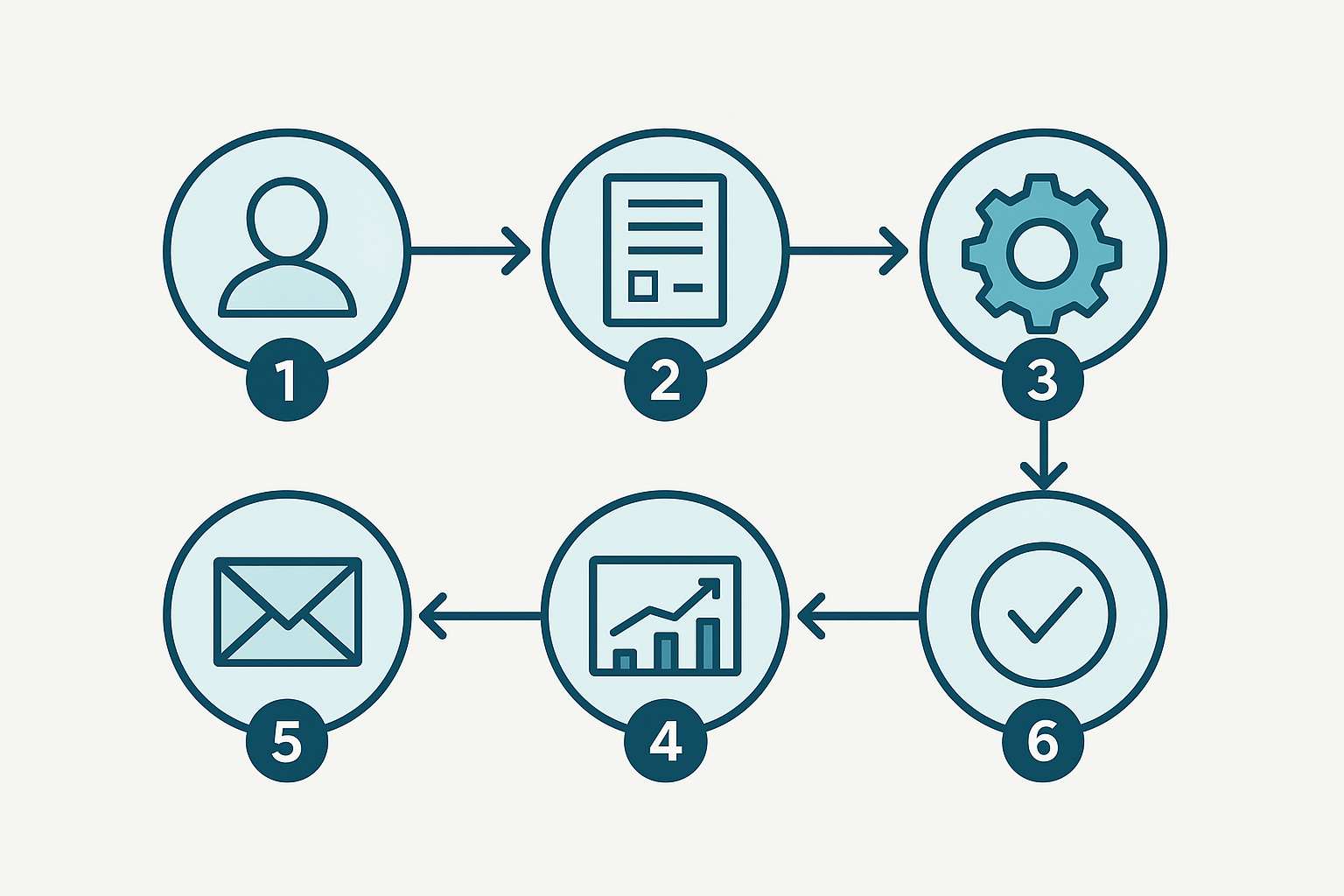
A repeatable workflow keeps every step consistent when scaling automation across client accounts.
Choosing the Right Automated SEO Tools for Agencies
Not every automation tool is built for agency-scale work. Specifically, agencies should look for platforms that support multiple client logins, bulk audits, and centralized reporting rather than single-site tools repurposed for agency use. For a deeper comparison of what to prioritize, see this breakdown of SEO automation tools for marketing agencies.
Features worth prioritizing include competitor page analysis (such as RankFast), automated internal linking (RankLink), AI-assisted content publishing (AI Blog Builder), and free diagnostic tools like a site audit checker or backlink checker for quick client pitches. Agencies already wondering whether one tool can manage SEO for multiple clients typically find that consolidated platforms reduce both cost and complexity compared to stitching together several point solutions.
Common Mistakes Agencies Make When Scaling SEO Automation
Even strong automation platforms can underdeliver when deployed carelessly. The following mistakes come up often:
- Skipping the baseline audit. Without a starting score, it becomes difficult to demonstrate progress to clients later.
- Automating everything with no review. Some fixes need context a human should confirm, especially on highly customized client sites.
- Ignoring GEO and AEO entirely. Agencies that automate only traditional SEO miss growing visibility opportunities in AI-generated answers.
- Overpromising indexing speed. Submitting a page for indexing does not guarantee Google will index it on any particular timeline.
- Not monitoring after deployment. Automation without ongoing visibility tracking makes it hard to catch regressions quickly.
Measuring Success: RA Score, AI Visibility, and Reporting
Agencies that automate SEO still need a consistent way to measure outcomes. A composite score, such as the Rank Authority Score, combines technical health, content quality, and schema completeness into one number that is easy to explain to clients. In addition, AI visibility monitoring tracks whether a client’s content is being cited across major AI answer platforms, which is a newer but increasingly important metric.
For agencies new to automation, guidance on how to automate a website’s SEO efforts offers a useful starting point before scaling to a full client roster. As always, individual results vary, and reported visibility gains reflect specific account conditions rather than guaranteed outcomes for every client.

Ongoing monitoring helps agencies confirm automated SEO changes are improving AI and traditional search visibility.
Frequently Asked Questions About How to Deploy SEO Automation in Digital Agencies
What does it mean to deploy SEO automation in digital agencies?
Deploying SEO automation in digital agencies means using a software platform to handle repetitive technical SEO, schema, and content tasks across every client site from one dashboard. Instead of manually auditing each site, teams set automation rules once and apply approved fixes at scale.
How long does it take to set up automated SEO for multiple clients?
Most agencies can connect a first client site and run an initial audit within a day, with full rollout across a client roster typically taking one to three weeks. Individual results vary based on site complexity and existing technical debt.
Is SEO automation different from traditional manual SEO?
Traditional SEO relies on a specialist manually auditing, fixing, and tracking each site, while automation uses algorithms to detect issues and apply fixes consistently. Strategic decisions still require human oversight, but execution speed increases significantly.
What is Generative Engine Optimization (GEO) and why does it matter for agencies?
Generative Engine Optimization, or GEO, is the practice of structuring content so AI systems like chatbots and AI Overviews can easily cite it as a source. Agencies that add GEO to their service mix help clients stay visible as search shifts toward AI-generated answers.
How does Answer Engine Optimization (AEO) help agencies earn AI citations?
Answer Engine Optimization, or AEO, formats content and schema markup so search engines and AI tools can extract direct answers for featured snippets and conversational results. This increases the odds that a client’s page is the one an AI assistant quotes.
How much does SEO automation cost for an agency?
Costs vary by platform and the number of client sites managed, but many tools offer tiered plans and risk-free trial periods so agencies can test results before committing. A ten-day free trial, for example, is a common way to evaluate value before paying.
Can one platform manage SEO automation for multiple client sites?
Yes, modern platforms are built to connect and manage dozens of client sites from a single login, applying consistent fixes and reporting across all of them. This centralization is one of the main reasons agencies move away from manual, site-by-site SEO work.
What are the biggest risks of automating SEO without oversight?
Running automation with no human review can lead to applying irrelevant fixes, ignoring client-specific context, or mismanaging schema. Agencies reduce this risk by reviewing suggested changes before they go live and monitoring visibility afterward.
Does automated indexing guarantee faster Google indexing?
No. Automated tools can submit updated pages for indexing, but Google alone determines whether and when a page is actually indexed. Submission simply speeds up discovery; it does not guarantee a specific outcome.
What’s the difference between RankFast and RankLink?
RankFast analyzes competitor pages and rebuilds content to outrank them, while RankLink automates topical siloing and internal linking across a site’s structure. Agencies often use both together to strengthen content and architecture simultaneously.
How do agencies measure ROI from SEO automation?
Agencies typically track a composite visibility score, organic traffic trends, keyword movement, and AI citation frequency before and after deployment. Reporting dashboards that combine these metrics make it easier to show clients measurable progress over time.
What CMS platforms work with SEO automation tools?
Leading automation platforms integrate with common CMS environments including WordPress, Shopify, Wix, Webflow, Squarespace and more (45 platforms in total). This broad compatibility lets agencies standardize automated SEO across clients who use different website builders.
Agencies exploring Rank Authority can test the full platform, including 1-Click AI AutoPilot, RankFast, and RankLink, through a risk-free ten-day trial before rolling it out across every client account.
Final Thoughts on Agency-Wide SEO Automation
Ultimately, knowing how to deploy SEO automation in digital agencies comes down to sequencing: audit first, automate repetitive fixes next, then layer in GEO and AEO before scaling across every client site. Agencies that skip the baseline or ignore AI visibility tend to struggle to prove value, while those that follow a structured rollout can manage far more accounts without burning out their team. As AI-powered search continues to reshape how people find businesses online, automation is becoming less of a luxury and more of a practical requirement for agencies that want to stay competitive.