
How to enhance brand visibility using AI is the process of combining automated SEO, Generative Engine Optimization (GEO), and Answer Engine Optimization (AEO) so AI search tools, chatbots, and answer engines can find, understand, and cite your business accurately. As AI reshapes how people search for products and services, brands that fail to adapt risk disappearing from AI-generated answers entirely. Fortunately, however, enhancing visibility in this new landscape does not require a technical background or an in-house SEO team. Below, this guide breaks down exactly how to enhance brand visibility using AI, step by step, with tools and strategies that work for small businesses, marketers, and agencies alike.
Quick Answer: To enhance brand visibility using AI, audit your site for AI readability, deploy schema markup, publish AEO-formatted answer content, build GEO artifact pages, and track citations across AI platforms such as ChatGPT, Gemini, and Perplexity. Automated platforms such as Rank Authority streamline most of this work through tools like 1-Click AI AutoPilot.
What Is Brand Visibility in AI Search?
Brand visibility in AI search refers to how often, and how accurately, AI systems mention, cite, or recommend your business when users ask related questions. In contrast to classic search, where visibility meant ranking on page one, AI visibility is about being named inside an AI-generated answer, summary, or chat response. Specifically, this depends on whether generative AI models can parse your site’s structure, trust your content, and connect it to the right topics.
Gartner has predicted that traditional search engine volume could drop by as much as 25% by 2026 as users shift toward AI chatbots and virtual agents, according to a 2024 Gartner press release. As a result, brands that only optimize for classic blue-link search are leaving a growing share of discovery opportunities untapped. To understand this shift in more depth, see how AI search really sees your brand and learn what AI visibility really means for everyday search behavior.
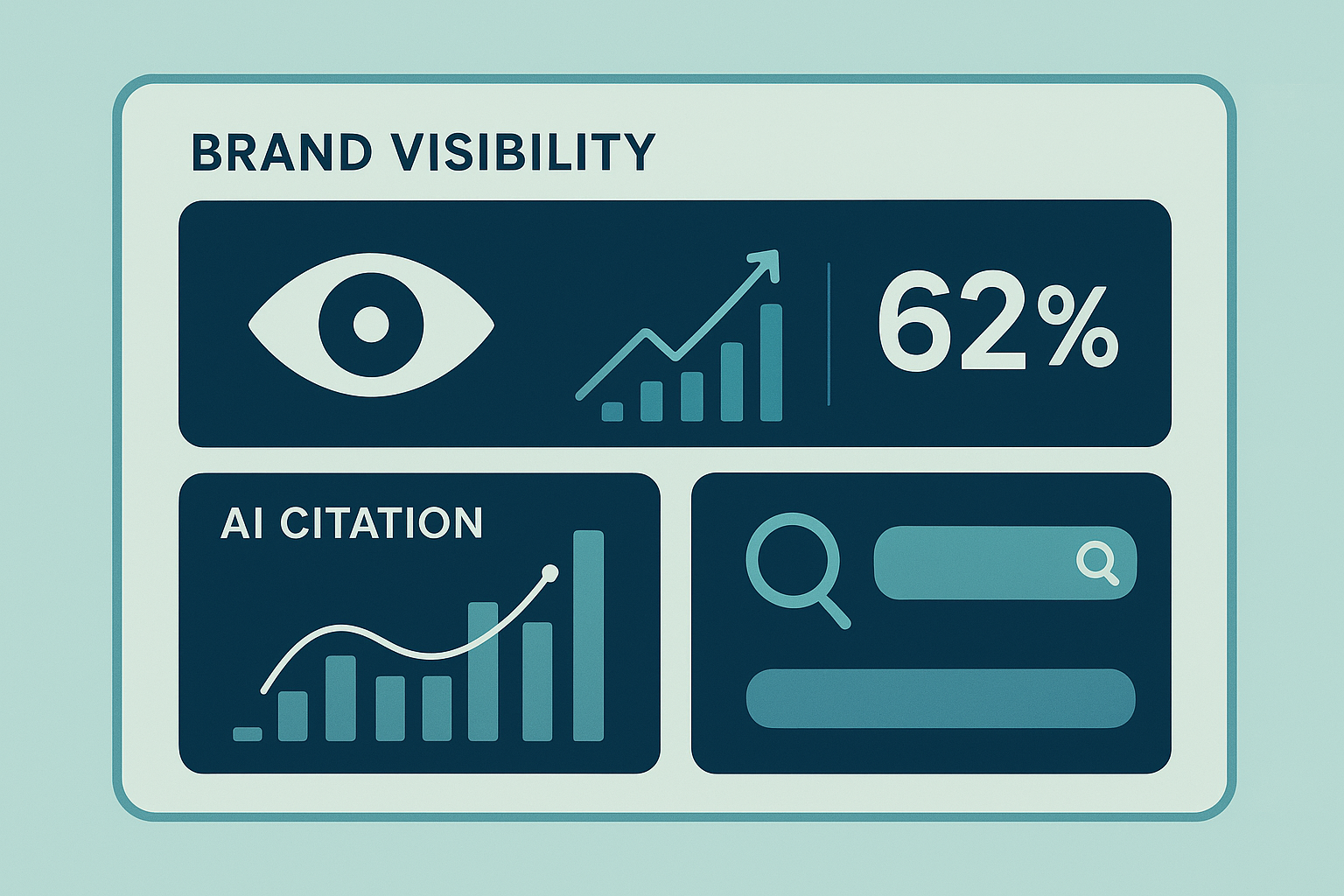
Tracking tools make it easier to see exactly how to enhance brand visibility using AI across multiple platforms.
How to Enhance Brand Visibility Using AI in 6 Steps
Enhancing visibility across AI platforms follows a repeatable process rather than a one-time fix. The following steps outline the order most businesses should follow, moving from foundational technical work toward ongoing monitoring.
- Run a full AI visibility and site audit. Start by scanning your website for technical issues, missing schema, and thin content using a diagnostic tool, since AI systems cannot cite what they cannot crawl or understand.
- Fix technical and schema markup gaps automatically. Deploy structured data using schema.org vocabulary so search engines and AI models can correctly interpret your business, products, and expertise.
- Build GEO-ready content artifacts for AI citation. Create dedicated pages that directly answer common customer questions in clear, quotable language, because generative engines favor content that can be extracted and cited verbatim.
- Structure content for direct answers using AEO. Place a concise answer near the top of each page, followed by supporting detail, so answer engines and featured snippet systems can lift your response easily.
- Strengthen internal linking and topical authority. Connect related pages through clear internal links and topic clusters, which helps both traditional crawlers and AI models understand how your content fits together.
- Monitor citations and adjust continuously. Track how often AI platforms mention your brand, then refine underperforming pages based on what is and is not getting cited.
It is worth noting that submitting pages for indexing, whether manually or through an automated platform, does not guarantee inclusion. Rank Authority can submit changes for indexing, but Google alone determines whether and when a page is indexed.
Why AI Visibility Matters for Brand Growth
Consumers increasingly ask AI assistants for recommendations instead of typing keywords into a search bar. Consequently, a brand that AI tools cannot find or trust effectively becomes invisible to a meaningful share of potential customers. In addition, AI answer engines tend to cite a small number of sources per query, which means visibility is often winner-take-most rather than evenly spread across page-one results.
For small businesses and agencies managing multiple client sites, this shift raises the stakes further. Specifically, agencies must now track AI citations across several properties at once, which is difficult without automation. Tools that combine AI visibility tracking with AI citation monitoring make it possible to see where a brand stands across ChatGPT, Gemini, Perplexity, and traditional search at the same time.
Structured, quotable content is central to any strategy for improving AI search presence.
Practical AI Tools to Strengthen Your Online Presence
Beyond manual fixes, several automated tools can shorten the path to stronger AI visibility. For example, RankFast analyzes competitor pages and rebuilds weaker content so it can outperform rivals in both traditional and AI search. Meanwhile, RankLink automates topical siloing and internal linking, and AI Blog Builder publishes AEO-optimized articles without requiring a dedicated writer.
Free diagnostic tools, such as an AI Visibility Checker or Site Audit Checker, also offer a useful starting point before committing to a full platform. To see a broader breakdown of options, review practical AI tools for improving your online presence. Individual results vary when adopting any automated optimization platform, and outcomes depend on site history, competition, and implementation consistency.
Common Mistakes That Hurt AI Visibility
Even well-intentioned optimization efforts can backfire when a few common mistakes creep in. Avoiding these pitfalls early often saves significant rework later.
- Skipping schema markup, which leaves AI models guessing at page context.
- Burying direct answers deep inside long paragraphs instead of near the top.
- Ignoring internal linking, which weakens topical authority signals.
- Publishing thin content that lacks specific, citable facts or data.
- Failing to monitor citations, so visibility losses go unnoticed for months.

Consistent monitoring helps confirm whether visibility gains from AI optimization are holding steady.
Frequently Asked Questions About How to Enhance Brand Visibility Using AI
What does it mean to enhance brand visibility using AI?
How to enhance brand visibility using AI starts with optimizing your website and content so AI search tools, chatbots, and answer engines can find, understand, and cite your business. This combines traditional SEO with GEO and AEO techniques built specifically for AI-driven discovery.
How is AI visibility different from traditional SEO?
Traditional SEO focuses on ranking in a list of blue links, while AI visibility focuses on whether an AI system mentions or cites your brand inside a generated answer. As a result, AI visibility relies heavily on structured data, clear answers, and content that can be quoted directly.
Why do AI search engines sometimes ignore my website?
AI engines often skip sites that lack clear structure, schema markup, or direct answers to common questions. In addition, thin or duplicate content makes it harder for AI models to trust a page enough to cite it.
How long does it take to see AI visibility improvements?
Most businesses begin seeing early signals, such as improved crawlability and schema recognition, within a few weeks of implementing fixes. However, meaningful citation gains in AI answers typically take longer, and individual results vary based on competition and site history.
What is schema markup and why does it matter for AI search?
Schema markup is structured code added to a webpage that explains its content in a format search engines and AI models can read directly. Without it, AI systems must guess at context, which reduces the chances your page gets cited accurately.
Can small businesses compete with large brands in AI search?
Yes, because AI answer engines often reward clarity and specificity over sheer domain size. Specifically, a small business with precise, well-structured answer content can outrank a larger competitor that lacks AEO-friendly formatting.
What is the difference between GEO and AEO?
Generative Engine Optimization (GEO) focuses on creating content artifacts that generative AI tools can pull from and cite, while Answer Engine Optimization (AEO) focuses on structuring answers for featured snippets and direct AI responses. Both work together to strengthen overall AI visibility.
How much does AI-powered SEO software typically cost?
Pricing varies widely across platforms and depends on features such as automated audits, schema generation, and citation tracking. Many platforms, including Rank Authority, offer a free diagnostic scan or a short trial period so businesses can evaluate value before committing.
What common mistakes hurt brand visibility in AI search?
Common mistakes include skipping schema markup, burying answers inside long paragraphs, and ignoring internal linking between related topics. Furthermore, failing to monitor AI citations means businesses often do not know visibility is slipping until traffic drops.
How can I track whether AI platforms are citing my brand?
Dedicated AI visibility and citation tracking tools monitor mentions of your brand across platforms like ChatGPT, Gemini, and Perplexity. These tools typically report which pages get cited, how often, and in what context.
Does improving AI visibility also help traditional Google rankings?
In most cases, yes, because the same foundations, such as clean structure, schema markup, and clear answers, support both traditional SEO and AI visibility. Therefore, investing in AEO and GEO rarely conflicts with classic ranking goals.
What is the best way to start enhancing brand visibility using AI?
The best starting point is a full site audit that identifies technical gaps, missing schema, and content that AI engines can’t easily parse. From there, prioritize fixing crawlability issues before investing in new content or citation tracking.
Final Thoughts
Ultimately, knowing how to enhance brand visibility using AI comes down to treating AI search as a core channel rather than an afterthought. By auditing technical health, deploying schema, publishing AEO-ready answers, and monitoring citations consistently, businesses of any size can strengthen their presence across both traditional and AI-powered search. Platforms such as Rank Authority bring these steps together in one dashboard, reducing the expertise and workload typically required to compete in this fast-changing landscape. As AI search continues to evolve, brands that start now will have a meaningful head start over those that wait.