
Learning how to automate SEO solutions for growing businesses starts with understanding which tasks can be safely handed to software and which still need human judgment. As companies scale, manual audits, schema coding, and content production become bottlenecks that slow down visibility gains. Automation closes that gap by handling repetitive technical and structural work at speed, freeing teams to focus on strategy.
Direct answer: To automate SEO solutions for growing businesses, pair an all-in-one platform (technical fixes, schema generation, AI content, and internal linking) with monthly monitoring of rankings and AI visibility. This replaces dozens of manual tasks with repeatable, software-driven workflows that scale as the business grows.
What Is SEO Automation for Growing Businesses?
SEO automation for growing businesses is the practice of using software and AI-driven tools to perform repetitive search optimization tasks instead of doing them manually, page by page. This includes technical fixes, schema markup generation, content formatting, and internal linking structure. Rather than hiring a large in-house team, a company can configure rules once and let the platform apply them consistently across the entire site.
For context, search engine optimization traditionally required manual keyword research, content edits, and backlink outreach. Automation layers on top of that foundation, handling the technical maintenance work so marketers can focus on strategy and creative decisions. In addition, modern automation now extends beyond traditional search into Generative Engine Optimization (GEO) and Answer Engine Optimization (AEO), which prepare content specifically for AI-driven answer platforms.
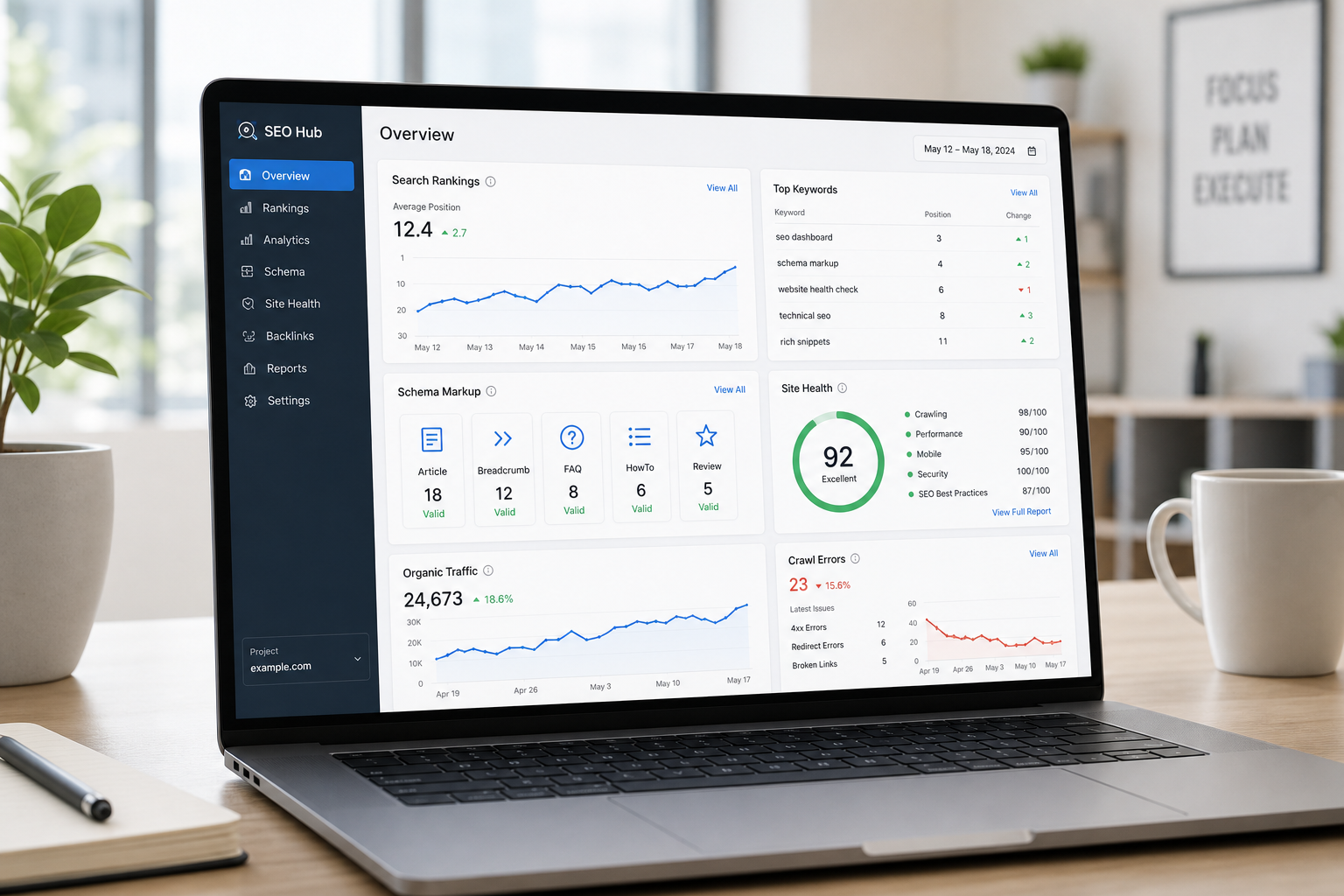
An automated SEO dashboard tracking technical health, rankings, and AI visibility in one place.
How to Automate SEO Solutions for Growing Businesses: A Step-by-Step Process
Once you understand the basics, the next question is practical: where do you start? Below is a sequence that works for most small businesses, marketers, and agencies managing multiple client sites.
- Audit your current SEO performance. Run a full technical and content audit to identify indexing issues, broken links, missing schema, and content gaps before applying any automated fixes.
- Automate technical SEO fixes. Deploy tools that correct page speed issues, broken links, duplicate meta tags, and crawlability problems across every page automatically.
- Deploy schema markup automatically. Generate and publish structured data, such as Article, FAQ, and Organization schema, so search engines and AI systems can parse content correctly.
- Build GEO-optimized content for AI citations. Create artifact-style pages with clear definitions and direct answers, formatted specifically so AI answer engines can cite them confidently.
- Automate internal linking and topical silos. Connect related pages into topical clusters, strengthening authority signals while helping users and crawlers navigate the site logically.
- Monitor AI visibility and adjust. Track rankings, indexing status, and AI citation appearances monthly, then refine automated rules based on what performs best.
Platforms such as Rank Authority combine several of these steps into one dashboard through tools like 1-Click AI AutoPilot, which scans a site and streamlines approved fixes without requiring a dedicated technical team.
Key Components of an Automated SEO Strategy
An effective automated SEO strategy typically blends four components: technical maintenance, content production, structured data, and visibility tracking. Technical maintenance covers crawlability, page speed, and mobile usability. Content production includes AI-assisted drafting tools, such as an AI Blog Builder, that produce SEO- and AEO-optimized articles at a pace manual teams cannot match.
Structured data, meanwhile, helps machines understand context. According to Schema.org, structured markup gives search and AI systems explicit signals about page content, which directly supports both traditional rankings and AI citation eligibility. Finally, visibility tracking closes the loop by showing which automated changes are actually working.
GEO and AEO: The New Frontier of Automated SEO Solutions
As AI-powered search grows, automated SEO solutions increasingly need to account for how chatbots and answer engines retrieve information. Gartner has projected that traditional search engine volume could drop by as much as 25% by 2026 as consumers shift toward AI assistants for direct answers. In response, GEO and AEO automation focuses on structuring content so it can be cited, not just ranked, which is a meaningful shift from keyword-only strategies.
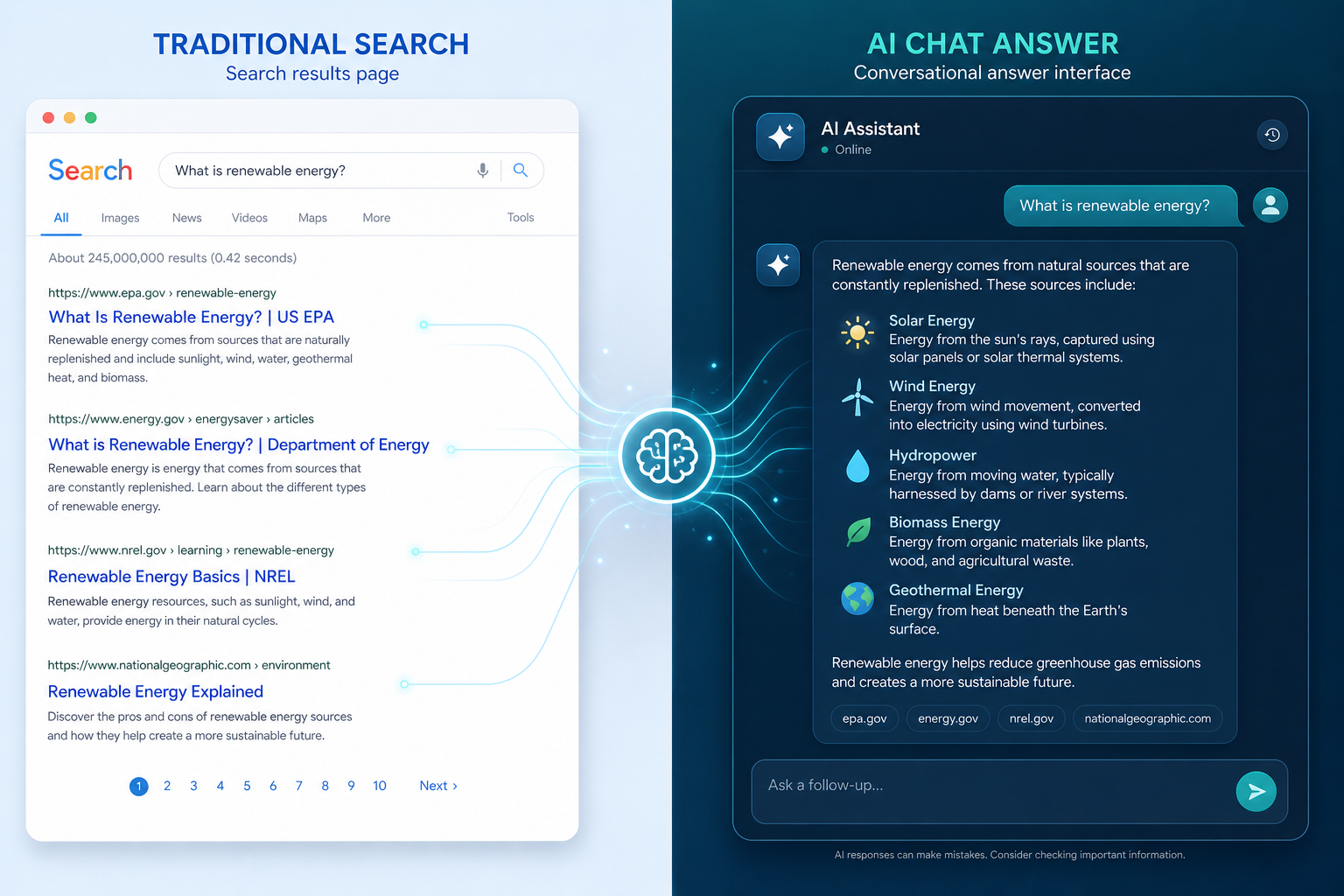
Generative Engine Optimization and Answer Engine Optimization extend automated SEO into AI answer environments.
Choosing the Right Automated SEO Platform for Growing Businesses
Not every automated SEO solution covers the same ground, so it helps to compare feature sets before committing. A thorough overview of automated SEO solutions can clarify what separates basic plugins from full platforms.
| Feature | Basic Tools | Full Platforms |
|---|---|---|
| Technical fixes | Manual review required | 1-click automated deployment |
| Schema markup | Template only | Auto-generated and deployed |
| AI visibility tracking | Not included | Monitored across AI platforms |
For businesses managing multiple sites, agencies in particular benefit from scalable dashboards. A detailed guide on SEO solutions built for growing agencies walks through multi-client reporting in more depth.
Common Mistakes When Automating SEO
Automation reduces workload, but it is not a substitute for oversight. One frequent mistake is applying technical fixes without reviewing them first, which can occasionally break custom site elements. Another is ignoring schema errors that quietly prevent rich results from appearing.
Similarly, some businesses automate content production but forget internal linking, leaving new pages isolated from the rest of the site. Consequently, those pages struggle to rank even when the content itself is strong. Reviewing the best practices for automating SEO before launch helps avoid these pitfalls.
It’s also worth noting that while platforms can submit updated pages for indexing, Google alone determines whether and when a page is actually indexed. Treat indexing automation as a submission tool, not a guarantee.
Measuring Success: Tracking Automated SEO Results
After implementation, tracking matters as much as the setup itself. A composite visibility score, such as an RA Score, combines technical health, content performance, and AI citation tracking into a single number that is easy to monitor month over month. In addition, Google’s own SEO Starter Guide recommends regularly checking indexing status and search performance reports as part of ongoing optimization.
Individual results vary based on site history, competition, and industry, so treat any visibility gains as directional rather than guaranteed. For a deeper walkthrough of practical automation steps, this practical 2026 guide to SEO automation for small businesses expands on monthly reporting routines, and this resource on leveraging automation for better SEO results covers prioritization frameworks in more detail.
Frequently Asked Questions
What is SEO automation for growing businesses?
SEO automation for growing businesses is the use of software and AI to handle repetitive optimization tasks such as audits, schema markup, content formatting, and internal linking. It reduces manual workload while maintaining consistent search and AI visibility as a company scales.
How to automate SEO solutions for growing businesses?
You can automate SEO solutions for growing businesses by auditing your site, deploying automated technical fixes, generating schema markup, creating GEO-optimized content, and automating internal linking through a connected platform. Ongoing monitoring then tracks visibility gains over time.
How long does it take to see results from automated SEO?
Most businesses notice measurable improvements in technical health and indexing signals within four to eight weeks. Ranking and AI citation gains typically build over two to six months, and individual results vary based on competition and site history.
How much does automated SEO software cost?
Pricing varies widely, from free diagnostic tools to monthly subscriptions ranging from roughly $50 to several hundred dollars depending on features like AI content generation and multi-site management. Many platforms offer a risk-free trial period before committing.
What is the difference between SEO automation and traditional SEO?
Traditional SEO relies on manual audits, hand-coded schema, and individually written content, which takes significant time and expertise. SEO automation uses software to perform these same tasks faster and more consistently, often adding AI-specific optimization that manual processes overlook.
What is Generative Engine Optimization (GEO)?
Generative Engine Optimization (GEO) is the practice of structuring content so AI systems like ChatGPT, Gemini, and Perplexity can easily cite it as a source. It focuses on clear answers, structured data, and authoritative formatting rather than keyword density alone.
What is Answer Engine Optimization (AEO)?
Answer Engine Optimization (AEO) formats content and schema markup so it can appear directly in featured snippets, voice search results, and AI-generated answers. It prioritizes concise, structured responses placed near the top of relevant sections.
Can automated SEO replace human expertise entirely?
Automation handles repetitive technical and structural work, but strategic decisions around brand voice, market positioning, and content quality still benefit from human oversight. Most growing businesses use automation to reduce workload, not to eliminate strategic input entirely.
What are common mistakes when automating SEO?
Common mistakes include automating fixes without reviewing them first, ignoring schema markup errors, overlooking AI visibility entirely, and neglecting internal linking structure. Skipping regular reporting reviews is another frequent oversight that slows progress.
Is automated SEO safe for Google rankings?
Reputable automated SEO platforms follow Google’s published webmaster guidelines and avoid manipulative tactics, making them safe when configured correctly. Platforms can submit pages for indexing, but Google alone determines whether and when a page is actually indexed.
What tools are used for automating SEO?
Common tools include site audit scanners, schema markup generators, AI content builders, internal linking automation, and AI visibility trackers. Some platforms combine several of these functions, such as 1-Click AI AutoPilot, RankFast, and RankLink, into a single dashboard.
How do I measure the success of automated SEO campaigns?
Track organic traffic, keyword rankings, indexing rates, and a composite visibility metric such as an RA Score alongside AI citation tracking. Reviewing these metrics monthly helps confirm which automated changes are driving measurable improvement.
Does automated SEO work for small businesses and agencies alike?
Yes, automated SEO scales for both single-site small businesses and agencies managing multiple client properties. Multi-site dashboards and reporting features make it practical to oversee several accounts without duplicating manual work for each one.
Final Thoughts
Ultimately, learning how to automate SEO solutions for growing businesses comes down to combining the right tools with consistent monitoring. Start with a full audit, automate technical fixes and schema deployment, then extend into GEO and AEO so content is ready for both traditional search and AI answer engines. Finally, track visibility monthly and adjust rules as the business grows, keeping in mind that individual results vary and indexing timelines remain under Google’s control.
For businesses ready to put this process into action, Rank Authority offers a ten-day trial that includes free diagnostic tools, automated fixes, and AI visibility tracking in one dashboard.