
SEO knowledge separates the websites that dominate page one from the ones that stay buried on page five, and building that knowledge properly is the single highest-leverage skill you can develop for your online business. Search engines process billions of queries every day, and understanding how they crawl, index, and rank content gives you a durable advantage that no shortcut or trick can replace. Consequently, this guide breaks down everything you need, from foundational concepts to advanced technical strategies, so your SEO knowledge becomes deep enough to outlast every algorithm update. Along the way, you will see exactly how AI-driven tools from Rank Authority translate that knowledge into measurable ranking gains, and where to go next once you have mastered the basics.
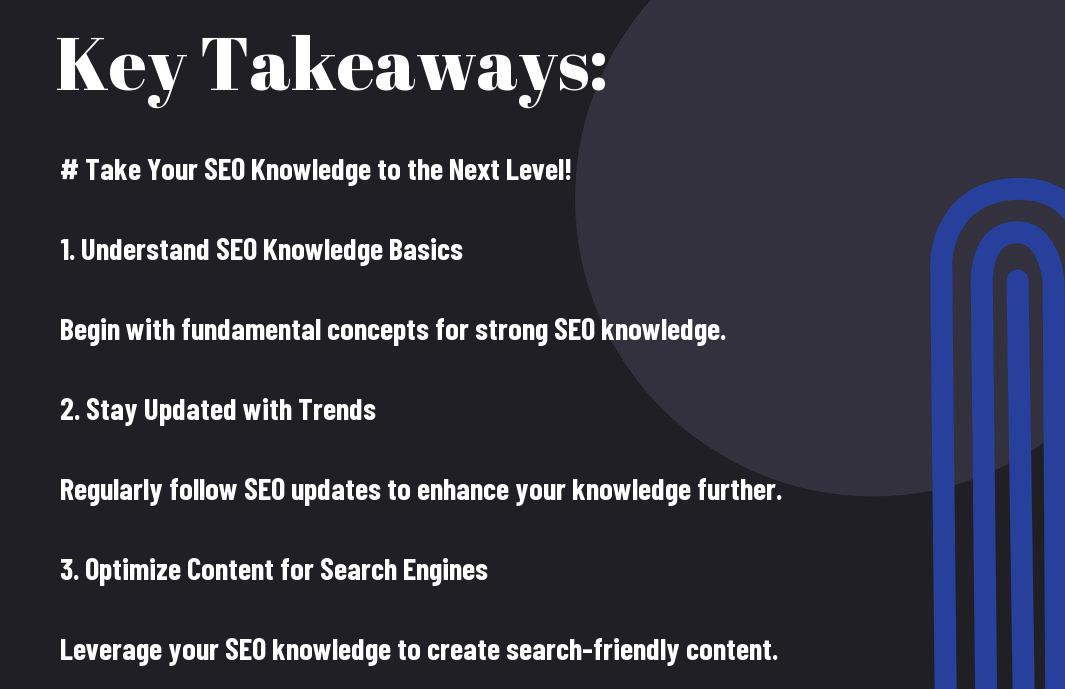
Key Takeaways
- Real SEO knowledge starts with understanding how search engines actually work, not just memorizing a checklist of tips.
- Keyword research, on-page SEO, technical SEO, and off-page SEO form the four pillars of complete SEO expertise.
- AI-powered platforms like Rank Authority accelerate your SEO knowledge by surfacing insights that manual analysis would take weeks to uncover.
- Local SEO, E-E-A-T, and search intent are often-overlooked pieces of SEO knowledge that directly influence rankings.
- Tracking the right metrics turns theoretical SEO knowledge into a repeatable, provable growth process.
Because algorithms change constantly, expanding your SEO knowledge through continuous learning is non-negotiable in today’s fast-paced digital landscape. Platforms such as Rank Authority’s AI-driven search visibility tools give business owners a repeatable way to identify what is working, what is stalling, and where the next quick win is hiding. In addition, these tools remove much of the guesswork that traditionally slowed down manual SEO audits.
Monitoring Performance as Part of Your SEO Knowledge
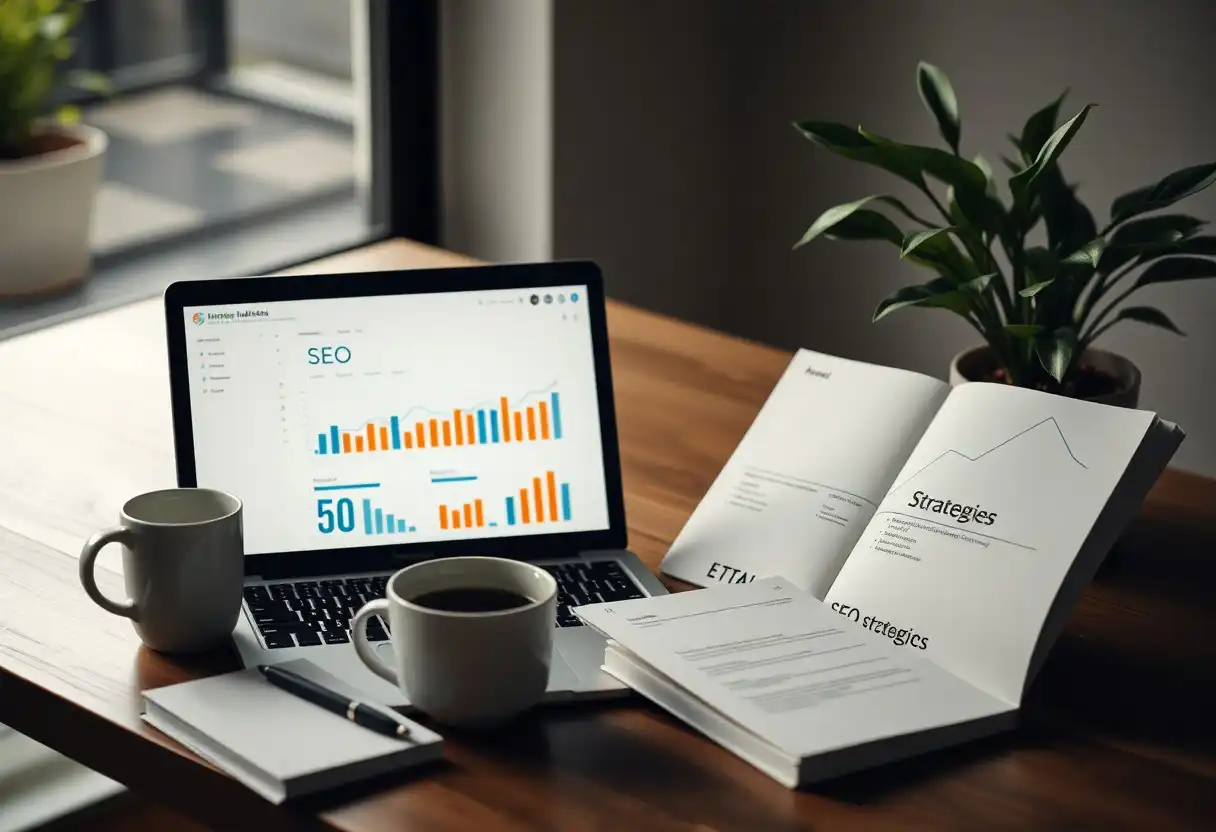
Notably, monitoring performance is imperative to any SEO strategy. For this reason, employing AI tools allows for real-time data analysis that flags issues before they hurt rankings. These advanced solutions help you identify what works and what doesn’t, so you stop wasting effort on tactics that never move the needle. Additionally, visuals and charts that show growth over time keep your team motivated and provide clear evidence that stronger SEO knowledge is translating into traffic and conversions.
Moreover, keyword strategy plays a vital role in optimizing content correctly from day one. As a result, conducting thorough keyword research early sets a strong foundation for the rest of your campaign. It is vital to align content with user intent, since doing so attracts the right audience instead of just any audience. Rank Authority guides you through this process end to end, ensuring your content is optimized rather than guessed at.

What Is SEO Knowledge, Really?
SEO knowledge is the working understanding of how search engine optimization actually functions, not a collection of isolated tricks, but a mental model of how search engines evaluate, rank, and reward content. In practice, that means knowing why a page ranks, not just copying what a competitor did. Search Engine Optimization is the practice of enhancing a website’s visibility on search engines like Google, Bing, and increasingly AI-powered search assistants. Understanding its intricacies ensures your online presence stands out amid heavy competition.
Why SEO Knowledge Beats Random SEO Tips
Random tips expire the moment an algorithm updates. Deep SEO knowledge, however, lets you adapt because you understand the underlying principles rather than memorized steps. For example, a marketer who only knows “add keywords to your title” will struggle when search intent shifts, whereas a marketer who understands relevance, authority, and user experience can adjust instantly. Therefore, this guide focuses on building genuine understanding of keyword research, on-page optimization, and link building, the three components that consistently drive rankings regardless of which update just rolled out.
How Search Engines Actually Work: Crawling, Indexing, and Ranking
Before you can apply any tactic, your SEO knowledge needs a clear picture of what happens behind the scenes. Search engines use automated programs, often called crawlers or spiders, to discover pages across the web. According to Google’s own SEO starter guide, this three-stage process, crawling, indexing, and ranking, determines whether your page ever has a chance to appear in search results at all.
Crawling and Indexing Explained
Crawling happens when a search engine’s bots follow links from page to page, discovering new and updated content. Indexing follows, storing that content in a massive database so it can be retrieved instantly when someone searches. If a page cannot be crawled or indexed, it simply does not exist as far as search results are concerned, regardless of how well written it is. As a result, checking crawlability should be step one in any SEO knowledge checklist, well before you worry about keyword density or backlinks.
The Ranking Factors That Matter Most
Once a page is indexed, ranking algorithms weigh hundreds of signals to decide its position for a given query. Relevance, content quality, page experience, and authority consistently rise to the top of that list. In particular, relevance measures how well your content matches search intent, while authority reflects how much the wider web trusts your domain through links and mentions. Together, these signals explain why two pages targeting the same keyword can perform completely differently.
Keyword Research: Building the Foundation of SEO Knowledge
You can elevate your SEO knowledge quickly by mastering keyword research. Start by exploring why keywords matter for optimizing content effectively, then use tools and strategies to identify high-potential terms that drive targeted traffic. To dive deeper into community-tested techniques, check out How Can I Take My Website To The Next Level? : r/SEO.
Tools for Keyword Research
For successful SEO knowledge, leveraging the right tools is vital. Platforms like Google Keyword Planner and SEMrush provide valuable insight into search volume and keyword difficulty. These tools not only streamline keyword discovery, but they also equip you to refine your content strategy based on real search demand rather than guesswork.
Long-Tail vs. Short-Tail Keywords
Understanding the difference between long-tail and short-tail keywords significantly strengthens your SEO knowledge. Short-tail keywords are broad and highly competitive, while long-tail keywords are more specific and typically less competitive, which often leads to higher conversion rates.
Even though short-tail keywords can drive high impression volume, targeting long-tail keywords connects you with users who are ready to convert. Therefore, focusing on long-tail keywords aligns closely with audience intent, which in turn increases your site’s real visibility among buyers rather than casual browsers.
Search Intent: The Piece Most Guides Skip
Search intent describes the actual reason behind a query, whether someone wants information, wants to compare options, or is ready to buy. Consequently, matching content format to intent matters just as much as matching the keyword itself. For instance, a query with commercial intent needs a comparison page or product listing, not a long historical essay. Skipping this step is one of the most common gaps in surface-level SEO knowledge, and fixing it often produces faster ranking gains than any other single change.
On-Page SEO Strategies
Your growing SEO knowledge comes to life through effective on-page SEO strategies. These strategies ensure your website is optimized for search engines while still delivering a great experience for real readers. From content optimization to meta tags, these elements influence how search engines interpret and rank your content. At Rank Authority, our AI guides your on-page optimization so you stay on the right track without needing to become a full-time technician.
Content Optimization
After grasping the importance of quality content, focus on optimizing it for both readers and search engines simultaneously. Effective content optimization uses relevant keywords, engaging headlines, and a logical flow. In addition, clear images and headers break up dense blocks of text, making information easier to digest. Regularly updating content keeps it fresh, which search engines reward, further building your SEO knowledge over time.
Title Tags and Meta Descriptions
Title tags and meta descriptions influence both click-through rates and rankings, yet they are often overlooked. Each page on your site should feature a unique title and description that accurately reflects its content. Consequently, well-crafted meta information improves search visibility while also compelling users to click through instead of scrolling past your result. Rank Authority can assist in crafting optimized titles and descriptions aligned with current best practices.
URL Structure and Internal Linking
Short, descriptive URLs help both users and search engines understand a page at a glance. In addition, internal linking connects related pages together, spreading authority throughout your site and helping visitors find more of your content. For a broader view of how these pieces fit into a full ranking strategy, see what’s the best way to improve your site’s search rankings. Strategic internal links also reduce bounce rate, since readers stay on your site longer when the next logical page is one click away.
Header Tags and Readability
Header tags such as H2 and H3 organize content into scannable sections, which helps both readers and search engine crawlers understand structure. Furthermore, breaking long sections into shorter ones with clear headings keeps engagement high, since most readers scan before they commit to reading in full.
Off-Page SEO Essentials
Mastering off-page SEO is pivotal to rounding out your overall SEO knowledge. Off-page SEO covers all activities conducted outside your website that still impact rankings, mainly through backlinks and social signals. By understanding and implementing off-page strategies effectively, you can significantly boost your website’s authority and visibility, provided you apply them consistently.
The Importance of Backlinks
Backlinks are foundational to off-page SEO because they are a key factor in how search engines gauge credibility. Each backlink you earn acts like a vote of confidence from another site, signaling that your content is valuable. High-quality backlinks from reputable sites improve rankings and, consequently, organic traffic. The more authoritative links you acquire, the stronger your SEO knowledge becomes in practice, not just in theory.
Social Media Influence
Any effective SEO strategy must also account for social media’s influence. Social platforms help you connect with your audience while serving as a channel to share content and earn backlinks. Engaging with a wider audience amplifies reach and improves your odds of acquiring quality links that strengthen authority over time.
E-E-A-T and Brand Authority
Google evaluates content through the lens of Experience, Expertise, Authoritativeness, and Trustworthiness, commonly shortened to E-E-A-T. In practice, this means author credentials, transparent sourcing, and a track record of accurate information all feed into how much trust a page receives. Therefore, building genuine brand authority, not just chasing links, should be part of any complete SEO knowledge strategy. Winning links can lead to enhanced traffic, but poor-quality links can damage your brand and undo months of progress. Focus on forging genuine relationships that lead to quality backlinks and sustainable traffic growth.

Technical SEO Deep Dive
With a solid grip on the basics, it’s time to explore the more intricate world of technical SEO. You can push your skills further by reviewing 10 advanced tips to take your SEO strategy to the next level. Technical SEO ensures search engines can fully crawl, understand, and properly index your site, which directly improves rankings and organic traffic.
Site Speed and Core Web Vitals
A slow website leads to higher bounce rates, which negatively affects rankings. Aim for a loading time under three seconds, and use tools like Google PageSpeed Insights to monitor performance. For a deeper technical explanation of what drives page speed, MDN’s web performance documentation is an excellent reference point.
Mobile Optimization
Alongside site speed, mobile optimization is critical in today’s digital landscape. Since more users browse on mobile devices than ever, a site that is not mobile-friendly loses significant traffic. Ensure your design is responsive and accessible across various screen sizes to provide an optimal experience regardless of device.
Mobile optimization is not just about responsive design, however. You must also consider page load speed, which can make or break the mobile experience. Prioritize compressing images for quick loading, and if you neglect these details, you risk falling behind competitors who already prioritize mobile-friendly experiences.
XML Sitemaps, Robots.txt, and Crawl Budget
An XML sitemap acts as a roadmap that tells search engines exactly which pages exist and how they connect. Meanwhile, a robots.txt file tells crawlers which sections to skip. Together, these two files help manage crawl budget, the limited number of pages a search engine will crawl on your site during any given visit. For larger sites especially, mismanaging crawl budget means important pages may get indexed slowly or not at all.
Schema Markup and Structured Data
Structured data, commonly added through schema markup, helps search engines understand context, such as whether a page is a recipe, a product, or an article. As a result, well-implemented schema can unlock rich results like star ratings and FAQ dropdowns directly in search listings, increasing click-through rates without changing your ranking position at all.
Local SEO Knowledge You Can’t Afford to Skip
If your business serves a physical location or region, local SEO deserves a dedicated place in your SEO knowledge. Claiming and optimizing your Google Business Profile, gathering genuine customer reviews, and keeping your business name, address, and phone number consistent across the web all directly influence whether you appear in local map results. In particular, review volume and recency often matter as much as backlinks for local visibility, so treat customer feedback as an active SEO channel rather than an afterthought.
Analyzing and Measuring SEO Success
Despite all the information available on SEO knowledge, understanding how to measure your progress can still feel challenging. By using the right metrics and tools, you can gauge progress accurately and adjust strategies for continuous improvement. It’s important to track the indicators that matter most to your business, since vanity metrics rarely translate into revenue.
Key Metrics to Track
Metrics reveal how effectively your SEO knowledge translates into traffic and engagement. Track organic traffic, bounce rate, conversion rate, and keyword rankings consistently. By reviewing these figures regularly, you can identify areas needing attention and refine your strategy before small problems become large ones.
Using Analytics Tools
Analytics tools provide deep insight into performance, enabling informed decisions rather than guesses. Understanding platforms like Google Analytics and SEMrush requires some familiarity, but the payoff is real-time data you can act on immediately. Ultimately, analytics unlock the potential of your SEO knowledge by revealing user behavior, visitor pathways, and content effectiveness. However, be cautious about relying on a single tool, since each one offers a slightly different lens. Combining multiple analytics platforms tailors your approach to your specific needs far more effectively than any single dashboard could.
Common SEO Mistakes That Undermine Your SEO Knowledge
- Chasing keywords without intent: Ranking for a term nobody wants to click on wastes effort that could go toward a genuinely valuable query.
- Ignoring technical health: Beautiful content on a slow, uncrawlable site rarely ranks, regardless of how well it’s written.
- Buying low-quality links: Spammy backlinks can trigger penalties that take months to recover from.
- Neglecting mobile users: With mobile traffic dominating most industries, a poor mobile experience quietly bleeds rankings and revenue.
- Treating SEO as a one-time project: Search engines reward sites that improve continuously, not ones that were optimized once and forgotten.
How to Build SEO Knowledge From Scratch
If you are starting from zero, follow this sequence to build genuine, lasting SEO knowledge rather than a scattered pile of tips.
- Learn how search engines work first. Spend time understanding crawling, indexing, and ranking before touching any tactic, since this context makes every later step easier to grasp.
- Master keyword research and search intent together. Identify what your audience searches for and why, then match content formats to that intent rather than guessing at topics.
- Apply on-page SEO to your existing content. Update title tags, meta descriptions, headers, and internal links so search engines and readers both understand your pages clearly.
- Strengthen your technical SEO foundation. Fix site speed issues, confirm mobile responsiveness, and verify your sitemap and robots.txt files are configured correctly.
- Build authority through off-page SEO. Earn backlinks from reputable sites and grow your social presence to strengthen trust signals over time.
- Track performance and refine continuously. Review analytics monthly, identify what is and isn’t working, and adjust your strategy based on real data instead of assumptions.
Best Resources to Keep Expanding Your SEO Knowledge
Building your SEO knowledge goes well beyond basic concepts. Therefore, using advanced tools and platforms like Rank Authority can elevate the entire experience by pairing expert insight with data-driven recommendations. For a broader, step-by-step breakdown of ranking tactics, our complete guide to improving your online search rankings is worth bookmarking.
If you manage SEO for multiple clients rather than a single site, scaling your process matters just as much as the tactics themselves. Our resource on SEO insights for agencies looking to scale client rankings faster covers exactly how to apply these principles across many accounts at once without losing quality.
Beyond Rank Authority, following reputable industry publications and attending webinars keeps your knowledge current as algorithms evolve. Consider it ongoing education rather than a one-time course, the businesses that keep learning are the ones that keep ranking.
Frequently Asked Questions About SEO Knowledge
What is SEO knowledge and why does it matter for my business?
SEO knowledge is a working understanding of how search engines crawl, index, and rank content, combined with the skill to apply that understanding to a real website. It matters because businesses with strong SEO knowledge adapt to algorithm changes quickly, while those relying on outdated tricks lose rankings when the rules shift.
How is SEO knowledge different from just knowing a few tips?
A few tips can help temporarily, but true SEO knowledge means understanding why those tips work in the first place. This deeper understanding lets you troubleshoot ranking drops, adapt to new algorithm updates, and make confident decisions instead of copying whatever worked for someone else last year.
What are the core components of SEO knowledge every beginner should master?
The four core components are keyword research, on-page SEO, technical SEO, and off-page SEO. Together, these pillars cover everything from understanding what people search for to ensuring your site can be crawled, optimized, and trusted by other reputable sites.
How does Rank Authority’s AI use my SEO knowledge to improve rankings faster?
Rank Authority employs AI to analyze data and predict trends in search engine algorithms. This technology allows us to develop customized strategies that can propel your website’s ranking. By pairing that automation with your own growing SEO knowledge, you understand the process while the platform handles the heavy analytical lifting.
How long does it take to build strong SEO knowledge from scratch?
Most beginners grasp the fundamentals within a few weeks of consistent study and hands-on practice. However, mastering technical SEO and off-page strategy typically takes several months of applied experience, since real ranking feedback takes time to appear in search results.
What tools help me expand my SEO knowledge beyond reading articles?
Hands-on tools like Google Keyword Planner, Google Analytics, Google PageSpeed Insights, and SEMrush let you apply concepts immediately rather than only reading about them. In addition, AI-driven platforms like Rank Authority translate raw data into specific action items, which speeds up learning considerably compared to manual analysis alone.
Conclusion: Turn Your SEO Knowledge Into Results
Ultimately, enhancing your SEO knowledge is imperative for lasting online success, and it pays off far beyond any single ranking boost. By applying the strategies covered here, from crawling and indexing fundamentals to keyword research, on-page and technical SEO, off-page authority building, local SEO, and consistent performance tracking, you build a foundation that survives algorithm updates instead of being wiped out by them. Moreover, leveraging Rank Authority’s AI-driven solutions equips you with the practical skills to adapt as the digital landscape keeps evolving. As you implement these techniques, keep evaluating your progress and adjusting your approach accordingly. With consistent effort, your SEO knowledge will transform your online presence, attract more visitors, and ultimately increase conversions. Take charge of your SEO journey today with Rank Authority.
Sign Up for Free!
One-Click Fully Automated SEO.
Boost Rankings, and Increase Traffic.
Instantly Optimize Your Site.
- No Coding
- One Click Setup