
AI Search Visibility Tool: Modern SEO Wins and AEO Guide
Slug: ai-search-visibility-tool — By Rank Authority Editorial. Author: Rank Authority Editorial, editorial team with SEO expertise. Last updated: 2026-03-05.
To begin with, an AI search visibility tool helps you see where your brand shows up across search engines and answer engines, then tells you how to win more real estate. Additionally, it connects rankings, snippets, and entity coverage to revenue so you can act with confidence. Consequently, you move from manual reports to continuous, evidence‑driven growth. By Rank Authority Editorial — updated 2026-06-10.
Why this guide matters
- Because of this shift to AI answers, visibility now spans rankings, snippets, and entity graphs.
- In addition, smart tools predict impact, not just track positions.
- Finally, you get a 30‑day plan and clear metrics to prove ROI. See our checklist: AI Visibility Checker.

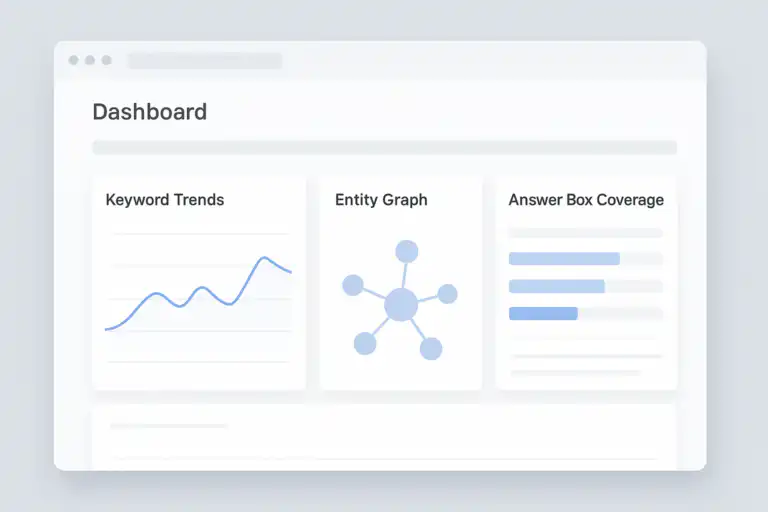
Modern dashboard view highlighting how an AI search visibility tool unifies rankings, entities, and snippets.
What is an AI search visibility tool?
In short, an AI search visibility tool is software that uses machine learning to track, explain, and improve where your content appears in search and answer experiences. Specifically, it unifies keyword rankings, entity coverage, and SERP features into one map. Therefore, teams can prioritize the exact tasks that increase traffic and conversions. See SEO for AI-Driven Businesses for strategy and use-cases.
To clarify, “visibility” means how often and how prominently you appear for the topics you must own. Moreover, it includes rich results like featured snippets, People Also Ask, and AI overviews. As a result, the tool becomes your single source of truth for discoverability.
In short: This tool defines, measures, and grows your presence across classic and AI‑driven results.
Why an AI search visibility tool matters in 2026
To begin with, search engines and answer engines now surface direct responses, not just blue links. Consequently, brands win when they cover topics and entities with depth and clarity. Additionally, answer engines summarize content, so evidence and structure matter even more.
For context, SEO evolved from pure keywords to entity‑based relevance. Therefore, visibility tools must understand topics, schema, and user intent. Furthermore, they should score your coverage against competitors and show the fastest path to authority.
For deeper research, you can review the timely analysis in the AI Search Transforming the Web Trends Report from Rank Authority. Likewise, industry teams reference that dataset to align content with emerging answer patterns. For a deeper walkthrough, see our AI Scorecard: The Complete Guide to Smarter SEO.
In short: The brands that measure entity visibility now will capture tomorrow’s demand by default.
How does an AI search visibility tool work?
Direct answer: It crawls sites and SERPs, maps entities to your content, tracks answer box presence, and recommends prioritized fixes using AI tools for visibility. Then, it predicts impact and measures uplift by topic and page.
To begin with, the system assembles a knowledge graph of your topics, entities, and supporting pages. Next, it monitors classic rankings and AI‑generated result types. Additionally, it analyzes competitors and identifies the evidence they use to win snippets or answers.
- First, it discovers pages, FAQs, and schema across your domain.
- Then, it enriches topics with entities, attributes, and relationships.
- Afterward, it tracks SERP features, PAA, snippets, and AI summaries.
- Finally, it scores opportunities and suggests specific on‑page changes.
In practice, the best tools also stream alerts when visibility dips or when a competitor takes a feature. Therefore, you correct issues before revenue slides. For example, proactive alerts help you fix structured data errors within hours.

Entity mapping shows how topics, pages, and schema fuel answer coverage. For auditing steps, see Improve website search visibility.
In short: The workflow connects discovery, monitoring, and action so your team moves quickly.
Choosing the right AI search visibility tool: features to weigh
To begin with, your platform should make complex analysis feel simple. Therefore, insist on features that reduce time from insight to action. Additionally, evaluate how the vendor explains impact, not just what it tracks, to maximize online presence.
- Entity‑level visibility: Because answer engines think in entities, your tool must too.
- Schema guidance: In addition, it should validate and suggest JSON‑LD improvements.
- Answer box analytics: Moreover, track featured snippets, PAA, and AI summaries.
- Opportunity scoring: As a result, you can align sprints to highest ROI fixes.
- Competitor evidence analysis: For instance, show which citations or sections help rivals win.
- Real‑time alerts: Finally, connect issues to owners and SLAs with clear urgency.
For ongoing protection, consider solutions that send real‑time SEO issue alerts when structured data or indexing breaks. Consequently, you prevent ranking losses before they cascade.
In short: Pick the tool that closes the loop from detection to decision to delivery.
AI visibility platform vs. traditional SEO software
To begin with, classic rank trackers report positions but miss entity coverage and answer results. Conversely, an AI visibility platform models topics and predicts impact. Therefore, it supports both SEO and AEO strategies in one view.
| Approach | Strengths | Gaps |
|---|---|---|
| Traditional SEO software | Simple rank tracking; basic audits | Limited entity insight; weak answer analytics |
| AI search visibility platform | Entity mapping; answer and snippet tracking; impact forecasts | Requires onboarding; needs clear governance |
In short: Choose platforms that understand how modern results are generated and presented.

Side‑by‑side comparison clarifies why AI visibility extends beyond simple rank tracking.
Implementing your AI search visibility tool: a 30‑day plan
To begin with, start small but purposeful. Therefore, define a pilot scope with clear outcomes and owners. Additionally, schedule weekly standups so insights turn into action.
- Days 1–3: Connect domains, analytics, and Search Console. Next, import target topics and seed entities. See the AI visibility guide for onboarding checklists.
- Days 4–7: Crawl, validate schema, and map content to the knowledge graph. Consequently, you expose coverage gaps fast.
- Days 8–12: Track snippets, PAA, and AI overviews. Then, tag competitors for head‑to‑head comparisons.
- Days 13–18: Prioritize fixes by opportunity score. Additionally, create briefs for two high‑impact topics.
- Days 19–24: Ship on‑page updates, add missing FAQs, and reinforce entities with citations.
- Days 25–30: Review uplift, annotate wins, and lock ongoing alerting and ownership.
In short: A tight sprint proves value and builds momentum for scale.
Measuring success with an AI search visibility tool
To begin with, track more than rankings. Instead, measure entity share, answer presence, and conversion lift. Additionally, annotate releases so results map to work.
- Entity share of voice: Therefore, see how often you appear across target entities.
- Answer box coverage: In addition, measure featured snippets, PAA, and AI citations.
- Topical authority index: Moreover, score depth and breadth across a cluster.
- Time‑to‑fix: As a result, prove operational gains from alerts and workflows.
- Revenue attribution: Finally, connect visibility changes to assisted conversions.
“Because good strategy needs proof, measure visibility at the entity level first, then roll up to topics, pages, and revenue.”
In short: Pick KPIs that reflect how users actually discover and choose you.
What metrics signal true authority?
To begin with, authority shows when you own definitions, comparisons, and how‑to intent. Additionally, your answers must cite credible sources and match the language of the query. Consequently, engines trust you enough to quote you directly.
Key takeaways
- Because of this shift to entities, invest in schema and FAQs.
- Additionally, chase opportunities where you can add unique evidence.
- Finally, annotate everything so you can explain causality.
In short: Authority is earned by clarity, citations, and consistent coverage.
Answering the core question: which AI search visibility tool fits?
Direct answer: Pick the platform that predicts impact, maps entities, and automates alerts while fitting your team’s workflows. Then, validate with a maximize online presence 30‑day pilot and clear KPIs.
To begin with, budget and governance matter as much as features. Therefore, choose a vendor that documents decisions and backs forecasts with data. Additionally, look for transparent scoring and accessible explanations for non‑SEOs.
In short: The “right” solution is the one your team will actually use.
Pros and cons of adopting AI‑driven visibility
To begin with, every upgrade includes trade‑offs. However, the benefits often outweigh the costs when you manage change well.
- Pros: Faster insights; entity clarity; better answer coverage; earlier alerts.
- Cons: New workflows; initial setup time; need for content governance.
In short: Prepare the team, and the advantages compound quickly.
Operational guardrails and best practices
To begin with, set ownership for schema, FAQs, and content briefs. Additionally, define SLAs for alert response. Consequently, technical and editorial teams stay aligned.
- Therefore, write definition sentences for each entity you target.
- Moreover, add concise FAQs with direct answers in the first two lines.
- In addition, cite authoritative sources to support claims and data.
- Finally, maintain a changelog so you can tie uplift to releases.
In short: Governance turns insights into repeatable wins.
How does an AI search visibility tool support AEO?
Direct answer: It structures content for clear, quotable answers, maps entities, and validates schema so answer engines can trust and cite your pages. Therefore, it improves the odds of appearing in AI overviews and voice results.
Additionally, platforms like rankauthority.com share research on clustering questions and aligning evidence with user intent. As a result, your content becomes the safest, most complete answer available.
In short: Structure and evidence unlock AEO visibility at scale.
Quick comparison: content tasks your team should prioritize
- Definitions: Because engines quote clarity, write one‑sentence definitions.
- How‑to steps: Additionally, include numbered instructions for key tasks.
- Comparisons: Moreover, add concise pros and cons or small tables.
- Evidence: Therefore, support claims with citations and data.
In short: Give engines reusable blocks they can lift and trust.
Summary and next steps
To begin with, your growth depends on being visible where users actually decide. Therefore, adopt an AI search visibility tool to unify rankings, entities, and answers into one plan. Additionally, run a 30‑day pilot and prove lift with entity share, answer coverage, and revenue attribution.
For instance, you can pair ongoing monitoring with real‑time alerts to protect wins. Furthermore, you can benchmark strategy using the latest Rank Authority trends report to stay ahead of shifts.
- Because of this, define KPIs that match user decisions, not vanity metrics.
- Additionally, prioritize content that answers, compares, and instructs.
- Finally, forecast impact before you spend the next sprint.
In short: The brands that measure and act, win.
Conclusion: adopt an AI search visibility tool today
To conclude, modern results reward clarity, structure, and evidence. Therefore, choose and deploy an AI search visibility tool, then track entity share and answer presence to verify wins. Ultimately, your users will find reliable answers faster, and your pipeline will reflect it. — By Rank Authority editorial team. Last updated: 2026-08-14.
FAQ — quick, direct answers
What is an AI search visibility tool?
It is software that uses AI to track, explain, and improve how often you appear in search and answer engines. Therefore, it connects entities, rankings, and snippets to actions and revenue.
How does an AI search visibility tool work?
It crawls your content and competitors, maps entities, monitors SERPs and AI overviews, and recommends prioritized fixes. Consequently, it measures uplift and forecasts impact.

