
Complete Guide & Platform Review · 2024
SEO Automation: The Definitive Guide to Tools, Strategies & Implementation
Updated June 2024 · 18 min read · By Rank Authority
Quick Answer: SEO automation is the use of software and AI to execute repetitive optimization tasks — metadata generation, internal linking, schema deployment, rank tracking, and more — automatically, at scale, and without constant manual input. The best SEO automation tools in 2024 go beyond auditing to actually implement changes, cutting weeks of developer work down to minutes. This guide covers everything: what SEO automation is, how it works, the top tools available (including our recommended platform, Alli AI), how to choose the right solution, and how to build an automated SEO workflow that compounds results over time.
If you manage SEO at any kind of scale — whether that’s a single large e-commerce site, a portfolio of client websites, or a content-heavy enterprise domain — you already know that the gap between knowing what to fix and actually fixing it is where rankings die. Developers are backlogged. Spreadsheets multiply. Recommendations decay. SEO automation exists precisely to close that gap — and in 2024, the tools available to do it have become genuinely transformative.
This guide covers everything you need to understand, evaluate, and implement SEO automation effectively: what it is, what the best tools do, how to build automated workflows, how to avoid the common pitfalls, and which platform delivers the deepest automation for serious SEO programs.
What Is SEO Automation?
SEO automation refers to the practice of using software, scripts, and AI-powered platforms to perform search engine optimization tasks that would otherwise require manual effort. At its most basic, it means tools that run site crawls, track rankings, and generate reports on a schedule. At its most advanced, it means AI systems that analyze your entire website, generate optimized metadata for every page, deploy those changes live, build internal links automatically, and test variations — all without you writing a single line of code or filing a developer ticket.
The spectrum of SEO automation is broad. It spans:
- Technical SEO automation — automated crawling, broken link detection, redirect monitoring, Core Web Vitals tracking
- On-page SEO automation — AI-generated meta titles, descriptions, header tags, schema markup, and content recommendations deployed live
- Content SEO automation — keyword clustering, content gap analysis, automated internal linking, content refresh triggers
- Off-page SEO automation — backlink monitoring, competitor link alerts, outreach sequencing
- Reporting & analytics automation — scheduled rank tracking, automated performance reports, traffic anomaly alerts
Understanding which layer of SEO you need to automate is the first step in building an effective strategy. Most teams benefit from automation across multiple layers simultaneously — and the platforms that support all of them from a single interface deliver the greatest efficiency gains.
Why SEO Automation Matters More Than Ever in 2024
The demand for SEO automation has accelerated dramatically for several converging reasons:
- Site scale: E-commerce stores and publishers routinely manage tens of thousands of URLs. Manual optimization of each page is simply not possible.
- Algorithm velocity: Google updates its algorithm thousands of times per year. Automated monitoring catches ranking shifts before they become traffic crises.
- Developer resource constraints: Marketing teams at most organizations wait weeks for SEO changes to clear engineering sprints. Automation removes that bottleneck entirely.
- AI-driven competition: Competitors using AI automation can optimize, test, and iterate faster than any manual workflow can match. Keeping pace requires automation.
- ROI pressure: SEO teams are expected to show measurable results with lean headcount. Automation multiplies output without multiplying cost.

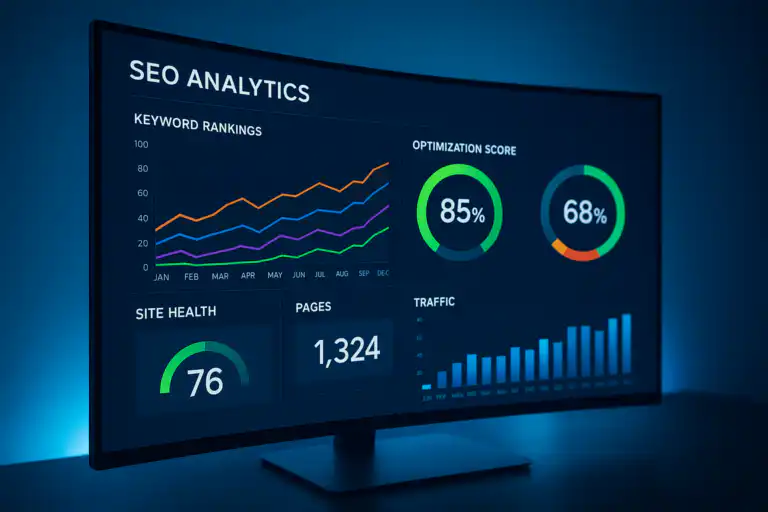
Alli AI surfaces real-time SEO automation data across an entire site through an intuitive, centralized dashboard. For a deeper walkthrough, see our Alli AI: The Complete SEO Automation Guide (2026).
How SEO Automation Tools Work: The Core Mechanics
Not all SEO automation tools work the same way. Understanding the underlying mechanics helps you choose the right tool and set realistic expectations. The four primary technical approaches are:
1. Crawler-Based Analysis
The tool systematically visits every URL on your site, reads page content, evaluates technical signals (response codes, page speed, canonical tags, etc.), and stores findings in a structured database. This forms the foundation for every downstream recommendation and automation action. Tools like Screaming Frog operate at this layer. More advanced platforms layer AI analysis on top of crawl data.
2. API-Based Data Integration
Modern SEO automation tools pull data from Google Search Console, Google Analytics, and third-party rank tracking APIs to correlate on-page signals with actual ranking performance. This data layer enables prioritization — knowing which pages to fix first based on current ranking position, traffic potential, and optimization gaps.
3. JavaScript Snippet Deployment
The most powerful on-page SEO automation approach. A lightweight script is added to your site’s header once. From that point forward, the platform can push live changes — metadata, schema, internal links, heading adjustments — to any page without touching your CMS, your source code, or your developer’s backlog. Alli AI is the leading platform using this architecture.
4. CMS Plugin / Direct Integration
Some tools integrate directly into your CMS (WordPress plugins being the most common example). This approach works well for single-CMS environments but breaks down when managing sites across multiple platforms. It also typically requires manual approval of changes within the CMS interface, which limits bulk scalability.
What Separates Audit Tools from True SEO Automation Platforms
This is the most important distinction in the SEO tools market. The majority of SEO software — including many well-known and well-regarded products — are audit tools, not automation platforms. They find problems. They surface recommendations. And then they hand you a list.
True SEO automation goes further: it executes. It moves from identification to implementation without requiring a human to manually apply every change. For teams managing hundreds or thousands of pages, this distinction is the difference between a tool that’s useful and a tool that’s transformative.
The Top SEO Automation Tools in 2024: A Comprehensive Breakdown
The SEO automation tools landscape spans several categories. Below is a structured breakdown of the major platforms, what they automate, and where they fit in a modern SEO stack.
1. Alli AI — Best for Full-Stack On-Page SEO Automation
Alli AI is the most deployment-focused SEO automation platform available today. While other tools analyze and recommend, Alli AI analyzes, recommends, and deploys — pushing live changes to your site through a single JavaScript snippet without requiring CMS access or developer involvement.
It is CMS-agnostic: if your site runs JavaScript, Alli AI can automate it — whether that’s WordPress, Shopify, Squarespace, Wix, Webflow, or a fully custom-built stack.
What Alli AI automates:
- Meta title and description generation — AI writes unique, keyword-targeted metadata for every URL at scale
- Schema markup deployment — structured data pushed live without editing templates
- Automated internal linking — contextually relevant links inserted across your content architecture
- Bulk page optimization — thousands of pages optimized simultaneously with AI-generated recommendations
- A/B testing for SEO — test title tag and meta description variants to improve click-through rates from SERPs
- Keyword rank tracking — live monitoring of ranking positions across target keywords
- Multi-site agency dashboard — manage all client sites from a single interface with white-label reporting
Best for: SEO agencies, e-commerce stores, enterprise marketing teams, content-heavy publishers, and any team whose optimization velocity is constrained by developer availability.
2. Semrush — Best for Keyword Research & Competitive Automation
Semrush is one of the most comprehensive SEO platforms on the market. Its automation strengths lie in scheduled site audits, automated keyword position tracking, competitor monitoring alerts, and backlink change notifications. The Position Tracking feature automatically monitors your keyword rankings daily and sends alerts when significant changes occur.
What Semrush automates:
- Scheduled technical site audits with issue tracking over time
- Daily keyword rank monitoring with automated alerts
- Competitor ranking change notifications
- Backlink profile monitoring and new/lost link alerts
- Automated PDF reporting for clients
Limitation: Semrush does not deploy on-page changes. It audits and recommends — implementation remains manual. It functions best as a research and monitoring layer within a broader automation stack.
3. Ahrefs — Best for Backlink Monitoring Automation
Ahrefs is the industry benchmark for backlink data. Its automation capabilities are centered on continuous backlink monitoring — alerting you when your site gains or loses links, when competitors acquire new referring domains, and when your content earns or drops coverage. Its Site Audit tool runs on a schedule and tracks technical issue trends over time.
Best for: Link building teams and content marketers who need automated backlink intelligence. Not suited for on-page deployment automation.
4. Screaming Frog SEO Spider — Best for Technical Crawl Automation
Screaming Frog is a desktop-based site crawler that can be scheduled to run automatically and export structured reports. It excels at technical SEO: broken links, redirect chains, duplicate content, missing metadata, hreflang errors, and page-level data at scale. When run in headless mode with scheduling via the command line, it becomes a genuine technical automation tool.
Best for: Technical SEO specialists and agencies that need granular, scheduled crawl data. Requires manual implementation of any fixes identified.
5. Surfer SEO — Best for Content Optimization Automation
Surfer SEO automates content scoring and on-page optimization guidance by analyzing the top-ranking pages for any target keyword and surfacing the structural and semantic patterns they share. Its Content Editor provides real-time optimization scores as writers draft content. The Audit feature automates page-level content recommendations against current SERPs.
Best for: Content teams creating new articles or refreshing existing ones. Automates the analysis side of content optimization; does not deploy changes to live pages.
6. Yoast SEO — Best for WordPress-Specific On-Page Guidance
Yoast SEO automates on-page SEO guidance within the WordPress editor — readability scoring, keyword density checking, meta field population, and XML sitemap generation. It is widely used and genuinely useful for WordPress sites, but its automation depth is limited to single-page guidance and does not support bulk deployment across thousands of URLs or multi-site management.
Best for: Individual WordPress site owners who want guided SEO assistance within their existing editing workflow. Not suitable for enterprise or agency scale.
7. Google Search Console — Best for Free Automated Performance Monitoring
Google Search Console is a free tool from Google that provides automated notifications of manual penalties, indexing issues, Core Web Vitals failures, and significant traffic drops. It is not an optimization platform, but its automated alerts and performance data are foundational inputs for any SEO automation workflow.
Best for: All SEO practitioners as a free baseline monitoring layer. Should be integrated with other tools for full automation capability.

The Alli AI automation workflow moves from crawl to live deployment in a repeatable, scalable process.
SEO Automation Tool Comparison: Feature Matrix
To help you evaluate which tools belong in your stack, here is a structured feature comparison across the key automation capabilities:
How to Build a Complete SEO Automation Workflow (Step by Step)
Having the right tools is only half the equation. The other half is building a systematic, repeatable workflow that makes automation compound over time. Here is how to construct one:
- Audit your current SEO state: Before automating anything, run a comprehensive technical audit using a tool like Screaming Frog or Semrush’s Site Audit. Catalog your existing issues by category and severity. This becomes your automation baseline.
- Connect your monitoring infrastructure: Integrate Google Search Console and Google Analytics with your primary SEO platform. Set up automated rank tracking for your target keywords. Configure alerts for significant ranking drops, indexing errors, and traffic anomalies.
- Install your on-page deployment layer: Add Alli AI’s JavaScript snippet to your site’s header. This single step enables live, CMS-independent deployment of all future on-page changes. No further developer involvement is required for metadata, schema, or internal link changes.
- Run AI-powered site analysis: Let Alli AI crawl your site and generate prioritized optimization recommendations for every URL. The platform scores each page against target keywords and surfaces gaps ranked by estimated ranking impact.
- Execute bulk optimizations: Review and approve the AI recommendations — individually or in bulk. Changes deploy live immediately. For a large site, this step can address hundreds of pages’ worth of metadata gaps in a single session.
- Automate internal linking: Enable Alli AI’s automated internal linking to build contextually relevant links across your content architecture continuously. This improves crawlability and topical authority signals without ongoing manual effort.
- Set up A/B tests for SERP elements: Launch title tag and meta description variants on high-traffic pages to improve click-through rates. Let the tests run until statistical significance is reached, then deploy the winning variants across similar pages.
- Schedule content refresh audits: Use automated content gap analysis to identify pages where rankings are declining due to content staleness. Pair this with a disciplined content updating strategy for SEO to systematically recover and improve underperforming pages.
- Monitor, iterate, and scale: Review your automated reports weekly. Track ranking changes attributed to specific automation actions. Use this data to refine your automation rules and expand coverage to new page categories or sites.

Combining AI-powered SEO automation with a structured content strategy creates a compounding, scalable SEO advantage.
What Can (and Cannot) Be Automated in SEO
Understanding the boundaries of automation is critical for setting realistic expectations and building a strategy that uses human judgment where it matters most.
What SEO Automation Handles Exceptionally Well
- Metadata generation at scale — Writing unique, keyword-targeted title tags and meta descriptions for hundreds or thousands of pages
- Technical issue detection — Crawling and flagging broken links, missing tags, slow pages, and indexability problems across the entire site
- Rank tracking and alerting — Monitoring keyword positions daily and sending automated alerts when significant changes occur
- Internal link insertion — Identifying and building contextually appropriate links at a scale no human editor could sustain
- Schema markup deployment — Adding structured data to pages without template editing
- Backlink monitoring — Continuous surveillance of your link profile with alerts for notable gains or losses
- Reporting — Generating and distributing performance reports on a schedule without manual assembly
Where Human Judgment Remains Essential
- Content strategy and topical authority planning — Deciding what topics to pursue, how to structure content pillars, and how to differentiate your editorial voice
- Original content creation — High-quality, authoritative long-form content requires human expertise and experience. Automation enhances visibility; it does not replace content depth. Understanding how content length impacts SEO rankings remains a strategic human decision.
- Link acquisition strategy — Building high-authority backlinks requires relationship-based outreach that software cannot replicate
- Interpreting ranking signals in context — Algorithm updates, SERP feature changes, and competitive shifts require human analysis to respond correctly
- Brand voice and tone alignment — Ensuring automated content outputs align with your brand standards requires human review
SEO Automation by Use Case: Who Benefits Most?
Different organizations have vastly different automation needs. Here is how SEO automation maps to specific use cases:
SEO Agencies
Agencies managing ten to fifty client sites face a fundamental scalability problem: every manual optimization task multiplied by the number of clients creates an impossible workload. SEO automation — especially Alli AI’s multi-site dashboard and bulk deployment — compresses weeks of work into hours, freeing strategists to focus on higher-value client deliverables. White-label reporting means clients see branded results, not platform interfaces.
E-Commerce Stores
Sites with thousands of product pages face a metadata crisis: each page needs unique, keyword-targeted title tags, descriptions, and schema — but manual creation is economically unfeasible at scale. Bulk AI meta generation, automated product schema deployment, and continuous internal linking automation are the three highest-ROI automation investments for e-commerce SEO.
Enterprise Marketing Teams
Enterprise organizations have the opposite problem from small sites: they have large, complex sites with abundant organic opportunity, but SEO changes are buried in engineering sprint queues that can stretch months. JavaScript snippet-based deployment (Alli AI’s approach) removes the engineering dependency entirely, empowering marketing to act at the speed of search without waiting for developer resources.
Content-Heavy Publishers & News Sites
Publishers accumulate thousands of articles over time. Older content decays in rankings as freshness signals fade and competitive content improves. Automated content refresh identification — flagging articles whose rankings are declining — combined with systematic re-optimization creates a continuous improvement engine that most publishers don’t have the manual bandwidth to maintain otherwise.
SaaS & Tech Companies
Software companies with product-led SEO strategies (programmatic landing pages, integration pages, use-case pages) need to generate and optimize hundreds of pages at launch speed. Automation tools that handle metadata generation and schema deployment in bulk are essential for maintaining SEO quality across rapidly scaling page inventories.
Alli AI Deep Dive: How the Platform Works
Among all SEO automation platforms, Alli AI stands apart because of its execution-first architecture. Understanding the mechanics makes the platform’s value proposition clear: For a deeper walkthrough, see our Alli AI SEO: The Complete Guide to Smarter Rankings.
The Alli AI Setup Process
- Install the JavaScript snippet: Add one line of code to your site’s header section. This is the only developer involvement required. The snippet connects your site to Alli AI’s cloud infrastructure and enables all future automated deployments.
- Full-site crawl and analysis: Alli AI crawls every URL on your site, evaluates on-page signals against hundreds of ranking factors, and builds a comprehensive optimization opportunity map for your domain.
- AI recommendation generation: The platform generates prioritized optimization recommendations for each page — unique metadata, schema suggestions, internal link opportunities, heading improvements — ranked by estimated SEO impact.
- Review and approve changes: You can approve changes page by page, by category, or in bulk across hundreds of pages simultaneously. Alli AI shows you exactly what will change before it goes live.
- Live deployment: Approved changes are pushed to your live site immediately via the JavaScript layer. No CMS editing, no source code changes, no developer tickets.
- Monitoring and iteration: The live dashboard tracks ranking changes, traffic impact, and optimization coverage continuously. A/B tests run automatically to refine SERP snippet performance over time.
Alli AI Pricing Structure
Alli AI offers tiered pricing that scales from solo consultants to large agency operations:
All plans include a free trial period. Given the labor cost of manual metadata optimization alone — typically several hours per hundred pages — most agencies report recovering the full annual subscription cost within the first active month of use.
Common SEO Automation Mistakes to Avoid
SEO automation is powerful, but misapplied it can create new problems. Here are the most common mistakes and how to avoid them:
❌ Automating Without a Strategy
Automation amplifies whatever direction you’re moving in. If your keyword targeting, content architecture, or competitive positioning are misaligned, automation will efficiently move you in the wrong direction faster. Establish a clear content and keyword strategy before deploying bulk automation.
❌ Ignoring AI Output Quality
AI-generated metadata can be excellent, but it requires human review — especially for brand-sensitive pages, YMYL content, or pages where the AI lacks sufficient context. Build a review checkpoint into your automation workflow for high-priority pages.
❌ Over-automating Internal Links
Automated internal linking is highly effective, but poorly configured automation can insert links that feel unnatural, create topic dilution, or violate content style guides. Configure your internal linking rules carefully and audit the output regularly.
❌ Treating Automation as a One-Time Event
SEO automation is not a set-it-and-forget-it activity. Rankings change, new pages are added, competitors publish new content, and algorithm updates shift the optimization landscape. Effective automation requires scheduled review cycles — at least monthly — to recalibrate rules and priorities.
❌ Neglecting Content Quality
Automation can optimize the technical and structural elements of your pages brilliantly — but it cannot compensate for thin or low-quality content. Search engines are increasingly sophisticated at evaluating content depth and expertise. Automation and content quality must advance together.
How to Choose the Right SEO Automation Tool
With dozens of SEO automation tools on the market, selection criteria matter. Here is a framework for evaluating which tools belong in your stack:
- Does it automate execution, not just analysis? The most valuable tools don’t just tell you what to fix — they fix it. Prioritize platforms with live deployment capabilities.
- Is it CMS-agnostic? If you manage sites across multiple platforms (or anticipate migrating platforms), CMS-independent tools like Alli AI outperform plugin-based solutions significantly.
- Does it scale to your page volume? Test automation tools against your actual page counts. A tool that works well at 100 pages may bottleneck at 10,000.
- Does it support multi-site management? Agencies and enterprise teams need consolidated dashboards. Single-site tools create overhead that negates automation savings.
- How granular is its reporting? You need to attribute ranking improvements to specific automation actions. Look for platforms that log changes with timestamps and connect them to measurable ranking outcomes.
- What does the review workflow look like? The best automation tools give you full visibility and control over what changes before they go live, while making approval fast and frictionless.
- What is the true cost per site? Compare not just subscription cost but time saved. A more expensive platform that saves 20 hours per month per client has a radically different ROI than a cheaper tool that saves 2 hours.
Frequently Asked Questions About SEO Automation
What is SEO automation and how does it work?
SEO automation uses software and AI to perform optimization tasks automatically — including crawling, rank tracking, metadata generation, schema deployment, internal linking, and reporting — without requiring constant manual input. The most advanced SEO automation platforms like Alli AI go beyond analysis to deploy live changes directly to your website through a JavaScript snippet, eliminating the need for developer involvement in routine optimization tasks.
What is the best SEO automation tool in 2024?
The best SEO automation tool depends on your specific needs. For full-stack on-page automation with live deployment capability, Alli AI is the leading platform — it is the only major tool that both generates AI-powered optimization recommendations and deploys those changes live without CMS access. For keyword research and competitive monitoring automation, Semrush is the most comprehensive option. For backlink monitoring, Ahrefs leads the market. Most serious SEO programs use a combination of these tools.
Can SEO automation replace human SEO specialists?
No. SEO automation dramatically increases the output of human SEO specialists — it does not replace them. Tasks like content strategy, competitive positioning, link acquisition, and algorithm interpretation all require human expertise and judgment. What automation eliminates is the repetitive, time-consuming execution work: generating metadata, checking technical issues, building internal links, and assembling reports. Specialists who use automation well become significantly more productive than those who don’t.
Is SEO automation safe? Will it get my site penalized?
Legitimate SEO automation — the kind performed by tools like Alli AI, Semrush, and Ahrefs — is entirely safe and aligned with Google’s guidelines. These tools automate white-hat optimization practices: improving metadata quality, fixing technical issues, building relevant internal links, and monitoring performance. The type of automation Google penalizes involves manipulative link schemes, content scraping, and keyword stuffing — none of which legitimate SEO automation tools perform.
How does Alli AI differ from other SEO automation tools?
Alli AI’s core differentiator is execution. Most SEO tools stop at the audit — they identify what needs to be fixed and hand you a list. Alli AI actually implements the changes: it pushes updated metadata, schema markup, and internal links to your live site through a JavaScript snippet, with no CMS login and no developer required. It also supports bulk optimization across thousands of pages simultaneously, automated internal linking, live A/B testing for SERP elements, and a multi-site agency dashboard with white-label reporting.
Does Alli AI work with any CMS?
Yes. Alli AI is CMS-agnostic. Because it operates through a JavaScript snippet rather than a platform-specific plugin, it works with any website that supports JavaScript — including WordPress, Shopify, Squarespace, Wix, Webflow, Magento, and fully custom-built sites. This makes it uniquely suitable for agencies managing clients across different CMS environments.
How much time does SEO automation actually save?
The time savings depend on site size and the breadth of automation deployed. For a site with 1,000 pages, manually writing optimized metadata alone would take approximately 30–50 hours. Alli AI can generate and deploy that metadata in under an hour. Rank tracking automation saves several hours per week versus manual checking. Internal linking automation can eliminate dozens of hours of content auditing per month. For agencies, these savings multiply across every client site.
What SEO tasks should I automate first?
The highest-ROI automation tasks to tackle first are: (1) rank tracking and alerting — so you always know when rankings shift; (2) technical site auditing — so issues are discovered immediately rather than manually; and (3) bulk metadata generation and deployment for pages missing or having weak titles and descriptions. These three automation layers alone will generate measurable ranking improvements and eliminate the most time-consuming manual work most SEO teams face.
The Future of SEO Automation
SEO automation is not a mature, static category — it is accelerating rapidly, driven by advances in large language models, multimodal AI, and real-time data processing. Here is where the technology is heading:
- Predictive ranking intelligence: AI systems that anticipate ranking drops before they occur by detecting early signals — traffic pattern shifts, crawl frequency changes, competitor content movements — and triggering proactive optimization responses.
- Autonomous content optimization: AI that not only identifies content gaps but drafts the additional content needed to fill them, subject to human approval before publication.
- Dynamic SERP feature targeting: Automation that continuously optimizes page structure and markup to capture featured snippets, People Also Ask boxes, and knowledge panels as SERP compositions change.
- Integrated GEO (Generative Engine Optimization): As AI-powered answer engines like Google’s AI Overviews and ChatGPT become significant traffic sources, SEO automation tools will expand to optimize content for citation in AI-generated answers — not just traditional organic rankings.
- Cross-channel automation integration: SEO automation platforms connecting directly with paid search, CRO, and social analytics to enable unified organic performance management across all discovery channels.
Organizations building systematic SEO automation programs today are positioning themselves to adopt these next-generation capabilities from a position of strength — with established workflows, clean data foundations, and the operational discipline to leverage more powerful tools as they emerge.
Final Verdict: Building Your SEO Automation Stack
The question is no longer whether to automate SEO — it’s how comprehensively and intelligently to do it. The organizations winning organic search in 2024 are those that have moved beyond the audit-and-recommend cycle into genuine execution automation.
A well-constructed SEO automation stack looks like this:
- Alli AI — on-page execution, bulk optimization, automated internal linking, multi-site management
- Semrush or Ahrefs — keyword research, competitive intelligence, rank tracking, backlink monitoring
- Screaming Frog — scheduled technical crawl automation and structured data extraction
- Google Search Console — free baseline monitoring, indexing alerts, Core Web Vitals tracking
- Surfer SEO — content optimization scoring for new content creation workflows
Pair this stack with strong content strategy thinking — understanding how factors like content length affects SEO rankings and implementing a disciplined content refresh strategy — and you have a genuinely compounding SEO engine. Automation handles execution at scale; strategy ensures you’re executing in the right direction.
For deeper insight into search engine optimization principles and best practices, Wikipedia’s SEO overview provides a useful foundational reference. And for ongoing strategy guidance, resources from Rank Authority cover the content and competitive dimensions that automation tools amplify but cannot replace.
Ready to Build Your SEO Automation System?
Alli AI delivers the deepest on-page SEO automation available — from AI-powered bulk optimization to live deployment without developer involvement. Start with a free trial, connect your site in minutes, and watch how dramatically automation accelerates your SEO results.

