
Every SEO campaign begins with a single question: how strong is this website? A DA checker free tool gives you the answer in seconds — no subscription, no guesswork, no waiting.
A DA checker free tool is an online utility that calculates your website’s Domain Authority (DA) score — a proprietary metric originally developed by Moz that predicts how likely a domain is to rank prominently in search engine results pages (SERPs). Scored on a logarithmic scale from 1 to 100, DA aggregates dozens of signals — primarily the quantity and quality of inbound links — into one actionable number. Whether you are auditing your own site, vetting a link-building prospect, or benchmarking against competitors, a DA checker free tool delivers critical intelligence without costing a cent.
Quick Answer
A DA checker free tool measures your website’s Domain Authority score on a scale of 1–100. Higher scores indicate stronger ranking potential. You can use one instantly at rankauthority.com’s free DA checker — no account required.
What Is a DA Checker Free Tool?
A DA checker free tool is a web-based application that queries a live link database and returns a domain’s authority score alongside supporting metrics such as Page Authority (PA), total backlinks, and linking root domains. The tool works by analyzing the backlink graph of any given domain and running it through a machine-learning model that correlates those link signals with actual Google ranking performance across millions of URLs.
Unlike paid enterprise platforms, a free DA checker requires nothing more than a domain name input. You paste in the URL, click check, and within moments you receive a structured readout of the site’s authority profile. This accessibility makes it an essential first stop for freelance SEOs, small business owners, bloggers, and digital marketing students who need reliable data without enterprise pricing.
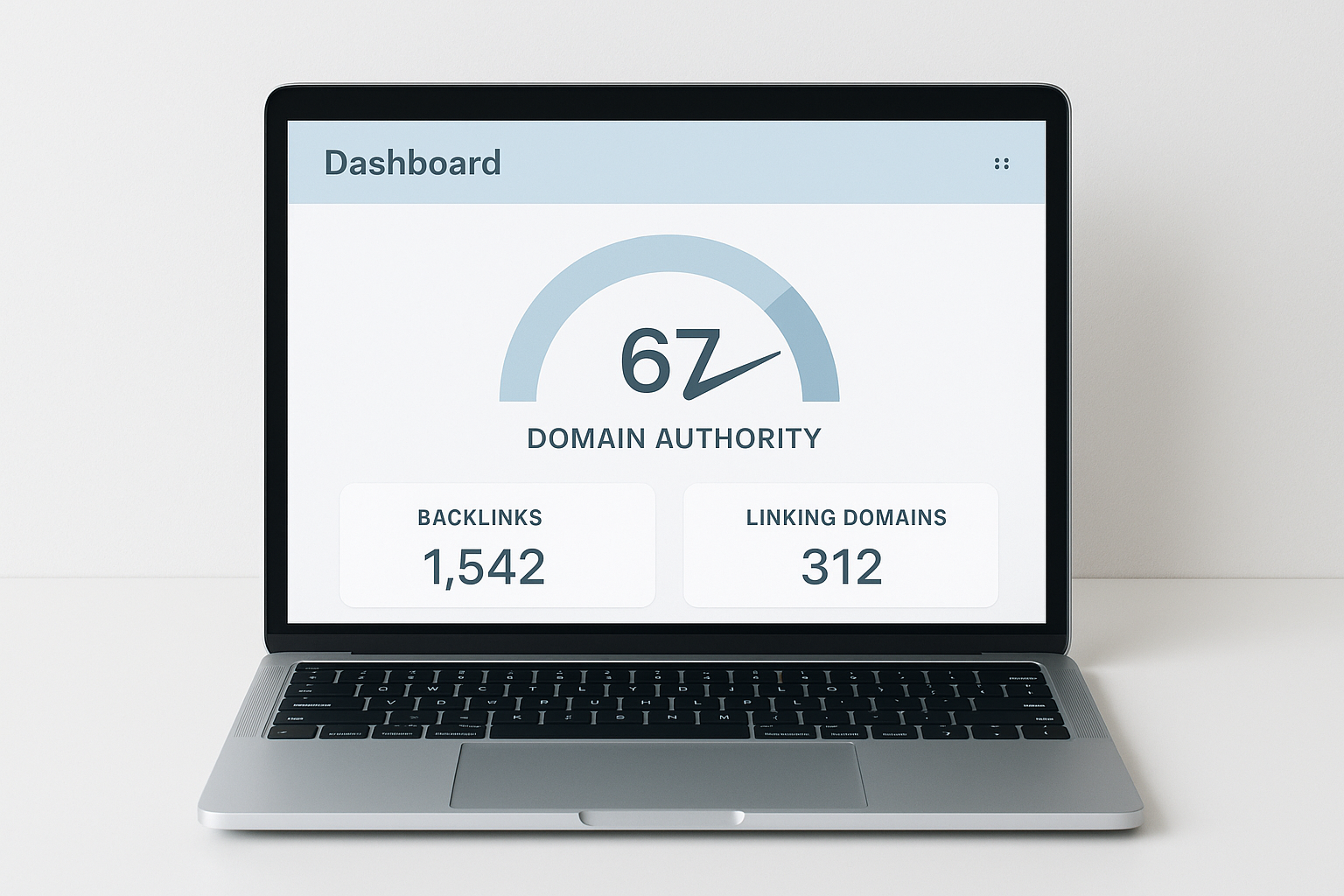
A DA checker free tool displays your domain authority score alongside key backlink metrics in one clear view. For a deeper walkthrough, see our Checking Domain Authority: The Complete Guide (2025).
Why Domain Authority Matters for SEO
Domain Authority is not an official Google ranking factor — Google has confirmed it uses its own internal signals. However, DA is a remarkably reliable proxy for organic performance because both DA and Google’s algorithm heavily weight the same underlying signals: the volume of unique linking domains, the topical authority of those domains, and the anchor text distribution across the link profile.
In practical SEO work, DA serves three primary functions:
- Competitive benchmarking — Knowing your DA relative to the top-ranking pages for a target keyword tells you how much authority-building work lies ahead.
- Link prospecting — When evaluating guest post or partnership opportunities, a site’s DA score helps you quickly filter high-value prospects from low-quality directories.
- Progress tracking — Running a DA check monthly lets you visualize the cumulative impact of your link-building campaigns over time.
How to Use a DA Checker Free Tool Effectively
Using a DA checker is straightforward, but extracting maximum value requires knowing what to look for beyond the headline score. Here is a step-by-step approach:
Step 1 — Enter your domain
Navigate to the free domain authority checker, type or paste your root domain (e.g., example.com), and click the check button. No login is required.
Step 2 — Read the full report
Look beyond the DA score. Note the number of linking root domains — this is often a stronger signal than raw backlink count, since 100 links from 100 unique domains outweigh 100 links from a single source.
Step 3 — Compare competitors
Run the same check on your top 3–5 competitors. A DA gap of more than 15–20 points usually signals that keyword difficulty is high and that sustained link building will be necessary to close the gap.
Step 4 — Pair with keyword research
Authority data is most powerful when combined with keyword intelligence. Use the free keyword checker to identify search terms where your current DA is already competitive enough to rank without heavy link building.

Pairing a DA checker free tool with keyword research creates a complete picture of your competitive SEO position.
What Is a Good DA Score? Understanding the Scale
Because DA uses a logarithmic scale, moving from DA 10 to DA 20 is significantly easier than moving from DA 60 to DA 70. This is important context when setting realistic expectations for your link-building timeline.
Frequently Asked Questions
Is Domain Authority an official Google ranking factor?
No. Domain Authority is a third-party metric created by Moz, not an official Google signal. However, it strongly correlates with organic search performance and is widely used by SEO professionals to benchmark site strength and evaluate link-building opportunities.
How often does my DA score update?
Domain Authority scores are recalculated periodically as Moz crawls the web and updates its link index. Significant changes to your backlink profile — such as earning high-quality links or losing toxic ones — will be reflected in your DA score over time, typically within a few weeks.
Can I check multiple domains at once with a DA checker free tool?
Yes. Many DA checker free tools support bulk domain checks, allowing you to compare the authority scores of multiple websites simultaneously — ideal for competitor analysis and link prospecting campaigns.
Does a higher DA guarantee better Google rankings?
Not directly. A higher DA increases the probability of ranking well, but Google also weighs content relevance, on-page optimization, user experience signals, and hundreds of other factors. DA is best used as a relative benchmark rather than an absolute guarantee of ranking position.
How to Improve Your Domain Authority Score
Checking your score is only the beginning. Once you know where you stand, the real work is improving that number. Here are the most impactful strategies:
- Earn editorial backlinks — Links from high-DA sites in your niche carry the most weight. Focus on creating genuinely linkable assets: original research, comprehensive guides, and unique data studies.
- Diversify your link profile — A healthy DA profile includes links from many unique root domains across varied site types: blogs, news outlets, directories, and educational resources.
- Remove toxic links — Spammy or irrelevant backlinks can suppress your DA. Use Google Search Console’s disavow tool to neutralize harmful links identified in your audit.
- Fix broken link opportunities — Find broken external links on high-DA sites in your niche and suggest your content as a replacement — a highly efficient white-hat link-building tactic.
- Publish consistently — Fresh, high-quality content naturally attracts links over time and signals to crawlers that your domain is an active, authoritative resource.
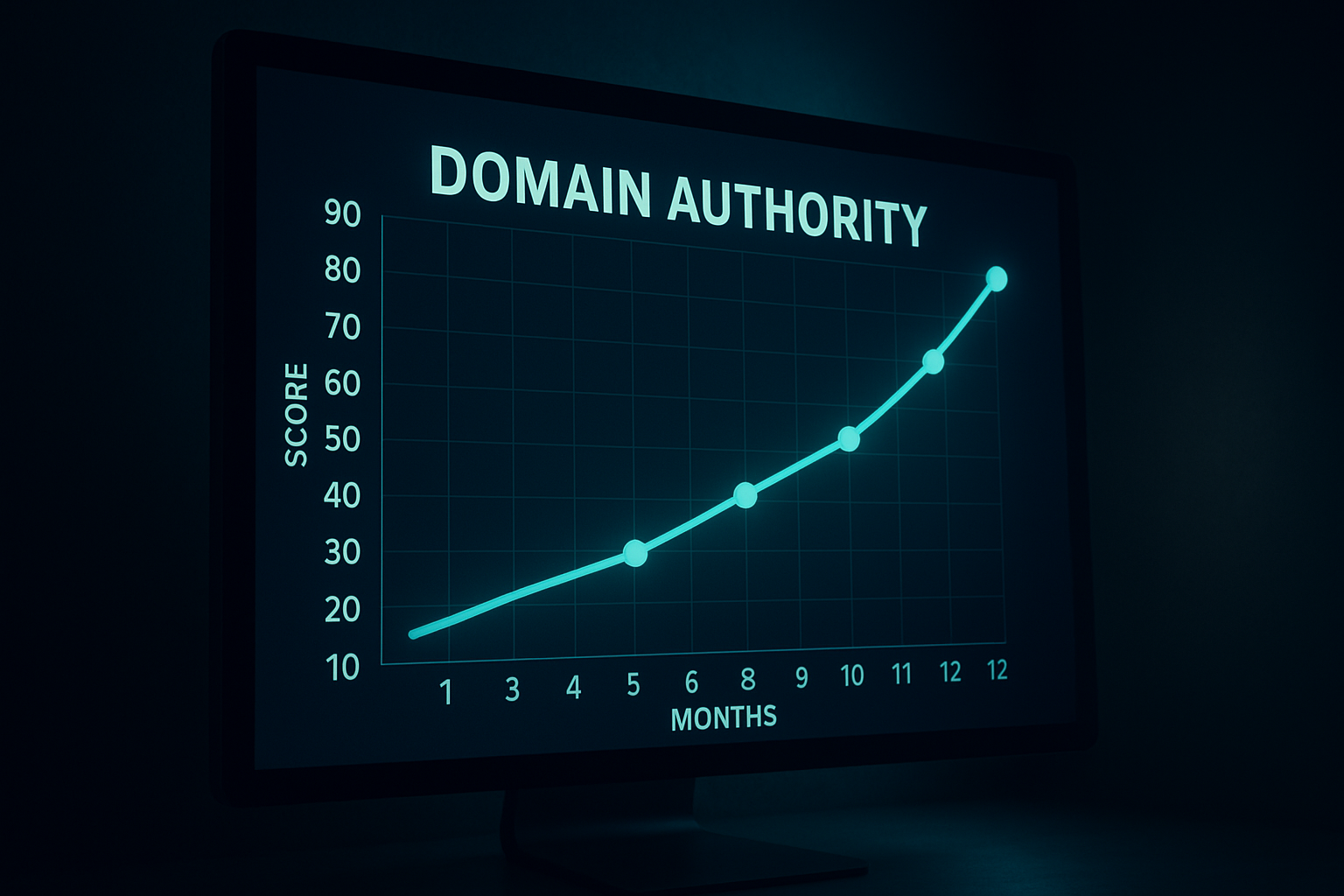
Consistent link building and content creation produce measurable DA score growth over time.
Common Mistakes When Using a DA Checker
Even experienced SEOs sometimes misread DA data. Watch out for these common errors:
Mistake 1 — Treating DA as absolute. DA is a relative metric. A DA of 35 might dominate a hyper-local niche but be entirely uncompetitive in finance or health. Always compare DA in context against the actual pages ranking for your target keywords.
Mistake 2 — Ignoring Page Authority. DA measures the entire domain. A high-DA site can have individual pages with very low PA. When evaluating a link opportunity, check the PA of the specific linking page, not just the domain’s overall DA.
Mistake 3 — Chasing DA as a vanity metric. The goal is not a high DA score — it is organic traffic and conversions. Use DA as a navigational tool within a broader SEO strategy, not as an end goal in itself.
Ready to check your domain authority right now?
Using a DA checker free tool is the fastest way to understand your site’s competitive position, identify link-building gaps, and build a smarter SEO strategy — all without spending a dollar. Start with your own domain, then benchmark your top competitors, and use the data to prioritize every content and outreach decision you make going forward.

