
Competitive Intelligence
“The competitor who adopts AI first doesn’t just move faster — they see further.”
AI competitor analysis techniques are methods that use artificial intelligence, machine learning, and natural language processing to automatically gather, process, and interpret competitive data — turning raw signals into strategic advantage at a speed and scale no human team can match manually. In an era where search landscapes shift overnight and AI-generated results reshape visibility, understanding what your competitors are doing — and predicting what they will do next — has become the single most valuable edge in digital marketing.
Direct Answer
AI competitor analysis techniques use algorithms to monitor, benchmark, and decode competitor strategies across SEO, content, backlinks, and market positioning. They replace hours of manual research with automated, continuously updated intelligence that surfaces actionable insights — enabling faster, smarter decisions about where to invest and how to outrank rivals.
What Are AI Competitor Analysis Techniques?
At their core, AI competitor analysis techniques replace gut-feel benchmarking with data-driven precision. Traditional competitor research meant manually checking a rival’s homepage, eyeballing their rankings, or scrolling through their blog. AI transforms this into a continuous, multi-dimensional intelligence operation.
According to Wikipedia’s definition of competitive intelligence, the discipline involves gathering and analyzing information about competitors, market trends, and the broader business environment. AI doesn’t change that mission — it supercharges it, processing thousands of data points simultaneously and surfacing patterns that would take a human analyst weeks to identify.
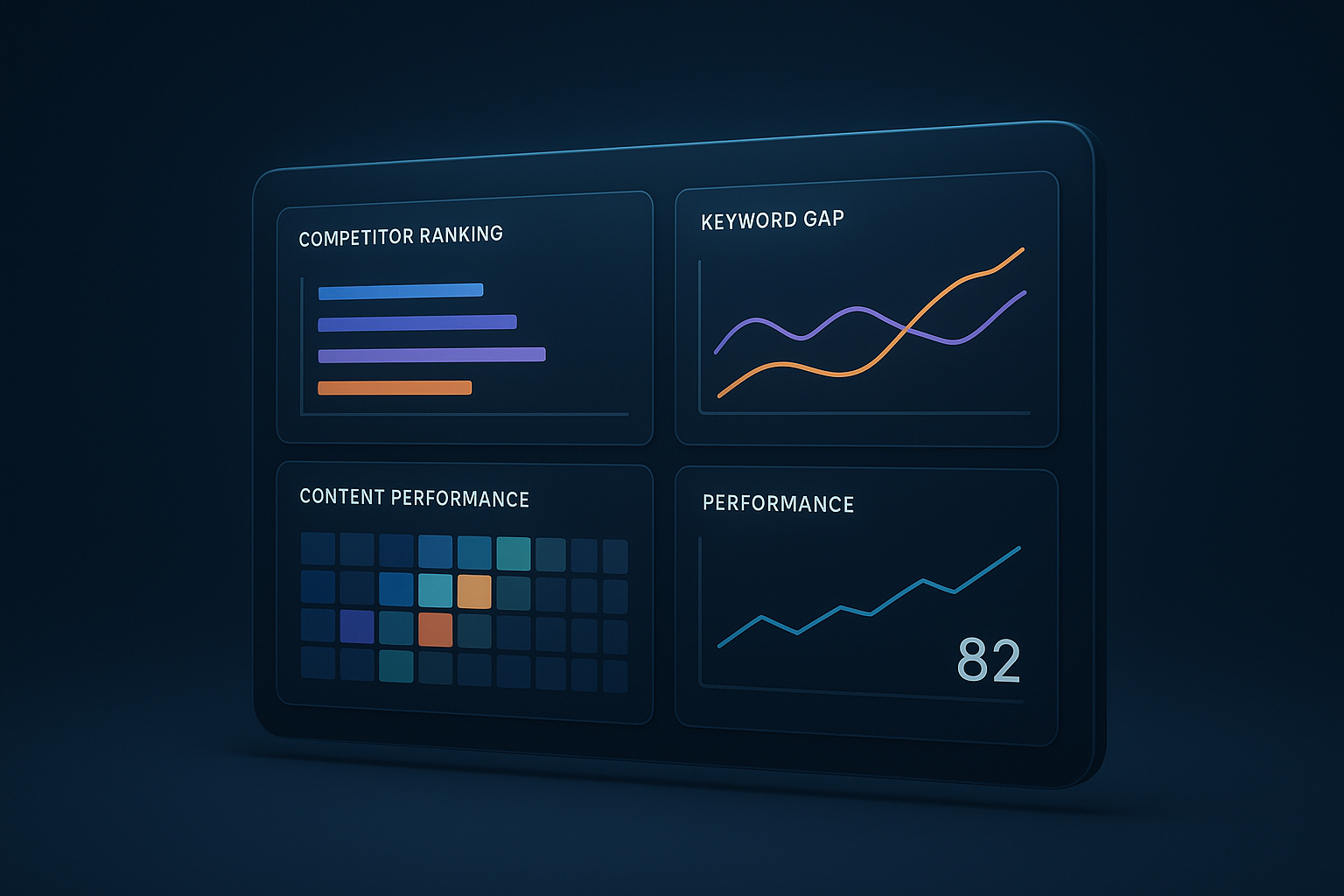
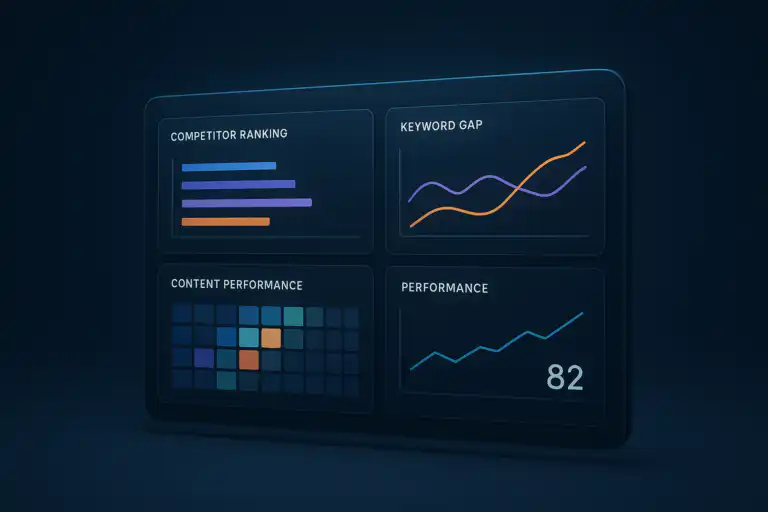
A modern AI competitor analysis dashboard surfaces keyword gaps, ranking shifts, and content opportunities in real time.
7 Powerful AI Competitor Analysis Techniques You Should Be Using
1. Automated Keyword Gap Detection
AI-powered keyword gap analysis compares your ranking keyword universe against multiple competitors simultaneously. Tools like Semrush and Ahrefs use machine learning to cluster keyword opportunities by intent, difficulty, and traffic potential — then prioritize which gaps represent the fastest wins. Instead of reviewing spreadsheets, you receive a ranked action list. Focus on keywords where two or more competitors rank but you don’t — these represent validated demand with proven search intent.
2. NLP-Driven Content Structure Analysis
Natural language processing allows AI to dissect competitor content at the semantic level — not just counting keywords, but understanding topical depth, entity coverage, heading hierarchy, and reading complexity. Tools like Surfer SEO and Clearscope analyze the top-ranking pages for your target queries and generate a content blueprint that mirrors what the algorithm rewards. This technique reveals whether competitors are winning because of link authority or because their content genuinely answers more questions at greater depth.
3. Backlink Velocity and Pattern Monitoring
AI doesn’t just catalog competitor backlinks — it tracks the velocity and pattern of link acquisition over time. A sudden spike in a competitor’s referring domains often signals a PR campaign, a viral content piece, or a partnership deal. By monitoring these patterns, you can reverse-engineer their link-building strategy, identify the publications linking to them, and pitch similar placements before the opportunity window closes.
4. SERP Feature and AI Answer Tracking
Modern AI competitor analysis now extends beyond the ten blue links. AI tools track which competitors are appearing in featured snippets, People Also Ask boxes, knowledge panels, and — critically — AI-generated overviews in Google’s SGE and other AI search platforms. Understanding how your rivals are being cited in AI answers requires a different lens than traditional rank tracking. This connects directly to how AI search sees and evaluates your brand — a dimension of competitive intelligence most teams are still ignoring.
Key Insight
Competitors who appear in AI-generated answers often aren’t the highest domain authority sites — they’re the ones with the clearest, most structured, most entity-rich content. AI competitor analysis techniques help you decode exactly what attributes earn that placement.
5. Sentiment and Brand Perception Mining
AI sentiment analysis tools crawl reviews, forums, Reddit threads, social mentions, and comment sections to map how audiences perceive your competitors. This reveals unmet needs, recurring complaints, and emotional triggers that competitors are failing to address — all of which represent positioning opportunities for your brand. If customers consistently complain that a competitor’s onboarding is confusing, that’s your opening to lead with simplicity in your messaging and content.
6. Predictive Ranking Shift Modeling
Some advanced AI platforms now model likely ranking trajectories based on historical patterns, content publishing cadence, and link acquisition rates. Rather than reacting to competitors after they’ve moved up, predictive modeling gives you a forward-looking view — allowing you to publish competing content, build supporting links, or strengthen topical authority before a rival’s page overtakes yours.
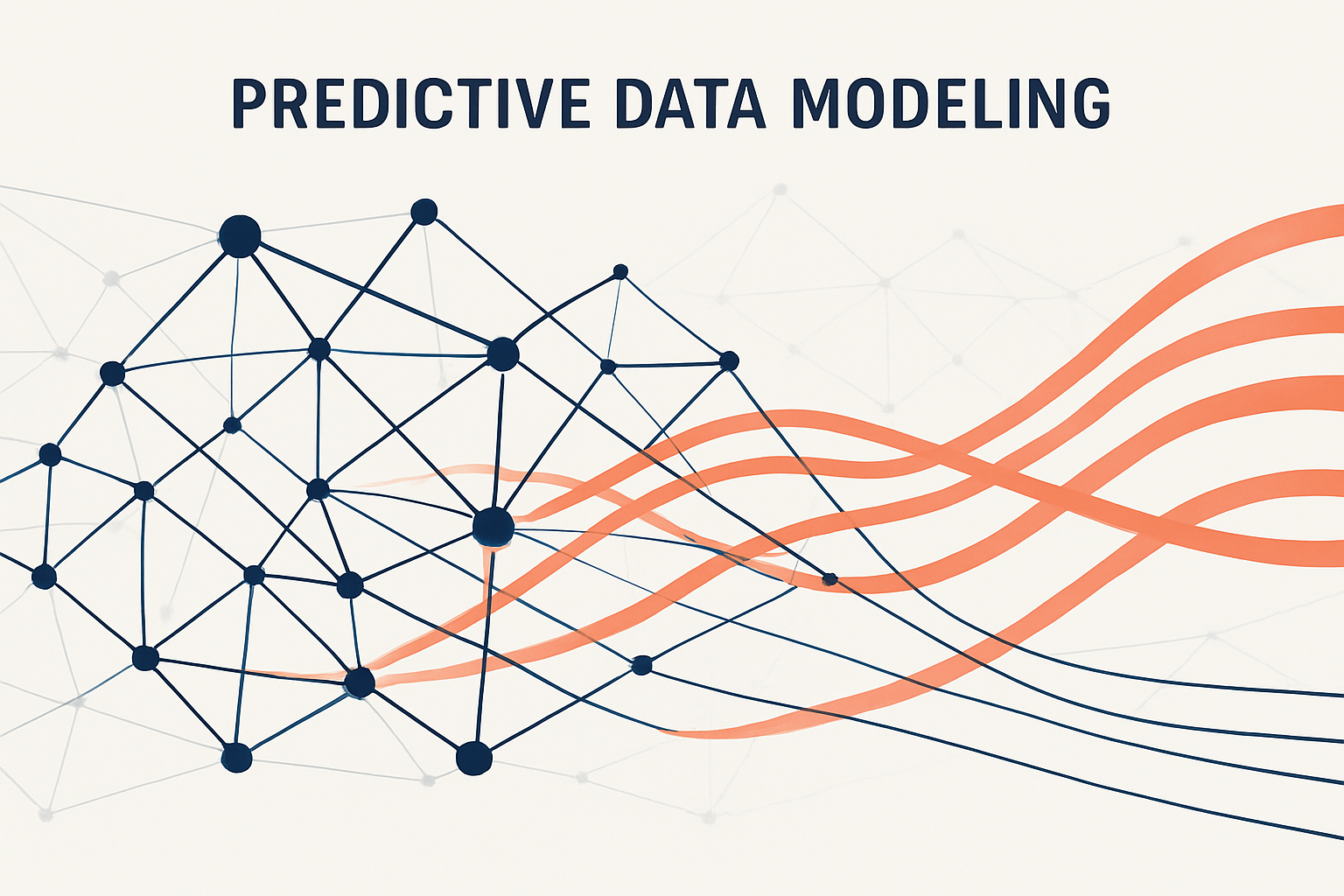
Predictive modeling is one of the most advanced AI competitor analysis techniques, forecasting ranking shifts before they happen.
7. AI-Synthesized Competitive Briefings
Large language models can now synthesize data from multiple competitor intelligence sources into a single coherent briefing. By feeding structured competitor data into a GPT-based workflow, teams can generate weekly competitive summaries, identify emerging threats, and receive content recommendations — all formatted for immediate action. This technique transforms raw data into strategic narrative without requiring a dedicated analyst.
How to Build an AI Competitor Analysis Workflow
Knowing the techniques is only half the equation. Turning them into a repeatable system is what creates compounding advantage. Here’s a practical framework:
Step 1 — Define Your Competitor Set
Identify direct competitors (same product/service), content competitors (ranking for your keywords), and emerging competitors (newer players gaining traction). AI tools can surface the third group automatically by monitoring SERP entrants.
Step 2 — Select Your Intelligence Layers
Decide which data dimensions matter most: organic rankings, content depth, backlink profiles, paid advertising, social presence, or AI search citations. Different competitive situations demand different intelligence priorities.
Step 3 — Automate Monitoring Cadence
Set up automated alerts for significant ranking changes, new content publication, backlink surges, and brand mention spikes. Weekly digest reports keep your team informed without requiring manual checks.
Step 4 — Convert Insights to Action
Every intelligence output should map to a specific action: a content brief, a link outreach target, a page optimization task, or a positioning adjustment. Data that doesn’t drive decisions is noise.
AI Competitor Analysis and the New Search Landscape
The rise of AI-powered search engines has added an entirely new competitive dimension. It’s no longer sufficient to rank in position one — you need to understand whether your competitors are being cited in AI overviews, featured in conversational answers, or referenced as authoritative sources by large language models. This requires AI competitor analysis techniques that go beyond traditional rank tracking.
Developing a comprehensive AI search engine optimization strategy means factoring in how AI systems perceive and rank entities — not just web pages. Competitors who understand this are already building content architectures designed to be cited by AI, not just indexed by crawlers. Your competitive intelligence must evolve to track both dimensions simultaneously.

Modern AI competitor analysis techniques must account for both traditional SERP rankings and emerging AI search citation visibility. For a deeper walkthrough, see our AI Citation Score Checker: The Complete 2025 Guide.
Frequently Asked Questions
What are AI competitor analysis techniques?
AI competitor analysis techniques are methods that use artificial intelligence, machine learning, and natural language processing to automatically gather, process, and interpret data about competing businesses — revealing keyword gaps, content strategies, backlink profiles, and market positioning far faster than manual research.
How does AI improve traditional competitor analysis?
AI improves traditional competitor analysis by processing massive datasets in real time, identifying patterns humans would miss, automating repetitive tracking tasks, and generating predictive insights about competitor moves before they fully impact search rankings.
Which AI tools are best for competitor analysis?
Top AI tools for competitor analysis include Semrush (AI-powered keyword and traffic intelligence), Ahrefs (backlink and content gap analysis), Surfer SEO (NLP-driven content comparison), and custom GPT-based workflows for synthesizing competitive intelligence at scale.
How often should I run AI competitor analysis?
For competitive niches, running AI competitor analysis weekly or bi-weekly is recommended. Automated monitoring tools can flag significant competitor changes — such as new content, ranking shifts, or backlink surges — in near real time so you can respond quickly.
Can AI competitor analysis techniques help with AI search visibility?
Yes. AI competitor analysis techniques can reveal how rivals are being cited or referenced in AI-generated search results, helping you understand what content attributes, entity authority, and topical depth you need to match or surpass their visibility in AI search engines. For a deeper walkthrough, see our AI Blog Posts for Local Businesses: Complete Guide.
Conclusion
Mastering AI competitor analysis techniques is no longer optional for serious digital marketers — it’s the foundation of any strategy designed to win in 2025 and beyond. From automated keyword gap detection and NLP content audits to predictive ranking models and AI search citation tracking, these techniques give you a 360-degree view of the competitive landscape that manual research simply cannot match.
The teams that will dominate search — both traditional and AI-powered — are those who treat competitive intelligence as a continuous, automated, and strategically integrated discipline rather than a quarterly exercise. Start with one technique, build the workflow, and expand from there. The intelligence compounds. So does the advantage.

