

Strategy & Technology
“The marketers who master AI today will define the competitive landscape of tomorrow.” — Rank Authority
AI-based digital marketing solutions — defined as technology platforms and methodologies that apply artificial intelligence, machine learning, and predictive data modeling to plan, execute, and optimize marketing activities — are no longer a future-facing luxury. They are the operational backbone of every high-performing marketing team in 2025. Whether you are managing paid search campaigns, building organic authority through SEO, or nurturing leads through personalized email sequences, AI is actively reshaping how results are achieved, measured, and scaled. Last updated: 2026-04-07. Author: Rank Authority.
Direct Answer
AI solutions for digital marketing use machine learning, natural language processing, and automation to improve campaign targeting, content creation, and ROI measurement. They reduce manual workload, surface actionable insights from large datasets, and enable real-time personalization at a scale no human team can match alone.
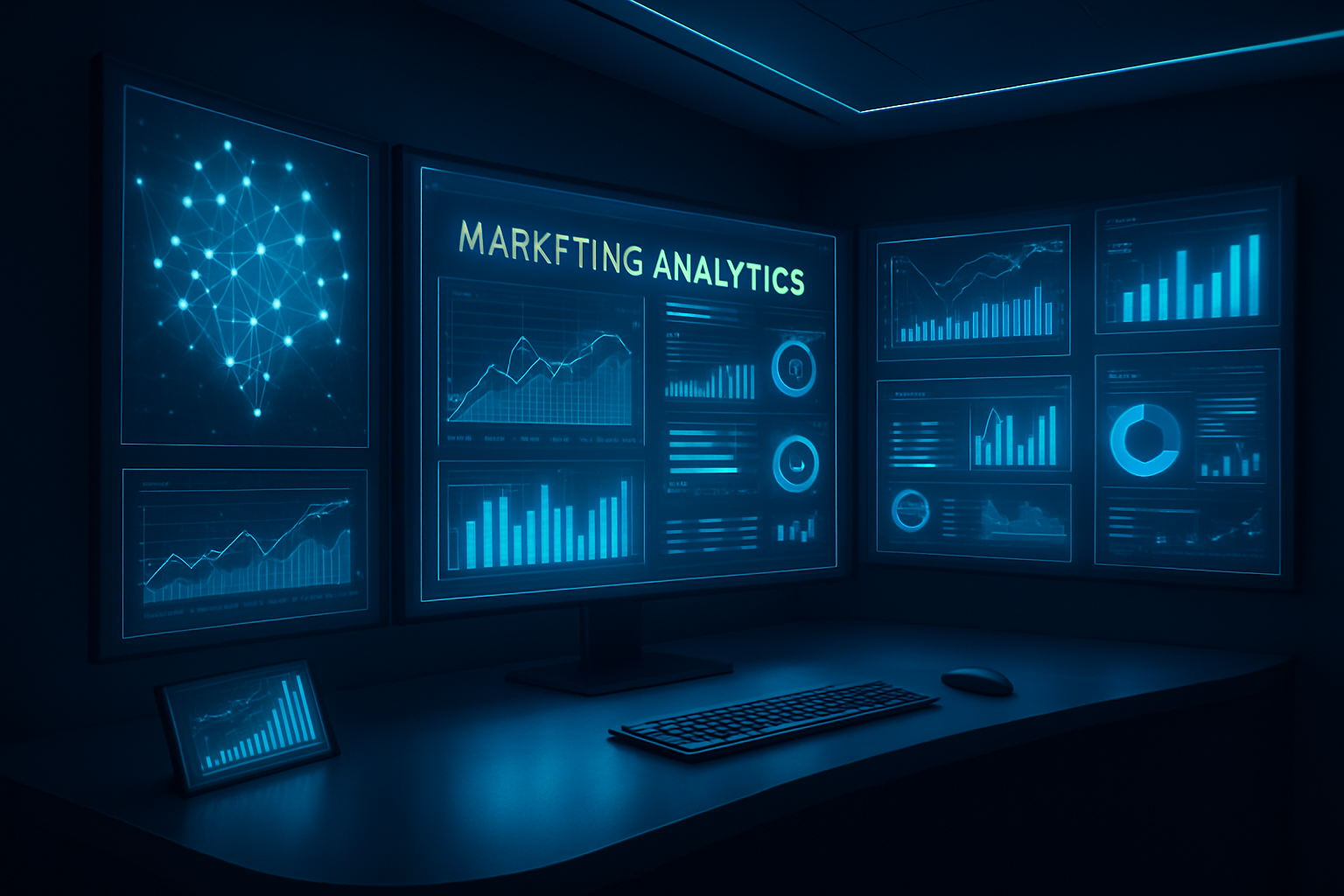
AI solutions for digital marketing centralize data, automate decisions, and surface insights that drive measurable growth. For practical content workflows and editorial oversight, see AI for content marketing strategies.
What Are AI Solutions for Digital Marketing?
AI solutions for digital marketing encompass a broad ecosystem of tools — from autonomous bidding engines in Google Ads to AI for content marketing and intelligent customer data platforms (CDPs). At their core, these solutions ingest structured and unstructured data, identify patterns invisible to human analysts, and take or recommend actions that improve outcomes across the marketing funnel.
According to Wikipedia’s overview of artificial intelligence marketing, AI marketing refers to leveraging customer data and AI concepts like machine learning to anticipate the customer’s next move and improve the customer journey. This definition captures the essence of what modern AI tools deliver: anticipation, personalization, and precision.
The Six Core AI Solutions for Digital Marketing
01 — AI-Powered SEO
Machine learning models now analyze billions of search signals to identify ranking opportunities, predict content gaps, and automate technical audits. Tools like Surfer SEO, Clearscope, and enterprise-grade platforms process competitive data in minutes rather than weeks. For a comprehensive framework on deploying these tools strategically, the AI technology in digital marketing guide explains implementation, tooling, and measurement.
02 — Content Generation & Optimization
Large language models (LLMs) have made it possible to generate first drafts, product descriptions, ad copy, and long-form articles at scale. The key differentiator between brands that win and those that stagnate is editorial oversight — using AI as an accelerant while preserving authentic brand voice and factual accuracy. See our guidance on AI for Content Marketing to balance scale and quality.
03 — Predictive Analytics & Audience Segmentation
Predictive models analyze behavioral signals — page visits, email opens, purchase history — to score leads, forecast churn, and segment audiences with surgical precision. This enables marketing teams to deliver the right message to the right person at the optimal moment in their buying journey. See our AI tools for digital marketing guide for tool recommendations and workflows.
04 — Programmatic Advertising & Bid Automation
AI-driven bidding algorithms evaluate thousands of contextual signals in real time — device type, location, browsing history, time of day — and adjust bids at the millisecond level. Google’s Performance Max campaigns and Meta’s Advantage+ are prime examples of how AI is now embedded directly into the media buying process.
05 — Personalization Engines
Dynamic personalization platforms use AI to tailor website content, email subject lines, product recommendations, and push notifications to individual users based on real-time behavioral data. Brands deploying personalization engines consistently report double-digit improvements in conversion rates and customer lifetime value.
06 — Conversational AI & Chatbots
AI-powered chatbots and virtual assistants handle lead qualification, customer support, and guided product discovery around the clock. Modern conversational AI understands intent, maintains context across sessions, and escalates to human agents only when necessary — dramatically reducing cost per acquisition.
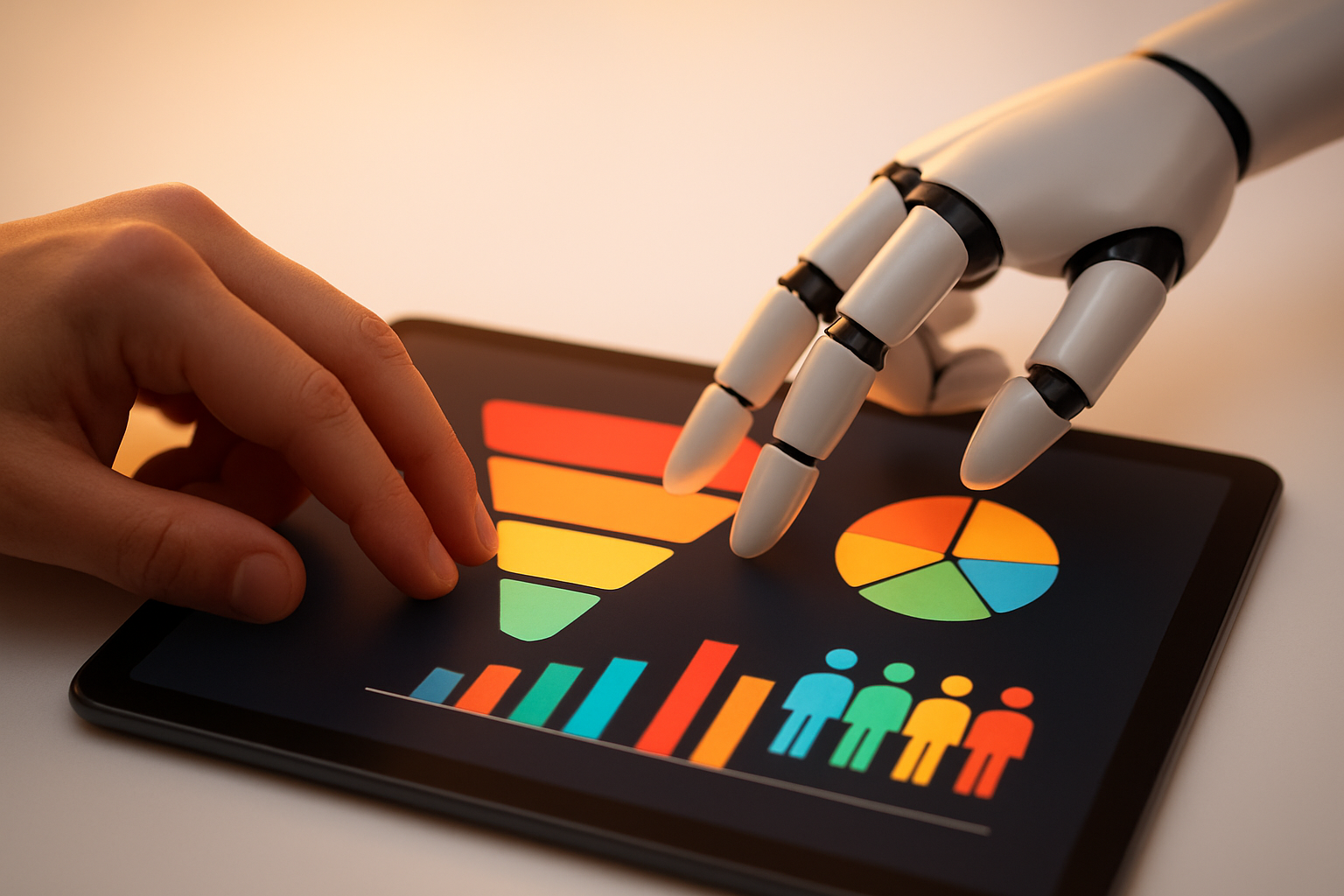
The most effective marketing strategies combine human creativity with AI-driven precision and automation.
How Does AI Improve SEO Performance?
AI improves SEO performance by processing and interpreting data at a scale and speed that is impossible for human analysts alone. Modern AI SEO platforms can crawl millions of pages, cross-reference ranking factors, model competitor authority profiles, and generate prioritized action plans — see our AI technology guide for implementation frameworks.
Natural language processing (NLP) tools analyze top-ranking content to understand semantic relationships, entity coverage, and topical depth. This allows content teams to create pages that satisfy search intent more completely — a key signal in Google’s ranking algorithm. The result is higher organic visibility, lower bounce rates, and stronger domain authority over time.
Key AI SEO Capabilities to Prioritize
-
→
Automated keyword clustering — Group thousands of keywords by intent and topic to build comprehensive content architectures efficiently. -
→
SERP feature analysis — Identify which queries trigger featured snippets, People Also Ask boxes, and knowledge panels to capture zero-click traffic. -
→
Content gap detection — Surface topics your competitors rank for that your site has not yet addressed, revealing high-value content opportunities. -
→
Technical health monitoring — Continuously audit crawlability, Core Web Vitals, structured data integrity, and internal linking at scale.
AI Content Marketing: Data Behind the Shift
The adoption of AI in content marketing has accelerated dramatically. Research and industry analysis consistently show that organizations integrating AI into their content workflows see measurable improvements in output volume, content quality scores, and organic traffic. For a deep dive into the numbers driving this transformation, the 2025 AI Content Marketing: 96 Key Insights report compiles the most comprehensive data available on how AI is reshaping content strategy and performance benchmarks.
By The Numbers
of marketing leaders report AI tools have significantly improved campaign performance within the first six months of adoption.
higher content production velocity reported by teams using AI writing and optimization tools compared to manual-only workflows.
average reduction in cost per lead when AI-powered audience segmentation and personalization are applied to paid campaigns.
Can Small Businesses Benefit from AI Marketing Tools?
Absolutely. The democratization of AI tools means that capabilities once reserved for Fortune 500 marketing departments are now accessible to businesses with modest budgets. A small e-commerce brand can use AI to automate abandoned cart email sequences, a local service business can deploy a chatbot to qualify leads overnight, and a solo content creator can use AI writing assistants to maintain a consistent publishing schedule without burning out.
The critical success factor for smaller organizations is focus. Rather than attempting to implement every available AI tool simultaneously, high-performing small teams identify the single highest-impact bottleneck in their marketing funnel and deploy AI to solve that specific problem first. This focused approach generates quick wins, builds internal confidence, and creates a foundation for broader AI integration over time.

AI tools empower businesses of every size to compete with data-driven precision and marketing automation.
Frequently Asked Questions
What is predictive analytics in digital marketing?
Predictive analytics in digital marketing uses historical data and machine learning models to forecast future customer behavior, campaign performance, and revenue outcomes, enabling marketers to allocate budgets more effectively and reduce wasted spend.
How do I get started with AI solutions for digital marketing?
Start by auditing your current marketing stack and identifying the tasks consuming the most time with the least strategic value — these are your best automation targets. Select AI tools aligned with your primary goal, whether that is content creation, paid media optimization, SEO, or customer segmentation. Implement one tool at a time, measure its impact rigorously, and expand from there. For a practical how-to, see enhance my marketing strategy.
Is AI-generated content safe for SEO?
AI-generated content is safe for SEO when it is accurate, genuinely useful, and editorially reviewed before publication. Google’s guidance focuses on content quality and user value rather than the method of production. The risk lies in publishing unreviewed, low-quality AI output at scale — a practice that can trigger quality penalties regardless of how the content was created.
What budget is needed to implement AI marketing tools?
AI marketing tools span a wide price range. Entry-level tools for content generation and email automation start at under $50 per month, while enterprise AI marketing platforms can cost thousands per month. Most growing businesses find significant value in the $200 to $800 per month range, which covers strong AI SEO, content optimization, and basic automation capabilities.
Conclusion
AI solutions for digital marketing represent the most significant shift in how brands acquire, engage, and retain customers since the rise of social media. From intelligent SEO platforms and generative content tools to predictive analytics engines and real-time personalization systems, AI is compressing the gap between marketing effort and measurable business outcomes. Last updated: 2026-07-02.
The organizations winning in this environment are not necessarily those with the largest budgets — they are the ones deploying AI solutions with strategic clarity, disciplined measurement, and a commitment to continuous optimization. Start with your highest-leverage bottleneck, measure relentlessly, and scale what works.
For expert guidance on building an AI-powered marketing strategy that delivers compounding returns, Rank Authority provides the frameworks, playbooks, and implementation support to accelerate your results. Add an author bio and last-updated date to improve E‑E‑A‑T and reader trust.
For a deeper walkthrough, see our AI Visibility Audit: The Complete Guide to Rankings.

