
The Definitive 2025 Guide
“The websites winning in search today aren’t working harder — they’re working smarter with AI.”
AI-driven SEO optimization is the application of artificial intelligence and machine learning to automate, scale, and sharpen every layer of search engine optimization — from keyword discovery and content structuring to technical auditing and competitive analysis. In 2025, it is no longer a competitive edge reserved for enterprise brands. It is the new baseline for any website that wants to rank, convert, and grow.
Direct Answer
What does AI-driven SEO optimization actually do? It uses algorithms trained on billions of search signals to predict what content will rank, identify technical issues before they damage performance, and continuously adapt your strategy to algorithm changes — all at a speed and scale impossible for human teams alone.
What Is AI-Driven SEO Optimization?
AI-driven SEO optimization is the systematic use of machine learning models, natural language processing (NLP), and predictive analytics to perform and improve SEO tasks that were once entirely manual. Rather than relying on a practitioner’s intuition or periodic audits, AI systems monitor, analyze, and act on search data continuously.
According to Wikipedia’s overview of search engine optimization, SEO encompasses both technical and creative elements. AI amplifies both dimensions simultaneously — automating technical crawls while generating semantically rich content frameworks that align with search intent.
The shift is fundamental. Traditional SEO asked: “What keywords should we target?” AI-driven SEO asks: “What does this audience need at every stage of their journey, and how do we serve it better than every competing page in the index?”
AI-driven SEO optimization brings together real-time data analysis and machine learning to power smarter search strategies.
The Five Pillars of AI-Powered SEO
Understanding where AI delivers the highest SEO impact means looking at the five core pillars where it transforms outcomes:
01 — Intelligent Keyword Research
AI tools analyze search intent clusters, semantic relationships, and real-time trend data to surface keyword opportunities that static tools miss entirely. They predict which queries are gaining momentum before they peak — giving you a first-mover advantage.
02 — Content Optimization at Scale
Natural language processing models evaluate your existing content against top-ranking competitors, identifying gaps in topical coverage, entity relationships, and semantic depth. AI then generates structured briefs that guide writers toward content that genuinely satisfies search intent.
03 — Automated Technical Auditing
AI crawlers continuously monitor site health — flagging broken links, crawl errors, Core Web Vitals regressions, and structured data issues the moment they appear. This shifts your team from reactive firefighting to proactive performance management.
04 — Predictive Rank Tracking
Rather than simply reporting where you rank today, AI-driven rank tracking models forecast ranking trajectories based on link velocity, content freshness signals, and competitor activity. You can act before rankings drop rather than after.
05 — Link Intelligence and Outreach
AI evaluates link profiles at a granular level — assessing topical relevance, domain authority trajectories, and toxic link patterns. It also identifies high-probability link prospects and personalizes outreach at scale, dramatically improving acquisition rates.
Is AI-Driven SEO Better Than Traditional SEO?
This is the question every SEO professional and business owner is wrestling with in 2025. The honest answer: AI-driven SEO optimization is not a replacement for foundational SEO principles — it is a force multiplier for them.
Google’s core ranking systems still reward expertise, experience, authoritativeness, and trustworthiness (E-E-A-T). No AI tool creates genuine authority in your niche. What AI does is ensure that your authoritative content is structured, optimized, and distributed in the most search-friendly way possible — consistently and at speed.
Key Insight
Teams that combine human subject-matter expertise with AI-driven SEO optimization consistently outperform both fully manual teams and fully automated approaches. The winning formula is human strategy + AI execution.
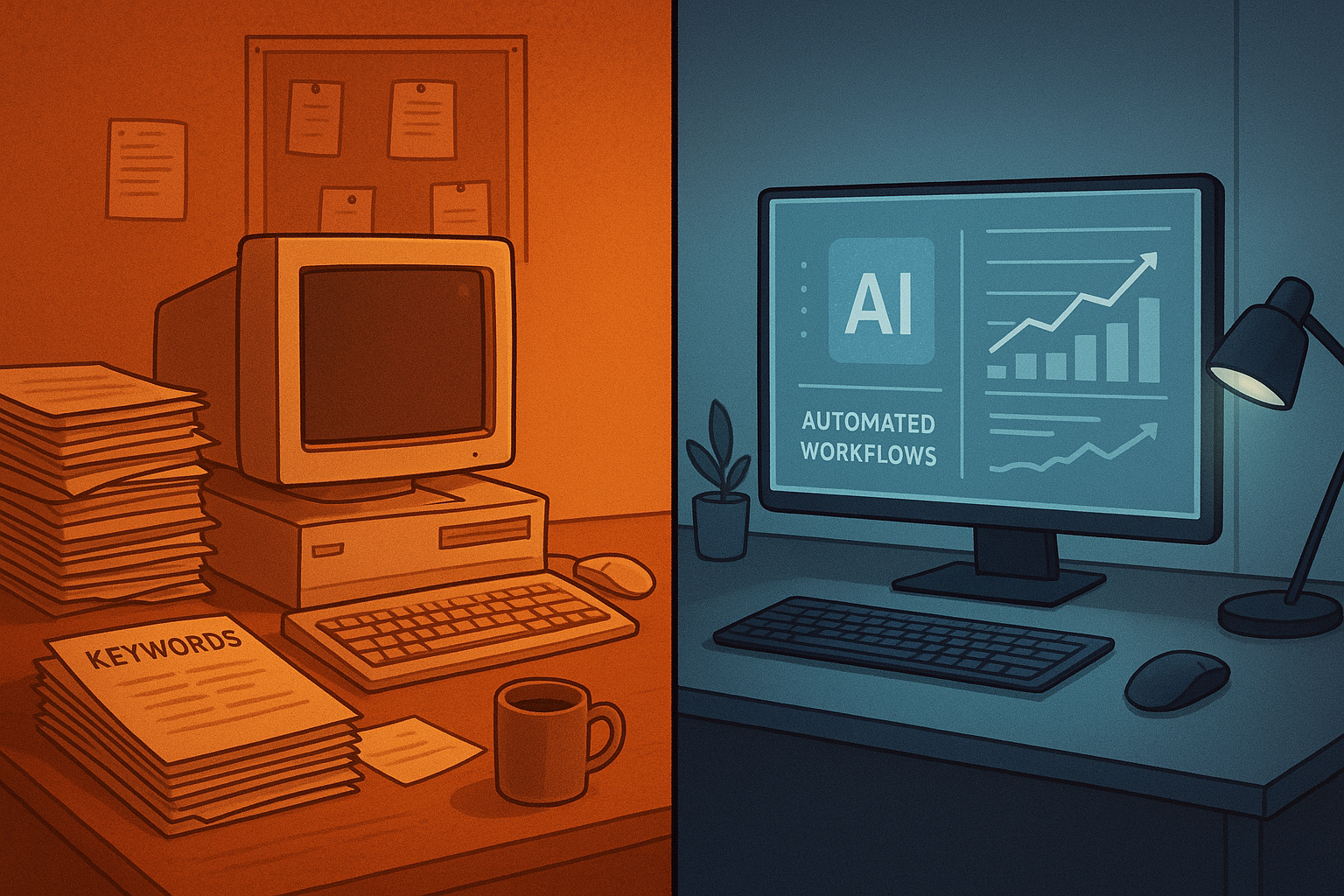
The contrast between manual SEO workflows and AI-driven SEO optimization illustrates why adoption is accelerating across every industry.
How to Implement AI-Driven SEO: A Practical Framework
Adopting AI for SEO doesn’t require a complete overhaul of your existing workflow. The most effective implementations follow a phased approach:
Audit Your Current State
Before deploying any AI tool, establish baseline metrics — organic traffic, keyword rankings, Core Web Vitals scores, and conversion rates. You need a clear before-state to measure AI’s impact accurately.
Prioritize High-Impact AI Applications
Start with AI-powered technical auditing and keyword clustering — these deliver the fastest measurable wins with the lowest risk. Content AI tools require more editorial oversight and should be introduced in a second phase.
Integrate, Don’t Isolate
AI SEO tools produce their best results when connected to your analytics stack, CMS, and content calendar. Siloed tools generate insights that never get acted upon. Integration turns insights into automated workflows.
Measure, Learn, and Iterate
AI-driven SEO is not a set-and-forget solution. Review AI recommendations weekly, validate them against real-world results, and refine your prompts and configurations. The teams that iterate fastest gain the most compounding advantage.
Frequently Asked Questions
How does AI improve keyword research for SEO?
AI improves keyword research by analyzing massive datasets in real time, identifying semantic relationships between terms, predicting search intent shifts, and surfacing long-tail opportunities that traditional tools miss. This results in more targeted content strategies and faster ranking gains.
What are the best AI tools for SEO optimization?
The best AI SEO tools handle automated technical audits, content gap analysis, predictive rank tracking, and NLP-based on-page scoring. For a curated breakdown of top platforms and how to evaluate them for your specific goals, Rank Authority’s guide to AI SEO strategies, tools, and ROI provides an excellent starting framework. For a deeper walkthrough, see our AI-Driven Onpage SEO Audit: The Complete Guide.
Can small businesses benefit from AI-driven SEO optimization?
Absolutely. AI-driven SEO optimization levels the playing field by automating time-consuming tasks and delivering enterprise-level insights at accessible price points. Solutions like 1-click AI SEO tools have made sophisticated optimization achievable for businesses of any size — no large in-house team required.
Does AI-driven SEO work for local search?
Yes. AI tools can analyze local search intent patterns, optimize Google Business Profile signals, identify hyper-local keyword opportunities, and monitor local pack rankings with far more granularity than manual methods. Local SEO is one of the fastest-growing applications of AI in search optimization.
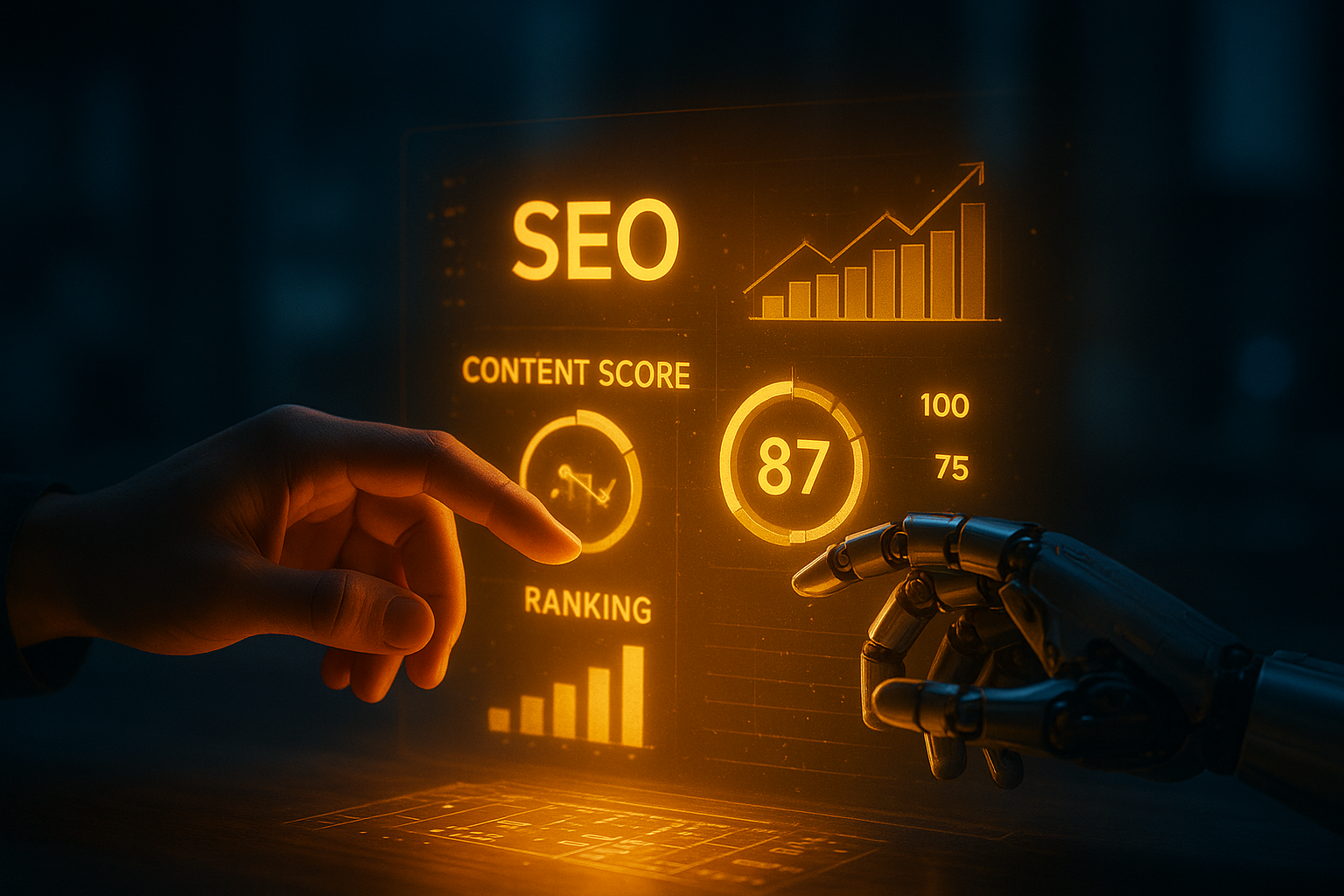
The most effective SEO teams combine human expertise with AI-driven SEO optimization tools for compounding long-term results.
What to Expect: Real ROI from AI SEO
Organizations implementing AI-driven SEO report a range of measurable outcomes. While results vary by industry, site maturity, and implementation quality, common reported gains include:
3–5×
Faster content production with AI-assisted briefs and drafts
40%
Average reduction in time spent on technical SEO auditing
62%
Of SEO professionals report improved ranking outcomes with AI tools
These numbers reflect a broader industry trend: AI is compressing the timeline from SEO investment to measurable organic growth. Sites that previously waited 6–12 months to see meaningful ranking movement are achieving similar results in 8–16 weeks when AI is applied strategically across the full optimization stack.
The Future of AI in Search
The trajectory is clear. As Google’s own systems become more AI-native — from RankBrain and BERT to the Helpful Content System and AI Overviews — optimizing for AI-evaluated quality signals is no longer optional. The search engines themselves are AI. Competing in that environment requires AI-driven SEO optimization as a core competency, not an optional add-on.
Emerging developments to watch include real-time personalized search results driven by user behavior AI, voice and multimodal search optimization, and AI agents that autonomously execute SEO tasks end-to-end. The organizations building AI SEO capabilities today are establishing the infrastructure that will define search dominance for the next decade.
Conclusion
AI-driven SEO optimization represents the most significant shift in search marketing since the introduction of mobile-first indexing. It doesn’t replace the human judgment, brand voice, and subject-matter expertise that build genuine authority — but it eliminates the inefficiencies, blind spots, and scaling limitations that hold even talented SEO teams back.
Whether you’re a solo operator or managing SEO for a large enterprise, the question is no longer whether to adopt AI-driven SEO — it’s how quickly and how strategically you can implement it. Start with the fundamentals, measure relentlessly, and let the data guide your evolution.

