

AI SEO for content creators has changed search — it is no longer a future concept, but the competitive baseline every serious creator needs to understand right now. Add a byline and a brief author bio plus a visible "Last updated" date to the top of this article to strengthen E-E-A-T signals. Add a visible author byline and a short author bio (credentials and expertise) near the top to boost trust.
What Is AI SEO for Content Creators?
Direct Answer: AI SEO for content creators is the practice of using artificial intelligence tools and automation to research keywords, optimize content structure, analyze search intent, and improve rankings — enabling creators to produce high-performing content faster and more strategically than manual methods alone.
For years, SEO demanded hours of manual keyword research, competitor analysis, and content auditing. Artificial intelligence has compressed that timeline dramatically. Today, bloggers, YouTubers, newsletter writers, and independent publishers can use AI-powered platforms to identify ranking opportunities, build semantically rich content outlines, score drafts against top-performing pages, and track performance — all within a single workflow. Last updated: 2026-07-02.
But speed and automation are only part of the story. The creators who win with AI are the ones who understand how to direct these tools with expertise and editorial judgment. AI amplifies good strategy; it cannot replace it.

AI SEO for content creators combines data-driven tools with editorial strategy to accelerate organic growth.
Why Search Intent Is the Foundation
Before any AI tool enters your workflow, you need to understand what search intent means and why Google treats it as the primary ranking signal. Search intent refers to the underlying goal a person has when they type a query — are they looking to learn something, buy something, navigate to a specific site, or compare options?
AI tools can analyze the top 20 results for any keyword and identify patterns in content format, length, heading structure, and topical depth. This gives content creators an evidence-based blueprint before they write a single word. Rather than guessing what Google wants to see, you are working from data.
Matching intent is also deeply tied to content usefulness. If you want to understand how Google evaluates whether your content genuinely helps readers, this breakdown of content usefulness signals from Rank Authority is essential reading.
The Core AI SEO Workflow for Content Creators
A repeatable AI-assisted SEO workflow has five distinct stages. Each stage has specific tools and decisions that keep the process efficient without sacrificing quality. Learn more in our AI SEO content creator guide.
Stage 01
Keyword Discovery and Clustering
Use AI-based SEO tools like Semrush, Ahrefs, or even ChatGPT with search data plugins to generate keyword clusters around your core topic. Group semantically related terms together so each piece of content covers a topic comprehensively rather than targeting a single phrase in isolation.
Stage 02
Competitive SERP Analysis — learn methods in the AI Content Writing guide to align drafts with top results.
Feed your target keyword into tools like Frase or Surfer SEO. These platforms pull the top-ranking pages and extract common headings, word counts, questions answered, and entities mentioned. Your content brief is built from this competitive data automatically. Also review our AI content optimization tools overview.
Stage 03
AI-Assisted Drafting with Human Oversight — see AI‑based SEO tools for tool comparisons and workflows.
Use AI content writing tools to generate a structured first draft based on your brief. Then apply your subject-matter expertise: add original examples, correct inaccuracies, inject genuine perspective, and ensure every claim is verifiable. This human layer is what separates rankable content from generic output.
Stage 04
On-Page Optimization Scoring
Run your draft through an AI content analysis tool that measures keyword density, semantic coverage, readability, and structural elements like meta descriptions and internal linking. Adjust until your content score is competitive with the top three ranking pages for your target keyword.
Stage 05
Publish, Monitor, and Refresh
Publishing is not the finish line. Monitor rankings, click-through rates, and engagement signals using Google Search Console. When a page starts to slide, use AI to identify content gaps and update the piece. A disciplined refresh cycle is one of the highest-ROI activities in content SEO. Read our AI SEO content creator guide for deeper workflows.
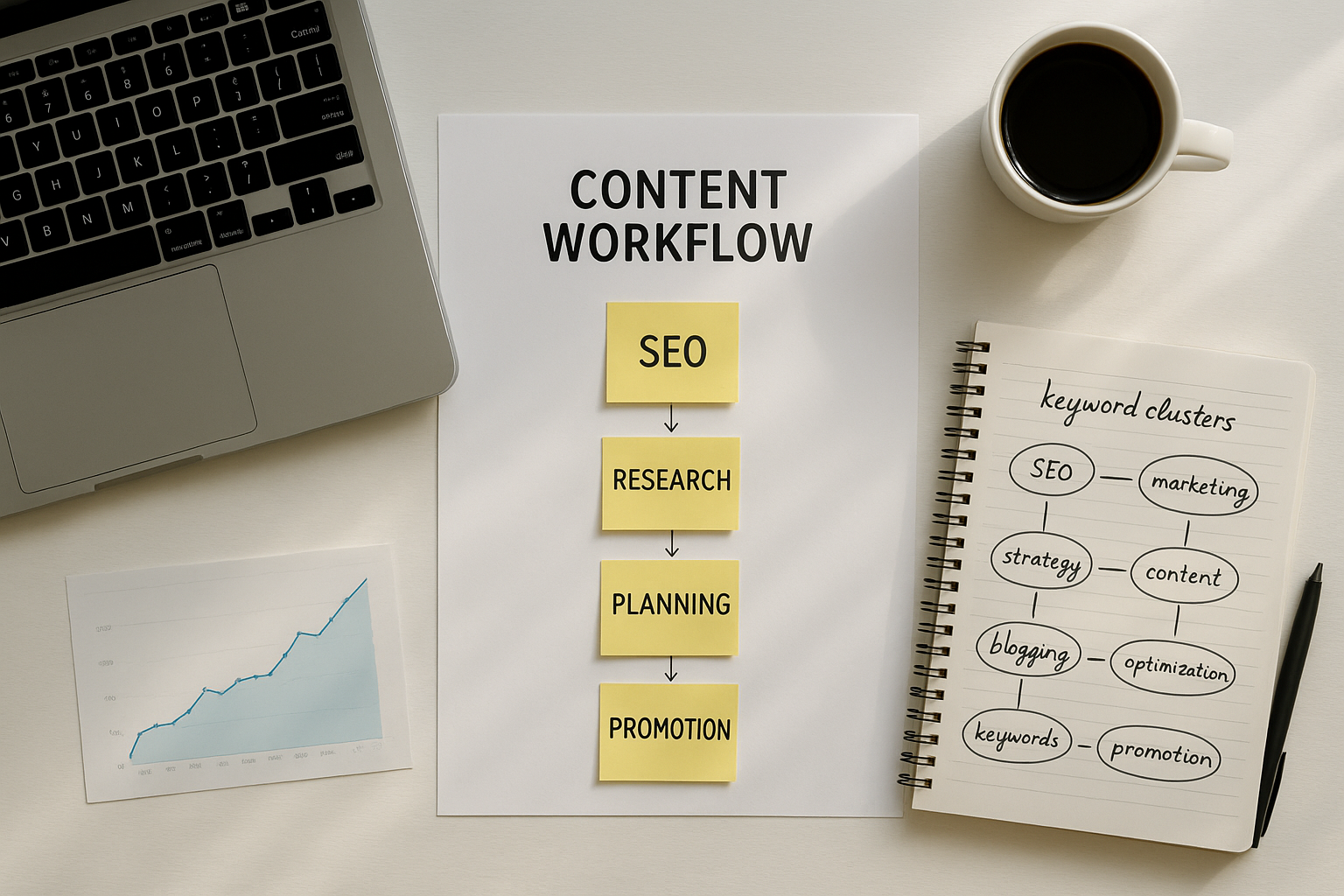
A structured workflow helps content creators apply AI SEO consistently at every stage of production. Byline: Rank Authority Editorial Team. Last updated: 2026-06-17.
Does AI-Generated Content Actually Rank?
This is the question every content creator asks when they first explore AI tools. The answer is nuanced but encouraging: yes, AI-assisted content can and does rank — when it meets Google’s quality standards.
Google’s ranking systems evaluate content on signals like expertise, authoritativeness, trustworthiness (E-E-A-T), helpfulness, and user satisfaction — not the method of production. A purely AI-generated article with no editorial oversight, thin factual accuracy, or obvious intent to game rankings will struggle. A well-researched, human-edited piece that happens to use AI for structure and efficiency can rank at the top of competitive SERPs.
Key principle: Treat AI as your research assistant and structural architect. Keep yourself — your experience, your voice, your expertise — as the author. That division of labor produces content that both readers and search engines reward.
It is also worth noting that AI tools can help you identify which of your existing pages are underperforming and why. Many creators focus entirely on producing new content when the bigger opportunity lies in optimizing what they already have. Rank Authority’s guide on content updates for SEO walks through exactly how to approach that process systematically. For a deeper walkthrough, see our AI SEO Platforms: The Complete Guide for 2025. Also see AI SEO content creator guide.
Choosing the Right AI SEO Tools
The market for AI SEO content creator guide has expanded rapidly. Here is a practical breakdown of the main categories and what each does best for content creators:
Common Mistakes Content Creators Make with AI SEO
Adopting AI tools without a clear strategy leads to predictable failures. These are the mistakes that cost creators rankings and waste time:
Publishing unedited AI output
Raw AI drafts often contain factual errors, generic phrasing, and no genuine perspective. Without human editing, this content fails on E-E-A-T and disappoints readers.
Chasing volume over relevance
AI makes it easy to produce content at scale. Producing 50 loosely related articles is less effective than 10 deeply authoritative pieces that establish genuine topical authority in your niche.
Ignoring content decay
Most creators focus on publishing new content and never revisit older pages. AI tools can flag declining pages so you can refresh them before rankings drop significantly.
Skipping internal linking
AI drafts rarely include contextual internal links. Manually adding links to related content on your site distributes authority and keeps readers engaged longer — both positive ranking signals.
Frequently Asked Questions
Which AI SEO tools are best for content creators?
Popular choices include AI SEO tools guide, Semrush for keyword research, Clearscope for topic coverage, ChatGPT for drafting and ideation, and Frase for brief building. The best tool depends on your workflow and budget — most professionals combine two or three rather than relying on one.
How often should I update my content for SEO?
Audit and update your existing content at least every three to six months. Pages covering rapidly changing topics — technology, finance, health — may need refreshes every four to eight weeks. Regular updates signal freshness to search engines and help maintain or recover rankings over time.
Can small creators compete with large publishers using AI SEO?
Yes — and this is one of AI’s most exciting implications for independent creators. AI levels the research and production playing field. A solo creator with a clear niche, genuine expertise, and a disciplined AI-assisted workflow can outrank large publishers on specific long-tail topics where depth and authenticity matter more than domain authority alone.

Monitoring content performance through analytics dashboards is a critical part of any long-term AI SEO strategy.
Building Long-Term Authority with AI SEO
The creators who see lasting results from AI SEO are not the ones who chase shortcuts — they are the ones who build systems. A content system powered by AI means you have a repeatable process for identifying opportunities, producing quality content, optimizing it before publishing, and refreshing it on a schedule.
Topical authority — the practice of comprehensively covering a subject area rather than targeting isolated keywords — is the strategic goal. AI makes it feasible for individual creators to map and execute an entire topical cluster that would have taken a team months to produce manually.
Resources like Rank Authority provide ongoing guidance for creators navigating the intersection of AI tools and search strategy — a space that is evolving fast and rewarding those who stay informed. See the AI SEO content creator guide for additional tactics and case studies.
Start Using AI SEO for Content Creators Today
AI SEO for content creators is not a passing trend — it is a fundamental shift in how competitive content is researched, produced, and maintained. Creators who build AI-assisted workflows now will compound their advantages over the next several years, while those who ignore these tools will find it increasingly difficult to compete on quality, speed, and scale simultaneously. Last updated: 2026-07-02.
Start with one stage of the workflow — keyword research or content scoring — and build from there. Consistency and iteration beat perfection every time.

