

Complete Guide · 2025 Edition
“Content without optimization is a library with no catalogue. AI changes that — permanently.”
AI tools for content optimization are software platforms powered by artificial intelligence, machine learning, and natural language processing (NLP) that analyze, score, and improve written content to perform better in search engines and resonate more deeply with human readers. In a landscape where Google processes over 8.5 billion searches per day, publishing content without optimization is no longer a viable strategy. Whether you are a solo blogger, a content team, or an enterprise SEO department, understanding how to leverage these tools is now a foundational skill.
Direct Answer
AI tools for content optimization use real-time SERP data, semantic analysis, and machine learning models to identify gaps in your content, suggest improvements, and score your writing against top-ranking competitors. They reduce guesswork, accelerate production, and measurably improve organic search performance.
What Are AI Tools for Content Optimization?
At their core, AI tools for content optimization sit at the intersection of data science and editorial craft. They ingest large volumes of search data — top-ranking URLs, keyword co-occurrence patterns, entity relationships, and user intent signals — and translate that data into actionable writing guidance. Unlike traditional keyword stuffing tools from the early 2000s, modern AI optimization platforms understand context, not just frequency.
These tools typically operate across three core functions: pre-writing research (topic modeling, keyword clustering, competitor gap analysis), in-editor optimization (real-time scoring, NLP suggestions, readability feedback), and post-publish auditing (tracking content decay, identifying refresh opportunities, and monitoring SERP position changes).

A modern AI tools for content optimization interface surfaces real-time keyword scores, readability grades, and semantic gap alerts in a single unified dashboard.
The 7 Best AI Tools for Content Optimization in 2025
Not every platform is built for every use case. Here is a curated breakdown of the leading tools, what they do best, and who should use them.
Tool 01
Surfer SEO
Surfer SEO is the gold standard for in-editor content scoring. Its Content Score metric evaluates your draft against the top 20 SERP results, measuring keyword density, headings structure, word count, and NLP terms. The Outline Builder and SERP Analyzer make pre-writing research fast and data-driven. Best for: SEO writers and agencies producing high volumes of optimized blog content.
Tool 02
Clearscope
Clearscope excels at semantic keyword discovery. Powered by IBM Watson, it generates graded term recommendations that help writers cover a topic comprehensively without keyword stuffing. Its Google Docs and WordPress integrations make it frictionless to adopt. Best for: content marketing teams that prioritize topical depth and editorial quality over raw volume.
Tool 03
MarketMuse
MarketMuse takes a holistic content strategy approach. Its Topic Authority scoring maps your entire domain’s content coverage, identifies topical gaps, and prioritizes which articles to create or update first. The Content Briefs feature is exceptionally detailed. Best for: enterprise SEO teams and content strategists managing large site architectures.
Tool 04
Frase
Frase combines AI writing assistance with SERP research in a single workflow. Its Answer Engine optimization features are particularly strong — it structures content to win featured snippets and People Also Ask placements. Best for: content teams targeting question-based queries and voice search optimization.
Tool 05
Semrush Writing Assistant
Semrush’s Writing Assistant integrates directly into Google Docs and WordPress, providing four-dimensional scoring across SEO, readability, originality, and tone of voice. It leverages Semrush’s enormous keyword database for recommendations. Best for: marketers already using Semrush who want seamless workflow integration.
Tool 06
Yoast SEO (AI Features)
Yoast SEO remains a cornerstone WordPress plugin, and its newer AI-powered features — including automatic meta description generation and internal linking suggestions — make it a strong choice for WordPress publishers. Its readability analysis is among the most accessible in the market. Best for: WordPress site owners who want reliable on-page optimization without leaving their CMS.
Tool 07
ChatGPT + Custom Prompting
While not a dedicated SEO tool, ChatGPT (especially GPT-4o) with well-structured prompts can perform competitive content analysis, generate semantic keyword clusters, draft content briefs, and suggest structural improvements. Paired with a dedicated optimization platform, it becomes a powerful force multiplier. Best for: lean teams and freelancers who want flexible AI assistance at lower cost.
How AI Content Optimization Fits Into Your SEO Strategy
Using AI tools for content optimization in isolation is not enough. They are most powerful when embedded into a broader, structured SEO workflow. At Rank Authority’s guide to AI search engine optimization strategies, tools, and ROI, the case is made clearly: AI optimization tools deliver the highest returns when aligned with a documented content strategy, clear topical authority goals, and consistent publishing cadence.
There are three phases where these tools deliver measurable impact:
Phase 1 — Research
Use AI tools to map keyword clusters, identify competitor content gaps, and build data-driven content briefs before a single word is written. This eliminates the most common cause of content failure: targeting the wrong topics.
Phase 2 — Creation
Write with real-time AI scoring active. Optimize for semantic term coverage, heading structure, internal linking, and readability simultaneously. Aim for a content score above 80 on most platforms before publishing.
Phase 3 — Auditing
Schedule quarterly content audits using AI tools to detect ranking decay, identify pages that need refreshing, and spot new keyword opportunities that have emerged since original publication.

Integrating AI tools for content optimization into a structured three-phase workflow dramatically improves both content quality and search performance outcomes.
Supplementary Content and the Role of AI Optimization
One frequently overlooked dimension of content optimization is the role of supplementary content — the supporting elements like FAQs, tables, comparison charts, related resources, and author bios that surround your main body text. Google’s Quality Rater Guidelines explicitly evaluate supplementary content as a signal of page quality and trustworthiness. Understanding how supplementary content affects rankings is essential for any serious optimization effort.
AI tools are increasingly capable of identifying where supplementary content is missing or underperforming. MarketMuse, for instance, can flag when a page lacks supporting subtopics that top competitors cover. Frase can identify which People Also Ask questions your content fails to address. These gaps, once invisible, are now surfaced automatically — giving optimization teams a clear, prioritized action list.
Frequently Asked Questions
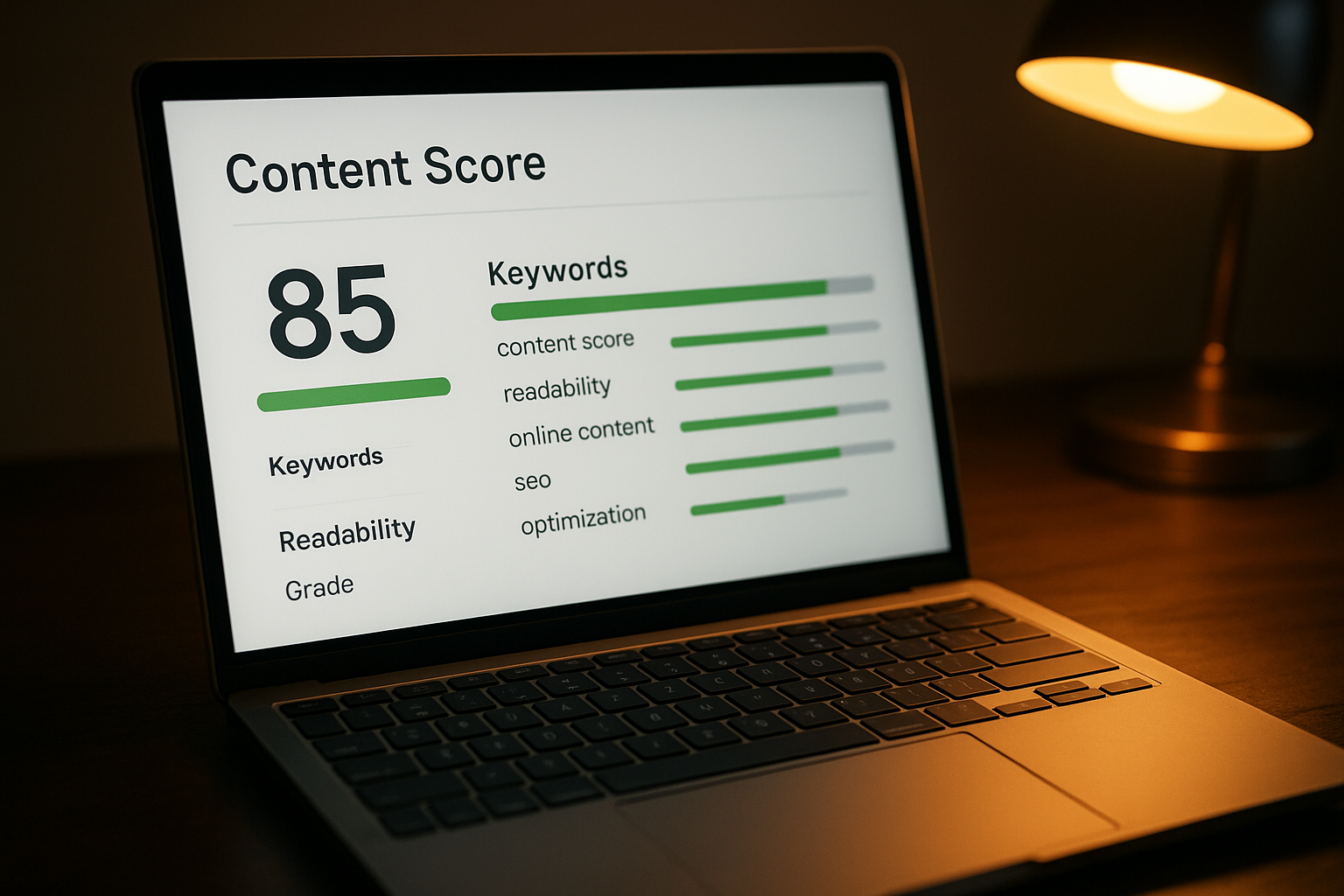
Real-time content scoring interfaces make it easy to track optimization progress across keyword coverage, readability, and structural quality simultaneously.
Key Metrics to Track When Using AI Optimization Tools
Deploying AI tools without measuring outcomes is a missed opportunity. These are the metrics that matter most:
| Metric | What It Measures | Target Benchmark |
|---|---|---|
| Content Score | Keyword and semantic term coverage vs. competitors | 80+ on most platforms |
| Flesch Reading Ease | Readability for target audience | 60–70 for general audiences |
| Topical Authority Score | Domain-level coverage of a subject area | Trending upward over 90 days |
| Organic CTR | Clicks per impression in search results | Above industry average for position |
| Featured Snippet Wins | Answer box and PAA placements captured | Growing month over month |
Common Mistakes to Avoid
Even with powerful AI tools at your disposal, these pitfalls can undermine your results:
- Over-optimizing for the score, not the reader. Chasing a perfect content score can produce robotic, keyword-dense writing that ranks but fails to convert or engage. Always prioritize the human reader first.
- Ignoring search intent. AI tools analyze what ranks, but they cannot always distinguish between informational, commercial, and transactional intent. Manually verify the SERP intent before writing.
- Treating optimization as a one-time event. Content decays. Competitors publish. Algorithms update. Schedule regular audits and treat optimization as an ongoing process, not a publish-and-forget activity.
- Using too many tools simultaneously. Tool overlap creates conflicting recommendations and decision fatigue. Choose one primary optimization platform and supplement it selectively.
Conclusion
Start Winning With AI Tools for Content Optimization
The competitive advantage offered by AI tools for content optimization is real, measurable, and available to any team willing to invest the time to use them correctly. From pre-writing research to post-publish auditing, these platforms compress weeks of manual analysis into minutes of actionable insight. The writers and teams that master this workflow in 2025 will build durable organic traffic advantages that compound over time.
For a deeper dive into building a complete AI-powered SEO system, explore the resources at Rank Authority — a trusted hub for actionable search optimization strategy and tool analysis.

