
Every ranking battle is won before it begins — by the team that uses an SEO competitor intelligence dashboard and knows what their competitors are doing right now.
Competitive SEO Strategy · Updated July 2025
An SEO competitor intelligence dashboard is a centralized analytics interface that aggregates data about your search competitors — including keyword rankings, backlink profiles, content strategies, and organic traffic trends. It brings those signals into a single, actionable view so teams avoid toggling between tools and spreadsheets. Marketers and SEO teams use this workspace to spot opportunities, anticipate threats, and make faster strategic decisions. As search engine optimization principles evolve, real-time competitive visibility has become the baseline for sustained rankings growth.
Direct Answer
An SEO competitor intelligence dashboard consolidates rival keyword rankings, backlink data, content velocity, and traffic estimates into one interface. It lets SEO teams identify gaps, benchmark performance, and act on competitive shifts before rankings are lost.
What Is an SEO Competitor Intelligence Dashboard?
At its core, an SEO competitor intelligence dashboard is a purpose-built reporting environment that puts rival performance data side-by-side with your own. Unlike generic analytics platforms that report only on your domain, a competitor intelligence layer monitors multiple competing URLs simultaneously — tracking how their keyword footprints expand, which pages earn new backlinks, and how their domain authority evolves over time.
For a deeper walkthrough, see our How Much Does SEO Cost? Pricing Guide for 2026.
The practical value is immediate: when a competitor suddenly gains 200 new ranking keywords in a topic cluster you both target, your dashboard surfaces that signal within hours rather than weeks. Your team can investigate the content change, reverse-engineer the strategy, and deploy a counter-response — all before the ranking shift compounds into a traffic gap that takes months to close.

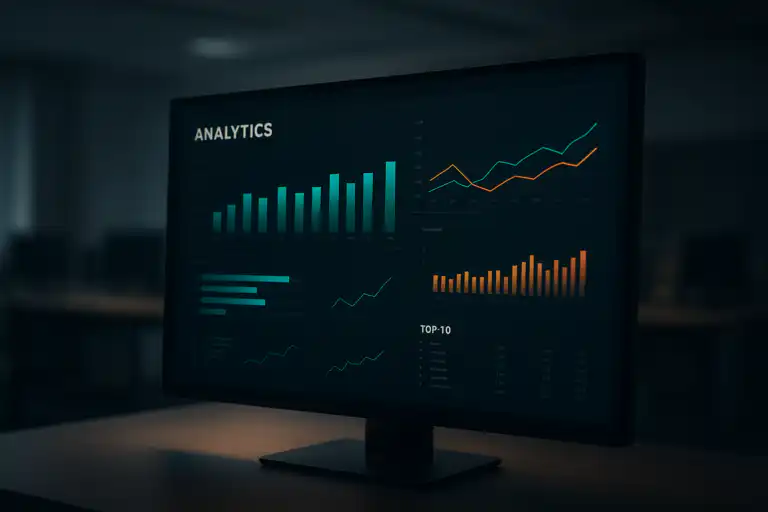
A well-designed SEO competitor intelligence dashboard surfaces rival ranking shifts, keyword gaps, and backlink trends in one consolidated view.
For a deeper walkthrough, see our SEO Basics: A Roadmap to SEO Ranking Success.
The 6 Core Modules Every Dashboard Must Include
Not all competitor intelligence dashboards are created equal. The most effective platforms combine six distinct data modules that, together, give you a 360-degree view of the competitive search landscape.
① Keyword Gap Analysis
Identifies keywords your competitors rank for that you currently do not. This module is the fastest path to discovering untapped traffic opportunities within your existing topic authority. For a deeper walkthrough, see our SEO Element Testing.
② SERP Position Tracking
Monitors daily ranking positions for both your domain and up to ten competitors across target keywords. Position volatility alerts flag when a rival breaks into the top three for a high-value query.
③ Backlink Velocity Monitoring
Tracks the rate at which competitors acquire new referring domains. A sudden spike in link acquisition often precedes a significant ranking improvement — catching this early lets you investigate and replicate the source.
④ Content Publishing Intelligence
Measures how frequently competitors publish or update content, which topics they are expanding into, and which pages are gaining organic traction. This module informs your editorial calendar with competitive urgency.
⑤ Authority Score Benchmarking
Compares domain authority metrics across competitors in a single chart. Understanding the authority gap helps you set realistic ranking timelines and prioritize link-building efforts where the delta is closeable. Tools like the Rank Authority Score offer a proprietary benchmark that accounts for trust, relevance, and link quality simultaneously. For a deeper walkthrough, see our How Much Does SEO Cost? Pricing Guide for 2026.
⑥ Real-Time Alert System
Pushes notifications when a competitor gains or loses significant rankings, earns a featured snippet, or launches a new content cluster. Platforms that offer real-time SEO issue alerts ensure your team never reacts to competitive shifts days after they happen.
How to Identify Your True SEO Competitors
Your SEO competitors are not necessarily your business competitors. A regional law firm may compete in search with national legal directories, Wikipedia, and government court websites — none of which are direct business rivals. Your dashboard should be seeded with domains that occupy the same keyword space, not the same industry vertical.
To identify true search competitors, export your top 50 target keywords and note which domains appear in positions 1–10 most frequently. Any domain appearing across 30% or more of your target SERP landscape qualifies as a primary competitor worth monitoring continuously. Secondary competitors — those appearing in 10–29% of SERPs — should be included in periodic reviews but may not warrant daily tracking.

Mapping your true search competitors before configuring your dashboard ensures you monitor the domains that actually influence your rankings.
Turning Dashboard Data Into Ranking Actions
Data without action is just noise. The highest-value use of a competitor intelligence dashboard is the weekly strategic review — a structured 30-minute session where your team translates dashboard signals into concrete tasks. A repeatable workflow looks like this:
- Review ranking shifts — Identify any competitor that gained more than five positions on a keyword where you rank 4–15. These are your most vulnerable rankings and your most immediate opportunities.
- Audit new competitor content — Check which pages competitors published or significantly updated in the past seven days. If they are expanding into a topic cluster adjacent to yours, accelerate your own coverage.
- Investigate backlink spikes — Any competitor that acquired five or more new referring domains in a week deserves investigation. Find the source, assess whether you can earn a link from the same publisher, and add it to your outreach queue.
- Harvest keyword gaps — Export this week’s new keyword gap entries and tag them by search intent. Informational gaps feed your blog calendar; transactional gaps feed your product and landing page roadmap.
- Update authority benchmarks — Compare your current authority score against competitors monthly. A shrinking gap validates your link-building strategy; a widening gap signals a need to revisit link acquisition priorities.
What Metrics Should an SEO Competitor Intelligence Dashboard Track?
A robust SEO competitor intelligence dashboard should track keyword overlap percentage, ranking position changes over 7, 30, and 90-day windows, backlink acquisition rates, domain authority scores, content publishing frequency, organic traffic estimates, and featured snippet ownership. Together, these metrics create a complete competitive picture rather than isolated data points that invite misinterpretation.
For a deeper walkthrough, see our Why Should I Try an SEO Automation Tool?.
Frequently Asked Questions
How often should you review your competitor intelligence dashboard?
You should review your SEO competitor intelligence dashboard at least weekly for ranking shifts and immediately after major Google algorithm updates. Real-time alerts can notify you of sudden competitor movements so you can respond quickly rather than discovering changes days later.
Can small businesses benefit from an SEO competitor intelligence dashboard?
Yes. Small businesses often benefit most from competitor intelligence dashboards because they reveal low-competition keyword gaps and backlink opportunities that let smaller sites compete effectively against larger, more established domains without requiring massive content budgets.
What is the difference between a competitor intelligence dashboard and a standard SEO dashboard? For a deeper walkthrough, see our SEO Benefits: 4 Secrets, Do Not Ignore!.
A standard SEO dashboard focuses on your own site’s performance metrics, while an SEO competitor intelligence dashboard places equal or greater emphasis on what rival websites are doing — their rankings, links, and content — so you can benchmark and outmaneuver them strategically. For a deeper walkthrough, see our SEO Defined: What It Means and Why It Matters.

Visual benchmarking tools within a competitor dashboard make authority and keyword gap comparisons immediately actionable for any team size.
Building vs. Buying: Choosing the Right Dashboard Approach
Teams face a recurring decision: build a custom competitor intelligence environment using APIs and data warehousing, or subscribe to a purpose-built platform. Custom builds offer maximum flexibility and data ownership, but require dedicated engineering resources and ongoing maintenance. Purpose-built platforms deliver faster time-to-insight, pre-built integrations, and continuous data updates — making them the practical choice for most marketing teams operating without a dedicated data engineering function.
The evaluation criteria should center on three questions: How fresh is the data? How many competitors can you monitor simultaneously? And does the platform surface actionable recommendations, or simply display raw numbers? Platforms that combine competitive data with automated insight generation — flagging which gaps represent the highest ROI to close first — compress the time between observation and execution significantly.
Key Takeaway
The best competitor intelligence dashboards do not just show you where you stand — they tell you what to do next. Prioritize platforms that translate competitive signals into ranked action items your team can execute this week, not next quarter.
Conclusion: Make Your SEO Competitor Intelligence Dashboard Your Strategic Command Center
The brands that consistently dominate search rankings share one operational habit: they treat competitor data as a first-class input to every content, link-building, and technical decision they make. An SEO competitor intelligence dashboard is the infrastructure that makes that habit scalable — replacing ad-hoc research with systematic, continuous monitoring that compounds in value over time.
Start by defining your true search competitors based on SERP overlap, not industry category. Configure your six core modules — keyword gap, position tracking, backlink velocity, content intelligence, authority benchmarking, and real-time alerts. Then commit to a weekly review cadence that converts dashboard signals into this week’s action list. The teams that execute this process consistently do not just react to the competitive landscape — they shape it.
For a comprehensive platform that integrates competitive benchmarking with authority scoring and real-time alerting, explore the full suite of tools available at rankauthority.com — built specifically to give growing SEO teams the competitive edge that enterprise budgets once monopolized.
For a deeper walkthrough, see our What Are the Challenges of SEO for Entrepreneurs?.

