

SEO, or search engine optimization, is the practice of improving a website’s visibility in organic search engine results to attract more relevant traffic. Because search engines like Google process billions of queries every day, ranking well for the right terms can be one of the most valuable and cost-effective growth channels available to any business. For a practical walkthrough, see the Ranked SEO guide.
Whether you run a small local business or a large e-commerce store, understanding how search engines evaluate and rank content is essential. In this guide, you will learn the core principles, key strategies, and practical steps that form a complete SEO foundation.
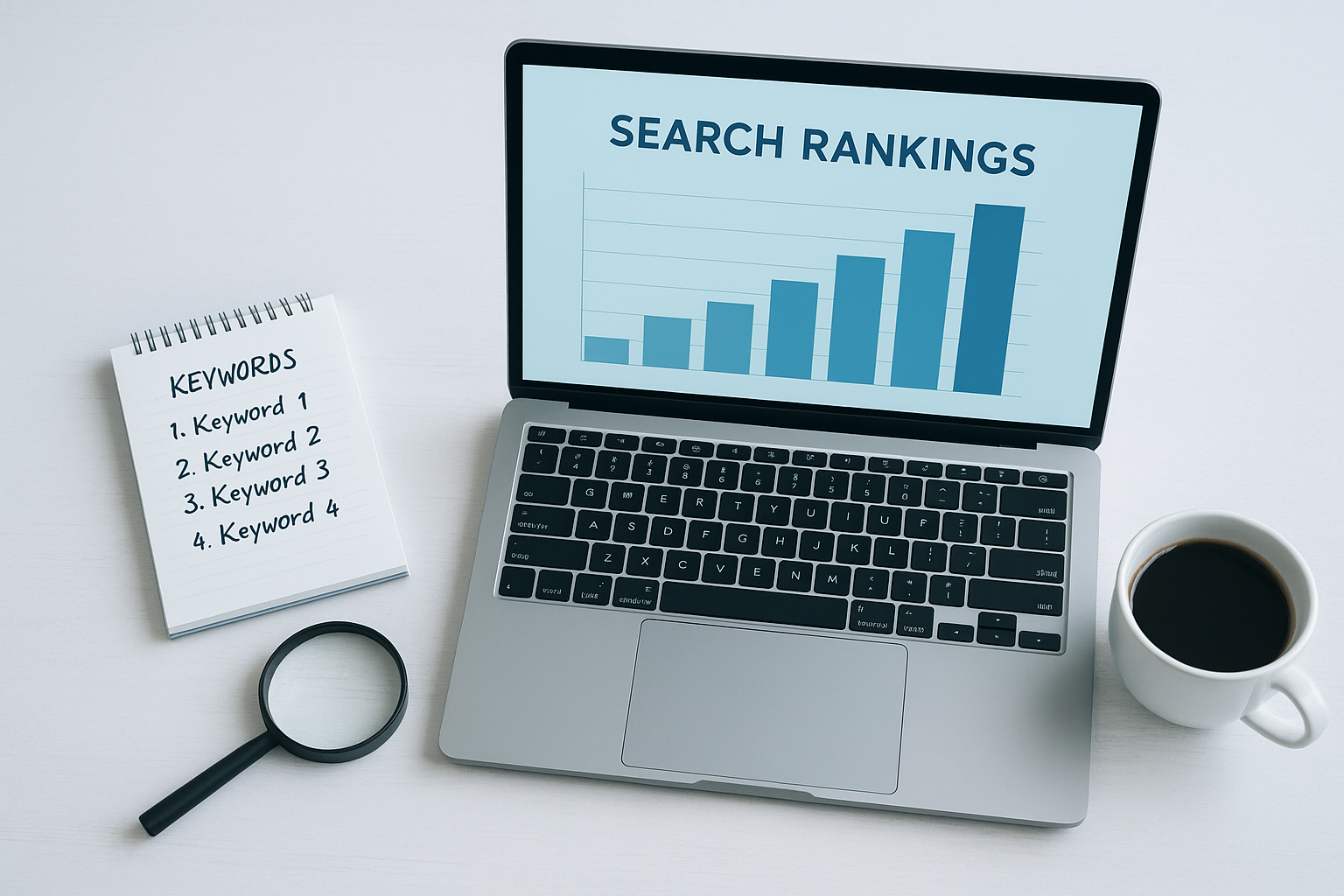
A well-structured SEO strategy begins with understanding how rankings are earned, not bought.
What Is Search Engine Optimization and How It Works?
SEO is the set of techniques used to help search engines understand, trust, and rank your web pages. Search engines like Google use automated programs called crawlers to discover pages, index their content, and then rank them based on hundreds of signals. Therefore, your goal is to send the right signals across every layer of your website. Learn how to improve search rankings effectively.
At its core, SEO works by aligning your content with what users are actually searching for. Additionally, it ensures your site is technically accessible and earns enough external trust to be considered authoritative. When all three elements work together, rankings follow.
The Three Pillars Every Site Needs
Effective optimization rests on three interconnected pillars. Understanding each one helps you prioritize your efforts and avoid wasting time on tactics that do not move the needle. See our SEO basics for a step-by-step roadmap.
1. Technical SEO — Ensures search engines can crawl and index your site without obstacles. This includes site speed, mobile responsiveness, HTTPS security, clean URL structures, and structured data markup.
2. On-Page SEO — Covers everything on the page itself: title tags, meta descriptions, heading hierarchy, keyword placement, internal linking, and content quality. In practice, this is where most day-to-day optimization work happens. Learn how AI and LLM answers affect on-page optimization: LLM visibility
3. Off-Page SEO — Involves external signals, primarily backlinks from other websites, that communicate your site’s authority and relevance. As a result, earning quality links from trusted sources remains one of the strongest ranking factors.
Keyword Research: The Foundation of Every Strategy SEO basics roadmap
Before writing a single word of content, you need to understand what your audience is searching for. Keyword research is the process of identifying those exact queries and evaluating them by search volume, competition, and commercial intent. Because choosing the wrong keywords wastes significant time and resources, this step deserves careful attention. For foundational steps, see our SEO Basics roadmap.
Beginners often target short, broad keywords with enormous competition. Instead, focus on long-tail keywords — phrases of three words or more that are more specific and easier to rank for. For example, “best running shoes for flat feet” is far more actionable than simply “shoes.” Additionally, long-tail keywords typically attract users who are closer to making a decision, which improves conversion rates.
According to research published by Wikipedia’s overview of search engine optimization, the discipline has evolved significantly since the early days of keyword stuffing, and modern best practices emphasize relevance and user satisfaction above all else. For an explanation of ranking metrics, see Semrush rank.
How to Build an Effective Ranked SEO guide Strategy
A structured approach removes guesswork and keeps your efforts focused. Follow these five steps to build a strategy that compounds over time.
Identify the terms your audience uses and prioritize by search volume, competition, and intent. Tools like Google Search Console reveal which queries already bring traffic to your site. Ahrefs comparison
Check site speed, mobile usability, crawlability, and HTTPS status. Fix broken links, duplicate content, and slow page loads before building new content on a shaky foundation.
Update title tags, meta descriptions, headings, and body content to match your target keywords and user intent. Furthermore, use internal links to connect related pages and distribute authority across your site. For a step-by-step implementation, see the How to Do SEO guide.
Earn links from authoritative, relevant websites through outreach, guest posting, and creating genuinely useful resources. However, avoid low-quality link schemes that can trigger Google penalties. See how GEO factors into visibility: GEO visibility
Monitor rankings, organic traffic, and conversions consistently. As a result, you can identify what is working, spot opportunities for improvement, and adapt your strategy to algorithm changes.

Tracking organic traffic trends helps you measure the real impact of your SEO efforts over time.
Content Quality and Search Engine Optimization (E-E-A-T)
Google’s quality evaluators use a framework called E-E-A-T — Experience, Expertise, Authoritativeness, and Trustworthiness — to assess whether content deserves to rank. Although E-E-A-T is not a direct algorithmic signal, it reflects the values baked into Google’s ranking systems. Therefore, content that demonstrates real expertise and is written for people rather than search engines consistently outperforms thin or keyword-stuffed pages.
In practice, this means writing in-depth, accurate content that genuinely answers the reader’s question. It also means citing credible sources, showcasing author credentials, and maintaining a trustworthy site design with clear contact information and privacy policies. For guidance, see useful content guide.
Common Mistakes That Hurt Your Rankings
Even experienced marketers make avoidable errors. Being aware of these pitfalls can save months of wasted effort.
- Ignoring mobile optimization: More than half of all searches now happen on mobile devices. Consequently, Google uses mobile-first indexing, meaning your mobile experience directly determines your rankings.
- Targeting keywords without checking intent: A page optimized for an informational query will not rank well if Google’s results show transactional pages. Always match your content type to the dominant search intent.
- Neglecting page speed: Slow sites lose both rankings and conversions. Because users abandon pages that take longer than three seconds to load, speed improvements deliver double benefits.
- Publishing thin content: Short, low-value pages rarely rank well. Instead, create comprehensive resources that cover a topic more thoroughly than competing pages.
- Skipping internal linking: Internal links help search engines discover new pages and understand your site’s structure. Additionally, they distribute ranking authority to pages that need a boost.
Where to Get Expert Help and Further Learning
Implementing a full strategy on your own can be overwhelming, especially when algorithm updates shift priorities. For those looking for professional guidance, Rank Authority offers expert resources and services designed to help websites build lasting organic visibility. Whether you are starting from scratch or looking to scale, having access to proven frameworks accelerates results considerably. This guide was written by [AUTHOR NAME], an experienced SEO practitioner — add an author bio with credentials and a visible "Last updated" date on the page.
Additionally, Google Search Console remains the most essential free tool available. It reveals which queries your site ranks for, highlights crawl errors, and provides performance data directly from the source that matters most.
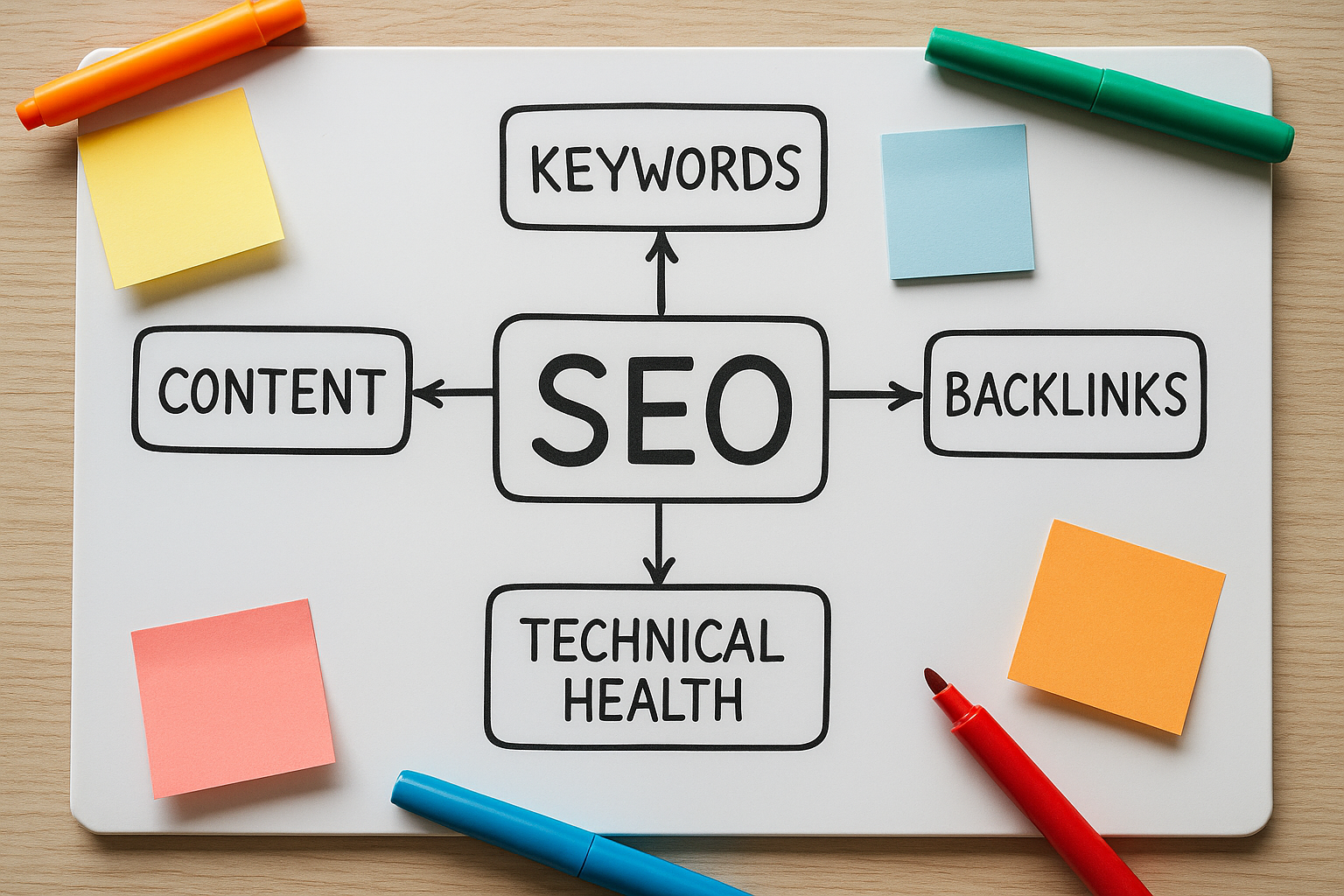
Mapping your SEO strategy visually helps clarify priorities and connect all moving parts of a campaign.
Measuring Success: Metrics That Actually Matter
Not all metrics deserve equal attention. Vanity metrics like raw page views can be misleading, so instead focus on numbers that reflect real business impact.
Organic traffic measures how many users arrive via search engines without paid promotion. Meanwhile, keyword rankings show where your pages appear for target queries. Click-through rate (CTR) reveals how compelling your titles and meta descriptions are in the search results page. Finally, conversions from organic traffic connect your SEO work directly to revenue, which is ultimately the metric that justifies continued investment.
Conclusion: Building Lasting Organic Visibility Through SEO
SEO is not a one-time project — it is an ongoing investment in your website’s ability to attract and serve the right audience. By mastering keyword research, technical fundamentals, content quality, and link building, you create a compounding asset that delivers returns long after the initial work is done. Furthermore, as search engines continue to evolve, the sites that prioritize genuine user value will always have a competitive advantage. Read our Ranked SEO guide for advanced strategies.
Start with the five-step strategy outlined above, track your progress consistently, and refine based on data. For deeper support and expert-level guidance, explore the resources available at Rank Authority to accelerate your path to page one. Note: this page currently has no inbound internal links; add 2–3 contextual links from related posts and category hub pages to improve discovery.
Frequently Asked Questions About SEO
What is SEO and why does it matter?
SEO, or search engine optimization, is the process of improving a website so it ranks higher in organic search results. It matters because higher rankings drive free, targeted traffic that is far more likely to convert into customers compared to paid channels.
How long does SEO take to show results?
Most websites begin to see measurable improvements within 3 to 6 months of consistent effort. However, competitive niches may require 12 months or more to achieve significant ranking gains, because authority builds gradually over time.
What are the three main pillars of SEO?
The three pillars are technical SEO, on-page SEO, and off-page SEO. Technical SEO addresses site infrastructure, on-page SEO optimizes content and keywords, and off-page SEO builds authority through backlinks and external signals.
What is keyword research and why is it important?
Keyword research identifies the exact words and phrases your audience types into search engines. It is critical because targeting the right keywords ensures your content reaches users who are actively looking for what you offer, improving both traffic quality and conversion rates.
What is the difference between on-page and off-page SEO?
On-page SEO refers to optimizations made directly on your website, such as title tags, headings, and content quality. Off-page SEO involves external signals like backlinks and brand mentions that build your site’s authority in the eyes of search engines.
What is technical SEO?
Technical SEO covers backend elements that affect how search engines crawl and index your site. This includes site speed, mobile-friendliness, structured data markup, secure HTTPS connections, and clean URL structures. Without a solid technical foundation, even great content may struggle to rank.
Are backlinks still important for SEO in 2025?
Yes, backlinks remain one of the most powerful ranking signals in 2025. Quality links from authoritative and relevant websites signal trustworthiness to search engines and significantly boost rankings, particularly in competitive niches.
What is the most common SEO mistake beginners make?
The most common mistake is targeting keywords that are too broad or too competitive before building sufficient domain authority. Beginners should focus on long-tail keywords with lower competition to earn early wins and build momentum.
How does page speed affect SEO?
Page speed is a confirmed Google ranking factor. Slow-loading pages frustrate users, increase bounce rates, and signal poor quality to search engines — all of which can lower your rankings and reduce conversions simultaneously.
What tools should I use to track SEO performance?
Google Search Console is the most essential free tool for monitoring rankings, impressions, and crawl errors. Additionally, rank tracking tools and site audit platforms provide deeper competitive and technical insights that help you refine your strategy over time.
What is E-E-A-T and how does it relate to SEO?
E-E-A-T stands for Experience, Expertise, Authoritativeness, and Trustworthiness. Google uses these quality signals to evaluate content credibility, particularly for topics that affect health, finance, or safety — making them especially important for sites in those sectors.
Can I do SEO myself or do I need to hire an agency?
Many website owners successfully handle their own SEO with the right education and tools. However, hiring an experienced SEO agency or consultant can accelerate results considerably, especially in competitive markets where every ranking position represents significant revenue.

