

Rank AI is the practice of using artificial intelligence to analyze, optimize, and accelerate how a website — and increasingly, how an entire brand — shows up across both classic search engines and the new wave of AI answer platforms like ChatGPT, Perplexity, and Google AI Overviews. In 2025, rank AI has grown far beyond simple keyword automation into a complete discipline that unifies traditional SERP rankings, AI visibility tracking, and generative engine optimization (GEO) under one strategy. Whether you manage a solo blog or an enterprise catalog with thousands of pages, understanding rank ai is no longer optional. It is the baseline requirement for staying visible as search itself changes shape.
Traditional SEO relied on manual research, gut instinct, and slow testing cycles. However, that era is effectively over. Today, rank ai systems process millions of ranking signals at once, surface content gaps in seconds, and even predict how an algorithm update will reshape results before it fully rolls out. As a result, websites that adopt these tools gain a measurable edge over competitors who still rely on spreadsheets and hunches alone.
In addition, the definition of “search” itself has expanded. People no longer only type queries into Google — they also ask ChatGPT for recommendations, ask Perplexity for sourced answers, and read AI Overviews without ever clicking a link. Consequently, a modern rank ai strategy has to cover both worlds at once: where you rank on the page, and whether you get mentioned at all inside an AI-generated answer.
What Is Rank AI and Why Does It Matter Right Now?
Rank AI sits at the intersection of machine learning, natural language processing (NLP — the technology that lets software understand human language), and traditional SEO methodology. These systems ingest huge volumes of SERP data, competitor content, and user behavior signals to generate recommendations you can act on immediately. In essence, a rank ai platform does in minutes what a human analyst would need days to finish. For a deeper walkthrough, see our Parked Domains and SEO: What You Should Know.
This shift matters because the stakes have changed. According to Wikipedia’s overview of search engine optimization, SEO has evolved from simple keyword stuffing into a sophisticated discipline involving technical architecture, authority signals, and semantic relevance — all areas where artificial intelligence genuinely excels. For a deeper walkthrough, see our Is It Possible to See Quick Results from SEO Automation?.
Furthermore, Google itself leans on AI extensively through systems like RankBrain and the Helpful Content system, and its own documentation on structured data and search appearance confirms how heavily machine understanding now shapes what gets shown to searchers. Therefore, fighting AI-driven ranking systems with purely manual tactics is a little like bringing a calculator to a supercomputer race. For a deeper walkthrough, see our What Is Perplexity? The AI Search Engine Explained.
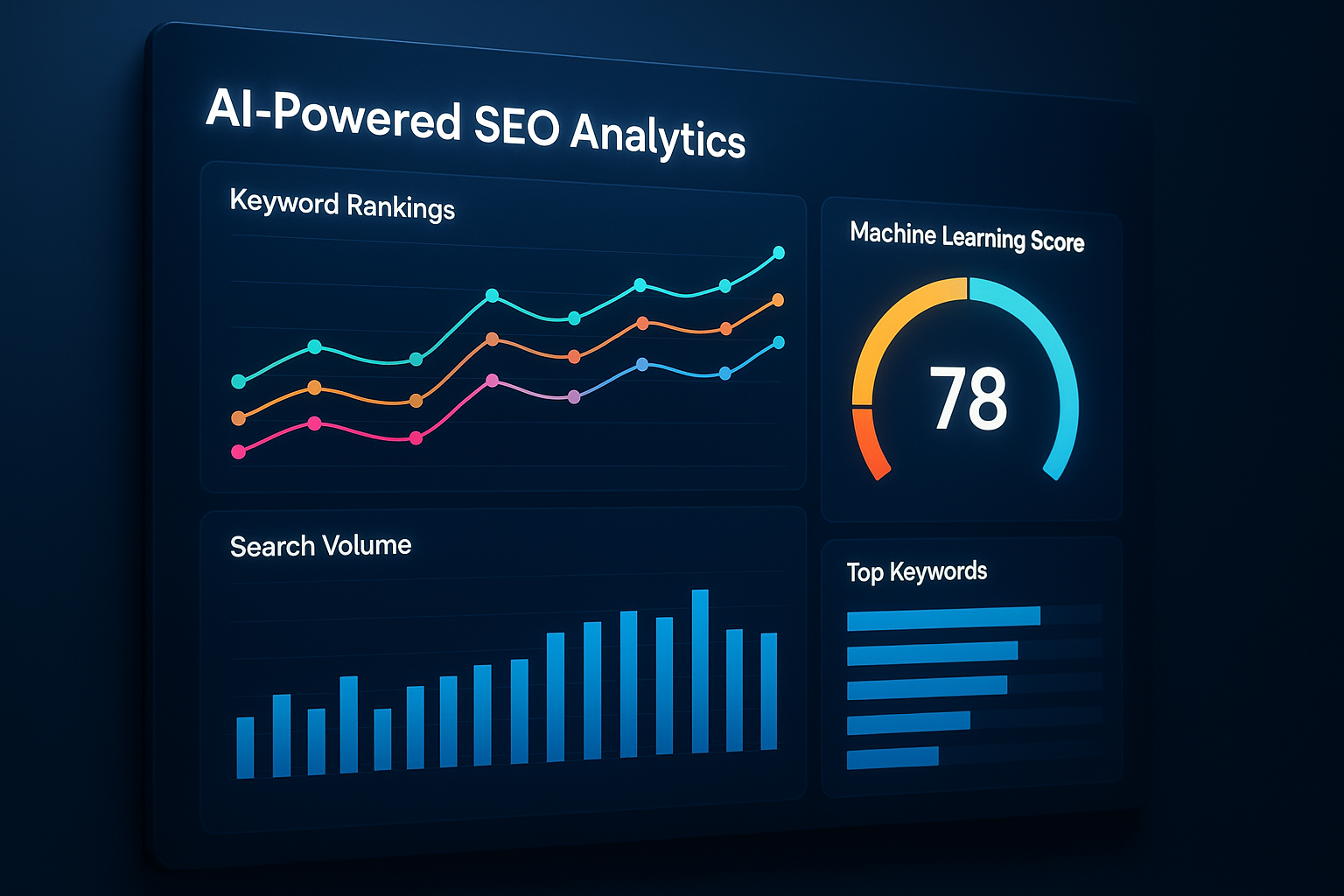
A modern rank ai platform surfaces real-time keyword data and predictive ranking insights in a single dashboard.
Rank AI vs. AI Visibility Trackers: What Is the Real Difference?
Many tools on the market today call themselves “AI visibility trackers.” Their job, in isolation, is narrow: they monitor whether your brand gets mentioned inside answers from ChatGPT, Perplexity, Google AI Overviews, or Gemini, and they report back a share-of-voice score. That is useful — but it is only one slice of what a true rank ai platform does.
A complete rank ai solution does not stop at monitoring. Instead, it combines classic keyword rank tracking, technical site audits, content optimization, backlink intelligence, and AI answer-engine visibility into a single connected workflow. In contrast, a standalone visibility tracker tells you that you are losing ground to a competitor in AI answers, but it cannot tell you why your page isn’t ranking in Google either, nor can it fix your schema markup or content gaps.
For a detailed, platform-by-platform breakdown, see exactly how RankAuthority tracks visibility across AI answer platforms, including the specific signals it monitors for each one. This is precisely the gap that single-purpose visibility trackers leave open, and it is where a unified rank ai strategy pulls ahead.
Core Capabilities of AI-Powered SEO Platforms
Modern rank ai platforms are built around several core functions that work together to lift rankings systematically. First, they automate keyword discovery by analyzing billions of search queries and surfacing opportunities manual research would simply miss. Next, they evaluate on-page content against top-ranking competitors using NLP models similar to Google’s own ranking systems.
Additionally, these platforms perform technical site audits — detecting crawl errors, page speed bottlenecks, and schema markup gaps — far faster than traditional crawlers. Many also integrate link intelligence, mapping your backlink profile against competitors and flagging high-value acquisition targets. To see the full breadth of what a modern platform can automate, explore RankAuthority’s complete rank ai feature suite. For a deeper walkthrough, see our Page-Level SEO Comparison Service: The Complete Guide.
Above all, the best platforms connect these functions so they inform one another — a technical fix changes a keyword opportunity, and a content update changes your AI-answer citation rate. Isolated tools cannot make these connections.
⚡ Direct Answer: How Does Rank AI Work?
Rank ai works by using machine learning algorithms to process SERP data, competitor content signals, AI answer citations, and user behavior patterns all at once. It then generates prioritized, data-backed recommendations for keyword targeting, content structure, technical fixes, and AI visibility improvements. The result is faster, more accurate SEO decision-making at scale, across both traditional rankings and AI-generated answers.
Tracking Your Brand’s Visibility Across AI Answer Engines
Because AI answer engines now influence purchase and research decisions before a single click happens, tracking your presence inside them has become a core rank ai function rather than a side feature. Specifically, a thorough rank ai platform should monitor your brand across:
- Google AI Overviews — tracking whether your pages get cited and how often your brand appears in the generated summary.
- ChatGPT — monitoring how OpenAI’s model describes your brand or product versus competitors across common prompts.
- Perplexity — tracking citation frequency, since Perplexity surfaces source links directly alongside its answers.
- Google Gemini — measuring share of voice inside Gemini’s conversational responses.
- Microsoft Copilot — tracking whether Bing’s AI layer surfaces your content for relevant queries.
In practice, this means running the same core prompts repeatedly, recording which brands get mentioned, and calculating a share-of-voice percentage over time. Consequently, you can see whether a content or PR push actually moved the needle inside AI answers, not just inside Google’s ten blue links.
If you are evaluating tools that specialize purely in this layer, it is worth comparing how they stack up against a full-stack alternative. For instance, this head-to-head comparison between Outrank.so and RankAuthority walks through exactly where single-purpose tools fall short.
How to Use Rank AI for AI-Powered SEO
Implementing a rank ai strategy follows a clear, repeatable process. Below are six steps that consistently produce ranking and AI-visibility improvements for websites of every size.
Audit Your Current Rankings
Run a full rank ai site audit to identify keyword positions, technical errors, and content gaps. This baseline assessment guides every subsequent decision and ensures you prioritize the highest-impact fixes first.
Identify AI-Recommended Keywords
Let the platform analyze competitor data and search trend patterns. As a result, you receive a curated list of high-opportunity, low-competition keywords that align precisely with your niche and audience intent.
Optimize Existing Content
Apply AI-generated on-page recommendations to existing pages, including title tags, heading structure, semantic keyword coverage, and internal linking. Often, optimizing existing content delivers faster wins than building new pages from scratch.
Create New AI-Optimized Content
Use AI-generated content briefs to produce new articles and landing pages structured to match search intent precisely. These briefs specify ideal word counts, heading structures, questions to answer, and AI content writing guide semantic terms to include.
Track AI Visibility and Share of Voice
Run recurring prompt checks across ChatGPT, Perplexity, Gemini, and Google AI Overviews to measure citation frequency and brand mentions. Compare your share of voice against named competitors every single month.
Monitor and Iterate
Track ranking changes weekly through the rank ai dashboard and continuously refine your strategy based on live performance data. Because search algorithms evolve constantly, iteration is the key to sustained growth.

Applying rank ai content recommendations systematically is the most reliable path to consistent ranking improvements. For a deeper walkthrough, see our How Does Rank Authority’s 1-Click AI AutoPilot Work?.
Generative Engine Optimization (GEO) and Answer Engine Optimization (AEO), Explained
Two newer terms often come up alongside rank ai: generative engine optimization (GEO) and answer engine optimization (AEO). Both describe the practice of structuring content so that large language models can easily extract, cite, and quote it inside their generated answers.
In practice, GEO and AEO favor clear, direct-answer paragraphs placed near the top of a page, strong use of structured data, original statistics, and explicit question-and-answer formatting. A rank ai platform applies these same principles automatically, scoring your content against what currently gets cited in AI Overviews and chat-based answers.
Notably, the U.S. Federal Trade Commission has published guidance on truthful, fair use of AI for businesses, a useful reminder that AEO content still has to be accurate and well-sourced, not just structured for extraction. For a deeper walkthrough, see our Priority SEO Fixes for Local Businesses That Work.
Choosing the Right Rank AI Platform for Your Goals
Not every rank ai tool is built the same way. Some platforms specialize in content optimization, while others focus on technical auditing, link intelligence, or AI visibility alone. Therefore, selecting the right platform depends heavily on your specific bottlenecks and budget.
For content-heavy websites, prioritize platforms with strong NLP scoring and content brief generation. In contrast, e-commerce sites with thousands of product pages benefit most from tools that automate technical audits and structured data recommendations at scale. Meanwhile, agencies managing multiple clients should weigh how well a platform reports on AI answer visibility alongside classic rankings, since clients increasingly ask about both.
Resources like RankAuthority provide in-depth comparisons and practical guidance on selecting rank ai tools that match your site’s specific needs. For example, this detailed comparison of RankAuthority versus Alli AI shows how feature depth varies significantly between platforms marketed as similar.
Mistakes That Undermine Rank AI Results
Even with powerful tools, certain patterns consistently sabotage results. First and foremost, many users implement AI recommendations without editorial review. Although AI identifies optimization opportunities accurately, it does not always understand brand voice, audience nuance, or factual accuracy.
Additionally, over-relying on keyword density suggestions leads to unnatural content that frustrates readers and signals low quality to search engines. Meanwhile, ignoring technical issues in favor of content alone leaves significant ranking potential untapped. Likewise, tracking only Google rankings while ignoring AI answer visibility means you miss a growing share of how people actually discover brands today.
Finally, failing to monitor results after implementation is perhaps the most common error of all. Because rankings fluctuate continuously, a set-and-forget approach quickly erodes gains. Consistent weekly review of your rank ai dashboard keeps your strategy responsive and competitive.
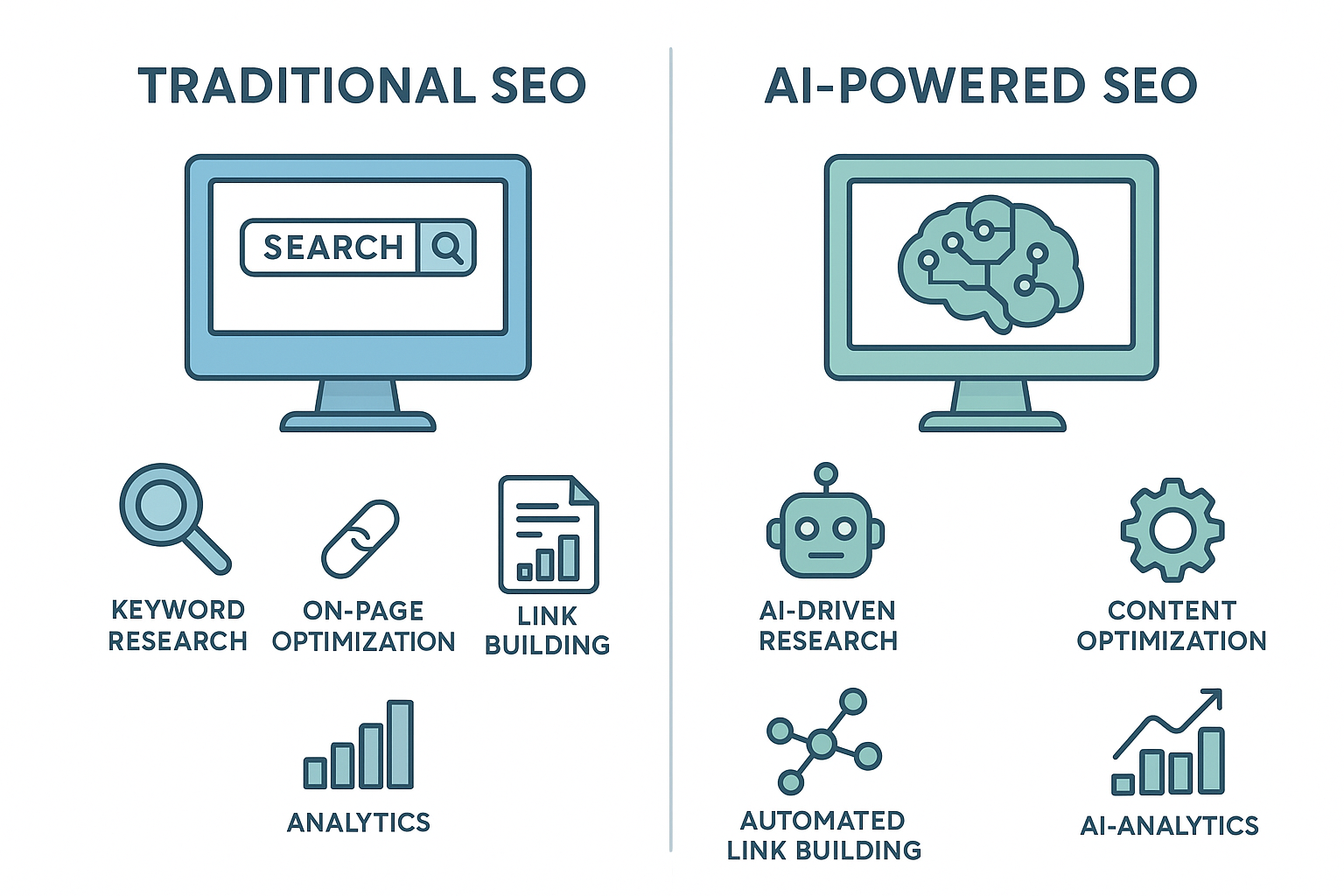
Rank ai workflows eliminate manual bottlenecks, enabling faster iteration and more consistent ranking gains.
The Role of NLP and Semantic Search in Rank AI
Natural language processing sits at the heart of every modern rank ai system. NLP enables these tools to evaluate content the way Google does — assessing topical depth, entity coverage, and semantic relevance rather than simply counting keyword occurrences.
For example, a page about “home solar panels” should ideally mention related entities like inverters, net metering, kilowatt-hours, and installation costs. Rank ai tools identify these semantic gaps automatically, helping writers produce content that demonstrates genuine topical authority.
As a result, pages optimized with NLP-driven guidance tend to rank for a wider cluster of related queries, not just the primary target keyword. This multiplier effect significantly increases organic traffic beyond what single-keyword targeting achieves — and it is also exactly the kind of content structure that AI answer engines prefer to cite.
Building Long-Term Authority With Rank AI
Short-term ranking gains are valuable, but sustainable authority requires a longer-term approach. Rank ai tools support this by mapping content clusters — groups of interlinked pages that collectively signal deep expertise on a subject to search engines.
Moreover, rank ai platforms track your site’s E-E-A-T signals (Experience, Expertise, Authoritativeness, and Trustworthiness) and suggest structural improvements that reinforce credibility. These might include adding author bios, citing authoritative sources, or restructuring navigation to highlight topic expertise.
For deeper strategic guidance on building sustainable rankings, RankAuthority offers resources specifically designed to help site owners translate AI data into long-term authority-building strategies. You can also learn more about the team behind RankAuthority and the philosophy driving its approach to rank ai.
Conclusion: Why Rank AI Is the Future of Search
Rank ai has fundamentally changed the speed, precision, and scope of search engine optimization. By combining machine learning, NLP, real-time data analysis, and AI answer-engine monitoring, these tools give marketers capabilities that were simply impossible with manual methods alone.
However, the most effective approach is never AI in isolation — it is rank ai combined with human strategic judgment. Therefore, the winning formula is to let AI handle data processing and pattern recognition while skilled SEOs focus on creative strategy, audience understanding, and brand differentiation. Websites that master this combination will consistently outrank, and outcite, those that rely on either approach alone.
Frequently Asked Questions About Rank AI
What is rank AI?
Rank AI is the use of artificial intelligence — including machine learning and natural language processing — to analyze and improve a website’s position in search engine results and inside AI-generated answers. It automates data-intensive SEO tasks and generates prioritized recommendations for content, technical fixes, link building, and AI answer visibility. For a deeper walkthrough, see our PageRank and SEO: Building Authority for Better Rankings.
How does AI improve search engine rankings beyond traditional SEO?
AI improves rankings by processing vast amounts of SERP and answer-engine data to identify patterns, predict algorithm behavior, and surface optimization opportunities faster than manual research. It allows SEOs to make more accurate, data-driven decisions at far greater speed.
What is an AI visibility tracker, and how is it different from a rank AI platform? For a deeper walkthrough, see our What Are Rank Authority’s Features and Pricing?.
An AI visibility tracker monitors whether your brand gets mentioned or cited inside AI answer engines like ChatGPT or AI Overviews. A full rank ai platform includes that same monitoring but also covers keyword rankings, technical audits, and content optimization in one connected system.
Which AI platforms should a rank AI tool monitor for brand visibility?
At minimum, look for monitoring across Google AI Overviews, ChatGPT, Perplexity, Google Gemini, and Microsoft Copilot. These five currently account for the vast majority of AI-driven answer traffic.
Is rank AI suitable for small business websites?
Yes, many rank ai platforms offer affordable entry-level plans designed for small businesses. These tools automate basic keyword research, content scoring, and technical audits without requiring advanced technical skills.
What features should I look for in a rank AI platform?
Prioritize AI-driven keyword research, content gap analysis, on-page scoring, SERP competitor analysis, AI answer-engine visibility tracking, and predictive ranking forecasts. Integration with Google Search Console and Analytics is also highly valuable.
Can rank AI replace a human SEO specialist?
No — rank ai tools augment but do not replace experienced SEO specialists. AI excels at data processing and pattern recognition, while humans provide strategic thinking, brand judgment, and creative content direction that AI cannot replicate.
How long does it take to see results from rank AI tools?
Most sites see measurable ranking improvements within 60 to 90 days of consistent implementation. Results vary based on domain authority, competition level, and how thoroughly the recommendations are applied. For a deeper walkthrough, see our How Does Rank Authority’s 1-Click AI AutoPilot Work?.
What is the difference between rank AI and traditional SEO?
Traditional SEO relies on manual research and periodic updates, while rank ai uses continuous machine learning to surface insights in real time. It is faster, more scalable, and better at detecting subtle ranking signals that manual analysis misses.
Are rank AI tools expensive?
Pricing ranges from free basic tools to enterprise platforms costing several hundred dollars per month. Most mid-tier rank ai platforms fall between $50 and $200 per month, offering strong value for growing websites and marketing agencies.
What common mistakes should I avoid with rank AI?
Avoid blindly implementing AI suggestions without editorial review, over-optimizing for keyword density, neglecting technical issues, and failing to monitor results after publishing. Always pair AI recommendations with informed human judgment.
Does Google penalize AI-generated content?
Google evaluates content based on quality and helpfulness, not the creation method. Accurate, original, and genuinely useful AI-assisted content is not penalized. However, thin, repetitive, or misleading AI content risks ranking demotions under Google’s Helpful Content guidelines.
How does rank AI handle Google algorithm updates and AI Overviews?
Advanced platforms monitor ranking fluctuations and AI Overview citation changes in real time, correlating traffic drops with known update patterns. They then automatically refresh recommendations to align with new ranking signals, helping sites recover faster after major updates.
What role does natural language processing play in rank AI?
NLP allows rank ai tools to understand semantic meaning, topical depth, and user intent within content — mirroring how Google’s own algorithms evaluate pages. This enables more precise on-page optimization that goes far beyond simple keyword placement.

