
What SEO Means: Search Engine Optimization — the practice of improving a website so that it ranks higher in organic search engine results and attracts more relevant visitors. Understanding what SEO means is the essential first step for anyone building an online presence, running a business website, or creating content meant to be discovered.
Search engines like Google process billions of queries every day. Therefore, the websites that appear on the first page capture the vast majority of clicks, while those buried on page two or beyond are rarely seen. SEO is the discipline that bridges the gap between a great website and the audience searching for it.
What SEO Means in Plain Language
At its core, SEO means making your website easier for search engines to find, understand, and recommend. When someone types a question or phrase into Google, the search engine scans its index of billions of pages to find the most relevant, trustworthy, and useful answers. See how AI and SEO work together. SEO is the set of strategies that signals to Google — and other search engines — that your page deserves to be one of those top answers.
According to Wikipedia’s overview of search engine optimization, the practice dates back to the mid-1990s, when the first search engines began cataloging the early web. Since then, it has evolved dramatically — but the fundamental goal remains the same: connect people with the content they are looking for.
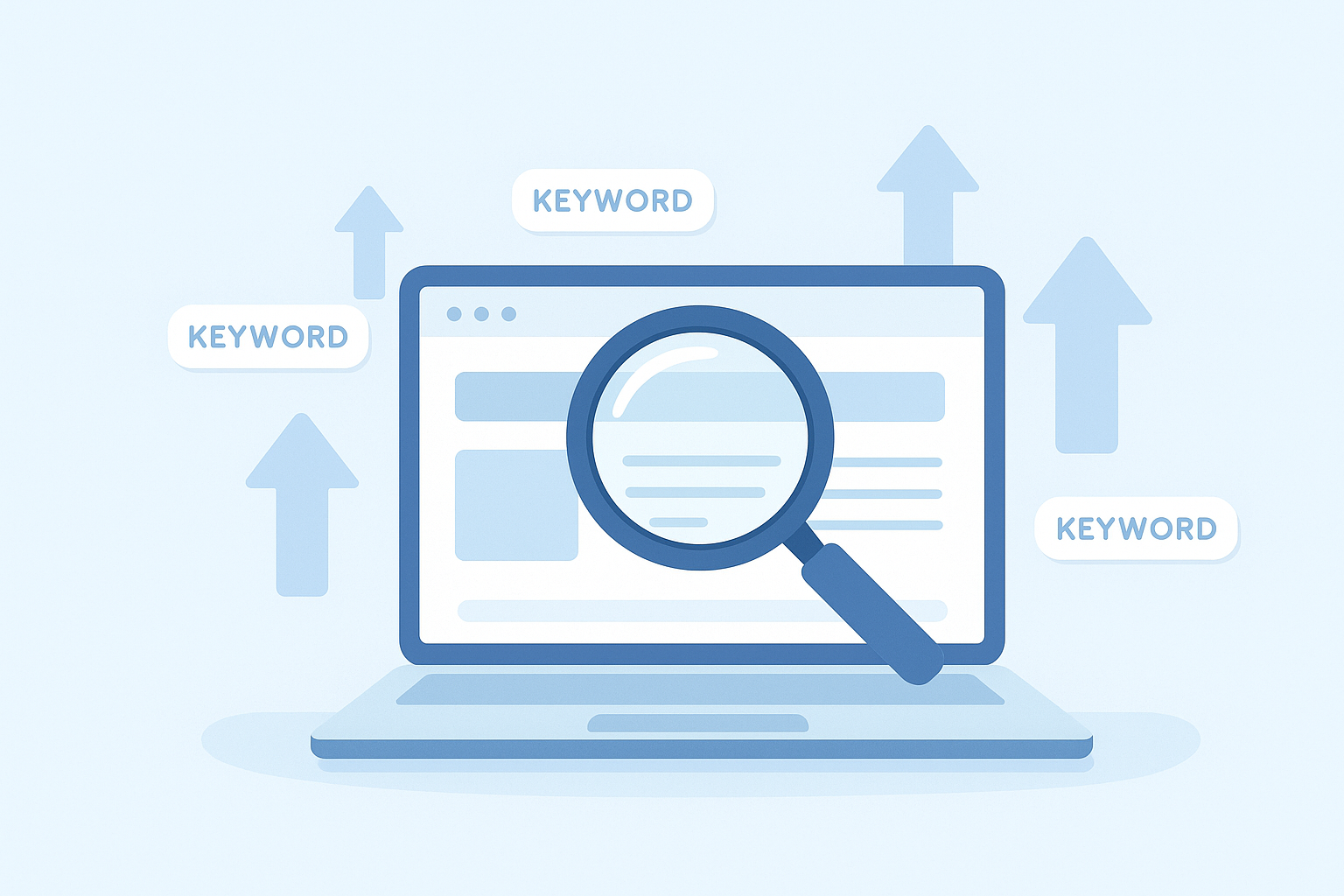
SEO means optimizing your website so search engines can find, understand, and rank your pages for relevant queries.
The Three Pillars of Search Engine Optimization
SEO is not a single tactic — it is a collection of disciplines that work together. In practice, most SEO professionals organize their work into three core pillars: on-page SEO, off-page SEO, and technical SEO. Each pillar addresses a different aspect of how search engines evaluate and rank websites. Learn more about search engine optimisation in our Search engine optimisation guide.
On-Page SEO: What You Publish and How You Write It
On-page SEO refers to everything you control directly on your web pages. This includes the words you use, how you structure your headings, and whether your content genuinely answers the questions your audience is asking. For example, placing your target keyword in the page title, the first paragraph, and at least one subheading helps search engines confirm that your content is relevant to that topic. Learn how to measure on-page effectiveness with our SEO score guide.
Additionally, meta descriptions, image alt text, and internal linking all contribute to on-page optimization. Well-written content that satisfies user intent — meaning it fully answers what someone is searching for — consistently outperforms thin or keyword-stuffed pages.
Off-Page SEO: Building Authority Beyond Your Site
Off-page SEO focuses on earning trust and authority through signals that originate outside your website. The most powerful of these signals is the backlink — a link from another website pointing to yours. Learn how to check your backlink profile. When reputable, high-authority sites link to your content, search engines interpret this as a vote of confidence.
However, quality matters far more than quantity. A single backlink from a respected industry publication carries significantly more weight than dozens of links from low-quality directories. As a result, effective off-page SEO involves building genuine relationships, creating shareable content, and earning mentions organically.
Technical SEO: The Foundation Search Engines Crawl
Technical SEO ensures that search engine bots can access, crawl, and index your website without obstacles. Even the best-written content will struggle to rank if it is hidden behind slow load times, broken links, or poor mobile performance. Key technical factors include page speed, HTTPS security, a clean site architecture, and a properly configured XML sitemap.
Meanwhile, Core Web Vitals — Google’s set of user experience metrics — have become increasingly important ranking signals. Therefore, monitoring your site’s technical health is not a one-time task but an ongoing responsibility.
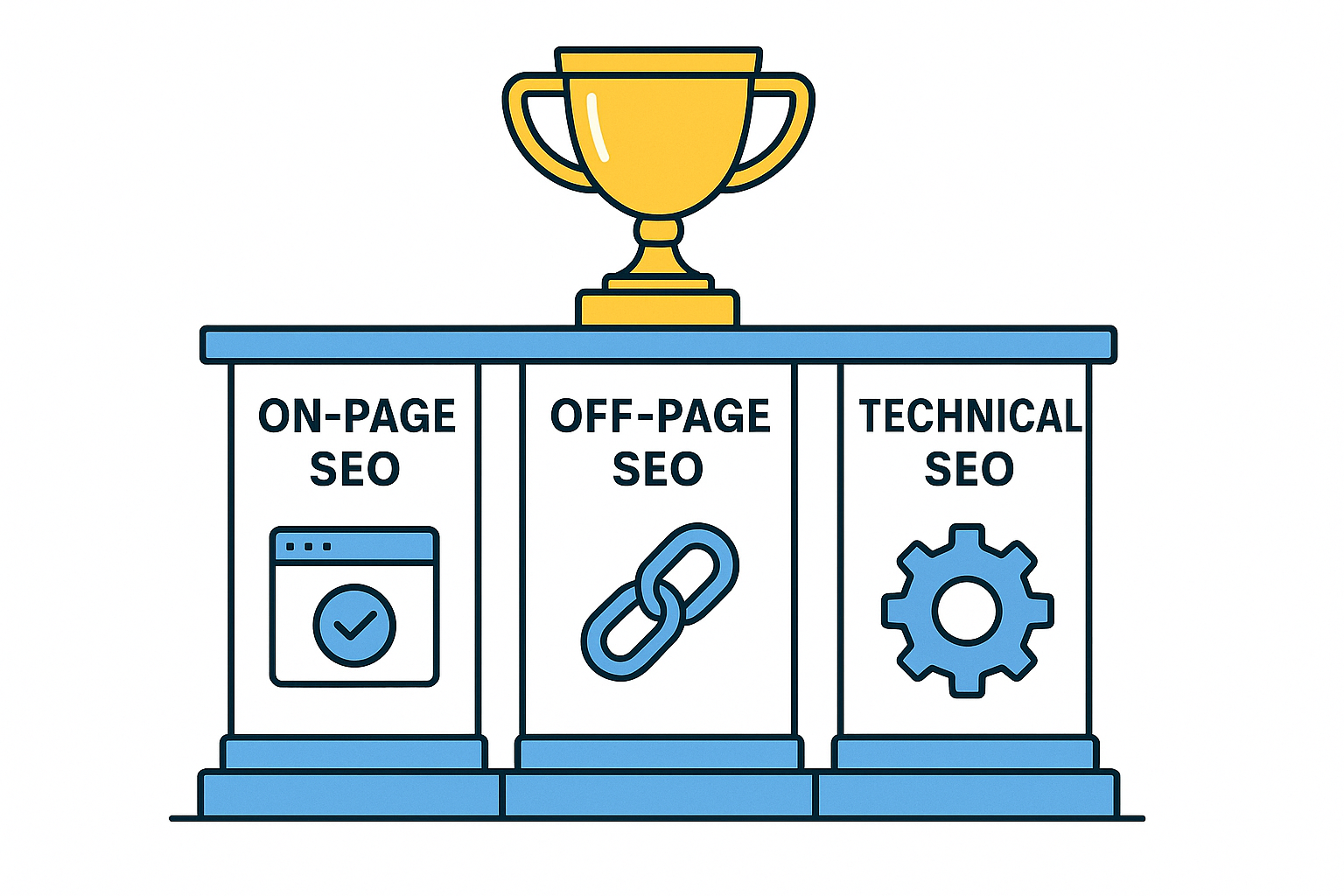
The three pillars of SEO work together to signal relevance, authority, and technical quality to search engines.
How Keywords Drive SEO Strategy
Keywords are the phrases and questions that real people type into search engines. Because search engines match user queries to indexed pages, choosing the right keywords is central to any SEO strategy. Keyword research involves identifying terms your target audience uses, evaluating how competitive those terms are, and selecting the ones where your content can realistically rank. For a complete walkthrough, see the search engine optimization guide.
Long-tail keywords — longer, more specific phrases like “how to start SEO for a small business” — are often easier to rank for than broad terms. Additionally, they tend to attract visitors with clearer intent, which typically leads to higher engagement and conversion rates.
Matching Content to Search Intent
Search intent describes the underlying goal behind a query. For instance, someone searching “best running shoes” is likely looking to compare options and buy, while someone searching “how to tie running shoes” wants a quick tutorial. Understanding this distinction allows you to create content that precisely meets what the searcher expects to find — which is exactly what Google rewards.
In contrast, publishing content that technically includes a keyword but fails to address the underlying intent will result in high bounce rates and poor rankings. Aligning your content with intent is therefore one of the highest-leverage moves in modern SEO.
Why Organic Search Traffic Is Worth the Effort
Organic traffic — visitors who arrive through unpaid search results — is consistently one of the highest-quality traffic sources available. Unlike paid advertising, which stops the moment your budget runs out, a well-optimized page can continue attracting visitors for months or even years. This compounding effect makes SEO one of the most cost-effective long-term digital marketing strategies. Read more: SEO defined.
Furthermore, users tend to trust organic results more than paid ads. Studies have shown that the majority of clicks go to organic listings rather than sponsored placements, particularly for informational queries. Building a strong organic presence therefore builds credibility alongside traffic.
For practical guidance on building that presence, resources like Rank Authority offer actionable SEO strategies that help websites compete more effectively in search results.

Consistent SEO effort produces compounding organic traffic growth that paid advertising alone cannot replicate.
Common Mistakes Beginners Make With SEO
Many newcomers approach SEO with the wrong expectations or tactics. First, they often focus on keyword density — stuffing a keyword into every sentence — rather than writing naturally useful content. Search engines have become sophisticated enough to penalize this behavior, so quality always outranks quantity.
Another frequent mistake is ignoring technical issues. A beautiful website with slow load times or broken mobile layouts will consistently underperform, regardless of how strong the content is. Similarly, neglecting to build internal links between related pages leaves valuable link equity untapped and makes it harder for search engines to understand your site’s structure. For guidance on measuring and improving ranking signals, see our SEO score guide.
Finally, many beginners expect instant results. Because SEO is a long-term strategy, patience and consistency are essential. Most sites begin seeing meaningful movement in rankings after three to six months of sustained effort.
Getting Started: Your First Steps in SEO
Beginning with SEO does not require a large budget or advanced technical knowledge. However, it does require a clear plan. The following steps provide a practical starting point for any beginner.
- Conduct keyword research. Use free tools like Google Search Console or Google’s autocomplete to identify what your audience is searching for. Start with specific, lower-competition phrases before targeting broad terms. See our SEO score guide for measuring progress and prioritizing opportunities.
- Optimize your page titles and meta descriptions. Every page should have a unique, descriptive title that includes the target keyword and a meta description that encourages clicks.
- Create high-quality, intent-matched content. Write content that fully answers the question behind the keyword. Use clear headings, short paragraphs, and helpful examples to improve readability.
- Fix technical issues. Run a basic site audit to identify slow pages, broken links, or missing alt text. Tools like Google PageSpeed Insights can highlight quick wins. For an actionable checklist, review our SEO basics roadmap.
- Build internal links. Connect related pages on your site to distribute authority and help visitors navigate to more of your content.
- Earn backlinks gradually. Share your content on relevant platforms, reach out to industry peers, and focus on creating resources others want to reference.
Additionally, tracking your progress through Google Search Console allows you to see which queries drive impressions and clicks, so you can refine your strategy over time. For deeper strategic support, Rank Authority provides a complete SEO guide to help you build a competitive SEO foundation.
Conclusion: Why Understanding What SEO Means Changes Everything
When you truly grasp what SEO means — not just the acronym, but the full strategy behind it — you gain a powerful advantage in the digital landscape. SEO means building a website that search engines trust, users find valuable, and competitors struggle to displace. Whether you are a small business owner, a blogger, or a marketing professional, investing in SEO is investing in long-term, sustainable visibility.
The discipline combines creativity, technical skill, and strategic thinking in equal measure. As a result, those who commit to learning and applying it consistently will always have an edge over those who rely solely on paid traffic or social media alone. Start with the fundamentals, stay patient, and let the compounding power of SEO work in your favor. Last updated: 2026-07-02. Author: Rank Authority. Learn the fundamentals in our SEO defined resource.
Frequently Asked Questions About SEO
What does SEO mean?
SEO means Search Engine Optimization — the practice of improving a website to rank higher in organic search results. It combines content strategy, technical improvements, and authority-building to help search engines understand and recommend your pages.
Why is SEO important for a website?
SEO drives organic traffic without ongoing ad spend. Higher rankings increase visibility and credibility, making it more likely that potential customers will find and trust your brand over time.
What are the three main types of SEO?
The three main types are on-page SEO, off-page SEO, and technical SEO. On-page covers content and keywords, off-page focuses on backlinks and authority, and technical SEO ensures your site is crawlable and fast.
How long does SEO take to show results?
Most websites begin seeing meaningful results after three to six months of consistent effort. New domains may take longer, while established sites with existing authority can see faster movement.
What is on-page SEO?
On-page SEO refers to optimizations made directly on your web pages, including keyword placement in titles and headings, compelling meta descriptions, internal linking, and content that matches user intent.
What is off-page SEO?
Off-page SEO involves activities outside your website that build its authority, primarily through earning backlinks from reputable sites. Brand mentions, guest posting, and social amplification also contribute to off-page signals.
What is technical SEO?
Technical SEO focuses on the backend structure of your site, ensuring search engine bots can crawl and index it efficiently. Key elements include site speed, mobile-friendliness, HTTPS security, and a clean XML sitemap.
What is the difference between SEO and paid search?
SEO generates organic traffic through unpaid rankings, while paid search places ads at the top of results for a fee. SEO builds long-term visibility, whereas paid search delivers immediate but temporary traffic that stops when the budget runs out.
What are keywords in SEO?
Keywords are the words and phrases users type into search engines to find information. Targeting the right keywords in your content helps search engines match your pages to relevant queries and surface them to the right audience.
Can I do SEO myself or do I need an expert?
You can absolutely start with SEO yourself using beginner guides and free tools. However, for competitive industries or larger websites, working with an SEO professional can accelerate results significantly.
What is a backlink and why does it matter?
A backlink is a link from another website pointing to yours, signaling authority and trustworthiness to search engines. High-quality backlinks from reputable sites remain one of the strongest ranking factors in SEO.
Does social media affect SEO rankings?
Social media does not directly influence search rankings, but it amplifies your content’s reach and can generate backlinks indirectly. Greater visibility often leads to more people linking to your content organically.
What is local SEO?
Local SEO optimizes your online presence to attract customers in a specific geographic area. It includes managing your Google Business Profile, earning local citations, and targeting location-based keywords relevant to your community.

