
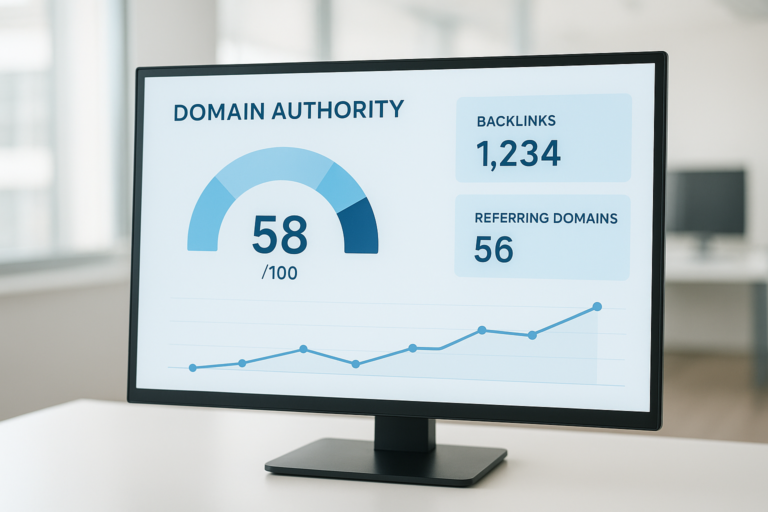
Checking domain authority is one of the most practical ways to measure your website’s competitive standing in search results and identify exactly where your SEO strategy needs to grow.
Domain authority (DA) is a score from 1 to 100 developed by Moz that predicts how well a website is likely to rank on search engine results pages. The higher the score, the stronger the site’s overall link profile and perceived authority. However, it is important to understand that DA is a comparative metric — its real value comes from benchmarking your score against competitors, not chasing an absolute number.
In this guide, you will learn what domain authority means, how to check it accurately, which tools to use, and — most importantly — what to do with the data once you have it. Author: Rank Authority. Last updated: 2026-06-02.
What Is Domain Authority and Why Does It Matter?
Domain authority is a third-party SEO metric, not an official Google ranking signal. According to Wikipedia’s overview of search engine optimization, ranking algorithms weigh hundreds of factors — and link quality is among the most influential. DA attempts to quantify that link quality in a single number.
The score is calculated using data from Moz’s web crawl, including the total number of backlinks, the number of unique linking root domains, and the authority of those linking pages. As a result, a site with 500 links from 500 different high-quality domains will almost always outrank a site with 5,000 links from a handful of low-quality sources.
DA matters because it gives you a fast, actionable snapshot of your competitive position. Before pitching a guest post, evaluating a potential link partner, or planning a content campaign, a quick DA check tells you whether the effort is worth your time.
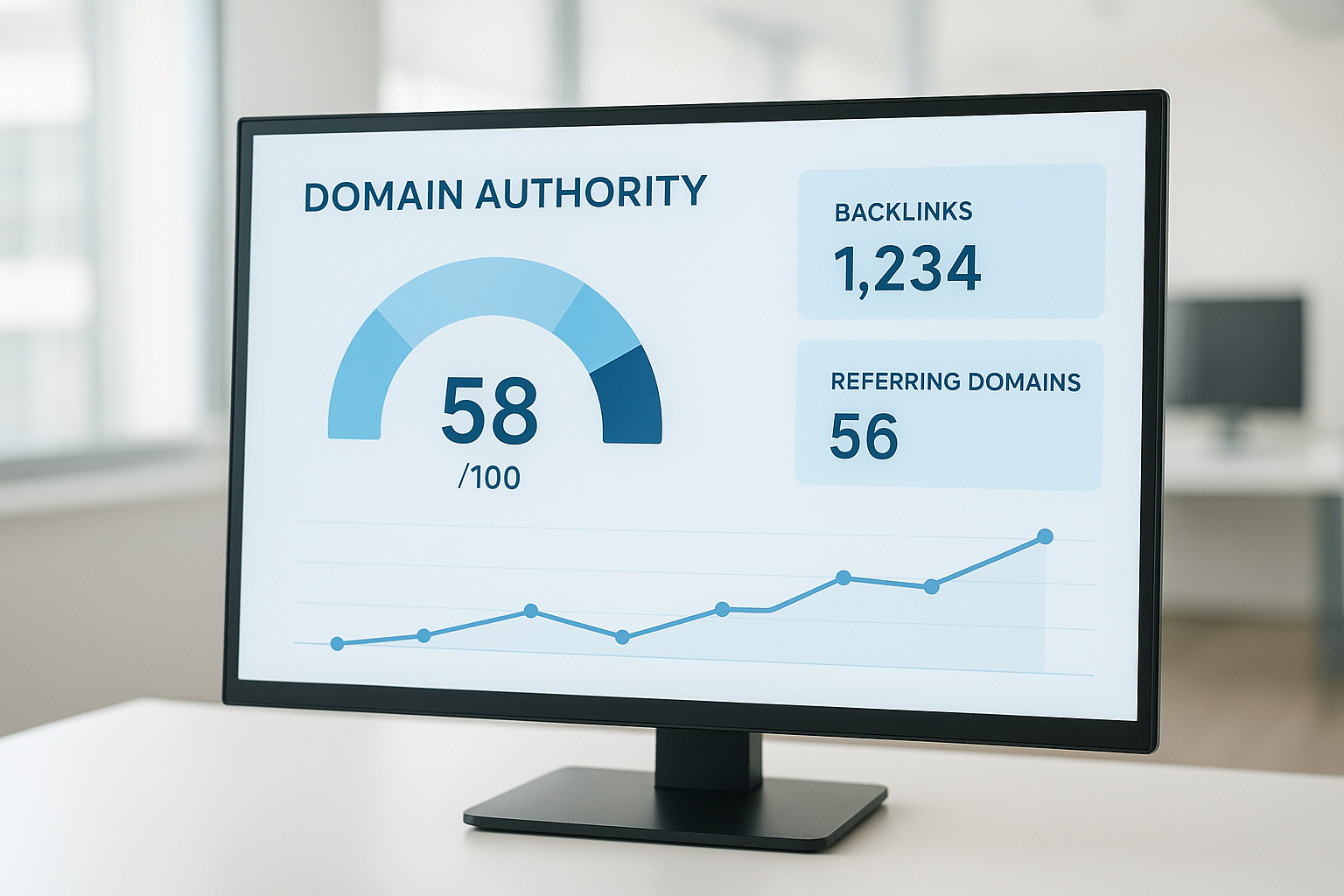
A domain authority dashboard gives you an at-a-glance view of your site’s SEO strength alongside key backlink metrics.
How Does Checking Domain Authority Work Step by Step?
The process of checking domain authority is straightforward, but interpreting the results correctly requires a bit more nuance. Follow these five steps to get actionable data.
Choose a reliable DA checker tool
Select a tool with a large, regularly updated link index. Moz Link Explorer, Ahrefs, SEMrush, and RankAuthority are all strong options. Each uses a slightly different methodology, so choose one and stick with it for consistent tracking. Try our Free DA checker for quick, consistent results.
Enter your root domain and record your score
Type your domain without a specific page path (e.g., example.com rather than example.com/blog/post). Note your DA score, total backlinks, and the number of unique linking root domains — these three numbers together tell a fuller story than DA alone. Use the DA Checker Free for instant results.
Benchmark against three to five competitors
Run the same check on your top competitors. This comparison reveals the authority gap you need to close and highlights which rivals have the strongest link profiles. Additionally, it shows you which sites are worth targeting for link acquisition outreach. Use our DA checker for fast benchmarking across competitors.
Audit and clean your backlink profile
Review your existing backlinks for spammy or irrelevant sources. Low-quality links can suppress your score. Therefore, use Google’s Disavow Tool to neutralize toxic links that you cannot get removed manually. Also, audit your backlink profile to identify toxic and high-value links.
Build high-quality links consistently
Publish link-worthy content, pursue guest posting on relevant high-DA sites like Domain Authority Explained, and run digital PR campaigns. Consistency matters more than volume — ten editorial links from authoritative sites will outperform a hundred links from low-quality directories.
Understanding What Your Score Actually Means
DA scores are not linear — moving from DA 10 to DA 20 is far easier than moving from DA 60 to DA 70. This is because the scale is logarithmic, meaning each additional point at the higher end requires exponentially more link equity. As a result, you should always compare your DA against sites in your own niche rather than against global giants like Wikipedia or Amazon.
1–29
New or developing site — competitive in low-authority niches
30–59
Established site — solid mid-tier authority with real ranking potential
60–100
High authority — major brands, news outlets, and industry leaders
For example, a niche blog about artisan cheese with a DA of 28 may comfortably outrank competitors in that space, even though a DA of 28 would be unremarkable in the finance or health sectors. Context is everything when interpreting your score.
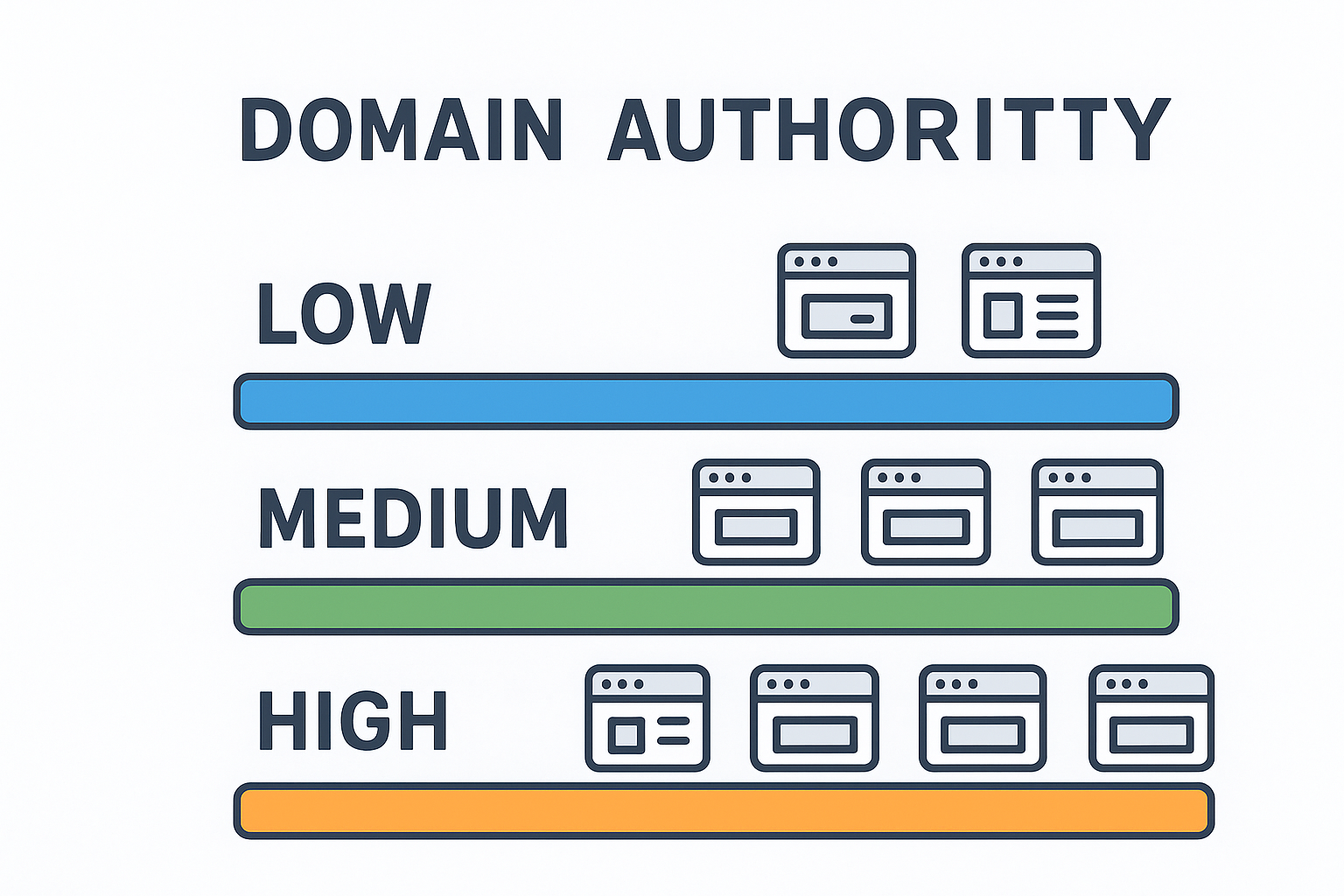
Domain authority score tiers help you set realistic benchmarks based on your niche and competitive landscape.
Common Mistakes That Skew Your Results
Many site owners misread their DA data because of avoidable errors. First, comparing your DA score across different tools is misleading because Moz’s DA, Ahrefs’ Domain Rating, and SEMrush’s Authority Score are calculated differently and will rarely match. Always use the same tool for all comparisons.
Second, obsessing over your raw DA number rather than the gap between you and your competitors wastes energy. A DA of 40 is excellent if your competitors average DA 30, but it is insufficient if they average DA 55. Therefore, always frame your score in competitive context.
Finally, many marketers panic when DA drops slightly after a Moz index update. In practice, these fluctuations are normal and often affect the entire web simultaneously. Instead of reacting to small drops, focus on the long-term trend over three to six months.
How to Use DA Data in Your Link-Building Strategy
Once you have your DA score and your competitors’ scores, you can build a targeted link acquisition plan. The goal is to identify sites that link to your competitors but not to you — these are your highest-priority outreach targets because they are already interested in your topic.
Additionally, use DA to filter guest post opportunities. When evaluating a site for a guest contribution, prioritize sites with a DA at least equal to or higher than your own. A guest post on a DA 15 site offers minimal link equity if your site is already at DA 35.
For a deeper look at how authority signals translate into real ranking gains, resources like RankAuthority offer practical frameworks for connecting DA metrics to measurable SEO outcomes.
Meanwhile, do not neglect internal linking. Although internal links do not raise your DA directly, they distribute page authority across your site more efficiently, which can improve rankings for individual pages even before your overall DA climbs.
Domain Authority vs. Page Authority: Which Should You Track?
Domain authority and page authority are related but serve different purposes. DA reflects the overall strength of your entire domain, while page authority (PA) measures the strength of a specific URL. Both metrics use the same 1–100 scale and are calculated similarly.
In practice, track DA when planning broad link-building campaigns or evaluating a site as a link partner. Track PA when optimizing specific landing pages or blog posts to rank for high-value keywords. For most SEO workflows, monitoring both gives you the clearest picture.
However, if you can only focus on one metric, DA is generally more actionable at a strategic level because it reflects the cumulative impact of all your link-building efforts across the entire site.
Frequently Asked Questions
What does checking domain authority actually measure?
Checking domain authority measures a predictive score from 1 to 100 that estimates how likely a website is to rank in search engine results. The score is calculated using the number and quality of inbound links, linking root domains, and overall link profile health. It is a comparative benchmark, not an absolute ranking guarantee.
Which tool is best for checking domain authority?
Moz Link Explorer is the original tool for checking domain authority and uses the DA metric specifically. Ahrefs Domain Rating and SEMrush Authority Score are strong alternatives. Choose one tool and use it consistently so your trend data remains comparable over time.
Is a domain authority score of 30 good?
A DA of 30 is considered average for a growing website and is competitive in many niche markets. Whether it is good depends entirely on your competitors’ scores — if they average DA 25, a score of 30 gives you a real advantage.
How often does domain authority update?
Moz updates its domain authority scores approximately once a month when it recrawls and recalculates its link index. Therefore, changes you make to your link profile may take four to six weeks to be reflected in your score.
Can domain authority drop overnight?
Yes, domain authority can drop suddenly if high-authority sites that linked to you remove those links, or if Moz recalibrates its scoring algorithm. A drop does not always mean your site lost real SEO value — it may simply reflect a recalculation across all sites in the index.
Does Google use domain authority as a ranking factor?
No, Google does not use domain authority as a direct ranking signal — it is a third-party metric created by Moz. However, the underlying factors DA measures, such as quality backlinks and link diversity, are genuine Google ranking factors and directly influence organic performance.
How long does it take to increase domain authority?
Improving domain authority typically takes three to twelve months of consistent link-building and content creation. Sites starting below DA 20 often see faster gains, while sites above DA 50 require significantly more high-quality links to move the needle.
What is the difference between domain authority and page authority?
Domain authority measures the ranking strength of an entire domain, while page authority measures the strength of a single URL. Both use a 1–100 scale, but page authority is more useful when evaluating specific landing pages or blog posts for targeted keyword campaigns.
What is a good domain authority score for a new website?
New websites almost always start at DA 1. Reaching DA 20 to 30 within the first year is a realistic and healthy goal with consistent content publishing and link outreach. Focus on earning links from relevant, authoritative sites rather than chasing a specific number.
How do I check a competitor’s domain authority?
Simply enter a competitor’s URL into any DA checker tool such as Moz Link Explorer, Ahrefs, or RankAuthority. Most tools display the score instantly alongside backlink counts and top linking domains, making competitive benchmarking fast and straightforward.
Why do different tools show different domain authority scores?
Each SEO tool uses its own proprietary link index and algorithm, so scores will naturally differ. Moz calls it Domain Authority, Ahrefs calls it Domain Rating, and SEMrush uses Authority Score — they are related concepts but not identical metrics, so cross-tool comparisons are unreliable.
Does buying backlinks improve domain authority?
Buying backlinks can temporarily inflate a DA score, but it violates Google’s Webmaster Guidelines and risks a manual penalty that can devastate real organic rankings. Sustainable DA growth comes from earning high-quality editorial links, not purchasing them.
Final Takeaways: Make Checking Domain Authority a Habit
Checking domain authority regularly — ideally once a month — keeps your SEO strategy grounded in real data rather than guesswork. It tells you whether your link-building efforts are working, where you stand relative to competitors, and which opportunities deserve your attention next.
Remember that DA is a means to an end, not the end itself. The true goal is better organic rankings and more qualified traffic. However, because DA closely mirrors the link signals that drive those rankings, tracking it consistently gives you a reliable early indicator of whether your strategy is on the right track. Last updated: 2026-07-02. By RankAuthority editorial team.
Start today by running a DA check on your own domain and your top five competitors. Record the scores, identify the gap, and build your next three months of link-building activity around closing it. That single habit, repeated consistently, is what separates sites that gradually climb the rankings from those that stay stuck. Make Checking Domain Authority a monthly habit to track progress. This guide is written by the Rank Authority editorial team; add an author bio with credentials and links to sources.

