
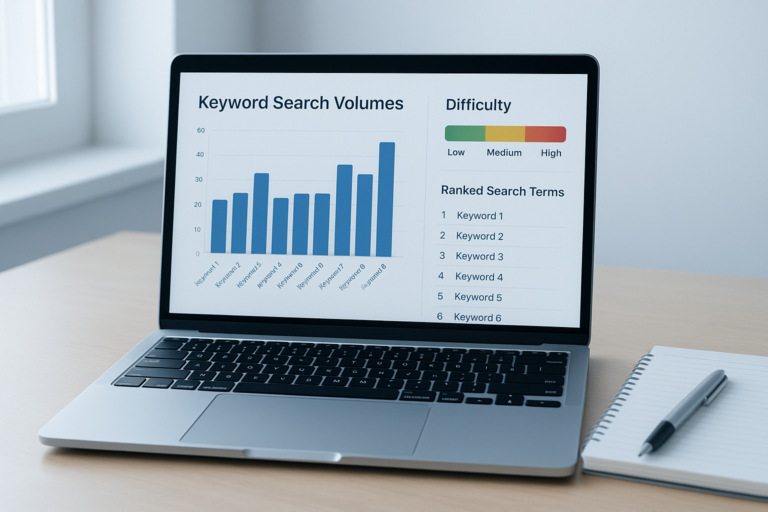
eIn this guide, SEO keyword analysis is the structured process of researching, scoring, and prioritizing the exact search terms your audience types into Google, so every page you publish targets real demand instead of a guess. Put simply, it is the filter that separates keywords worth chasing from keywords that will waste your team’s time. Without this filter, even beautifully written content can sit buried on page four, invisible to the people who are actively searching for it.
In this guide, you will learn exactly how to run a complete SEO keyword analysis from scratch — from brainstorming your first seed terms to building a prioritized keyword map, auditing competitor gaps, and tracking the rankings that result. Unlike a basic keyword list, this process accounts for search intent, SERP features, traffic potential, and topical clustering, so your strategy holds up as search behavior evolves.
Quick Answer
SEO keyword analysis is the process of finding the terms your audience searches for, then scoring each one by volume, difficulty, intent, and traffic potential to decide which deserve a page on your site. It determines which content you build, how that content is structured, and how fast you can realistically expect it to rank.
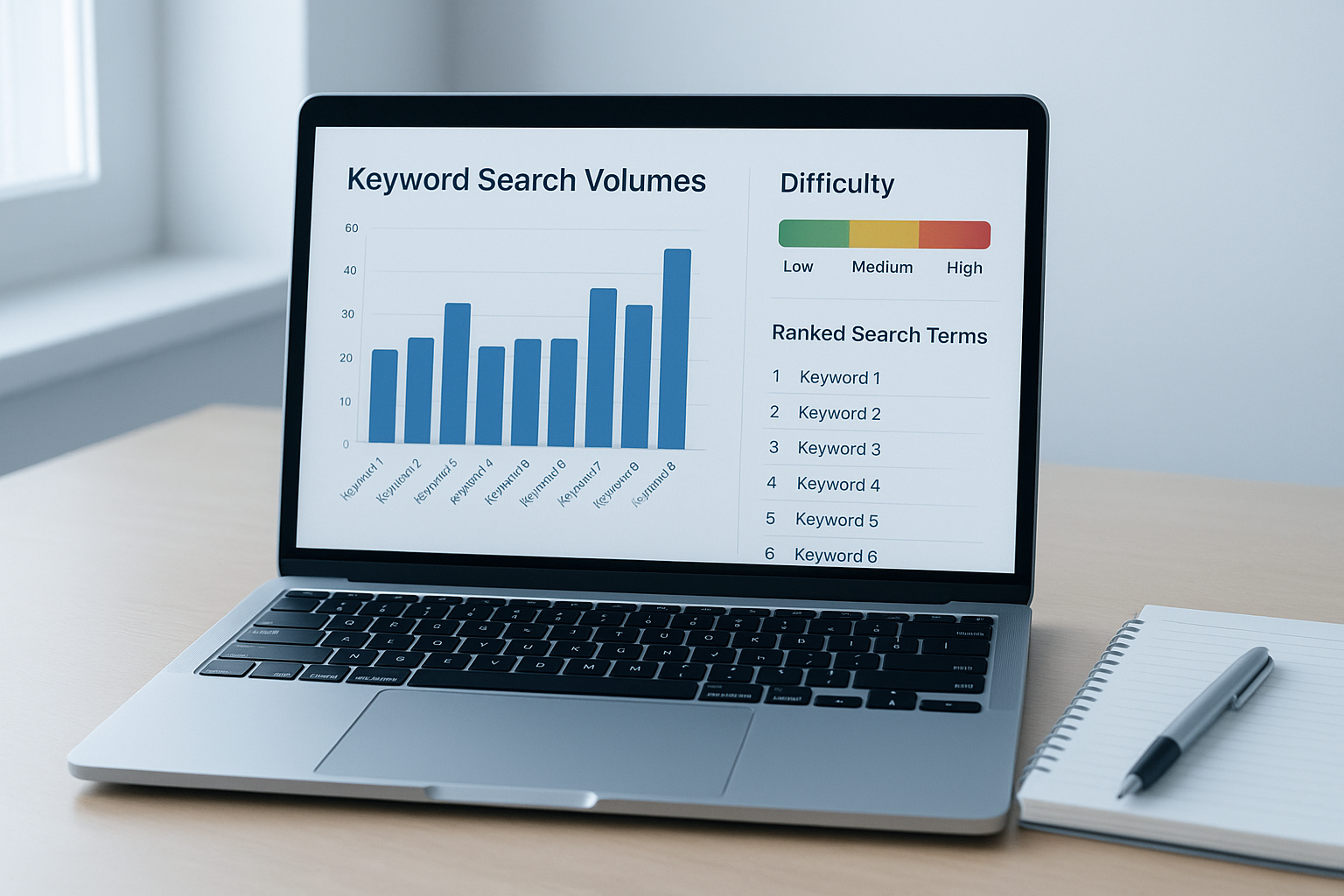
A well-structured SEO keyword analysis dashboard helps you spot high-opportunity terms at a glance.
What Does SEO Keyword Analysis Actually Mean?
SEO keyword analysis is the practice of systematically studying search query data to identify which terms offer the best balance of traffic potential and ranking feasibility for your specific website. Think of it as the foundation beneath every other SEO decision you make. According to Wikipedia’s overview of search engine optimization, keyword research has been a core pillar of SEO since the discipline’s earliest days — but analysis is the layer that turns raw research into an actionable plan.
However, modern keyword analysis has evolved well beyond pulling a spreadsheet of popular phrases. Today, it includes evaluating SERP features (the extra elements like featured snippets or image packs that appear above standard results), user intent signals, seasonal trends, and topical authority — not just raw monthly search volume.
SEO Keyword Analysis vs. Keyword Research: What’s the Real Difference?
People often use these two terms interchangeably, yet they describe different stages of the same workflow. Keyword research is the discovery phase — brainstorming and collecting as many relevant terms as possible. Keyword analysis, in contrast, is the evaluation phase that follows: scoring each discovered term, comparing it against competitors, checking intent alignment, and deciding whether it earns a spot on your editorial calendar.
In other words, research without analysis just gives you a longer list. Analysis is what turns that list into a strategy. For a full walkthrough of the discovery side of this process, our complete guide to keyword research pairs well with the evaluation framework covered here.
Why Keyword Analysis Is the Engine of Organic Growth
Without a clear keyword strategy, you are essentially publishing content and hoping it ranks. In contrast, sites that invest in thorough keyword analysis consistently outperform competitors because every piece of content they create is aligned with real, measurable demand.
Additionally, keyword analysis reveals gaps in your competitors’ coverage — opportunities where searchers have a clear need but existing pages deliver thin or outdated answers. These gaps are exactly where newer or smaller sites can realistically compete and win, rather than fighting head-on for terms dominated by established domains.
For a deeper dive into how keyword data translates into a full content strategy, RankAuthority provides actionable frameworks that connect keyword research directly to measurable ranking improvements.
The Metrics That Actually Matter in Keyword Analysis
Before you run any tool, it helps to know what you are actually looking for. A complete SEO keyword analysis weighs five signals together, rather than chasing a single number: For a deeper walkthrough, see our SEO Backlinks Analysis: A Complete Guide to Rankings.
- Search volume — the average number of monthly searches for a term. Useful, but misleading on its own.
- Keyword difficulty (KD) — a 0–100 score estimating how hard it is to crack the first page for that term.
- Traffic potential — the total traffic the top-ranking page earns from all the keywords it ranks for, not just the one you searched. A keyword can show low volume yet sit on a page that pulls thousands of visits from related variations.
- Click-through potential — how many searchers actually click a result, since SERP features like featured snippets or “People Also Ask” boxes can absorb clicks before anyone reaches a website.
- Search intent alignment — whether the content format users expect (a guide, a product page, a comparison table) matches what you plan to publish.
Consequently, a keyword with moderate volume, low difficulty, and strong intent alignment is almost always more valuable than a high-volume term you have no realistic chance of ranking for in the next twelve months.
Step-by-Step: How to Conduct a Complete SEO Keyword Analysis
Below is the full eight-step framework we use at RankAuthority. Follow it in order, since each step filters your list further before the next one begins.
Step 1 — Brainstorm Seed Keywords
Start by listing the core topics your business covers. For each topic, write down the terms a potential customer would type into Google. These seed keywords don’t need to be perfect — they simply serve as the starting point for broader research, for example our AI-powered keyword research guide. Therefore, aim for breadth over precision at this stage. If you want a deeper walkthrough of this discovery phase, see our guide on how to find and use SEO search keywords correctly.
Step 2 — Expand Using Keyword Research Tools how to find keywords
Feed your seed keywords into tools such as Ahrefs, Semrush, or Google Keyword Planner. These platforms generate hundreds of related phrases, questions, and variations. As a result, you quickly build a comprehensive keyword universe that reflects how real users phrase their searches. For a fast first pass without a paid subscription, our own free keyword checker tool is a practical starting point before you commit budget to a full platform.
Also consider Google’s “People Also Ask” boxes, autocomplete suggestions, and tools like AlsoAsked — all reveal natural-language variations that standard keyword tools sometimes miss.
Step 3 — Evaluate Search Volume, Difficulty, and Traffic Potential
Next, filter your expanded list using the metrics covered earlier. For newer sites, prioritize keywords with a KD below 30 and at least 100 monthly searches — this combination offers the fastest path to visible rankings. However, don’t discard a keyword just because its standalone volume looks small; check the traffic potential of the page currently ranking first, since it may capture far more total traffic than the seed term suggests.
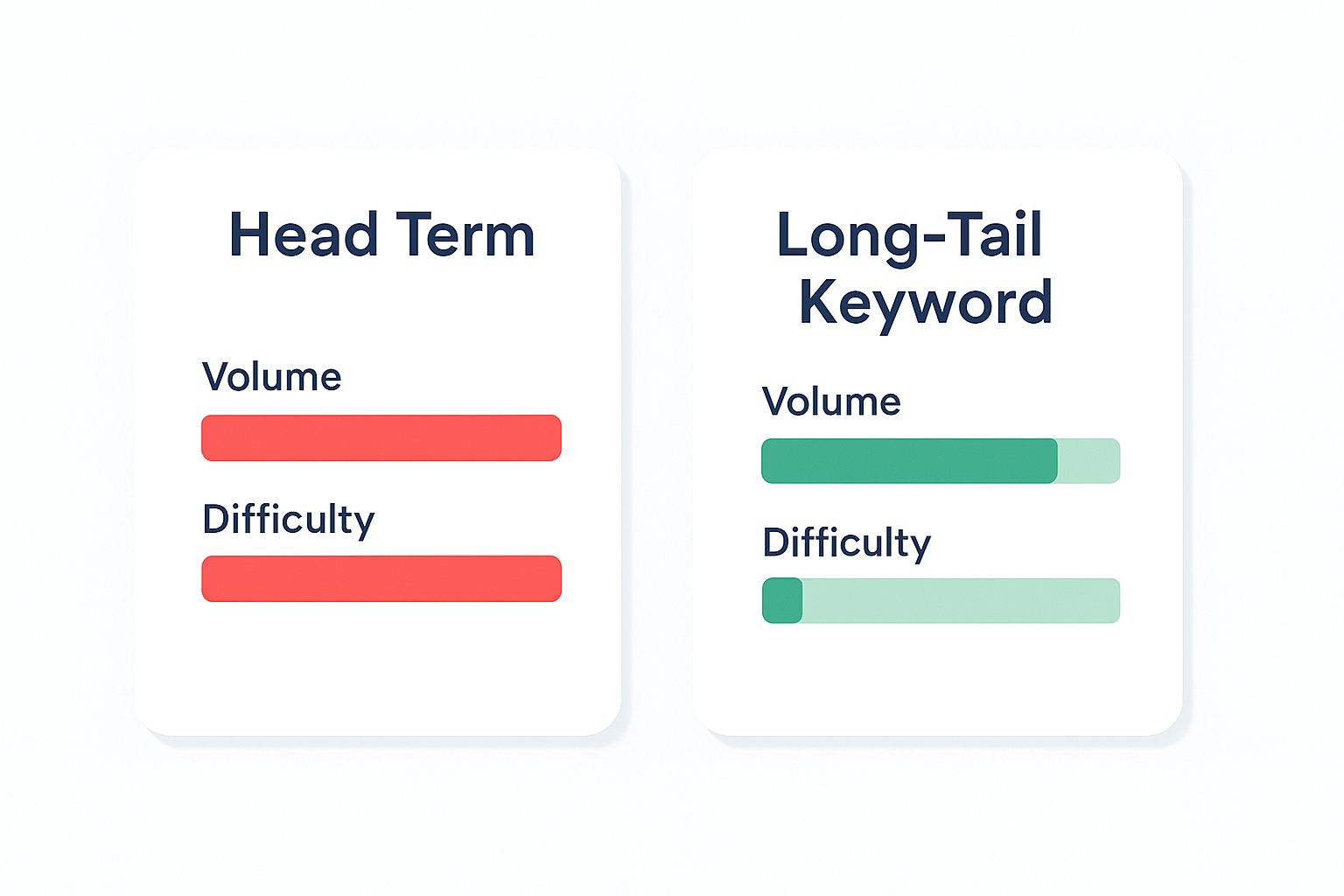
Understanding the trade-off between head terms and long-tail keywords is central to any effective SEO keyword analysis.
Step 4 — Analyze Search Intent and SERP Features
Search intent is arguably the most important filter in keyword analysis. Before targeting any keyword, review the top five ranking pages. Are they blog posts, product pages, comparison guides, or videos? Because Google’s ranking systems are trained to match content format to user intent, your page must mirror what already ranks — otherwise, even a perfectly optimized article will struggle. Google’s own SEO Starter Guide confirms that matching content to what searchers actually want is a foundational ranking factor, not an optional nicety.
The four primary intent types are informational (learning), navigational (finding a brand), commercial (comparing options), and transactional (buying). Each requires a different content approach, and each tends to trigger different SERP features — informational queries often surface featured snippets, while transactional queries trigger shopping carousels and ads.
Step 5 — Identify Competitor Keyword Gaps
Enter your top three competitors into a tool like Ahrefs Site Explorer or Semrush’s Organic Research. Export their ranking keywords, then compare that list against your own rankings using our competitor tracking guide. Keywords where competitors rank on page one but you do not represent your highest-priority content opportunities. In practice, closing these gaps often delivers faster ROI than targeting brand-new keyword territory.
Step 6 — Group Keywords Into Topical Clusters
Rather than treating every keyword as an isolated page, group related terms under a single “parent topic.” For example, “keyword difficulty,” “KD score,” and “how hard is it to rank” usually belong on one comprehensive page instead of three thin ones. Clustering this way builds topical authority — a signal that your site covers a subject in depth, not just in passing.
Step 7 — Build a Keyword Map
Assign each selected keyword cluster to a single page on your site. This keyword map prevents cannibalization — the damaging situation where multiple pages compete for the same term and split your ranking signals. Additionally, a clear map guides your editorial calendar, ensuring every new piece of content fills a specific gap rather than duplicating existing coverage. For a more detailed template, our complete guide to keyword research includes a downloadable mapping structure.
Step 8 — Score and Prioritize Your Final List
Finally, give each keyword an opportunity score by weighing traffic potential against difficulty and business value. Terms that are easy to rank for, closely match a buying intent, and feed an existing topical cluster should move to the top of your content calendar first.
Common Mistakes That Undermine Keyword Research
Many marketers chase high-volume head terms without considering difficulty, resulting in content that never reaches page one. Similarly, ignoring search intent leads to technically optimized pages that Google still won’t rank, simply because the content format doesn’t match what users expect to see.
Another frequent error is performing keyword analysis once and never revisiting it. However, search trends shift constantly — new competitors emerge, algorithm updates reorder priorities, and user language evolves. A third, often-overlooked mistake is ignoring keyword cannibalization until two of your own pages are competing against each other in the same search results. Therefore, schedule a full keyword audit at least every quarter to keep your strategy current.
Choosing the Right Tools for SEO Keyword Analysis
The tool you choose depends on your budget and depth of analysis needed.
- Google Search Console — free, and shows exactly which queries already bring traffic to your site, making it indispensable for optimizing existing pages.
- Ahrefs and Semrush — the most comprehensive competitive intelligence platforms, including backlink data that contextualizes keyword difficulty scores.
- Google Keyword Planner — a solid free option for teams on a tighter budget, particularly for understanding broad volume ranges.
- Moz Keyword Explorer and Ubersuggest — reasonable mid-tier alternatives worth comparing if Ahrefs or Semrush is outside your budget. Moz’s own Beginner’s Guide to SEO is also a useful companion reference for teams new to the discipline.
Meanwhile, resources like RankAuthority can help you interpret tool data and translate raw numbers into a coherent ranking strategy — which matters more than which single tool you pick.
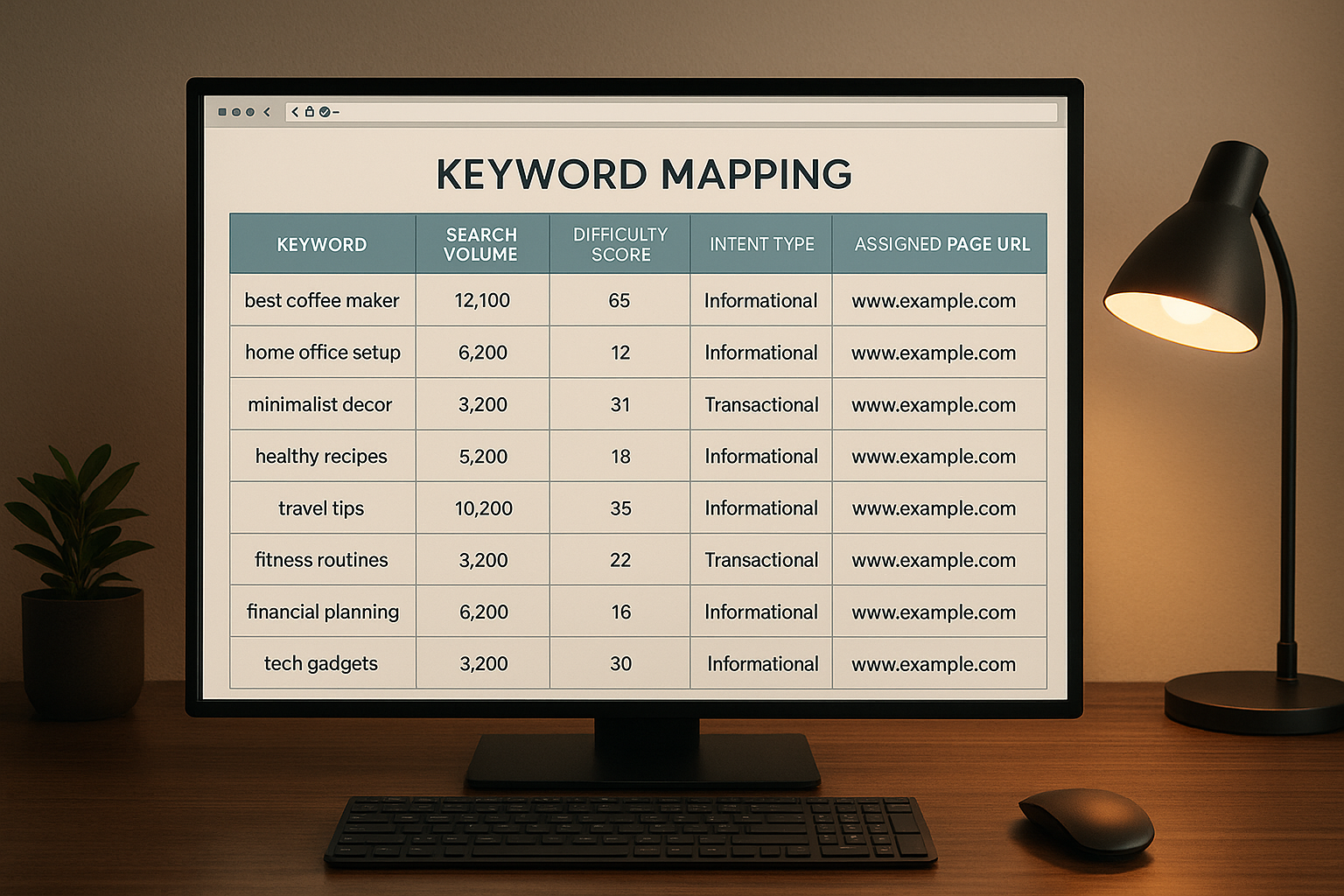
A keyword mapping spreadsheet keeps your analysis organized and prevents content cannibalization across your site.
Turning Keyword Analysis Into Rankings: What Comes Next
Once your keyword map is complete, the next phase is content creation and on-page optimization. Each target keyword should appear in the page title, the first paragraph, at least one subheading, and throughout the body in a natural, contextually relevant way. Additionally, internal linking between related pages reinforces topical authority and helps Google understand the relationship between your content. For practical examples on how to find and use keywords in-page, see our hands-on guide.
Track your rankings weekly so you can spot momentum early. Our AI rank checker is built for exactly this — it flags which pages are climbing and which ones need further optimization, creating a continuous improvement loop that compounds over time instead of a one-time project that goes stale.
How Often Should You Repeat Your SEO Keyword Analysis?
As a general rule, revisit your full keyword analysis every three to six months. In between, check Google Search Console monthly for new query patterns, since fresh phrasing often appears long before a keyword tool reports meaningful volume. Also run a dedicated analysis whenever you launch a new product, service, or content category, since waiting for the next scheduled quarterly review can mean missing an early-mover advantage.
Conclusion: Make SEO Keyword Analysis an Ongoing Practice
Thorough SEO keyword analysis is not a one-time task — it is a continuous discipline that keeps your content strategy aligned with how real people search. By combining the right metrics, intent analysis, competitor gap research, topical clustering, and a structured keyword map, you build a foundation that compounds into long-term organic growth. Start with your seed keywords today, revisit your analysis every quarter, and let your keyword map — not guesswork — decide what you publish next.
Frequently Asked Questions About SEO Keyword Analysis
What is SEO keyword analysis?
SEO keyword analysis is the process of researching, evaluating, and selecting search terms that your target audience uses so you can optimize your content to rank higher in search results. It examines search volume, keyword difficulty, traffic potential, and user intent to prioritize the most valuable opportunities for your site.
How do I start a keyword analysis for SEO?
Begin by brainstorming seed keywords related to your niche, then expand that list using tools like Google Keyword Planner, Ahrefs, or Semrush. Next, filter by search volume, keyword difficulty, and intent to identify your best ranking targets before building a keyword map.
What is keyword difficulty and why does it matter?
Keyword difficulty is a score from 0 to 100 that estimates how hard it is to rank on Google’s first page for a given term. It matters because targeting keywords far above your site’s authority level makes ranking nearly impossible without significant effort and backlinks.
What is traffic potential, and how is it different from search volume?
Traffic potential estimates the total organic traffic the top-ranking page earns from every keyword it ranks for, not just the single term you searched. A keyword can show modest standalone volume while the page ranking for it still pulls substantial traffic from dozens of related variations.
What is search intent and how does it affect keyword selection?
Search intent is the underlying reason behind a user’s query — informational, navigational, commercial, or transactional. Matching your content format to the correct intent is critical because Google ranks pages that best satisfy what users are actually looking for.
What are long-tail keywords and should I target them?
Long-tail keywords are longer, more specific phrases with lower search volume but also lower competition. You should absolutely target them — especially on newer sites — because they convert better and are significantly easier to rank for than broad head terms.
How often should I perform an SEO keyword analysis?
Revisit your keyword analysis at least every three to six months, since search trends, competitor strategies, and algorithm updates can shift keyword opportunities. Also run a fresh analysis whenever you launch a new product, service, or content category.
Which tools are best for SEO keyword analysis?
The most widely used paid tools include Ahrefs, Semrush, and Moz Keyword Explorer, while Google Search Console and Google Keyword Planner are strong free alternatives. Many professionals combine two or more tools to get the most complete picture of keyword opportunities.
What is the difference between head terms and long-tail keywords?
Head terms are short, broad keywords (one to two words) with high search volume and high competition, such as “SEO.” Long-tail keywords are three or more words, far more specific, and much less competitive. Both play important roles in a balanced keyword strategy.
How do I analyze competitor keywords?
Enter a competitor’s domain into a tool like Ahrefs Site Explorer or Semrush’s Organic Research to see all the keywords they rank for. Focus on terms where they appear on page one but your site does not — these gaps represent your highest-priority content opportunities.
What is keyword cannibalization and how do I avoid it?
Keyword cannibalization occurs when multiple pages on your site compete for the same keyword, splitting authority and confusing search engines. Avoid it by mapping one primary keyword to each page and consolidating or redirecting any overlapping content.
What are topical clusters and why do they matter for keyword analysis?
Topical clusters group closely related keywords under one “parent topic” so a single, thorough page can rank for many variations at once. This approach builds topical authority and avoids publishing several thin pages that compete against each other.
Can I do SEO keyword analysis for free?
Yes — Google Search Console, Google Keyword Planner, and Ubersuggest all offer useful free keyword data. However, free tools typically provide less granular data on keyword difficulty and competitive backlink profiles compared to paid platforms.

