
The Best SEO Optimisation Tool is software designed to help website owners, marketers, and developers improve their visibility in search engine results by automating keyword research, technical audits, backlink analysis, and rank tracking. Because search algorithms grow more sophisticated every year, choosing the right tool in 2025 is one of the highest-leverage decisions you can make for your organic traffic strategy. Last updated: 2026-07-02. Add a visible author bio with short credentials and a publication/updated date on the article page.
However, not every platform suits every use case. Therefore, this tool selection guide walks you through the core feature categories, a practical selection framework, and the mistakes to avoid — so you can invest confidently.
Quick Answer: The best SEO optimisation tool combines keyword research, site auditing, rank tracking, and backlink analysis in one dashboard. For most growing websites, a mid-tier all-in-one platform — supplemented by free data from Google Search Console — delivers the strongest return on investment.
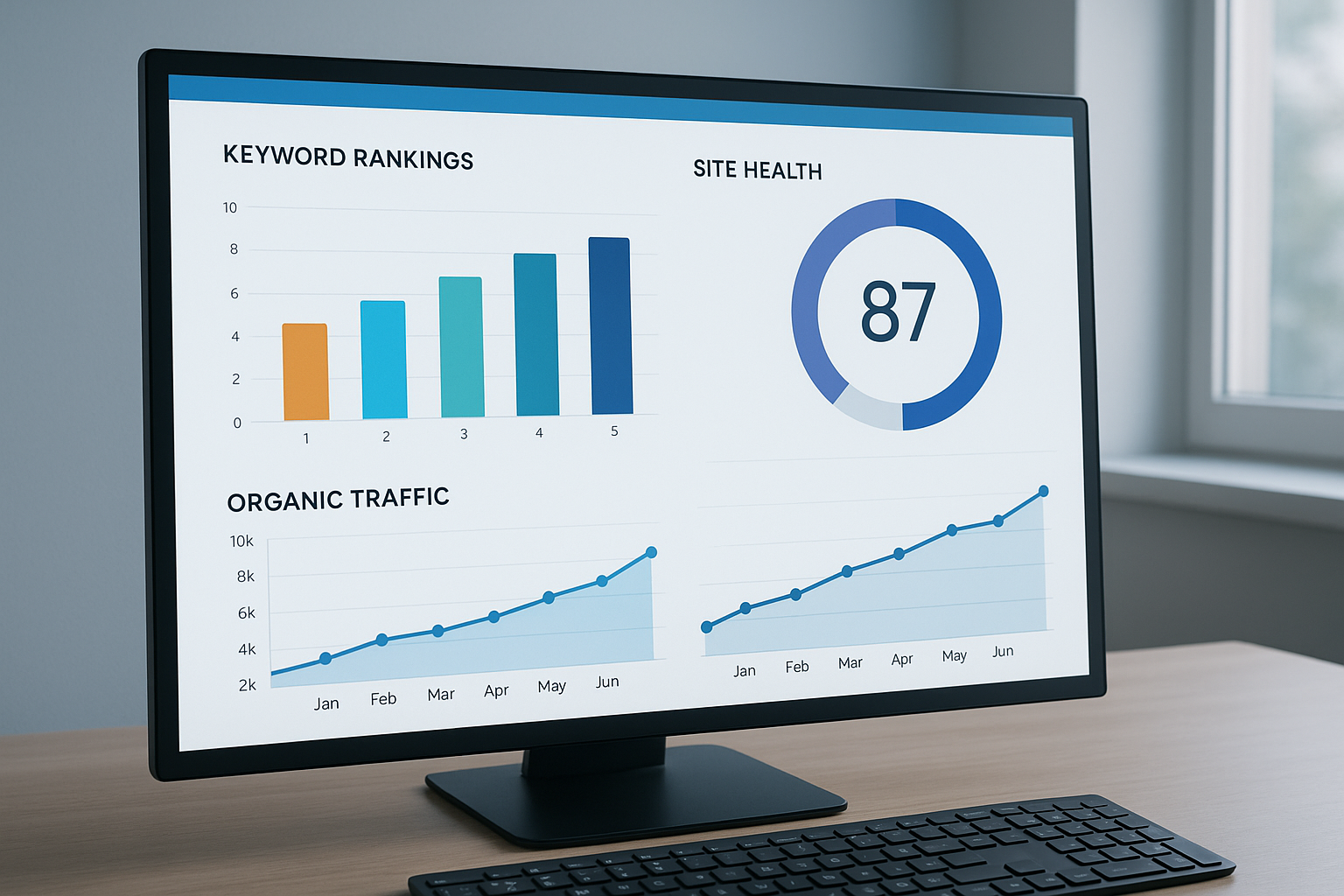
A well-designed SEO optimisation tool centralises ranking data, site health scores, and traffic trends in a single view.
What Does an SEO Optimisation Tool Actually Do?
An SEO optimisation tool is, at its core, a data aggregator and action engine. It collects signals from search engines, crawls your website, and translates raw data into prioritised recommendations. As a result, you spend less time guessing and more time executing improvements that move the needle.
According to Wikipedia’s overview of search engine optimisation, SEO encompasses both on-page and off-page factors, meaning a comprehensive tool must address content, technical structure, and external authority simultaneously.
In practice, most platforms group their features into four functional pillars: keyword intelligence, site auditing, backlink monitoring, and rank tracking. Understanding each pillar helps you evaluate tools with far greater clarity.
The Four Core Feature Pillars
1. Keyword Intelligence
Keyword research is the foundation of any content strategy; see our best tool for SEO for recommendations. However, modern keyword tools go well beyond search volume — they surface search intent, seasonal trends, keyword difficulty, and topic clusters. For example, a strong tool will show you not just that “running shoes” gets 90,000 monthly searches, but also that transactional intent dominates that query.
Additionally, look for competitor gap analysis, which reveals keywords your rivals rank for that you do not. This feature alone can uncover months of content opportunities within minutes.
2. Technical Site Auditing
Technical audits crawl your website the way Googlebot does, flagging broken links, duplicate content, slow page speeds, missing meta tags, and crawl errors. Because even excellent content can fail to rank when technical barriers exist, this pillar is non-negotiable.
The best audit tools prioritise issues by severity, so you fix what matters most first rather than working through an overwhelming list of minor warnings.
3. Backlink Monitoring and Analysis
Backlinks remain one of Google’s strongest ranking signals. Therefore, a features of a good SEO tool platform maintains a large, frequently updated index of links pointing to your domain and your competitors’ domains. Metrics to watch include domain authority, anchor text distribution, and link velocity.
Furthermore, toxic link detection helps you identify harmful backlinks and submit disavow files to Google before they damage your rankings.
4. Rank Tracking
Rank tracking shows where your pages appear in search results for target keywords over time. Meanwhile, the best trackers segment data by device type, location, and SERP feature (such as featured snippets or local packs), giving you a granular view of performance.

Rank tracking features in SEO automation tools help you monitor keyword position changes and respond quickly to algorithm updates.
How to Choose the Right SEO optimisation tool: A 5-Step Framework
Selecting the right platform becomes straightforward when you follow a structured process using a search optimization tool. Below is a practical five-step framework you can apply today.
Define your primary SEO goal
First, decide whether you need keyword discovery, a technical cleanup, link building intelligence, or all three. Your primary goal determines which feature pillar must be best-in-class.
Set a realistic budget
Free tools like Google Search Console are invaluable for baseline monitoring. However, paid platforms typically offer 10 to 50 times more keyword data and automation. Budget $99 to $199 per month for a solid mid-tier tool if you manage more than one site. Review our Search Optimization Tool guide for pricing comparisons.
Evaluate core features during a free trial
Most premium platforms offer 7- to 14-day trials. During that period, consult our search optimization tool guide to test crawl depth on your actual site, run a keyword gap report against a real competitor, and check how fresh the backlink index is.
Confirm integration support
Additionally, verify that the tool integrates with Google Analytics 4 and Google Search Console. Unified data across platforms eliminates manual data exports and reduces reporting time significantly.
Act on the data consistently
Finally, the most powerful tool in the world produces zero results if you collect data without acting on it. Build a monthly workflow around your tool’s audit reports and rank tracking alerts.
Common Mistakes to Avoid
Even experienced marketers fall into predictable traps when using SEO software. Understanding these mistakes upfront saves months of wasted effort.
Chasing volume over intent. High search volume is appealing, but a keyword with 50,000 monthly searches dominated by established brands is far harder to rank for than a 2,000-search keyword with low competition and clear commercial intent. Therefore, always cross-reference volume with difficulty scores.
Ignoring technical audit warnings. Many users run an audit, see a long list of issues, and then focus exclusively on content. In contrast, fixing crawl errors and improving Core Web Vitals often produces faster ranking gains than publishing new articles.
Using too many tools simultaneously. Subscribing to five platforms creates data overload and conflicting recommendations. As a result, most professionals recommend mastering one all-in-one platform before layering in specialist tools.
Free vs. Paid: Making the Right Call
Free tools are genuinely powerful for small sites and early-stage projects. Google Search Console, for example, provides direct performance data from Google itself — including impressions, click-through rates, and index coverage issues — at no cost.
However, free tools rarely offer competitor analysis, large-scale keyword databases, or automated alerts. As your site grows, the time saved by a paid platform typically far outweighs the subscription cost. Platforms like Rank Authority are worth evaluating when you need guided, actionable recommendations without the steep learning curve of enterprise tools; see our Easy SEO Tools for Startups for budget-friendly options.
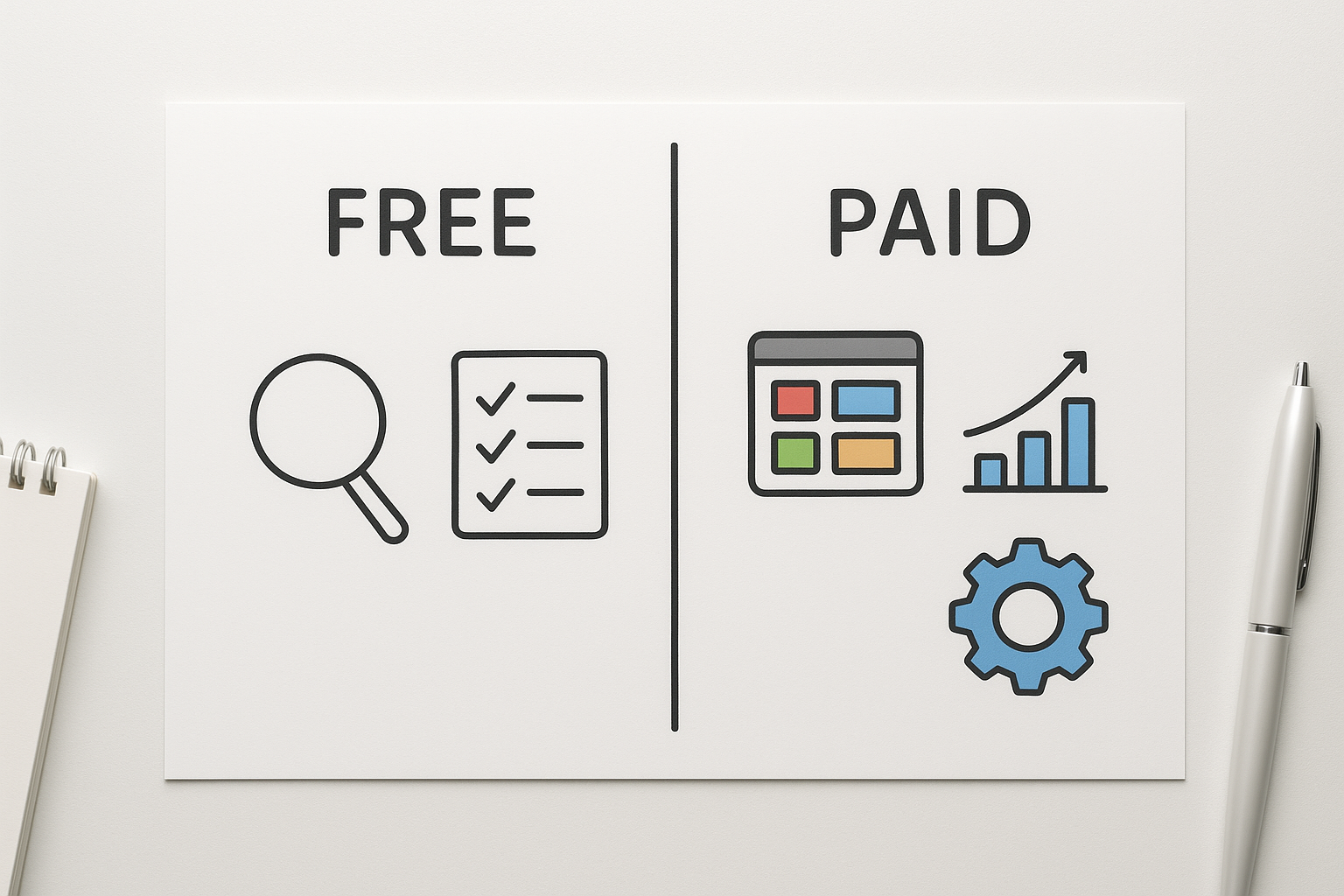
Choosing between free and paid SEO tools depends on your site’s scale, competitive landscape, and available time.
Integrating Your Tool Into a Monthly SEO Workflow
Owning a great SEO tool without a workflow is like owning a gym membership without a training plan. Because consistency drives compounding results in SEO, building a repeatable monthly process is essential.
A practical monthly workflow looks like this: run a full site audit in week one and fix critical issues. In week two, analyse rank movements and update any pages that dropped positions. During week three, conduct keyword research for the next month’s content calendar. Finally, in week four, review your backlink profile for new opportunities and toxic links and consider AI SEO automation to speed repetitive reporting.
This structured approach ensures your SEO tool generates continuous value rather than sitting unused between sporadic check-ins. For deeper guidance on building this kind of system, Rank Authority offers resources specifically designed to help marketers turn tool data into actionable growth plans, including our Best Search Optimization Tool guide.
Conclusion: Picking the Right SEO Optimisation Tool in 2025
The right SEO optimisation tool is not necessarily the most expensive or the most feature-rich — it is the one you will actually use consistently and act upon. Therefore, start by defining your goals, testing platforms during free trials like best tool for SEO, and building a monthly workflow around the data your chosen tool delivers.
In 2025, the gap between websites that use structured SEO tools and those that do not will only widen. By choosing strategically and committing to a data-driven process, you position your site for sustained, compounding organic growth.
Frequently Asked Questions
What is an SEO optimisation tool?
An SEO optimisation tool is software that helps website owners improve their search engine rankings by analysing keywords, auditing technical issues, tracking backlinks, and monitoring rank positions. These tools automate tasks that would otherwise take hours to perform manually.
Which SEO optimisation tool is best for beginners?
Google Search Console is the best free starting point for beginners because it provides direct data from Google about indexing, clicks, and search queries. For a more guided experience, platforms like Rank Authority offer beginner-friendly dashboards that simplify complex SEO data.
How much does an SEO optimisation tool cost?
Costs range from free (Google Search Console) to $100–$500 per month for professional platforms like Ahrefs or Semrush. Many tools offer tiered pricing so you can start with a basic plan and upgrade as your needs grow.
Can one SEO tool handle all optimisation tasks?
Most all-in-one SEO platforms cover keyword research, site auditing, rank tracking, and backlink analysis under one subscription. However, specialists often combine two or three tools to get the deepest data in each area.
How long does it take to see results from using an SEO tool?
SEO results typically appear within three to six months of making data-driven changes. The tool itself speeds up the identification of issues, but ranking improvements depend on how quickly you implement fixes and how competitive your niche is.
What is the difference between on-page and technical SEO tools?
On-page SEO tools focus on content quality, keyword placement, meta tags, and internal linking. Technical SEO tools audit site speed, crawlability, structured data, and server-level issues that affect how search engines index your pages.
Do I need a paid SEO tool or will free tools suffice?
Free tools are sufficient for basic monitoring and small websites. However, paid tools provide deeper competitive intelligence, larger keyword databases, and automated alerts that save significant time for growing businesses.
What features should I prioritise in an SEO tool?
Prioritise keyword research accuracy, site crawl depth, backlink database size, rank tracking frequency, and ease of reporting. Additionally, look for tools that integrate with Google Analytics and Google Search Console for unified data.
Is keyword research still important in 2025?
Yes, keyword research remains foundational in 2025. Search intent analysis has become equally important, so modern SEO tools now surface not just search volume but also intent signals, SERP features, and topic clusters.
How do backlink analysis features in SEO tools work?
Backlink analysis tools crawl the web and index links pointing to your domain, showing metrics like domain authority, anchor text, and link growth over time. This data helps you identify toxic links to disavow and high-value opportunities to pursue.
What common mistakes do people make when using SEO tools?
The most common mistakes include chasing high-volume keywords without considering competition, ignoring technical audit warnings, and failing to act on the data the tool provides. Collecting data without implementing changes produces no ranking improvement.
How often should I run an SEO site audit?
Running a full site audit monthly is a good baseline for most websites. High-traffic or frequently updated sites benefit from weekly automated crawls to catch new issues before they affect rankings.

