
Automated content marketing is the practice of using software, AI workflows, and predefined workflows to plan, create, publish, and distribute content with minimal manual effort — and in 2025, it has become one of the most powerful levers available to growth-focused teams. Because content demands are rising faster than headcount, automation bridges the gap between strategy and consistent execution.
However, automation is not a replacement for strategy. Instead, it is a force multiplier that makes your existing strategy work harder. This guide covers everything you need to know — from core concepts and practical tools to a step-by-step setup process and common pitfalls to avoid. Last updated: 2026-05-23.
What Is Automated Content Marketing?
Automated content marketing is a system where technology handles the repetitive, time-intensive parts of your content operation — scheduling, distribution, repurposing, and performance reporting. According to Wikipedia’s overview of marketing automation, the discipline has evolved from simple email scheduling into a comprehensive ecosystem of AI-driven tools that touch every stage of the customer journey.
At its core, content automation covers four main areas: content creation assistance, editorial scheduling, multi-channel distribution, and analytics reporting. Together, these systems allow a small team to produce and promote content at a volume that previously required a much larger staff.
For example, a single blog post can automatically trigger a social media post, an email newsletter segment, and an RSS update — all without a human clicking “publish” on each platform individually. That is the practical power of a well-built automation stack.
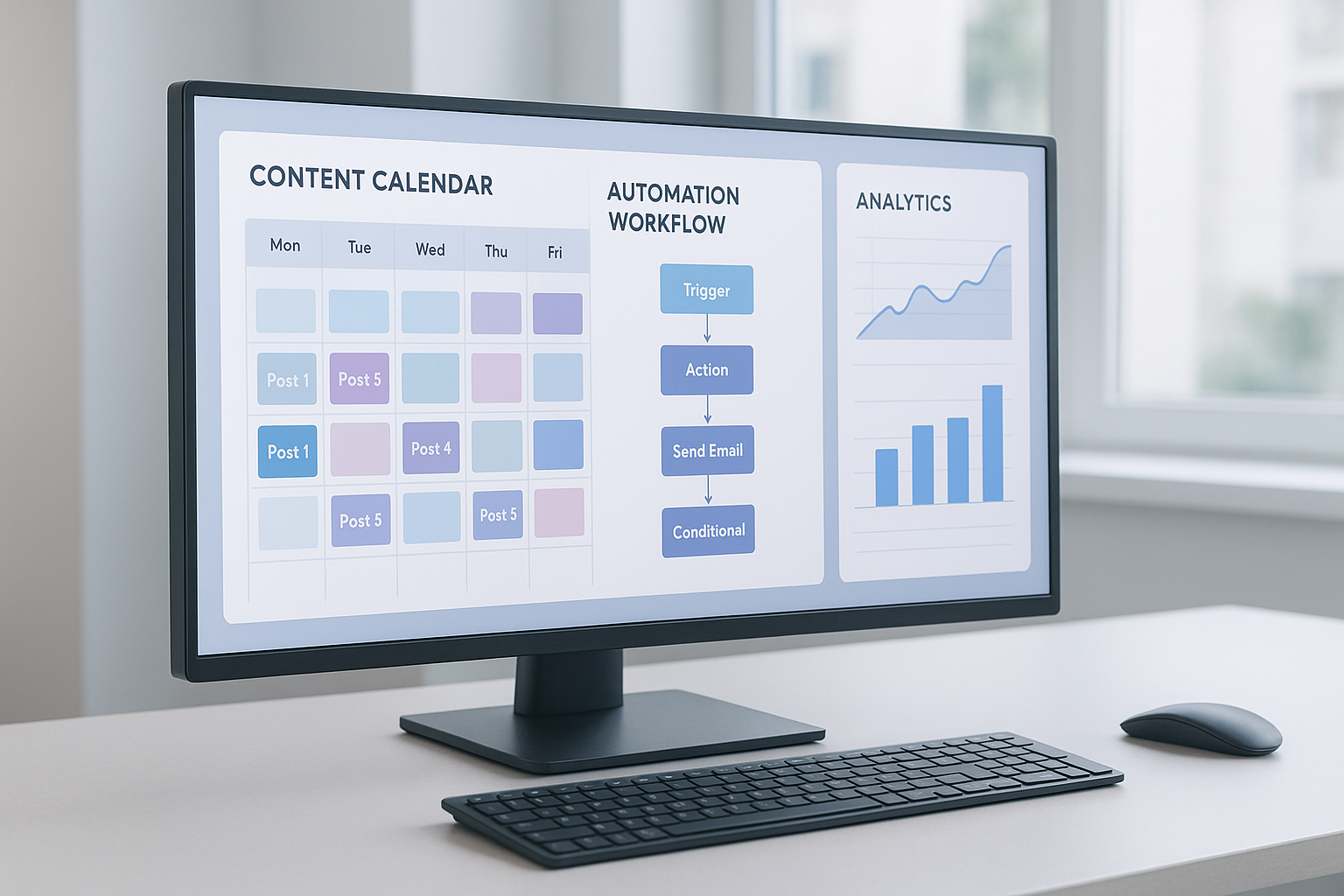
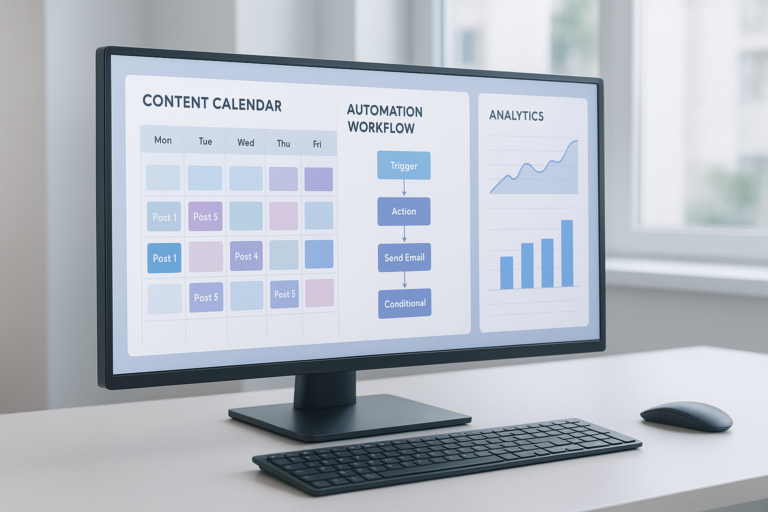
An automated content marketing dashboard centralizes scheduling, distribution, and performance tracking in one place.
Why Consistent Publishing Matters More Than Ever
Search engines reward websites that publish quality content on a regular cadence. Therefore, inconsistency in publishing is one of the most common reasons content strategies plateau. When life gets busy, manual content workflows are the first thing to slip.
Automation solves this by separating the act of creating content from the act of publishing it. Your team can batch-create content during productive periods and then let automation handle the release schedule over weeks or months.
Additionally, consistent publishing builds audience trust. Readers who know a brand publishes every Tuesday are more likely to return, subscribe, and convert. Automation makes that reliability effortless to maintain.
How to Build an Automated Content Marketing System
Building a reliable system does not require a large budget or a technical team. In practice, most businesses can get started with five focused steps.
Step 1 — Audit Your Current Content Workflow
First, map out every task your team performs manually, from keyword research and drafting to publishing and promoting. See AI-Driven Content Marketing for advanced workflows. This audit reveals which tasks are repetitive and low-judgment — those are your best automation candidates. For instance, sending a tweet every time a blog post publishes is a perfect automation trigger.
Step 2 — Choose the Right Automation Tools
Tool selection depends on your existing stack and goals; see our best SEO tools guide. HubSpot excels at CRM-integrated content publishing, while Buffer handles social scheduling elegantly. Zapier connects disparate tools so that one action in one platform automatically triggers another. Meanwhile, AI writing assistants help speed up the drafting phase without replacing your editorial voice.
For a deeper look at how these tools integrate into a broader SEO strategy, leverage AI for content provides practical guidance on building content systems that rank.
Step 3 — Build a Content Calendar and Scheduling Workflow
Next, create a content calendar inside your chosen platform and assign publishing rules. Set evergreen content to recycle automatically and time-sensitive content to expire after a set date. As a result, your content pipeline stays fresh without constant manual intervention.
Step 4 — Automate Content Distribution Across Channels
Once a piece of content is published, automation should immediately push it to every relevant channel. Configure rules to share new posts across email newsletters, social profiles, and community platforms. This distribution layer is where automation delivers its most visible time savings.
Step 5 — Monitor Performance and Refine Your Workflows
Finally, connect your automation tools to an analytics dashboard to leverage AI for content insights. Track organic traffic, email engagement, and social reach for every automated piece. Because data reveals what is working, you can continuously refine your workflows to prioritize the highest-performing content formats and channels.

Setting up distribution workflows ensures every new piece of content reaches all channels automatically.
Common Mistakes That Undermine Content Automation
Many teams rush into automation and encounter avoidable problems. Understanding these pitfalls in advance saves significant time and protects your brand reputation.
Over-automating customer interactions is one of the most damaging mistakes. Although chatbots and automated replies work well for FAQs, complex or emotional customer conversations require a human response. Automating these interactions too aggressively damages trust.
Publishing without editorial review is another critical error. AI-generated drafts often contain factual inaccuracies or tone mismatches. Therefore, every automated piece should pass through a human editor before it goes live, especially for high-stakes topics.
Ignoring performance data turns automation into a content treadmill rather than a growth engine. In contrast, teams that review their automated content metrics monthly consistently find opportunities to improve their return on investment.
Repurposing Content at Scale
One of the highest-leverage automation strategies is systematic content repurposing. A single long-form blog post contains enough material to generate a week of social content, an email sequence, and a short-form video script. However, most teams leave this value on the table because repurposing manually is time-consuming.
Automation tools can extract key quotes, generate summaries, and format content for different platforms automatically. For example, a Zapier workflow can trigger an AI tools for content marketing to create three tweet-length excerpts whenever a new blog post is published, then queue them in Buffer for the following week.
Additionally, repurposing extends the lifespan of evergreen content. Because search algorithms continue to surface well-optimized older posts, refreshing and redistributing them through automated workflows compounds their long-term value. Resources like RankAuthority can help you identify which existing content is worth repurposing first based on ranking potential.
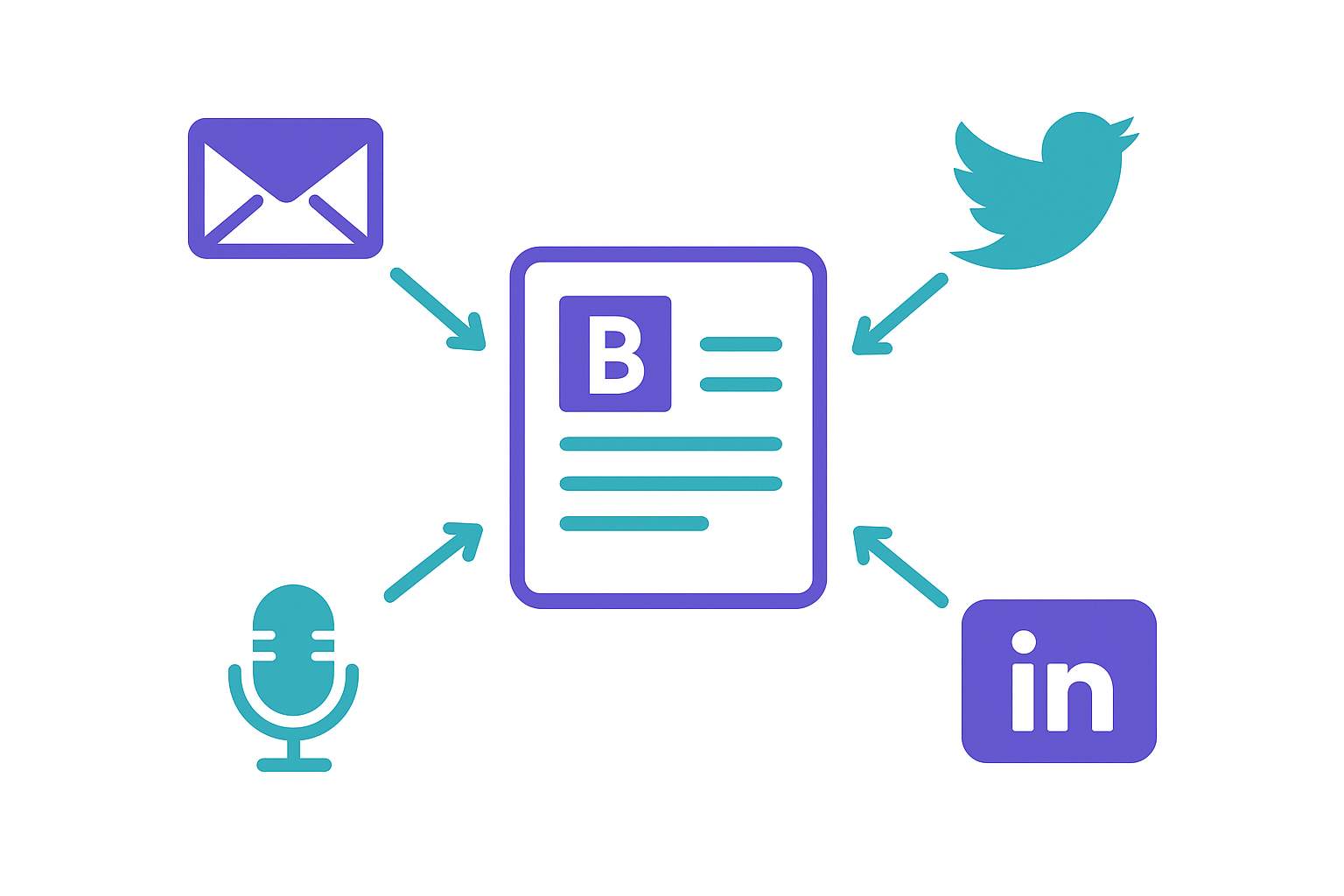
Content repurposing automation turns one piece of content into multiple channel-specific assets automatically.
Measuring ROI from Your Automation Stack
Measuring the return on investment from automation requires tracking both efficiency gains and content performance outcomes. On the efficiency side, calculate the hours saved per week by comparing your pre-automation workflow to your current one. Even a modest saving of five hours per week translates to over 200 hours annually.
On the performance side, monitor organic traffic growth, lead generation from content, and email list growth rate. Because automation enables higher publishing frequency, you should expect to see gradual improvements in all three metrics over a three-to-six-month period.
Meanwhile, track tool costs against those gains to ensure your automation stack remains cost-effective. Most teams find that the right combination of tools pays for itself within the first two months of consistent use.
Conclusion: Building a Smarter Content Engine
Automated content marketing is not about removing the human element from your strategy — it is about removing the friction that prevents your team from executing that strategy consistently. By automating scheduling, distribution, repurposing, and reporting, you free your best thinkers to focus on ideas, not logistics.
Start small, measure everything, and expand your automation gradually as confidence grows. As a result, you will build a content engine that compounds its results month after month — delivering more traffic, more leads, and more value from every piece of content you create. Author: RankAuthority editorial team. Last updated: 2026-07-30.
The teams that master automated content marketing in 2025 will not just save time — they will outpace competitors who are still executing every task by hand.
Frequently Asked Questions
What is automated content marketing?
Automated content marketing is the use of software, AI tools, and predefined workflows to plan, create, publish, and distribute content with minimal manual effort. It allows teams to maintain consistent output at scale while freeing time for strategic work.
How does content marketing automation save time?
Automation eliminates repetitive tasks such as scheduling posts, repurposing content across channels, sending email newsletters, and tracking performance. As a result, marketers can focus on strategy and creativity rather than manual execution.
What tools are commonly used for content automation?
Popular tools include HubSpot for CRM-integrated publishing, Buffer for social scheduling, Zapier for workflow automation, and AI writing assistants for content drafting. Each tool addresses a different stage of the content lifecycle.
Is content automation suitable for small businesses?
Yes, small businesses benefit significantly from automation because it lets a lean team compete with larger brands in content volume and consistency. Many tools offer affordable or free tiers specifically designed for smaller operations.
What are the biggest risks of automating content marketing?
The main risks include publishing low-quality or generic content, losing brand voice, and over-automating customer interactions that require a human touch. Regular audits and human editorial review help mitigate these risks effectively.
How do I get started with content automation?
Start by auditing your current content workflow, identifying repetitive tasks, and selecting one tool to automate a single process such as social scheduling. Gradually expand automation as your team gains confidence and measures results.
Can automation replace human content writers?
No, automation is best used to assist and accelerate human writers rather than replace them. AI tools can generate drafts and ideas, but human editors are still needed to ensure accuracy, tone, and strategic alignment.
How does content automation affect SEO performance?
When implemented correctly, automation supports SEO by enabling consistent publishing schedules, faster content updates, and systematic keyword targeting. However, publishing low-quality automated content can harm rankings, so editorial oversight is essential.
What is content repurposing automation?
Content repurposing automation converts existing content into new formats automatically — for example, turning a blog post into social media snippets, an email newsletter, or a short video script. This maximizes the value of every piece of content created.
How much does content marketing automation typically cost?
Costs range from free plans on tools like Buffer to enterprise pricing of thousands of dollars per month for platforms like HubSpot. Most growing businesses find a mid-tier plan in the $50 to $400 per month range sufficient for their needs.
What metrics should I track in a content automation strategy?
Key metrics include organic traffic, content publication frequency, email open rates, social engagement, and conversion rates from content. Tracking these consistently helps you identify which automated workflows deliver the best ROI.
What is the difference between marketing automation and content marketing automation?
Marketing automation broadly covers email campaigns, lead nurturing, and CRM workflows, while content marketing automation specifically focuses on creating, scheduling, distributing, and optimizing content assets. The two often overlap and work best when integrated together.

