

Answer engine optimization (AEO) is the process of structuring, writing, and marking up your content so that AI assistants, voice search platforms, and answer engines — including Google’s AI Overviews, ChatGPT, and Perplexity — select your page as the direct response to a user’s question, instead of just one more blue link on page one. In other words, answer engine optimization is what makes your content “quotable” by machines that summarize the web on a person’s behalf. As zero-click searches and conversational queries continue to rise, this discipline has moved from a niche experiment to a core requirement for anyone who wants their content to stay visible. By Rank Authority — Published: 2026-08-14. Author: Rank Authority team. See our Answer Engine Optimization guide for a full walkthrough.
Quick answer: Answer engine optimization combines question-focused research, direct-answer writing, structured data (schema markup), entity and brand-citation building, and strong E-E-A-T signals to help AI-driven search tools choose your content as the definitive response. It works across Google AI Overviews, voice assistants, and generative chat tools such as ChatGPT and Perplexity — and it succeeds even when the user never clicks through to your site.
What Is Answer Engine Optimization, Exactly?
At its core, answer engine optimization is about earning trust from a machine that has to pick one answer out of thousands of possible sources. Traditional search engines return a ranked list; answer engines synthesize, summarize, or read a single response aloud. Consequently, the winning content isn’t necessarily the page with the most backlinks — it’s the page that answers the question most clearly, most completely, and in a format the engine can extract without ambiguity.
Because of this, AEO sits at the intersection of content strategy, technical SEO, and information architecture. It borrows heavily from journalism’s “inverted pyramid” style, from structured data standards published at Schema.org, and from classic usability writing. Nothing about it replaces SEO — it extends SEO into a world where the “result” is often a synthesized paragraph rather than a link.
Answer Engine Optimization vs. Traditional SEO
Traditional SEO optimizes for rankings inside a list of ten blue links. AEO, on the other hand, optimizes for selection as the single featured answer, voice response, or AI-generated summary. The two disciplines overlap heavily — both depend on relevance, authority, and technical health — but AEO adds a sharper focus on question intent, extractable formatting, and machine-readable structure.
- SEO goal: rank in the top ten organic positions for a keyword.
- AEO goal: become the exact answer surfaced in a snippet, AI Overview, or spoken response.
- SEO metric: rankings and organic clicks.
- AEO metric: answer-box ownership, AI citations, and impression share on question-based queries.
Is AEO the Same Thing as Generative Engine Optimization (GEO)?
Not quite, and the distinction matters. Generative engine optimization (GEO) specifically targets chat-based tools like ChatGPT, Gemini, and Perplexity, which generate long-form conversational answers pulled from many sources at once. Answer engine optimization is the broader umbrella term — it includes GEO, but it also covers voice assistants, featured snippets, and structured “position zero” results inside classic search engines. In practice, most of the tactics below serve both goals simultaneously, so you rarely need to treat them as separate projects.
Why Answer Engine Optimization Matters Right Now
According to Wikipedia’s overview of voice search, spoken queries have grown steadily alongside smart speakers and mobile assistants, and each of those devices reads back exactly one answer. Meanwhile, Google’s AI Overviews synthesize responses from multiple sources and display them above every organic listing. As a result, ranking on page one is no longer sufficient on its own — you need to be the source the AI actually chooses to cite or read aloud.
This shift changes how content teams should think about their work. Instead of optimizing purely for keywords, teams must now optimize for questions, intent, and extractability. Every heading, paragraph, and list item should be capable of standing alone as a complete, correct answer — because that is precisely how an answer engine will use it.

Answer engine optimization focuses on earning the single answer position inside AI-powered and voice search results, not just a spot on page one.
How Answer Engines Actually Choose What to Show
Under the hood, most modern answer engines rely on a technique called retrieval-augmented generation (RAG), a plain-language term for “search first, then summarize.” The engine retrieves a small set of highly relevant passages from the web, then uses a language model to compose a fluent answer grounded in those passages. Because of this two-step process, your content needs to win twice: once during retrieval (matching intent and topical relevance) and once during summarization (being clear enough to quote accurately).
Specifically, this means walls of unstructured text hurt you twice over. Long, meandering paragraphs are harder to retrieve accurately and harder to summarize without distortion. In contrast, tightly scoped sections with a clear question-and-answer shape are easy for both the retrieval step and the generation step to handle correctly — which is exactly why formatting is treated as a ranking factor throughout this guide.
The Five Pillars of an Effective AEO Strategy
Building a durable answer engine optimization program requires attention to five interconnected pillars. Neglecting any single pillar weakens the others, so treat this as a system rather than a checklist you complete once.
1. Question-Focused Keyword and Intent Research
First, identify the exact questions your audience types or speaks aloud. Queries beginning with who, what, why, how, when, and which tend to carry the strongest answer intent. Tools such as Google Search Console, SEMrush, Ahrefs, and AnswerThePublic reveal these patterns at scale, and reviewing your own site’s search query reports often surfaces low-hanging opportunities you already rank for but haven’t yet structured as direct answers. Learn more about Answer Engine Optimization benefits to prioritize questions that convert.
Additionally, pay close attention to long-tail conversational phrasing. For example, “what is the fastest way to improve website authority” is far more actionable for AEO than the broad term “website authority,” because it maps to exactly one likely answer instead of dozens of possible interpretations.
2. Direct-Answer Content Structure
Answer engines extract content algorithmically, so structure matters enormously. Place the direct answer in the very first sentence of each relevant section, then follow it immediately with supporting context, data, or an example. This mirrors the inverted pyramid style long used in journalism, where the most important information always comes first.
In practice, a section answering “how long does AEO take” should open with a specific timeframe, then explain the variables that affect it. It should never bury the answer in the third paragraph after lengthy scene-setting, because most answer engines simply won’t scroll that far to find it.
3. Schema Markup and Structured Data
Structured data communicates your content’s intent directly to crawlers, without relying on inference. The most impactful schema types for answer engine optimization are FAQPage, HowTo, and Speakable. When implemented correctly via JSON-LD — the format detailed in Google’s own structured data documentation — these markup types tell search engines precisely where answers live on a page, which measurably increases selection rates for featured snippets and AI Overviews. See our AI Search Engine Optimization guide for a broader implementation roadmap.
For a deeper walkthrough of implementation, our structured data implementation guide covers field-by-field examples for each schema type. Because validation errors are common, always test new markup with Google’s Rich Results Test before publishing, and again after any template change.
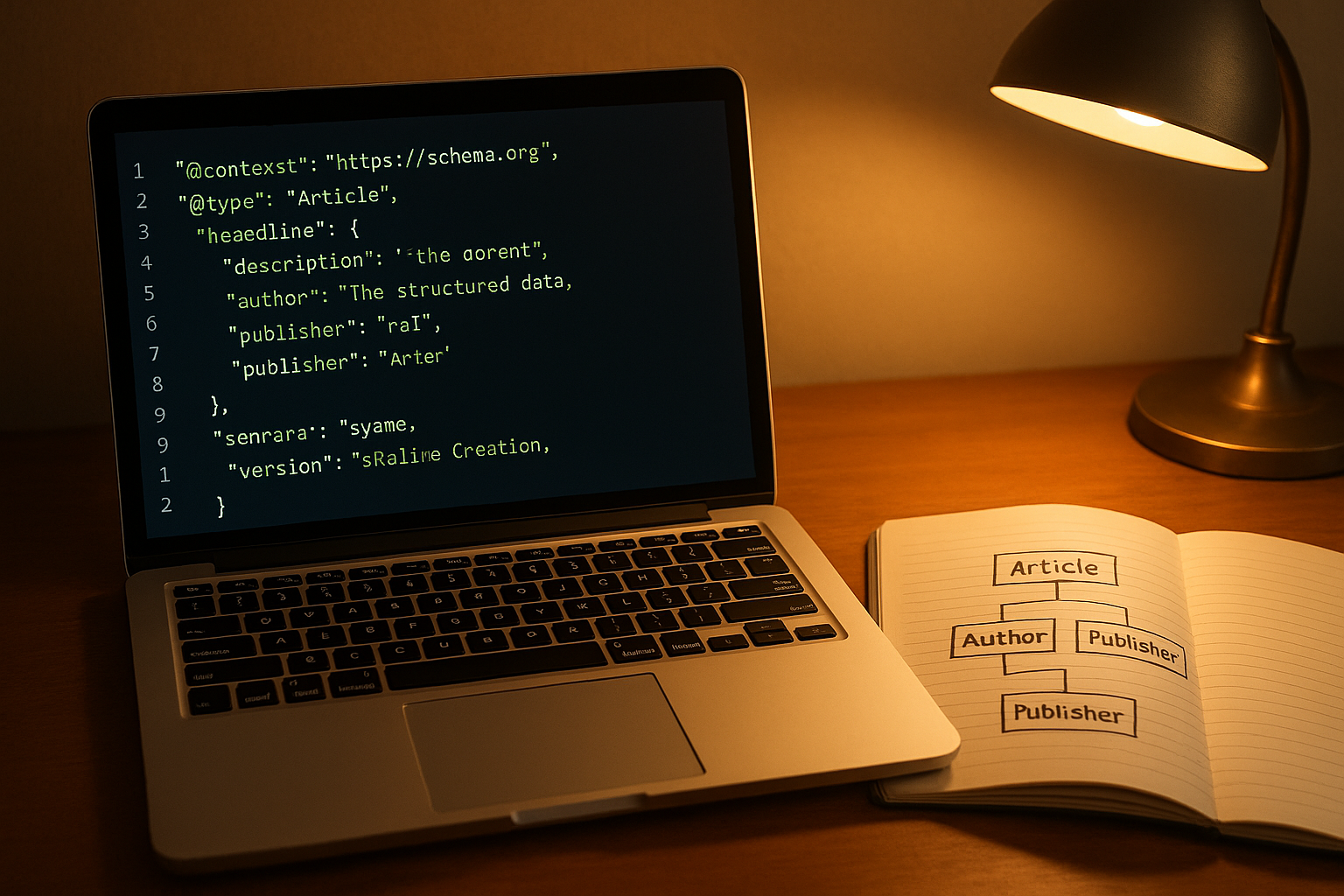
Implementing FAQPage and HowTo schema markup is one of the most direct technical levers inside any answer engine optimization strategy.
4. E-E-A-T Authority Signals
Google’s E-E-A-T framework — Experience, Expertise, Authoritativeness, and Trustworthiness — directly shapes which sources answer engines trust enough to cite. As a result, building genuine authority through quality backlinks, visible author credentials, and factually accurate content is non-negotiable for sustained AEO performance, not an optional add-on.
Furthermore, keeping content current is essential. An answer that was accurate in 2023 may already be outdated, and answer engines increasingly favor recently verified information over stale pages. Therefore, schedule quarterly content audits — guided by a structured content audit checklist — to refresh statistics, update examples, and reconfirm accuracy.
5. Entity Clarity and Brand-Citation Building
Generative tools like ChatGPT and Perplexity don’t just retrieve pages in real time — many also lean on patterns learned during training, including how often and how consistently your brand is mentioned across the web. Consequently, being cited by industry publications, appearing in comparison round-ups, and maintaining a consistent brand description everywhere it appears all strengthen your odds of being named as a trusted source, even outside of live search results.
In addition, clear “entity” signals — a consistent business name, a well-maintained About page, and organization schema — help engines connect scattered mentions of your brand into a single, trustworthy identity. Without this clarity, even good content can get attributed to the wrong entity or ignored entirely.
How AEO Differs Across Platforms
Not every answer engine works the same way, so a one-size-fits-all approach will always underperform. Understanding each platform’s mechanics lets you prioritize the tactics that matter most for your audience.
- Google AI Overviews and featured snippets: favor pages already ranking in the top five positions, with a direct answer in the opening sentence and clean HTML structure.
- ChatGPT and Perplexity: weigh brand consistency, third-party citations, and how frequently a source is referenced across the wider web, in addition to real-time retrieval.
- Voice assistants and smart speakers: read back exactly one answer, so conversational phrasing and concise sentence length matter more than for text-based results.
- Vertical answer engines (shopping, local, and knowledge-panel results): rely heavily on structured data completeness, such as product, review, and local business schema.
How to Implement Answer Engine Optimization: A Step-by-Step Framework
Executing AEO effectively follows a repeatable process. Although every website differs, the following seven steps apply broadly across industries and content types.
- Audit existing content for answer gaps. Review your top-performing pages and identify which questions each one answers, and which it misses entirely, so you can prioritize pages that already rank but do not yet hold a featured snippet.
- Map each page to a primary question. Assign one clear, specific question to every important section so writers know exactly what they need to answer before drafting a single word.
- Rewrite section openings as direct answers. For each target question, rewrite the opening sentence of the relevant section so it delivers the answer immediately, then support it with two to four sentences of elaboration and evidence. For a content-first approach see SEO Content Optimization for AI Answers to align copy with extraction-friendly formats.
- Add a dedicated FAQ section to key pages. Ten or more genuine question-and-answer pairs signal strong answer intent and create multiple independent opportunities for featured snippet or AI citation selection.
- Implement and validate schema markup. Deploy FAQPage and HowTo JSON-LD on relevant pages, then validate each implementation both before and after publishing using an official testing tool.
- Strengthen entity and citation signals. Pursue mentions in industry publications, keep your brand description consistent across profiles, and add organization schema so engines can connect every mention to one trusted identity.
- Monitor results and iterate weekly. Track featured snippet wins and losses in Google Search Console, update any content that loses its position, and analyze what competing content replaced it before revising your own page.
Measuring Answer Engine Optimization Performance Over Time
Unlike traditional SEO metrics, measuring answer engine optimization requires a slightly different framework. Because featured snippets and AI Overviews often generate impressions without clicks, click-through rate alone will never tell the full story.
Instead, track the following alongside standard organic traffic data: featured snippet ownership rate, total impressions for question-based queries, average position for conversational keywords, and brand mention volume inside AI-generated responses. Together, these indicators reveal whether your AEO investment is translating into genuine search visibility, even when clicks stay flat.
Similarly, our SEO strategy guide outlines a broader measurement framework that pairs click-based and impression-based visibility, which is especially useful once AEO and traditional SEO reporting start to overlap on the same dashboard.

Tracking impressions, snippet ownership, and conversational keyword rankings reveals the true impact of an answer engine optimization program.
Common Mistakes That Undermine AEO Results
Even well-intentioned teams make avoidable errors when first adopting answer engine optimization. Understanding these pitfalls in advance helps you sidestep them before they cost you rankings.
Burying the answer. Many writers build toward a conclusion, saving the key answer for the final paragraph. However, answer engines read content top-down and extract the earliest clear response they find, so leading with the answer is always the safer choice.
Ignoring conversational phrasing. Content written purely for keyword matching often sounds stilted when read aloud by a voice assistant. In contrast, AEO content should mirror how a knowledgeable person would naturally answer a spoken question.
Skipping schema validation. Broken or invalid structured data provides no benefit at all, and it can occasionally trigger manual review flags. Always validate before and after any schema change, not just once at launch.
Neglecting content freshness. Answer engines favor current, verified information. Consequently, stale content — even when well-structured — steadily loses its competitive edge as fresher sources take its place.
Treating AEO as a one-time project. Finally, AI models retrain, algorithms update, and competitors publish new content constantly. Above all, ongoing monitoring — not a single rewrite — is what keeps an answer position secure.
Best Tools for Answer Engine Optimization
A handful of tools cover most AEO workflows well. Google Search Console and Ahrefs surface question-based queries and snippet opportunities directly from real performance data, while SEMrush and AnswerThePublic help map broader question patterns during research. For technical validation, Google’s Rich Results Test confirms that FAQPage, HowTo, and Speakable markup renders correctly before it goes live.
Beyond search-specific tools, it’s worth periodically prompting ChatGPT and Perplexity directly with questions relevant to your industry to see whether — and how — your brand gets cited. This manual spot-check remains one of the fastest ways to catch AEO gaps that traditional analytics simply can’t show you.
Conclusion: Building a Future-Proof AEO Foundation
Answer engine optimization represents the next evolution of search visibility — one where being found means being chosen as the answer, not merely listed among results. By combining question-focused research, direct-answer structure, schema markup, entity clarity, and strong E-E-A-T signals, any brand can compete effectively in an AI-powered search landscape, regardless of size or existing domain authority.
The brands that invest in answer engine optimization today will hold a significant advantage as AI search tools become the default way people find information. Therefore, start with a content audit, implement structured data on your highest-traffic pages, strengthen your brand’s citation footprint, and build a measurement framework that captures both click- and impression-based visibility. The results compound over time, and the cost of waiting only grows. Add a clear author byline (name, role, brief credentials) and a "Last updated: YYYY-MM-DD" note on this page to strengthen E-E-A-T signals.
Frequently Asked Questions About Answer Engine Optimization
What is answer engine optimization?
Answer engine optimization is the practice of structuring content, adding schema markup, and building authority so that AI assistants, voice search tools, and featured snippet systems choose your page as the direct response to a user’s question. It focuses on structured clarity and concise answers rather than keyword ranking alone.
How is AEO different from traditional SEO?
Traditional SEO focuses on ranking a page within a list of results, while AEO focuses on becoming the single answer read aloud or displayed at position zero. Both disciplines complement each other, and the strongest content strategies incorporate both simultaneously.
Is answer engine optimization the same as generative engine optimization (GEO)?
Not exactly. GEO focuses specifically on chat-based tools like ChatGPT and Perplexity, while AEO is the broader term covering voice assistants, featured snippets, and AI Overviews as well. Most AEO tactics, however, benefit GEO performance at the same time.
Why is answer engine optimization important in 2025?
AI-powered search tools like Google’s AI Overviews and voice assistants now answer queries without requiring a click. Brands that implement AEO capture visibility even in zero-click environments, which has shifted AEO from a competitive advantage to a baseline necessity.
What types of content work best for AEO?
FAQ pages, how-to guides, definition paragraphs, and concise numbered lists perform best. Content that answers a specific question within the first one to three sentences is most likely to be selected, and conversational phrasing performs especially well in voice search contexts.
Does schema markup help with answer engine optimization?
Yes. Structured data types like FAQPage, HowTo, and Speakable signal exactly where answers are located on a page, increasing the likelihood of selection for featured snippets and AI responses. Always validate schema with Google’s Rich Results Test after implementation.
How long does it take to see results from AEO strategies?
Featured snippet results can appear within two to eight weeks, depending on domain authority and content quality. Voice and AI search placements may take slightly longer, since engines need time to recrawl and re-index updated pages.
What is a featured snippet, and how does AEO help win one?
A featured snippet is a highlighted answer block shown above all other organic results. AEO helps win one by structuring content with a direct answer in the opening sentence, supported by concise elaboration, on pages that already rank in positions one through five.
Can small businesses benefit from answer engine optimization?
Absolutely. Answer engines prioritize content clarity and relevance over domain size, so a well-structured FAQ page from a small business can outperform a much larger site for specific questions. AEO levels the playing field in ways traditional link-based SEO often does not.
How does voice search relate to answer engine optimization?
Voice search is one of the primary delivery channels for answer engines. When a user asks a smart speaker a question, the device reads back exactly one answer, making AEO the direct path to voice search visibility, especially since spoken queries tend to be longer and more conversational.
Is E-E-A-T important for answer engine optimization?
Yes. Answer engines prefer content from sources that demonstrate genuine authority and are consistently cited by reputable domains. Building Experience, Expertise, Authoritativeness, and Trustworthiness signals is a long-term investment that compounds AEO results over time.
Do brand mentions and citations affect AI-generated answers?
Yes, particularly for chat-based tools. Generative engines like ChatGPT and Perplexity often weigh how consistently and how often a brand is mentioned across third-party sites, so earning genuine coverage and maintaining a consistent brand description strengthens your citation odds.
What common mistakes should I avoid with AEO?
Common mistakes include burying the direct answer deep in a paragraph, writing vague responses, skipping schema validation, and ignoring conversational phrasing. Failing to update content regularly also reduces its chances of being selected as a trusted answer over time.
What tools can help implement answer engine optimization?
Google Search Console, SEMrush, and Ahrefs help identify featured snippet opportunities and track question-based keyword performance. Schema validators like Google’s Rich Results Test confirm structured data is implemented correctly, while manual prompts to ChatGPT or Perplexity reveal how AI tools currently cite your brand.

