

The AISEO humanizer is a purpose-built AI writing feature that rewrites AI-generated text so it reads like it was written by a real person — not a machine. Instead of just swapping a few words, it restructures sentences, varies rhythm, and adjusts tone so the final copy sounds natural, passes AI detectors, and actually connects with readers.
According to industry research on content marketing, the overwhelming majority of marketers now weave AI tools into their content workflow. However, generating AI text is the easy part. Making that text feel authentic, warm, and human is the real challenge — and that is precisely the gap the AISEO humanizer was built to close.
In this guide, you will learn exactly what the AISEO humanizer does, how it works under the hood, how to use it step by step, how it compares against other AI rewriting tools, and how humanizing AI content actually affects SEO performance. We will also cover pricing, ethical considerations, and the mistakes most people make — none of which you should skip if you want results that hold up under scrutiny. Last updated: 2026-07-30. Add an author byline and short bio with credentials near the top for stronger E‑E‑A‑T signals.
What Is the AISEO Humanizer?
The AISEO humanizer is a dedicated module inside the broader AISEO platform. Specifically, it takes robotic, formulaic AI output — the kind produced by tools like ChatGPT or Gemini — and rewrites it at a structural level. It does not simply substitute synonyms the way older paraphrasing tools do. Learn more about the AISEO platform and core features.
Instead, it uses advanced natural language processing (NLP) — the branch of artificial intelligence that helps computers understand, interpret, and generate human language — to rebuild sentences from the ground up. As a result, the output reads with the natural variation, imperfection, and rhythm that real human writing has.
Furthermore, the tool supports multiple tone presets, so the same underlying draft can be reshaped for a formal white paper, a persuasive sales page, or a casual blog post. In short, it is not a single trick — it is a full rewriting engine designed specifically for the AI content era.
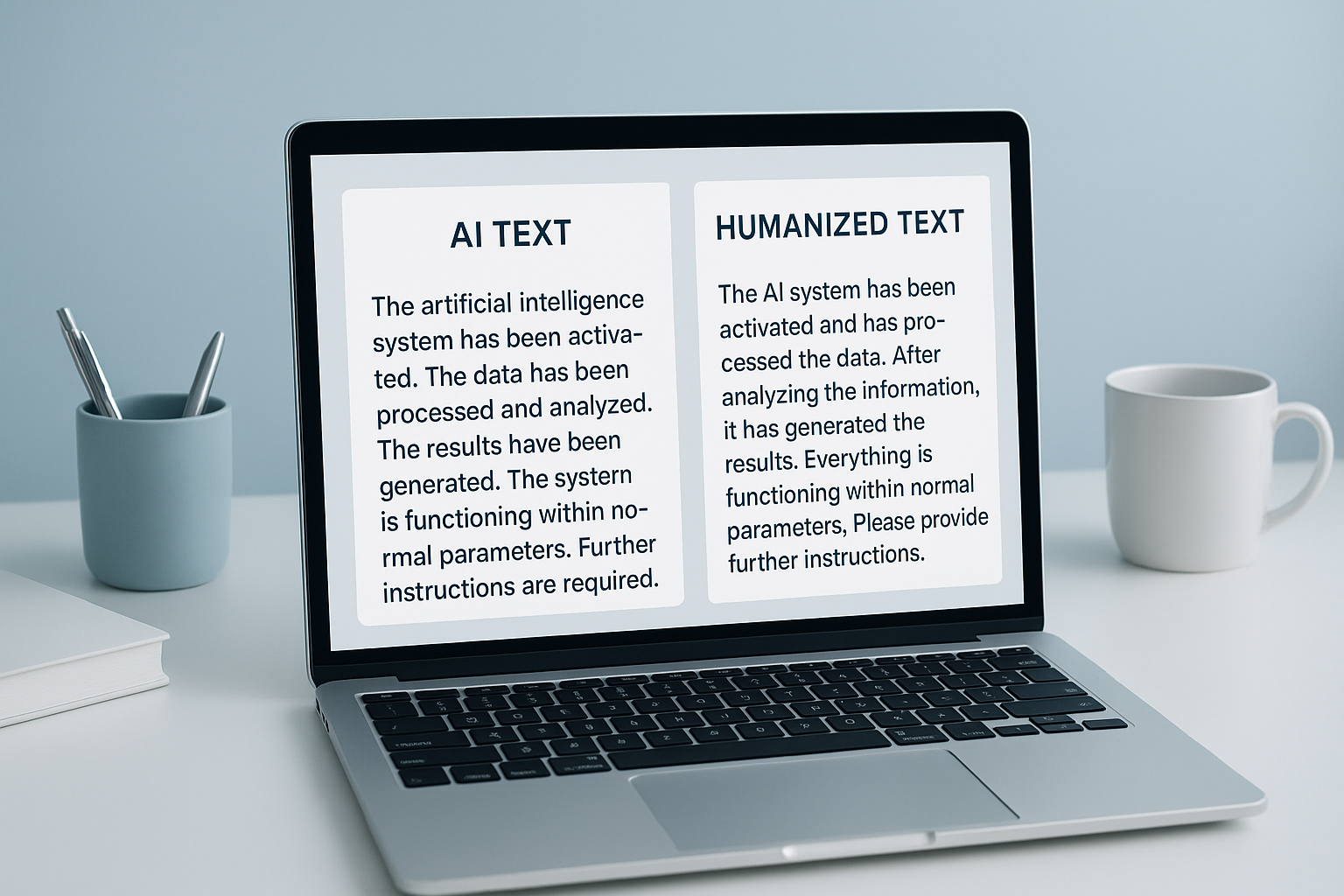
The AISEO humanizer converts stiff AI-generated drafts into polished, natural-sounding content in seconds.
How the AI Text Humanizer Actually Works
To understand why this matters, it helps to know how AI detectors work in the first place. Detection tools measure two key signals: perplexity (how predictable the word choices are) and burstiness (how much sentence length and structure vary throughout a passage). AI-generated text tends to score low on both — every sentence is roughly the same length, and word choices are statistically predictable.
Consequently, the AISEO humanizer deliberately increases burstiness by mixing short and long sentences, splitting compound clauses, and reordering ideas. In particular, it also lowers predictability by choosing less common — but still natural — phrasing wherever it strengthens the writing without confusing the reader.
Why AI Text Needs Humanizing in the First Place
AI writing tools produce content quickly, but that speed comes at a cost. Specifically, raw AI output often has telltale patterns — repetitive sentence openers, overused transition phrases, and an absence of personal voice. These patterns make it easy for AI detectors to flag the content immediately.
Beyond detection, there is a deeper, more human problem. Readers can sense when writing lacks warmth, even if they cannot name the reason. They may not know the copy is AI-generated, but something feels off, and as a result, engagement drops and trust quietly erodes.
Therefore, humanizing AI content with a tool like the AISEO humanizer is not just about dodging a detection score. It is about producing writing that genuinely serves the person reading it. Content quality and authenticity, as outlined in Rank Authority’s content strategy resources, directly influence both SEO performance and reader trust over time.
How to Use the AISEO Humanizer: A Complete Step-by-Step Walkthrough
Using the tool itself is simple. However, getting consistently strong results requires a bit more discipline. Follow these six steps to get the most out of the AISEO humanizer every time. See our What is AISEO overview for additional background on the platform.
- Generate your first draft with AI. Use ChatGPT, Gemini, or a similar model to produce a factually accurate first draft. Keep the structure loose since it will be reshaped later.
- Clean the text before pasting it in. Remove stray formatting, bullet artifacts, or markdown symbols so the AISEO humanizer receives clean input to work with.
- Paste your draft into the AISEO humanizer interface. Open the tool, drop your text into the input field, and confirm the word count fits within your current plan’s limit.
- Select a tone and creativity level. Choose formal, conversational, or creative tone settings, and adjust the creativity slider based on how much rewriting the passage actually needs.
- Click Humanize and read the output carefully. Wait a few seconds for processing, then review the rewritten passage for factual accuracy, tone consistency, and natural flow before moving forward.
- Run an AI detection check before publishing. Paste the humanized text into a detection tool to confirm the AI score has dropped to an acceptable level for your use case.
Specifically, breaking longer documents into smaller sections before humanizing tends to produce cleaner, more consistent results. As a general rule, process 300 to 500 words at a time rather than dumping an entire 3,000-word article in at once.
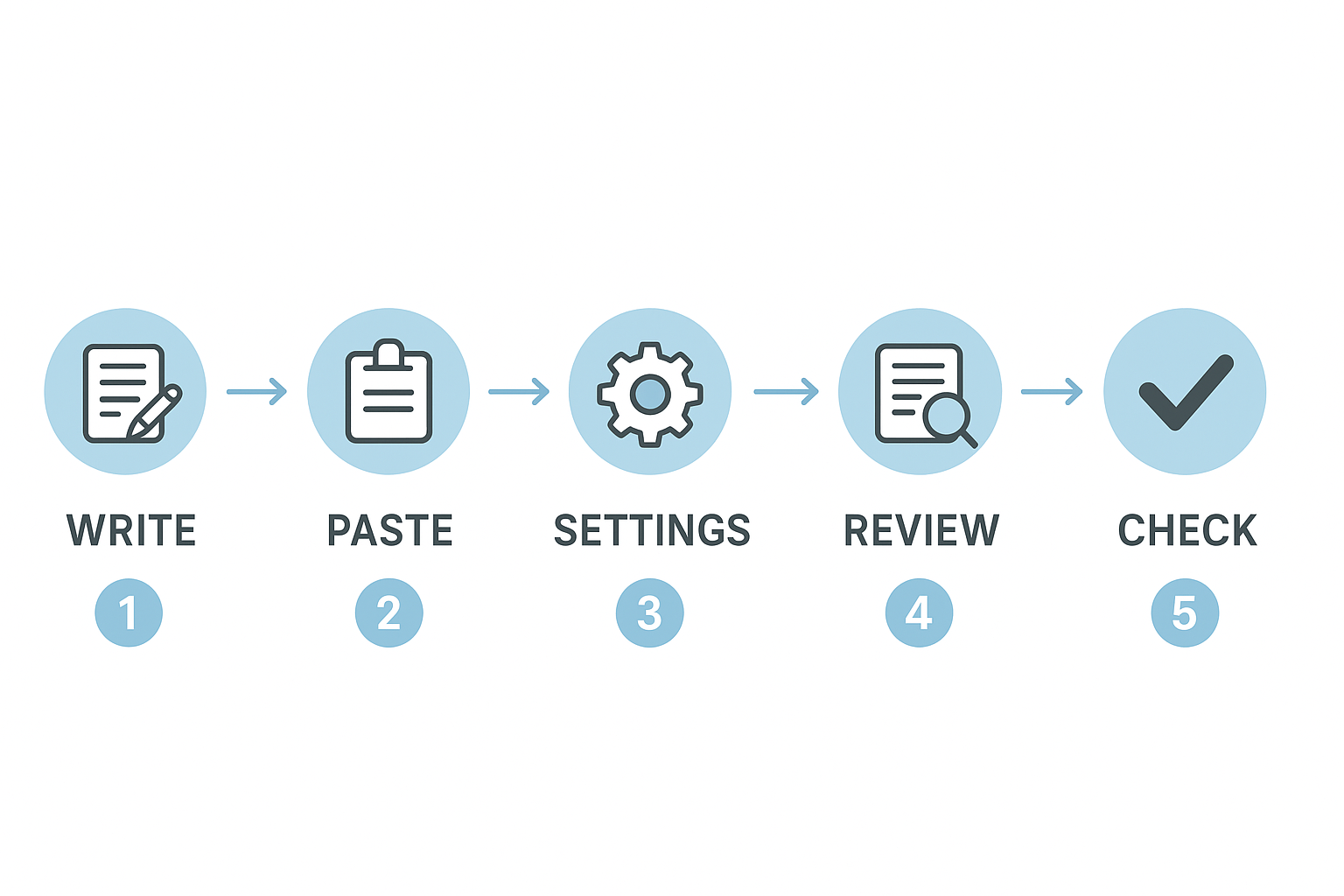
Following a clear six-step process ensures you get the most natural and accurate results from any AI humanizer tool.
Key Features That Set the AISEO Humanizer Apart
Several features separate the AISEO humanizer from basic paraphrasing tools. First, it offers a dedicated bypass mode — a setting engineered specifically to reduce AI detection scores on platforms like Turnitin and GPTZero.
Additionally, AISEO provides a built-in readability score for your humanized output. This gives you an immediate signal of how easy the text is to read before you hit publish. In contrast, most standalone paraphrasers offer no readability feedback at all.
Moreover, the platform layers in an SEO mode that optimizes humanized content for search engines at the same time it rewrites it. Therefore, you are not just making content sound human — you are simultaneously making it easier to rank. For strategy and optimization details, consult the AISEO AI guide.
Tone Control and Creativity Settings
One of the most practical features is tone control. You can switch between professional, casual, persuasive, and creative tones, which means the same base draft can be adapted for a corporate report or a friendly blog post without starting over.
Furthermore, AISEO lets you set a creativity level, which controls how aggressively the engine rewrites your original text. A lower setting preserves more of the source structure, while a higher setting produces more varied, heavily restructured output.
Bypass Mode Explained
Bypass mode deserves a closer look because it is often misunderstood. Rather than hiding AI origin through tricks or invisible characters, it works by genuinely rewriting sentence architecture so the statistical fingerprints detectors rely on are no longer present. In other words, it earns a lower detection score by actually becoming more human-like, not by gaming the system.
AISEO Humanizer Pricing and Plans
Pricing is one of the most common questions people have before committing to any AI content humanizer tool, yet it is frequently glossed over. For an overview of how AISEO works and plan differences, see What is AISEO. AISEO structures its humanizer access in tiers within its broader all-in-one content suite.
- Free tier: A limited monthly word allowance, ideal for testing the tool before committing to a paid plan.
- Pro tier: A significantly larger monthly word limit, full access to tone presets, bypass mode, and the readability score.
- Team tier: Multi-seat access, higher word ceilings, and collaboration features suited to agencies and in-house content teams.
Above all, check the official AISEO pricing page for current numbers, since AI tool pricing tends to shift as new features are added. Even so, the tiered structure makes it easy to start free and scale up only once the humanizer proves its value for your workflow.
Does Humanizing AI Content Actually Help SEO?
This is a common question, and the honest answer is nuanced. Google’s ranking systems reward content that demonstrates Experience, Expertise, Authoritativeness, and Trustworthiness (E-E-A-T) — a framework detailed in Google’s own guidance on helpful content. Robotic AI text frequently fails on the experience and authenticity dimensions of that framework.
However, humanized content tends to improve engagement metrics. When readers spend more time on a page and interact with it, search engines interpret that behavior as a positive signal. As a result, dwell time improves and bounce rate declines — both of which act as indirect ranking factors.
Notably, Google has stated publicly that it does not penalize content simply for being AI-assisted; it penalizes content that is low-quality, regardless of how it was produced. Therefore, the real SEO value of the AISEO humanizer is that it removes the low-quality signals — stiffness, repetition, lack of voice — that would otherwise hold AI-assisted content back. For a deeper dive into aligning content quality with search performance, Rank Authority’s guidance is worth reviewing, and you can also explore our own SEO content playbooks for practical next steps.
AISEO Humanizer vs. Other AI Rewriting Tools
Many tools claim to humanize AI content, but they differ significantly in depth and effectiveness. Basic paraphrasers — for example, QuillBot’s synonym-swap mode — often produce text that still triggers detectors because they do not fundamentally alter sentence structure.
- Synonym-swap paraphrasers: Fast but shallow. They change words, not sentence architecture, so detection rates stay high.
- Single-purpose humanizer tools: Often effective at lowering detection scores but lack tone control, readability scoring, or SEO features.
- The AISEO humanizer: Rewrites at a structural level, adds tone flexibility, and bundles SEO optimization into the same workflow.
In contrast to shallow alternatives, the AISEO humanizer changes sentence order, splits compound sentences, adds natural connective phrases, and varies paragraph rhythm. Consequently, the output feels genuinely written by a person rather than merely re-shuffled.
Similarly, AISEO’s built-in SEO optimization layer gives it an edge over standalone humanizers that only address detection risk. You get human-sounding text and search-friendly structure in a single pass, which saves a full editing round.
Best Use Cases for an AI Content Humanizer Tool
Not every project needs humanized text, but many do. For example, long-form blog content, email newsletters, and product descriptions all benefit heavily since readers expect a warm, conversational voice in those formats.
Similarly, agencies producing high volumes of client content use the AISEO humanizer to maintain a consistent brand voice across dozens of articles without hiring a full editorial team. In particular, e-commerce brands rely on it to make bulk product copy sound less templated.
On the other hand, highly technical or legal documentation may need lighter humanization, since preserving exact terminology matters more than tone variation in those contexts. Explore our content strategy hub for use-case-specific templates.
Common Mistakes to Avoid When Humanizing AI Text
Even with a powerful tool, mistakes happen. Specifically, many users repeat these errors when using an AI text humanizer.
- Skipping the review step. Always read the output carefully. The tool is excellent, but it is not infallible.
- Humanizing too much text at once. Large blocks produce less consistent results, so work in smaller 300 to 500 word chunks.
- Ignoring tone settings. Using the wrong tone for your audience undermines the entire effort, no matter how natural the sentences read.
- Not checking facts after rewriting. Occasionally, the rewriting process can subtly alter specific claims, numbers, or data points.
- Publishing without a final detection pass. Always verify the AI score has actually dropped before you hit publish.

Always review humanized content manually to catch any factual shifts or tone inconsistencies before publishing.
Ethical and Practical Considerations
Above all, remember that the goal of humanizing AI text is not to deceive anyone. In academic settings, always check your institution’s policy on AI use before submitting humanized drafts, since integrity rules vary widely and a lower detection score does not erase a disclosure requirement.
In professional contexts, disclosure practices differ by industry, but transparency about AI-assisted workflows tends to build more trust than it costs. Meanwhile, when handling sensitive or confidential material, review the privacy policy of any tool — including AISEO — before pasting proprietary business data into an online interface, as recommended by general natural language processing data-handling best practices.
Frequently Asked Questions About the AISEO Humanizer
What is the AISEO humanizer?
The AISEO humanizer is an AI-powered rewriting tool that transforms AI-generated text into natural, human-sounding writing by adjusting sentence structure, tone, and vocabulary so it reads authentically and resists AI detection.
Does the AISEO humanizer bypass AI detection tools?
Yes. Its bypass mode rewrites content at a deep structural level, which lowers detection scores on tools such as Turnitin and GPTZero by reducing predictable patterns.
Is the AISEO humanizer free to use?
AISEO offers a limited free tier for testing the tool, while paid Pro and Team plans unlock higher word limits and advanced features like bypass mode and readability scoring.
How accurate is the AISEO humanizer at preserving meaning?
It generally preserves core meaning well, but you should always review the output, since nuanced or technical phrasing can occasionally shift slightly during rewriting.
What types of content work best with an AI text humanizer?
Blog posts, marketing copy, email newsletters, and long-form articles work especially well, since they benefit most from a natural, conversational tone.
How does the AISEO humanizer differ from a standard paraphrasing tool?
Unlike paraphrasers that mainly swap synonyms, it restructures sentences, adjusts tone, and mimics natural human writing patterns for more fluent, contextually appropriate results.
Can I use the AISEO humanizer for academic writing?
You can use it to polish AI-assisted drafts, but you must verify your institution’s AI policy first, since academic integrity rules apply regardless of the tool’s output quality.
How long does it take to humanize content?
Most passages process within seconds. Longer documents may take a minute or two depending on word count and server load.
Does humanizing AI content improve SEO rankings?
Humanized content tends to read more naturally, which can improve dwell time and reduce bounce rate. These engagement signals can indirectly support better SEO performance over time.
What languages does the AISEO humanizer support?
AISEO primarily supports English today, though the platform continues expanding its language capabilities, so check the official site for current coverage.
Is it safe to humanize sensitive or confidential content with AISEO?
Exercise caution with any online tool. Review AISEO’s privacy policy carefully before submitting confidential business or personal data for processing.
What is the best way to get the most out of the AISEO humanizer?
Break content into smaller sections, choose the right tone setting for your audience, and always run a manual review plus a final detection check before publishing.
Conclusion: Is the AISEO Humanizer Worth Using?
The AISEO humanizer is one of the most effective tools available for transforming AI-generated content into writing that feels genuinely human. It goes beyond surface-level synonym swapping to restructure, rebalance, and refresh your text at a deeper level, all while offering tone control, a readability score, and built-in SEO optimization that most standalone humanizers simply do not provide.
In summary, humanizing AI content improves reader engagement, reduces detection risk, and supports stronger SEO outcomes over time. However, always pair the tool with a careful manual review, a fact check, and a final detection pass to ensure accuracy and tone consistency before you publish. For broader search strategy context, see Answer Engine Optimization.
Above all, remember that the goal is not just to trick a detector — it is to create content your audience genuinely wants to read. Used thoughtfully, the AISEO humanizer helps you achieve exactly that, and you can browse more AI writing guides on our blog to keep refining your workflow.

