

GEO, short for Generative Engine Optimization, is the practice of structuring and writing content so that AI-powered search engines choose to cite or surface it in their generated answers. As tools like ChatGPT, Perplexity AI, and Google AI Overviews reshape how people find information, GEO has become one of the most important skills for digital marketers and content creators in 2025.
In short: if your content does not appear in AI-generated answers, you are effectively invisible to a growing share of searchers. Fortunately, GEO is learnable, actionable, and highly rewarding when applied correctly.
What Is GEO and Why Does It Matter?
GEO is the next evolution of search optimization. Traditional SEO — Search Engine Optimization — focuses on ranking among a list of blue links on a results page. Generative Engine Optimization, however, targets a different outcome: getting your content quoted, paraphrased, or cited directly inside an AI-generated response.
This distinction matters enormously. According to a 2024 Princeton and Georgia Tech study, generative engines significantly favor content that is authoritative, well-cited, and structured to answer questions directly. Furthermore, research suggests that AI search tools now handle over one billion queries per day globally — a number growing rapidly.
Therefore, brands that invest in GEO now are positioning themselves ahead of competitors who are still focused exclusively on traditional ranking signals.

GEO bridges the gap between traditional content strategy and AI-powered search visibility.
How AI Search Engines Decide What to Cite
Understanding GEO starts with understanding how large language models (LLMs) — the AI systems powering these search tools — select sources. LLMs are trained on vast datasets and fine-tuned to prefer content that demonstrates clear expertise, factual accuracy, and logical structure.
Specifically, AI engines tend to favor content that:
- Answers the question directly within the first few sentences
- Uses clear, descriptive headings that mirror natural language questions
- Includes statistics, data points, and links to authoritative sources
- Demonstrates topical depth through comprehensive, interlinked content
- Carries strong E-E-A-T signals — Experience, Expertise, Authoritativeness, and Trustworthiness
In contrast, content that buries its main point, lacks citations, or reads as purely promotional is consistently deprioritized by AI citation algorithms.
The Role of E-E-A-T in Generative Search
Google’s E-E-A-T framework — which stands for Experience, Expertise, Authoritativeness, and Trustworthiness — was originally designed for human quality raters. However, it has become equally relevant to AI engines. These systems are trained to recognize signals of credibility, such as author credentials, backlinks from trusted domains, and consistent factual accuracy.
As a result, building E-E-A-T is not just an SEO exercise — it is a core component of any effective GEO strategy.
Step-by-Step: How to Optimize Content for GEO
Below is a practical, actionable process for applying GEO principles to your existing and future content.
- Identify high-intent questions your audience asks AI engines. Research the specific questions your target audience types into tools like Perplexity and ChatGPT. Map each question to a dedicated content section or page.
- Write a direct answer in the first 100 words. Place a clear, concise answer to the main question within your opening paragraph. AI engines extract answers quickly, so do not make them search for it.
- Structure content with descriptive headings and schema markup. Use H2 and H3 headings that mirror natural question phrasing. Add FAQPage, HowTo, and Article schema so AI crawlers can parse your structure efficiently.
- Add data, statistics, and authoritative citations. Include specific numbers, research findings, and links to credible sources. This signals factual reliability and increases the likelihood that AI engines will trust your content.
- Build topical authority through comprehensive coverage. Publish a cluster of interlinked articles covering every major subtopic in your niche. AI engines recognize sites with deep, consistent expertise as more trustworthy sources.
For a deeper dive into advanced AI search strategies, Rank Authority offers comprehensive guidance on aligning your content with the evolving demands of generative search platforms.

A structured content plan is the foundation of any successful generative engine optimization strategy.
GEO vs. SEO: Key Differences Explained
Many marketers ask whether GEO replaces SEO. The answer is no — they are complementary disciplines. However, they differ in important ways.
Traditional SEO optimizes for keyword rankings on search engine results pages (SERPs). Success is measured by position, click-through rate, and organic traffic volume.
GEO optimizes for citation frequency and accuracy within AI-generated answers. Success is measured by how often your content is referenced, quoted, or paraphrased by AI engines responding to user queries.
Furthermore, traditional SEO relies heavily on backlink profiles and technical site health. GEO, additionally, places greater emphasis on content clarity, factual density, and semantic relevance to conversational queries.
Can Small Sites Win at AI Search Optimization?
Absolutely. This is one of the most exciting aspects of GEO. AI engines often cite niche, highly specific content over broad generalist sites. A small blog with deep topical expertise can outperform a major media outlet if its content is structured more clearly and answers questions more precisely.
Consequently, niche publishers, independent experts, and specialized agencies have a real opportunity to gain AI-driven visibility that was previously dominated by large brands.
Common GEO Mistakes to Avoid
Even experienced content teams make avoidable errors when first approaching generative engine optimization. Here are the most common pitfalls.
- Burying the answer: Long, meandering introductions cause AI engines to skip your content entirely.
- Ignoring schema markup: Without structured data, AI crawlers cannot efficiently parse your content’s intent and structure.
- Writing for keywords alone: GEO requires writing for questions and topics, not just isolated keyword phrases.
- Neglecting citations: Unsupported claims reduce trustworthiness signals that AI engines rely on when selecting sources.
- Thin content: Pages with fewer than 600 words rarely provide enough depth for AI engines to consider authoritative.
For additional best practices on building AI-ready content, the resources at Rank Authority provide up-to-date guidance tailored to the current AI search landscape.
Measuring Your GEO Performance
Unlike traditional SEO, GEO does not yet have a single standardized measurement dashboard. However, you can track progress through several practical methods.
First, manually query AI engines with your target questions and note whether your content is cited. Second, monitor referral traffic from AI platforms in your analytics tool. Third, track branded mentions and citations using tools like Google Alerts or specialized AI visibility platforms.
Additionally, pay attention to AI search ranking signals and how they evolve, since the field is moving quickly and measurement standards are developing in real time.
How Quickly Can You See GEO Results?
Most sites begin noticing improvements within 4 to 12 weeks of applying GEO best practices, particularly after AI crawlers re-index updated content. However, results depend on your niche competitiveness, domain authority, and the quality of your content improvements.
In particular, pages that receive a complete GEO overhaul — including direct answers, schema markup, and added citations — tend to see the fastest citation improvements.
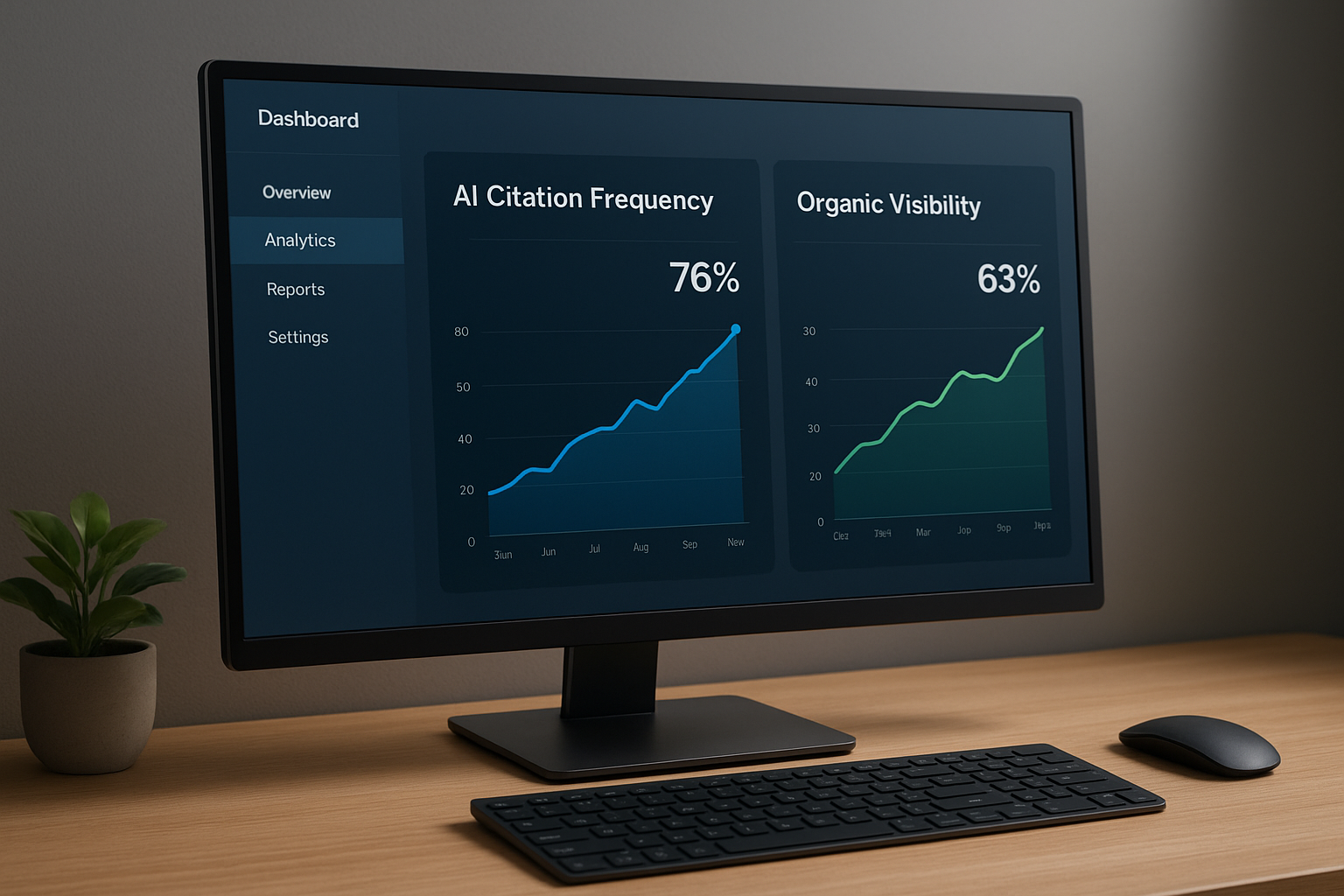
Tracking AI citation frequency and referral traffic helps measure the impact of your GEO efforts over time.
Frequently Asked Questions About GEO
What is GEO (Generative Engine Optimization)?
GEO stands for Generative Engine Optimization — the practice of structuring content so AI-powered search engines cite or surface it in generated responses. It targets platforms like ChatGPT, Perplexity AI, and Google AI Overviews.
How is GEO different from traditional SEO?
Traditional SEO targets blue-link rankings on results pages. GEO, in contrast, targets being quoted or cited inside AI-generated answers, which often replace the traditional results page for many queries.
Why is GEO important in 2025?
AI search tools now handle billions of queries monthly. Without GEO, your content risks being invisible to a growing share of searchers who rely on AI-generated answers rather than traditional search results.
Which AI search engines does GEO target?
GEO targets Google AI Overviews, ChatGPT Search, Perplexity AI, Microsoft Copilot, and other LLM-powered search interfaces that generate answers rather than returning a list of links.
How do I start optimizing for GEO?
Start by writing clear, direct answers to specific questions in your opening paragraph, structuring content with descriptive headings, adding data and citations, and building topical authority through comprehensive content clusters.
Does GEO replace SEO?
No. GEO complements rather than replaces SEO. Strong traditional SEO signals — backlinks, site authority, and technical health — still influence which sources AI engines trust and choose to cite.
What type of content performs best in generative engine results?
Factual, well-structured content that cites credible sources and answers questions directly performs best. Additionally, content demonstrating genuine expertise and depth is consistently favored over thin or keyword-stuffed pages.
How long does it take to see results from GEO?
Most sites begin seeing AI citation improvements within 4 to 12 weeks after applying GEO best practices. Results vary based on niche competitiveness, domain authority, and the depth of content improvements made.
Does structured data (schema markup) help with GEO?
Yes. Schema markup such as FAQPage, HowTo, and Article helps AI engines understand your content structure. As a result, they can more easily extract and cite specific answers from your pages.
What is a common mistake in GEO?
A very common mistake is burying the direct answer under long introductions. AI engines prefer content that answers the question within the first few sentences, so front-load your key information.
Is E-E-A-T relevant to GEO?
Absolutely. Experience, Expertise, Authoritativeness, and Trustworthiness signals influence which sources AI engines consider credible. Therefore, building E-E-A-T is a core pillar of any effective GEO strategy.
Can small websites compete in GEO?
Yes — and often very effectively. AI engines frequently cite niche, highly specific content over broad generalist sites. A small site with deep topical expertise can outperform much larger competitors in AI-generated answers.
Conclusion: Embracing GEO as the Future of Search
GEO — Generative Engine Optimization — is not a passing trend. It represents a fundamental shift in how content is discovered, evaluated, and surfaced by the AI systems that now power much of the world’s information retrieval. Consequently, brands and creators who invest in GEO today will hold a significant advantage as AI search continues to grow.
In summary, the key principles are simple: answer questions directly, structure content clearly, cite authoritative sources, build topical depth, and use schema markup to help AI engines understand your pages. Above all, treat every piece of content as an opportunity to demonstrate genuine expertise that both humans and AI systems will trust.
Start applying these GEO principles today, and you will be well on your way to earning visibility in the AI-powered search landscape that is rapidly defining the future of organic discovery. For further strategies, explore AI content optimization techniques to deepen your approach.

