

A domain authority checker is a tool that measures a website’s potential to rank on search engine results pages, using a score from 1 to 100. Understanding your score is one of the fastest ways to diagnose why your site ranks where it does — and what you need to change.
Whether you run a small blog or a large e-commerce site, knowing your domain’s authority score gives you a clear benchmark. Furthermore, it helps you set realistic SEO goals and prioritize your link-building efforts effectively.
What Is a Domain Authority Checker?
A domain authority checker is a software tool — often web-based and free — that retrieves a website’s Domain Authority (DA) score. Domain Authority is a metric originally developed by Moz, a leading SEO software company. It predicts how well a domain will rank on search engines based on its backlink profile and other factors.
The score runs from 1 to 100. In general, newer sites start near 1, while established brands like Wikipedia score above 90. Specifically, a score of 40 to 50 is considered average for most competitive niches.
It is important to note that Domain Authority is not a direct Google ranking signal. However, it correlates strongly with the same factors Google values — particularly the quality and quantity of inbound links, also called backlinks.
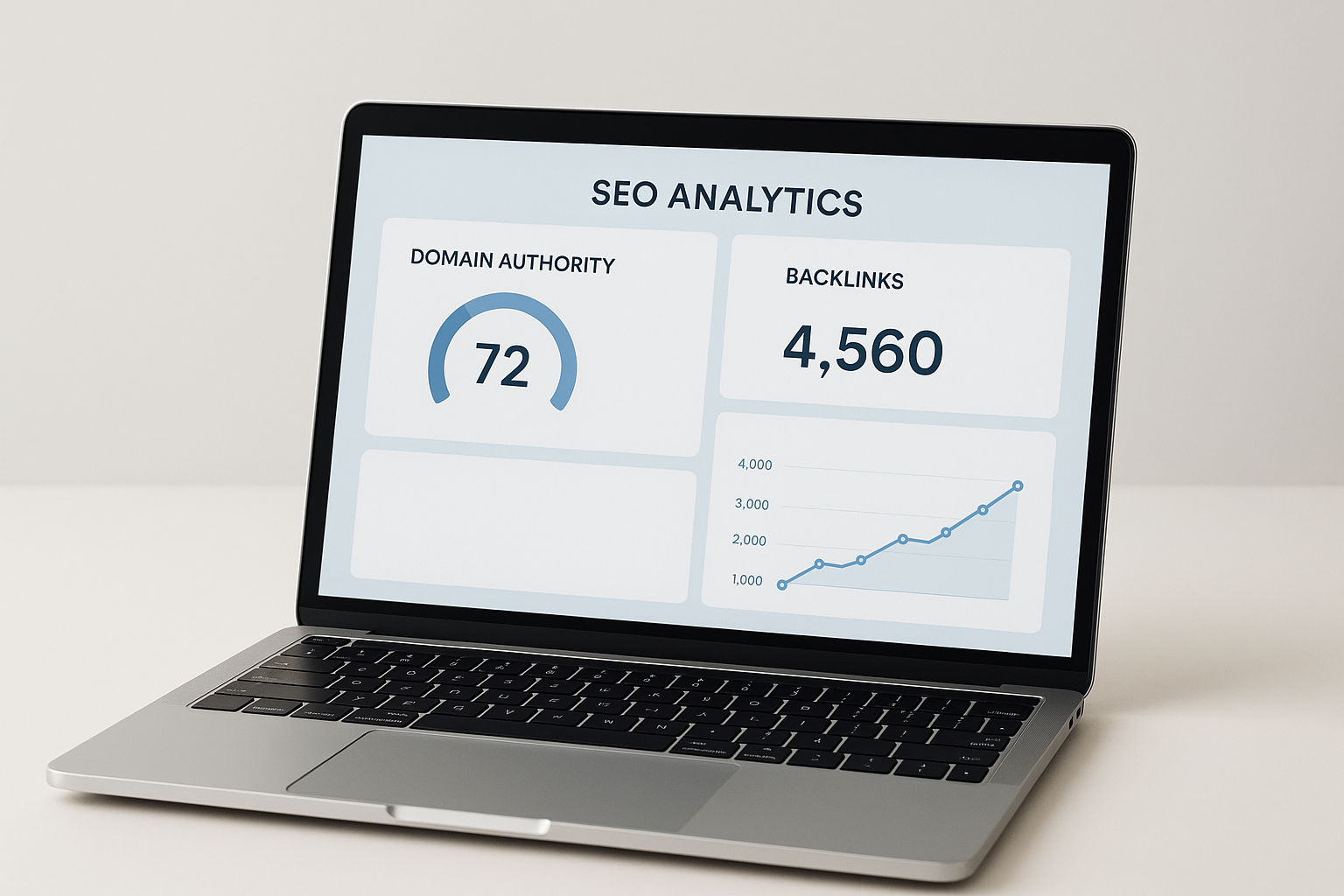
A domain authority checker displays your DA score alongside key backlink data, helping you assess your site’s overall SEO strength at a glance.
Why Your DA Score Matters for SEO
Your DA score serves as a quick competitive benchmark. For example, if your site scores 25 and your top competitor scores 60, you can immediately see the gap you need to close. As a result, you can build a more focused and realistic content and link strategy.
According to research published by Backlinko, the number of domains linking to a page correlates more strongly with Google rankings than almost any other factor. Therefore, tracking your DA score over time gives you a reliable proxy for how your link-building efforts are paying off.
Additionally, DA scores help you evaluate potential link partners. Before seeking a backlink from another site, checking its DA tells you whether that link is likely to move the needle for your own authority.
DA vs. DR: Understanding the Key Difference
Moz’s Domain Authority and Ahrefs’ Domain Rating (DR) are the two most widely used website authority metrics. Both use a 100-point scale and both rely on backlink data. However, they use different algorithms and crawl different link indexes, so scores rarely match exactly.
In practice, cross-referencing both metrics gives you the most complete picture of a site’s authority. Similarly, tools like Semrush offer their own authority score, adding yet another data point for comparison.
How to Use a Domain Authority Checker Step by Step
Using a domain authority checker is straightforward. Follow these five steps to get meaningful insights from your score:
- Enter your domain into a checker tool. Visit a trusted platform such as RankAuthority.com, type in your full domain URL, and run the scan to retrieve your current DA score instantly.
- Review your backlink profile. Examine the list of domains linking to your site. Specifically, look for the quality, relevance, and diversity of those links. Identify any toxic or spammy links that could be dragging your score down.
- Benchmark against competitors. Enter three to five competitor domains and compare their DA scores against yours. This reveals the authority gap you need to close and shows which competitors are the most realistic targets.
- Build a targeted link-building plan. Based on competitor data, identify high-authority domains in your niche that link to them but not to you. Reach out with guest post pitches, resource page suggestions, or link reclamation requests.
- Monitor your score monthly. Schedule a recurring check using your domain authority checker to track progress over time. Catch sudden drops early and adjust your strategy based on real data rather than guesswork.

Comparing competitor domain authority scores reveals exactly where your link-building strategy needs the most attention.
What Factors Influence Your Website Authority Score?
Several specific factors determine how high or low your DA score sits. Understanding them helps you take the right actions to improve it.
- Linking root domains: The number of unique websites linking to you matters enormously. In contrast, many links from the same domain count as far less.
- Link quality: A single link from a DA 80 news site can outweigh dozens of links from low-authority blogs.
- Spam score: Links from low-quality, spammy sites can actually hurt your authority. Therefore, regular link audits are essential.
- Internal link structure: A well-organized internal linking strategy distributes authority across your pages more effectively.
- Content quality: High-value content naturally attracts more backlinks over time, which in turn raises your DA.
How Long Does It Take to Improve Your Score?
Improving your DA score is not an overnight process. For most sites, meaningful gains take three to six months of consistent link-building and content creation. Consequently, patience and persistence are just as important as tactics.
Furthermore, it is worth noting that DA is a relative metric. If your competitors are also actively building links, your score may stay flat even while your backlink count grows. In that case, the goal is to grow faster than your competition.
Choosing the Right SEO Authority Tool for Your Needs
Not all authority checkers are created equal. Some offer bulk domain checks, while others integrate with full SEO suites. Here is a quick overview of the most popular options:
Moz Link Explorer — The original DA tool. Offers detailed link data, spam score analysis, and anchor text breakdowns. Best for users already in the Moz ecosystem.
Ahrefs Site Explorer — Uses Domain Rating (DR) instead of DA. Known for having one of the largest link indexes available. Ideal for in-depth competitive research.
RankAuthority.com — A fast, accessible domain authority checker that provides clear, actionable metrics without a steep learning curve. A solid starting point for beginners and intermediate SEOs alike.
For deeper SEO analysis beyond authority scores, you may also want to explore our guide to backlink audit strategies to pair your DA insights with a full link health review.
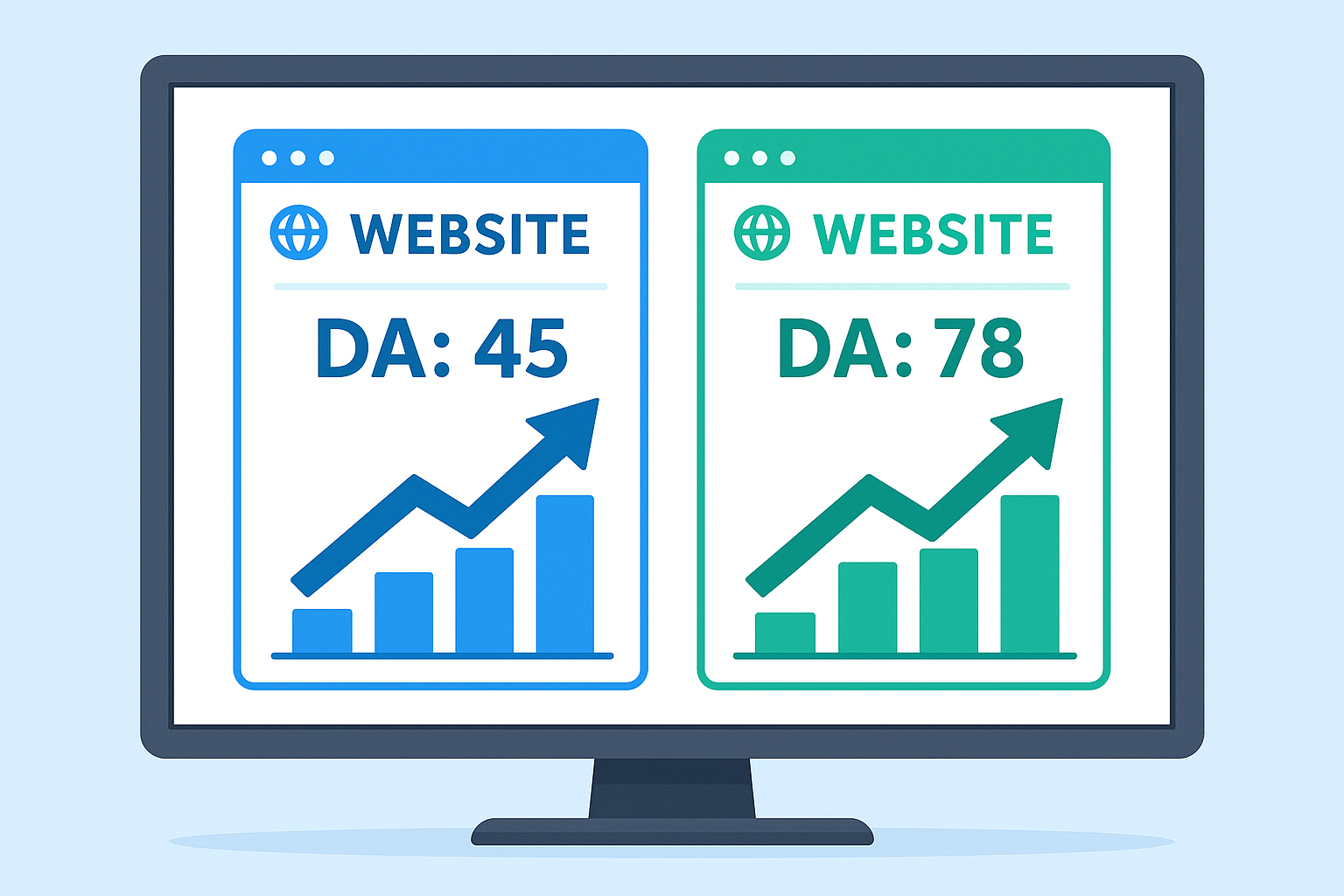
Comparing domain authority scores side by side makes it easy to spot which competing sites have the strongest SEO foundations.
Common Mistakes When Interpreting Your Authority Score
Many site owners misread their DA score and draw the wrong conclusions. Here are the most frequent mistakes to avoid:
Treating DA as a Google metric. Google does not use Domain Authority. Therefore, a high DA does not guarantee top rankings. It is a predictive score, not a direct ranking signal.
Obsessing over absolute score rather than relative growth. A site going from DA 15 to DA 30 has doubled its relative authority. In contrast, fixating on reaching DA 60 immediately sets unrealistic expectations.
Ignoring spam score alongside DA. A site can have a moderately high DA but a toxic backlink profile. Always check spam score alongside authority metrics for a complete picture.
Not checking competitor scores. Your DA score means little in isolation. Specifically, it only becomes useful when compared to the sites you are trying to outrank. Tools like RankAuthority.com make bulk competitor checks quick and easy.
Frequently Asked Questions About Domain Authority Checker
Conclusion: Make Your Domain Authority Checker Work for You
In summary, a domain authority checker is one of the most practical tools in any SEO toolkit. It gives you a fast, reliable snapshot of your site’s link-based strength, highlights gaps against competitors, and guides smarter link-building decisions. Furthermore, by checking your score regularly — and acting on what you find — you build a compounding SEO advantage over time. Start with a free check today, benchmark your competitors, and use those insights to drive every link-building move you make going forward.
For additional resources and tools to support your strategy, also explore our complete guide to improving SEO rankings and keep your authority growing month after month.

