

How to do SEO is the process of optimizing your website so it ranks higher in search engine results pages (SERPs), driving more organic traffic to your content. Whether you run a small business or manage a large digital portfolio, understanding SEO fundamentals gives you a measurable edge in online visibility.
According to BrightEdge research, organic search drives 53% of all website traffic — making SEO the single largest source of discoverable visitors for most businesses. Furthermore, the landscape is shifting fast. AI-powered search engines are changing what it means to rank, so learning SEO today means preparing for both traditional and next-generation results.
What Is SEO and Why Does It Matter?
SEO (Search Engine Optimization) is the practice of improving a website’s content, structure, and authority so search engines like Google rank it higher for relevant queries. In simple terms, it helps the right people find your site at the right moment.
Without SEO, even the best content can go unnoticed. Consequently, businesses that invest in optimization consistently outperform competitors who rely solely on paid advertising. Moreover, SEO compounds over time — unlike ads that stop the moment you stop paying.
According to Wikipedia’s overview of SEO, the discipline spans technical, creative, and analytical disciplines — all working together to improve discoverability.
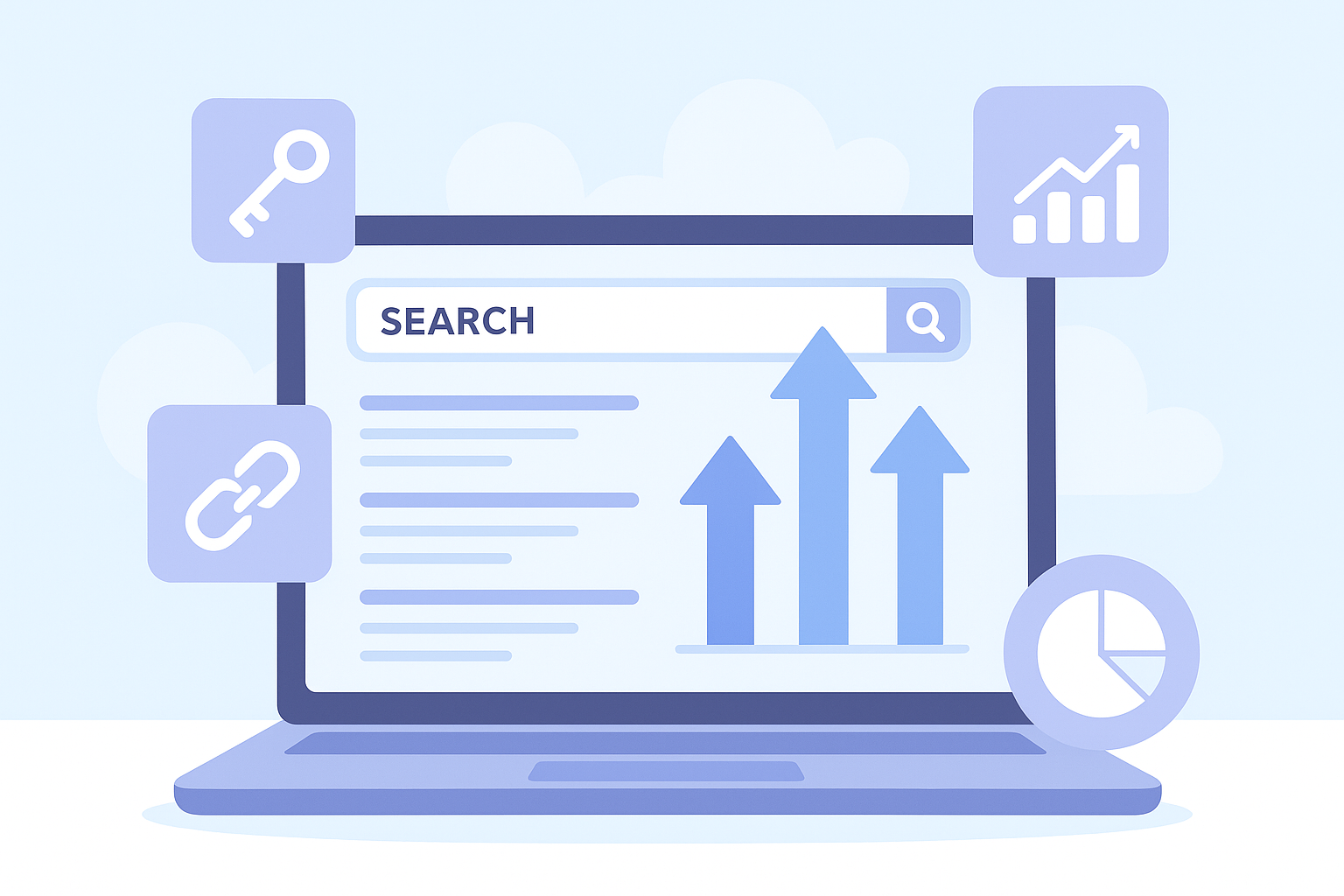
A clear SEO strategy combines keyword research, on-page optimization, and link building to improve search rankings.
Step 1 — Conduct Thorough Keyword Research
Keyword research is the foundation of any successful SEO strategy. Specifically, it means identifying the exact words and phrases your target audience types into search engines. Without this step, you risk creating content that nobody is actively searching for.
Start with free tools like Google Keyword Planner or explore paid platforms like Ahrefs for deeper data. Focus on three keyword types:
- Head keywords — short, high-volume terms (e.g., “SEO tips”)
- Long-tail keywords — specific phrases with lower competition (e.g., “how to do SEO for a new website”)
- Intent-based keywords — terms that signal what the user wants to do next (e.g., “best SEO tools free”)
In addition, always analyze search intent — the underlying reason behind a query. A page optimized for informational intent will perform very differently than one targeting transactional intent.
Step 2 — Master On-Page SEO Optimization
On-page SEO refers to all the optimizations you make directly within your website pages. Therefore, it gives you the most direct control over how search engines interpret your content.
For each page you want to rank, follow these on-page best practices:
- Place your primary keyword in the title tag as close to the beginning as possible.
- Write a compelling meta description (150–160 characters) that includes the keyword naturally.
- Use your keyword in the first 100 words of body content.
- Structure content with H2 and H3 headings that include keyword variants.
- Optimize image alt tags with descriptive, keyword-relevant text.
- Include internal links to related pages on your site to spread link equity.
Notably, Google’s SEO Starter Guide emphasizes creating content for people first, not search engines. Quality and relevance always outperform keyword stuffing.
How to Simplify On-Page Tasks for Small Businesses
Small business owners often find on-page SEO time-consuming. However, platforms designed to simplify SEO tasks for small businesses automate many of these steps — from generating optimized meta tags to flagging missing alt text — so you can focus on running your business.
Step 3 — Fix Technical SEO Issues
Technical SEO involves optimizing the infrastructure of your website so search engine crawlers can access, interpret, and index your content efficiently. Even outstanding content can fail to rank if technical barriers exist.
Specifically, focus on these critical technical areas:
- Page speed — Google uses Core Web Vitals (loading, interactivity, visual stability) as ranking signals.
- Mobile-friendliness — Over 60% of searches happen on mobile devices, making responsive design essential.
- HTTPS security — Secure sites receive a ranking preference from Google.
- Structured data (Schema markup) — Helps search engines understand your content type and enables rich results.
- XML sitemap and robots.txt — Guide crawlers to your most important pages.
Use Google Search Console (free) to identify crawl errors, coverage issues, and Core Web Vitals problems. As a result, you can prioritize fixes that have the highest ranking impact.

Technical SEO ensures your site is fast, secure, and fully crawlable — laying the groundwork for higher rankings.
Step 4 — Build High-Quality Backlinks
Backlinks — links from other websites pointing to yours — remain one of the strongest ranking signals in Google’s algorithm. Consequently, building a strong backlink profile is essential for competitive SEO success.
Not all backlinks are equal, however. A single link from a high-authority news site or industry publication can outweigh dozens of links from low-quality directories. Focus on earning links through:
- Guest posting on reputable industry blogs
- Creating linkable assets like original research, infographics, or comprehensive guides
- Digital PR — getting your brand mentioned in news coverage
- Broken link building — finding dead links on authoritative sites and suggesting your content as a replacement
Furthermore, learning how to search backlinks and boost your SEO rankings gives you a competitive intelligence advantage — you can see exactly where competitors earn their links and replicate those opportunities.
Step 5 — Track, Measure, and Refine Your SEO Strategy
SEO is not a one-time task — it is an ongoing process. Therefore, tracking your performance regularly is critical to understanding what works and what needs adjustment.
Key metrics to monitor include:
- Organic traffic — total visitors arriving via search engines
- Keyword rankings — position of your target keywords in SERPs
- Click-through rate (CTR) — percentage of searchers who click your listing
- Bounce rate and dwell time — signals of content relevance and quality
- Conversions from organic traffic — the ultimate measure of SEO business value
Additionally, understanding how often you should update your SEO strategy ensures you stay aligned with algorithm changes and evolving user behavior.
How AI Is Reshaping Modern SEO in 2025
The rise of AI-powered search engines — including Google’s AI Overviews and tools like ChatGPT — has fundamentally changed how to do SEO effectively. In particular, search engines now prioritize content that directly answers questions, demonstrates genuine expertise, and is structured for machine comprehension.
As a result, two emerging disciplines are becoming essential:
- Generative Engine Optimization (GEO) — optimizing content to appear in AI-generated search answers
- Answer Engine Optimization (AEO) — structuring content so AI answer engines can extract and cite it directly
Platforms like rankauthority.com automate both GEO and AEO alongside traditional SEO — using 1-Click AI AutoPilot technology to continuously optimize your site across all search environments. This is especially valuable for businesses that want results without needing deep technical expertise. You can explore how to get started with automated SEO services to see how the process works in practice.
Simplifying SEO for Your Business
Many business owners feel overwhelmed by the complexity of SEO. However, understanding how to simplify SEO for your business can transform it from a daunting technical challenge into a manageable, results-driven process — particularly when automation handles the repetitive work.
Quick Fact:
According to HubSpot’s marketing statistics, 64% of marketers actively invest in SEO, making it the most widely adopted digital marketing channel globally in 2024.
Frequently Asked Questions About How to Do SEO
What does how to do SEO mean for beginners?
How to do SEO means learning to optimize your website so search engines rank it higher in results pages. For beginners, it starts with keyword research, then moves to on-page content improvements and building credible backlinks. Starting with free tools like Google Search Console is the most accessible entry point.
How long does SEO take to show results?
Most websites see measurable SEO results within 3 to 6 months of consistent effort. However, competitive keywords in saturated markets may take 12 months or longer to rank prominently. Consistent content creation and link building accelerate the timeline.
How much does SEO cost for a small business?
SEO costs vary widely, from free DIY efforts to $500–$5,000 per month for professional services. Automated platforms like rankauthority.com offer affordable entry points with risk-free trial periods. The right investment depends on your competition level and growth goals.
What is the most important factor in SEO?
Content quality and relevance remain the most important SEO factors, according to Google. Technical health, backlink authority, and user experience signals also play major roles in ranking. No single factor dominates — SEO success requires a balanced approach across all pillars.
What is keyword research in SEO?
Keyword research is the process of identifying the specific words and phrases your target audience uses in search engines. Choosing the right keywords helps align your content with real user intent. It is the essential first step before creating or optimizing any page.
What is the difference between on-page and off-page SEO?
On-page SEO refers to optimizations made directly on your website, such as content, titles, and meta tags. Off-page SEO involves external signals like backlinks and brand mentions from other websites. Both are necessary for a comprehensive and competitive SEO strategy.
Do I need technical SEO knowledge to rank well?
Basic technical SEO knowledge is helpful but not always required, especially with automated tools available today. Ensuring your site loads fast, is mobile-friendly, and is crawlable covers the most critical technical bases. Automated platforms handle the more complex technical tasks on your behalf.
What are backlinks and why do they matter for SEO?
Backlinks are links from other websites pointing to yours, and they act as votes of confidence in search engine algorithms. High-quality backlinks from authoritative domains significantly boost your site’s ranking potential. Earning even a few strong backlinks can dramatically improve your position in competitive SERPs.
How does AI change how to do SEO in 2025?
AI search engines now interpret user intent more deeply, making content quality and structured data more important than keyword density. Platforms using Generative Engine Optimization (GEO) and Answer Engine Optimization (AEO) help sites stay visible in AI-driven results. Adapting to these changes early provides a significant competitive advantage.
What common SEO mistakes should I avoid?
Common mistakes include keyword stuffing, ignoring mobile optimization, neglecting page speed, and building low-quality backlinks. These errors can trigger ranking penalties and undo months of positive SEO work. Always prioritize user experience and content quality over shortcuts.
How often should I update my SEO strategy?
You should review and update your SEO strategy at least quarterly to account for algorithm changes and shifting search trends. More frequent updates are recommended for competitive industries. Staying current ensures your efforts remain aligned with how search engines evaluate content.
What tools help with doing SEO effectively?
Google Search Console, Google Analytics, and Ahrefs are widely used for tracking and improving SEO performance. Automated platforms like rankauthority.com simplify the process further with AI-driven optimization. Using a combination of free and paid tools gives you the most complete picture of your SEO health.
Conclusion
Understanding how to do SEO is one of the most valuable skills you can develop for long-term digital growth. In summary, the process involves researching the right keywords, optimizing your on-page content, resolving technical issues, building authoritative backlinks, and continuously measuring your results. Each of these steps compounds over time, creating a compounding cycle of visibility and traffic.
Furthermore, as AI search continues to evolve, staying ahead means embracing new optimization disciplines like GEO and AEO alongside traditional techniques. Platforms like rankauthority.com make this easier by automating the complex, time-intensive work — so businesses of any size can compete effectively in modern search environments.
Above all, the most important thing is to start. Even small, consistent improvements to your website’s SEO add up to significant ranking gains over time. Take the first step today and build the search visibility your business deserves.

