

Competitive SEO tools are the backbone of any serious search strategy in 2025 — they reveal exactly where rivals are winning, which keywords you are missing, and how to close the gap fast. The search landscape has changed dramatically. AI-powered engines like Google’s AI Overviews, Perplexity, and Bing Copilot now answer queries directly, bypassing traditional blue links entirely. As a result, the tools you choose — and how consistently you use them — determine whether your site gains ground or loses it.
According to Statista, the global SEO services market is projected to exceed $122 billion by 2028. That figure reflects how central search visibility has become to revenue growth. Consequently, investing in the right competitive intelligence tools is no longer optional — it is a strategic necessity for businesses of every size.
What Are Competitive SEO Tools?
Competitive SEO tools are software platforms that aggregate search data, backlink intelligence, and content performance metrics. Specifically, they show which pages earn the most organic traffic for your competitors, which authoritative domains link to them, and where your own content strategy has gaps. They go far beyond basic keyword research — they give you a complete map of the competitive search terrain.
For example, a well-configured competitor analysis tool can reveal that a rival ranks for 3,000 keywords you are not targeting — each one a potential traffic source you are missing right now. Furthermore, these platforms surface technical weaknesses on your own site that may be suppressing your rankings without your knowledge.
To understand what separates effective platforms from basic ones, explore this detailed breakdown of the features of a good SEO tool — it covers the must-have capabilities that drive real ranking improvements.

Modern competitive SEO tools display rival keyword rankings, traffic estimates, and backlink data in unified dashboards.
The Core Capabilities Every Competitive SEO Tool Should Have
Not all competitive SEO tools are built equally. Before selecting a platform, it pays to understand which core features actually move the needle. Below are the capabilities that separate high-value tools from glorified dashboards.
Keyword Gap Analysis
Keyword gap analysis identifies search terms that competitors rank for but your site does not. This is one of the fastest ways to find untapped traffic opportunities. A strong tool will let you compare your domain against two or three rivals simultaneously, then export and prioritize gaps by search volume and keyword difficulty.
Backlink Intelligence and Link Gap Analysis
Backlinks remain a major ranking signal. Therefore, any serious competitive tool must reveal which authoritative domains link to rivals but not to you. This intelligence powers targeted outreach campaigns that replicate — and eventually surpass — a competitor’s link profile.
Organic Traffic Estimation
Traffic estimation features project how much monthly organic traffic a competitor’s domain receives. In addition, they break this down by individual page, so you can pinpoint which content pieces are driving the most value for rivals and prioritize your own content investments accordingly.
Technical Site Auditing
A technical audit scans your site for crawlability issues, broken links, duplicate content, slow page speed, and missing structured data. These hidden problems can suppress rankings even when your content and backlinks are strong. Consequently, regular technical audits are non-negotiable in a competitive environment.
Rank Tracking
Rank tracking monitors your keyword positions over time and alerts you to significant changes — both gains and drops. Similarly, the best platforms track competitor rankings in parallel, so you see the full picture of how the SERP landscape shifts week by week.
SERP Feature and AI Visibility Tracking
Modern SERPs include featured snippets, People Also Ask boxes, image packs, and AI Overviews. The most advanced competitive SEO tools now track which SERP features competitors own and which AI-generated answers cite their content. This capability is increasingly critical as AI search reshapes how traffic is distributed.
How to Use Competitive SEO Tools to Outrank Your Rivals
Using these tools effectively requires a structured approach. Simply purchasing access to a platform without a clear workflow produces little value. Therefore, follow this five-step process to extract maximum competitive advantage from your stack.
- Identify Your True Search Competitors. Enter your primary target keywords into your chosen tool and note which websites consistently appear in the top 10 results. These are your real competitors — they may differ entirely from your direct business rivals. For example, a local plumber may find that a national home improvement guide outranks them for key service terms.
- Run a Keyword Gap Analysis. Compare your domain against two or three competitors simultaneously. Export the keywords they rank for that you do not, then prioritize by search volume and keyword difficulty score. Focus first on terms where competitors hold positions 4–10, as these are most vulnerable to displacement.
- Audit Competitor Backlink Profiles. Analyze which high-authority domains link to your rivals but not to you. Use this list to build a targeted outreach campaign and pursue similar linking opportunities. In addition, look for link patterns — recurring publication types or topic clusters — that signal what kind of content earns links in your niche.
- Optimize Content Using Competitive Insights. Review the top-performing pages of competitors. Note their content depth, heading structure, internal linking patterns, and whether they target SERP features. Then create or update your own pages to match or exceed that quality — specifically addressing questions competitors leave unanswered.
- Track Rankings and Iterate Monthly. Set up rank tracking for all target keywords. Schedule monthly competitor audits to monitor shifts and continuously refine your strategy based on real data. Above all, treat this as a recurring cycle — not a one-time exercise.
Top Competitive SEO Tools Compared: Features, Pricing, and Best Use Cases
Several established platforms dominate the competitive intelligence space. Each offers a distinct set of strengths. Therefore, the best choice depends on your specific goals, budget, and technical comfort level. Here is a detailed look at each major platform.
Ahrefs — Best for Backlink Intelligence and Content Research
Ahrefs is widely regarded as one of the most comprehensive backlink intelligence tools available. Its Site Explorer feature reveals a competitor’s top pages by organic traffic, their exact backlink sources, and the anchor text patterns used across their link profile. Additionally, the Keywords Explorer tool surfaces thousands of keyword ideas with accurate difficulty scores and click-through rate estimates.
Ahrefs also includes a Content Gap tool that compares your keyword rankings against up to ten competitors simultaneously — a highly efficient way to surface large batches of missed opportunities in one session. However, Ahrefs comes at a premium price. Plans start around $129 per month. Despite that cost, many agencies consider it essential for deep competitive research, particularly when backlink analysis is a primary priority.
Best for: Agencies and in-house SEO teams with a heavy focus on link building and content gap analysis. Starting price: ~$129/month.
Semrush — Best All-in-One Digital Marketing Suite
Semrush offers one of the broadest feature sets in the industry. It covers keyword research, site auditing, social media tracking, PPC intelligence, and content marketing analytics under a single subscription. Its Domain vs. Domain comparison tool makes side-by-side competitor analysis straightforward, while the Traffic Analytics feature estimates how much organic and paid traffic a competitor receives each month.
In contrast to Ahrefs, Semrush provides more marketing-focused features beyond pure SEO, making it a strong choice for digital marketing teams managing multiple channels. Its Keyword Magic Tool — which houses over 25 billion keyword data points — is particularly useful for comprehensive competitive keyword research. Plans start around $139 per month.
Best for: Multi-channel digital marketing teams needing SEO, PPC, and social analytics in one place. Starting price: ~$139/month.
Moz Pro — Best for SEO Beginners and Link Authority Metrics
Moz Pro is particularly well-suited for users who are newer to SEO. Its interface is intuitive, and its proprietary Domain Authority (DA) metric — a score from 1 to 100 predicting a site’s ranking potential — has become an industry benchmark for evaluating link quality. Similarly, Moz’s Link Explorer tool makes it straightforward to compare backlink profiles between your site and competitors.
Moz Pro also includes a Keyword Explorer with a SERP analysis overlay showing which SERP features appear for each term — a useful detail that many competing tools omit. Plans start around $99 per month, making it one of the more accessible entry points among premium tools.
Best for: SEO beginners, small businesses, and teams where DA/PA metrics are central to link evaluation. Starting price: ~$99/month.
Majestic — Best for Deep Link Profile Analysis
Majestic is a specialist tool focused almost exclusively on backlink data. Its proprietary Trust Flow and Citation Flow metrics provide a nuanced view of link quality that complements data from broader platforms. Furthermore, Majestic’s Topical Trust Flow feature categorizes backlinks by topic, helping you understand the thematic relevance of a competitor’s link profile — not just its volume.
Majestic is often used alongside Ahrefs or Semrush rather than as a standalone solution. However, for link-focused strategies, it offers depth that generalist tools often lack. Plans start around $49.99 per month.
Best for: Link-building specialists who need granular backlink intelligence beyond what all-in-one tools provide. Starting price: ~$49.99/month.
SpyFu — Best for PPC and Organic Competitor Research
SpyFu specializes in revealing the paid and organic search strategies of competitors. Its core value proposition is historical data — you can see every keyword a competitor has ever ranked for organically and every ad they have ever run on Google Ads. As a result, it is especially powerful for businesses competing in both organic and paid search.
SpyFu’s pricing is also notably more accessible than many rivals. Plans start around $39 per month. While it does not match Ahrefs or Semrush in data breadth, it provides exceptional value for competitive PPC research specifically.
Best for: Businesses running both SEO and Google Ads who want deep visibility into competitor paid strategies. Starting price: ~$39/month.
Similarweb — Best for Traffic Intelligence and Audience Insights
Similarweb provides detailed traffic intelligence data — including referral sources, geographic traffic distribution, audience demographics, and engagement metrics — for any competitor domain. Specifically, it excels at revealing the full traffic mix of a competitor, not just their organic search component.
For strategic planning — particularly when evaluating market share or entering a new competitive space — Similarweb’s breadth of intelligence is difficult to match. However, its entry-level pricing is higher than most tools, making it better suited for growth-stage companies and enterprise teams.
Best for: Competitive market analysis, investor research, and understanding the full traffic picture beyond organic SEO. Starting price: Contact for pricing (limited free tier available).
Free Competitive SEO Tools Worth Using
Not every useful tool carries a subscription fee. Several free options provide genuine competitive value, particularly when used as complements to a paid platform.
Google Search Console
Google Search Console remains one of the most valuable free resources available. It shows exactly which queries bring users to your site, which pages earn the most clicks, and where your average ranking positions stand. As a result, it provides a reliable performance baseline before you invest in paid competitor intelligence.
Google Keyword Planner
Google Keyword Planner provides search volume data and keyword suggestions directly from Google’s own advertising data. While it was designed for paid campaigns, it is equally useful for identifying organic keyword opportunities and validating search demand before creating content.
Google Trends
Google Trends reveals how search interest in a keyword changes over time and across geographic regions. Similarly, it lets you compare the relative popularity of multiple keywords simultaneously — a useful feature for prioritizing which topics deserve investment in competitive markets.
Ahrefs Free Webmaster Tools
Ahrefs offers a free Webmaster Tools tier that provides backlink data and SEO audit results for your own verified domain. It does not include competitor analysis, but it is an excellent no-cost option for monitoring your own site’s health against a competitive baseline.
For a broader view of the tools available at different budget levels, the guide to the best tools for SEO to boost your rankings in 2025 offers a curated breakdown of both free and paid options worth considering.

Reviewing competitor data regularly helps businesses spot ranking opportunities before rivals can capitalize on them.
How to Conduct a Thorough Competitor SEO Analysis
Running a structured competitor SEO analysis is more than entering a rival domain into a tool and scrolling through data. In particular, it requires a repeatable framework that translates raw data into actionable priorities. Here is how to approach it systematically.
Step 1: Map Your Competitive Landscape
Start by using a tool like Semrush’s Organic Research or Ahrefs’ Competing Domains report to identify who you are actually competing against in search — not just in business. These tools surface the domains sharing the most keyword overlap with yours, which are often different from the competitors you think of in a business context.
Step 2: Analyze Competitor Top Pages
Use Site Explorer (Ahrefs) or Organic Research (Semrush) to identify which pages drive the most traffic for each competitor. Specifically, examine the content format, word count, heading structure, and internal linking on these pages. This tells you the content standard you need to meet — and where you can exceed it.
Step 3: Evaluate Competitor Content Depth
Review the top-ranking pages for your target keywords. Note which questions they answer, which ones they leave unanswered, and where their content thins out. Furthermore, check whether they target SERP features like featured snippets — if they do, that tells you exactly what format Google rewards for that query.
Step 4: Audit Competitor Technical Health
Use a tool like Semrush’s Site Audit or Screaming Frog — a desktop crawler widely used by SEO professionals — to examine a competitor’s technical structure. Look at their URL hierarchy, internal linking patterns, and schema markup implementation. These structural elements often explain why one site outranks another despite similar content quality.
Step 5: Benchmark Your Results and Set Targets
After completing your analysis, document your findings with specific benchmarks — for example, your competitor earns 45,000 monthly organic visits and ranks for 8,200 keywords while your site earns 12,000 visits and ranks for 2,100 keywords. Setting quantified targets based on competitor data makes your SEO goals measurable and actionable, rather than vague aspirations.
Why AI-Powered Optimization Changes the Competitive Game
Traditional competitive SEO tools are powerful, but they were built for a search environment that is rapidly evolving. AI-powered search engines — including Google’s AI Overviews, Perplexity, and Bing Copilot — now surface answers directly in the search interface, bypassing traditional blue links entirely. Consequently, businesses that optimize only for classic ranking signals may find their traffic eroding even as their keyword positions hold steady.
This is where Generative Engine Optimization (GEO) and Answer Engine Optimization (AEO) become essential. GEO focuses on structuring content so AI systems can extract and cite it in generated answers. AEO, similarly, targets the formats — concise definitions, step-by-step answers, FAQ structures — that answer engines prioritize when constructing responses.
What GEO and AEO Mean for Your Tool Selection
Not all competitive SEO tools are equipped to help you compete in AI search environments. Specifically, you need platforms that track AI Overview appearances, measure citation rates in AI-generated answers, and evaluate whether your content structure matches the formats that AI engines prefer.
rankauthority.com addresses this shift directly. Its 1-Click AI AutoPilot technology automates both traditional SEO and next-generation GEO and AEO optimization, enabling businesses to compete across all search environments without requiring deep technical expertise. For teams managing multiple sites or client properties, that level of automation represents a significant competitive advantage.
For a broader look at how AI is reshaping search visibility strategy, explore the resource on the best tools for digital visibility improvement — it covers both traditional and AI-native approaches in one place.
Choosing the Right Competitive SEO Tool for Your Business
Selecting the right platform depends on several factors: your budget, the size of your site, your technical skill level, and whether you need to optimize for traditional search, AI search, or both. Above all, the best tool is the one your team will actually use consistently.
Quick Selection Guide
- Solopreneurs and bloggers: Start with Google Search Console (free) + Moz Pro or a trial of rankauthority.com for automation.
- Small businesses: Moz Pro or SpyFu for budget-conscious competitor research with a clear upgrade path.
- Growing businesses and content teams: Semrush for its breadth — keyword research, site auditing, and competitive tracking in one platform.
- Agencies and enterprise teams: Ahrefs for backlink depth and Content Gap, combined with rankauthority.com for AI search optimization.
- PPC-heavy businesses: SpyFu or Semrush for visibility into competitor ad strategies alongside organic rankings.
- Link-building specialists: Majestic for Trust Flow analysis alongside a generalist tool like Ahrefs or Semrush.
For small business owners and entrepreneurs, ease of use and automation are typically the most important criteria. In contrast, agencies and enterprise teams often prioritize data depth, API access, and multi-site management capabilities. Consider starting with a trial period — many platforms, including rankauthority.com, offer a risk-free seven-day trial so you can evaluate real-world results before committing.
Additionally, consider how well a platform integrates with your existing workflow. The guide on top SEO marketing tools to grow your rankings fast provides a practical comparison that can help you narrow down the options that best fit your situation.
Furthermore, do not overlook tools designed specifically for online business visibility. The resource covering tools that help improve online visibility for businesses is especially useful for local and small business operators building their digital presence from the ground up.
Competitive SEO Tools vs. General SEO Tools: Key Differences
Many marketers use the terms interchangeably, but there is a meaningful distinction. General SEO tools focus on improving your own site’s performance — crawling for errors, tracking your keyword positions, and suggesting on-page fixes. Competitive SEO tools, by contrast, place your performance in the context of the broader market.
Specifically, a competitive tool answers questions like: Why does your rival outrank you? Which pages are stealing traffic you could own? What content format is Google rewarding in your niche right now? These strategic questions require external data — competitor rankings, backlink profiles, traffic estimates — that purely internal SEO tools cannot provide.
As a result, the most effective SEO stacks combine both: internal tools for performance monitoring and technical health, plus competitive SEO tools for strategic intelligence. According to Wikipedia’s overview of SEO, competitive analysis has been a core pillar of search optimization since the early days of the discipline — and its importance has only grown as search becomes more competitive.
Common Mistakes When Using Competitor SEO Analysis Tools
Even experienced SEO professionals make avoidable errors when working with competitive intelligence platforms. Understanding these pitfalls in advance saves significant time and prevents misdirected effort.
- Chasing irrelevant competitors. Not every domain that appears in your keyword reports is a competitor worth tracking. Focus on sites with genuine keyword overlap across your core topics, not just single-keyword intersections.
- Treating traffic estimates as exact figures. All competitive tools estimate traffic using click-through rate models and index sampling — they are not exact. Consequently, use traffic data for relative comparison and trend analysis, not as precise benchmarks.
- Copying competitor content structures without adding value. Matching a competitor’s content depth and format is a starting point, not a strategy. Similarly, replicating what already ranks without adding new insights or data simply creates an inferior version of existing content.
- Neglecting SERP feature analysis. Ranking in position three is less valuable if a competitor owns the featured snippet above you. Therefore, always include SERP feature analysis in your competitive reviews to understand the full traffic opportunity for each keyword.
- Collecting data without acting on it. This is the most common mistake of all. Many businesses run audits and competitor reports but fail to implement the recommended changes. Consistent execution of insights is what separates businesses that improve rankings from those that remain stagnant.
Frequently Asked Questions About Competitive SEO Tools
What are competitive SEO tools?
Competitive SEO tools are software platforms that help businesses analyze search rankings, monitor rivals, identify keyword gaps, and improve visibility in search results. They combine data from multiple sources — including backlink indexes, keyword databases, and traffic estimators — to deliver actionable insights. Most platforms include features for backlink analysis, technical auditing, content optimization, and rank tracking.
How do competitive SEO tools help improve search rankings?
These tools identify which keywords competitors rank for, reveal backlink opportunities, audit technical site issues, and track ranking changes over time. By consistently acting on these insights — updating content, building links, and fixing technical issues — businesses can systematically close the gap with top-ranking competitors. The key is implementing recommendations rather than simply reviewing reports.
What is keyword gap analysis and why does it matter for competitive SEO?
Keyword gap analysis identifies search terms that competitors rank for but your site does not. It matters because it reveals untapped traffic opportunities and helps you prioritize content creation to close the visibility gap. It is one of the fastest ways to find low-competition wins in a competitive SEO strategy — specifically targeting keywords where rivals hold positions 4–10.
What is the difference between GEO and traditional competitive SEO tools?
Traditional competitive SEO tools focus on ranking in standard search engine results pages. Generative Engine Optimization (GEO) tools, however, are designed to improve visibility in AI-generated answers from platforms like ChatGPT, Gemini, and Perplexity. GEO tools optimize content structure and authority signals for AI-driven search environments, which increasingly influence how users discover information.
Which competitive SEO tools are best for small businesses?
Small businesses benefit most from tools that are affordable, easy to use, and automate repetitive tasks. SpyFu and Moz Pro offer accessible entry points for budget-conscious operators. Platforms like rankauthority.com offer 1-Click AI AutoPilot technology that handles complex optimization without requiring deep technical expertise, making them ideal for small business owners and entrepreneurs who need results without a large team.
How often should I run a competitor SEO analysis?
Run competitor SEO analysis at least monthly to track ranking shifts, new backlinks, and content changes from rivals. In fast-moving niches, weekly monitoring is recommended. Consistent tracking ensures you respond quickly to competitive moves before they erode your rankings or allow rivals to widen a gap you could have closed.
Are free SEO tools as effective as paid competitive SEO tools?
Free tools like Google Search Console provide valuable baseline data but lack the depth, automation, and competitor-focused intelligence of paid platforms. For serious competitive analysis, paid tools offer significantly more actionable insights, broader data coverage, and time-saving automation. Free tools work best as a complement to a paid platform — specifically for monitoring your own site’s performance — not as a replacement for competitive intelligence.
What features should I look for in competitive SEO tools?
Look for keyword gap analysis, backlink monitoring, technical site auditing, rank tracking, competitor traffic estimation, content optimization suggestions, and SERP feature tracking. Increasingly, AI visibility tracking — monitoring which competitors appear in AI-generated answers — is becoming an essential capability. Ease of use and integration with your existing workflow are equally important considerations.
How do AI-powered SEO tools differ from traditional SEO software?
AI-powered SEO tools use machine learning to surface patterns and recommendations that would take humans much longer to identify manually. They automate keyword clustering, content scoring, and technical auditing. Furthermore, the most advanced AI-powered platforms now optimize content for AI search environments — tracking appearances in AI Overviews and generative answer engines — a capability traditional tools entirely lack.
How much do competitive SEO tools typically cost?
Entry-level plans from major platforms start between $39 and $139 per month, depending on the tool. Enterprise solutions can exceed $500 per month. Some platforms, including rankauthority.com, offer risk-free trial periods so you can evaluate ROI before committing. The right investment depends on the size of your site, the competitiveness of your niche, and whether you need AI search optimization in addition to traditional competitive intelligence.
Can competitive SEO tools help with Answer Engine Optimization?
Yes. Advanced platforms now include AEO features that optimize content to appear in AI-generated answers, featured snippets, and voice search results. These capabilities are increasingly important as AI search engines reshape how users find information. Platforms like rankauthority.com are specifically designed to address both traditional and AI-native search environments simultaneously.
What is the biggest mistake businesses make with competitive SEO tools?
The biggest mistake is collecting data without acting on it. Many businesses run audits and competitor reports but fail to implement the recommended changes. Additionally, teams often focus on vanity metrics — like total keyword count — rather than the opportunities most likely to drive traffic. Building a regular review-and-action cycle, tied to specific business goals, is essential for long-term ranking improvement.
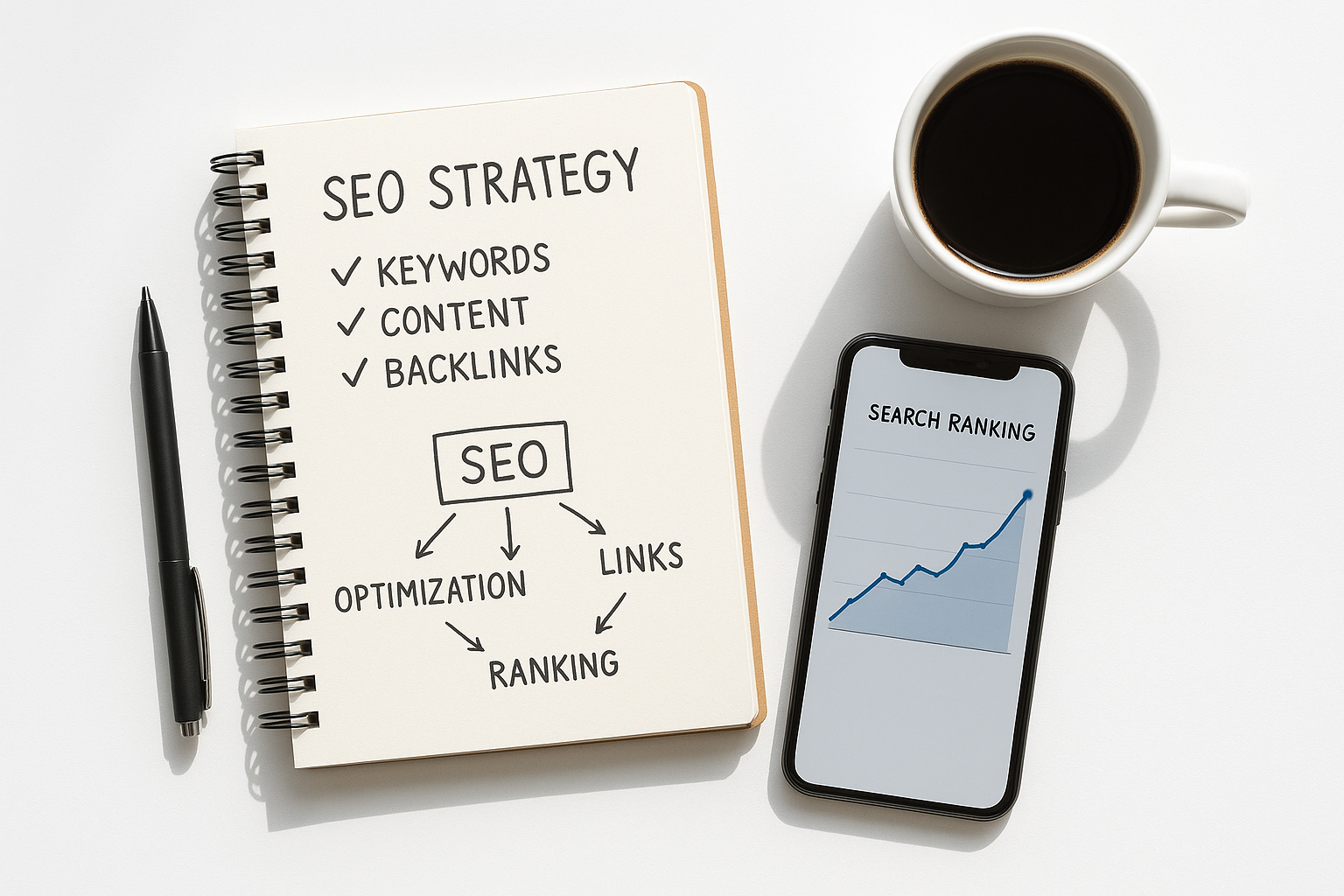
Pairing strategic planning with the right competitive SEO tools creates a repeatable system for sustained ranking growth.
Conclusion: Build a Winning Strategy With the Right Competitive SEO Tools
Competitive SEO tools are no longer a luxury reserved for large enterprises with dedicated SEO teams. They are, in fact, the foundation of any serious strategy to improve search visibility in 2025 and beyond. By combining traditional competitor intelligence platforms — like Ahrefs, Semrush, Moz Pro, Majestic, SpyFu, and Similarweb — with AI-native optimization solutions, businesses of all sizes can systematically identify opportunities, close ranking gaps, and build lasting authority in both classic and AI-powered search environments. Furthermore, the most important step is not choosing the perfect tool — it is committing to a consistent cycle of analysis and action. Whether you start with a free tool like Google Search Console or invest in a full-featured automated platform, the businesses that win in search are those that use their competitive SEO tools deliberately, regularly, and with a clear strategic purpose.

