

Digital marketing agency tools are the software platforms, automation systems, and analytics solutions that agencies depend on to plan, execute, and measure campaigns across every channel. In 2025, building the right tool stack is no longer optional — it is the single highest-leverage decision a growing agency can make.
Specifically, the rise of AI-powered search engines like ChatGPT, Perplexity, and Google’s AI Overviews has created a new layer of optimization that most legacy platforms simply do not address. Furthermore, agencies managing dozens of client accounts need tools that scale intelligently, automate repetitive tasks, and surface actionable insights — without requiring an in-house data science team. This guide covers every category, every selection criterion, and every pitfall you need to know to build a high-performance agency tool stack in 2025.
What Are Digital Marketing Agency Tools?
Digital marketing agency tools are specialized software solutions built to help agencies manage campaigns, optimize content, track performance, and report results across multiple client accounts simultaneously. They range from SEO platforms and social media schedulers to AI-driven optimization engines purpose-built for next-generation search environments.
According to Statista, global digital advertising spend surpassed $600 billion in 2024 and continues to grow year over year. As a result, agencies face mounting pressure to deliver measurable ROI while managing more channels, more content formats, and more client expectations than ever before. The right tools make that possible — without proportionally increasing headcount or operational costs.
In addition, the emergence of AI answer engines means agencies now need tools that optimize for two distinct environments: traditional keyword-based SERPs and AI-generated responses. That dual requirement is fundamentally reshaping what a complete agency tool stack looks like in 2025.
Consequently, the agencies winning the most competitive accounts today are not necessarily the largest — they are the ones with the most strategically assembled tool stacks.
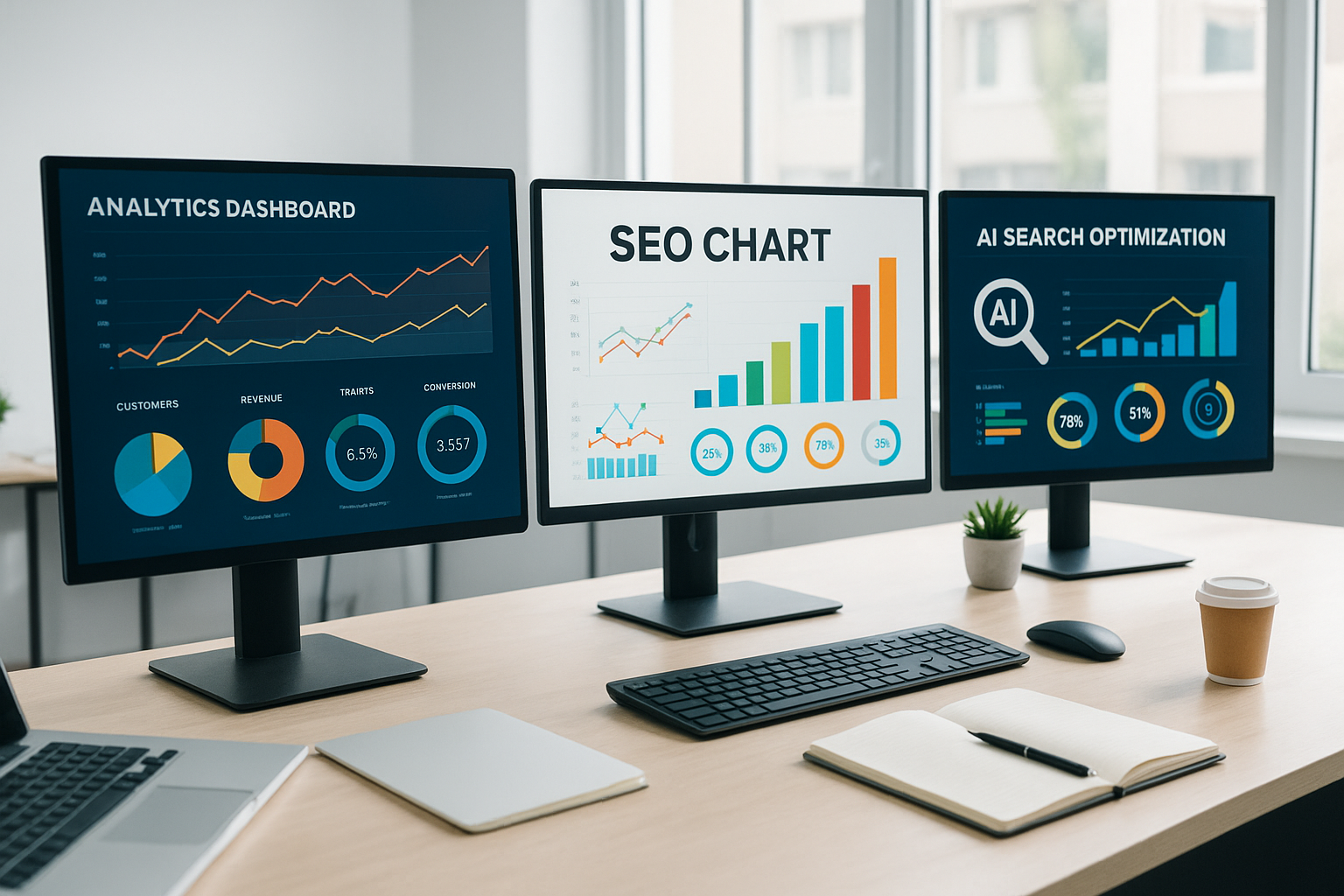
Modern agencies rely on a layered stack of digital marketing agency tools to manage SEO, AI search, and multi-channel campaigns simultaneously.
Digital Marketing Agency Tools: Core Categories Every Agency Stack Needs
Building an effective agency stack starts with understanding which categories address your biggest operational and client-delivery challenges. Below are the essential tool categories every agency should evaluate — and why each one matters.
1. SEO and Search Visibility Platforms
SEO platforms like Semrush and Ahrefs remain foundational for keyword research, backlink analysis, technical audits, and on-page optimization. However, they primarily address traditional search engine results pages (SERPs). Therefore, agencies should pair them with AI-specific optimization tools to maintain complete search coverage in 2025.
Key capabilities to look for in an SEO platform include:
- Keyword gap analysis — identify where competitors rank that you do not
- Backlink profile monitoring — track link acquisition and spot toxic links early
- Technical site auditing — surface crawlability, speed, and Core Web Vitals issues
- Rank tracking across multiple clients — monitor SERP positions at scale without manual checks
- Competitor benchmarking — compare client performance against direct rivals in real time
For agencies looking to deepen their SEO capabilities, the guide to best tools for digital marketing agencies on RankAuthority offers a curated breakdown of platforms worth evaluating.
2. AI-Powered GEO and AEO Optimization
Generative Engine Optimization (GEO) — the practice of structuring content so AI search engines surface it inside generated responses — is the fastest-growing discipline in search marketing. Similarly, Answer Engine Optimization (AEO) focuses on getting content featured in voice search and AI assistant answers like those from Google Assistant and Amazon Alexa. Both disciplines require dedicated tooling that goes far beyond what traditional SEO platforms offer.
RankAuthority addresses this gap directly with its 1-Click AI AutoPilot technology, which automates the technical and strategic work of GEO and AEO simultaneously. Consequently, agencies can deliver next-generation search optimization to clients without hiring additional specialists or restructuring their entire workflow. The platform’s seven-day risk-free trial makes it accessible to agencies of every size.
3. Social Media Management Tools
Social scheduling and analytics platforms streamline content publishing across Instagram, LinkedIn, X (Twitter), Facebook, TikTok, and Pinterest. They also aggregate engagement data so agencies can demonstrate social ROI clearly and consistently to clients. Popular options in this category include Hootsuite, Buffer, Sprout Social, and Later — each with different strengths depending on client industry and content volume.
For most agencies, social scheduling tools are table stakes. The real competitive advantage, however, comes from pairing social reach with AI optimization for organic discoverability across search engines and AI platforms simultaneously.
4. Email Marketing and Marketing Automation Platforms
Email remains one of the highest-ROI channels in digital marketing, returning an average of $36 for every $1 spent according to the Data & Marketing Association. Platforms like Mailchimp, Klaviyo, ActiveCampaign, and HubSpot enable agencies to build automated drip sequences, segment audiences by behavior, and track deliverability and conversion rates at the campaign level.
In addition, marketing automation features — such as lead scoring, CRM sync, and behavioral triggers — help agencies move prospects through the funnel without manual intervention. This is especially valuable for agencies running inbound programs for B2B clients.
5. Paid Advertising and PPC Management Platforms
Managing paid campaigns across Google Ads, Meta Ads, LinkedIn Ads, and programmatic networks requires dedicated PPC management tools. Platforms like Google Ads Editor, WordStream, and Optmyzr help agencies automate bid management, A/B test ad creative, and monitor spend pacing across client accounts in real time.
Furthermore, agencies managing large paid media budgets benefit significantly from automated rules that pause underperforming ads, reallocate budget toward high-converting ad sets, and alert account managers to anomalies before they erode client ROI.
6. Content Marketing and AI Writing Tools
Content production at agency scale demands tools that speed up research, drafting, editing, and optimization without sacrificing quality. AI writing assistants like Jasper, Copy.ai, and Surfer SEO’s content editor help teams produce SEO-optimized drafts faster. However, human editorial oversight remains essential — AI tools accelerate output, but strategy and voice still require experienced writers.
7. Analytics and Reporting Dashboards
Unified reporting tools pull data from multiple channels — SEO, social, paid, email — into a single client-facing dashboard. This saves agencies hours of manual reporting every month. Furthermore, automated reports reduce human error and make it easier to show clients the measurable impact of every campaign tactic.
Google Analytics 4 remains a free and powerful foundation for web performance data. Most agencies, however, supplement it with paid platforms like Looker Studio, AgencyAnalytics, or Databox for deeper multi-channel insight and white-label client reporting.
8. Project Management and Client Collaboration Tools
Operational efficiency is just as important as campaign performance. Project management platforms like Asana, Monday.com, ClickUp, and Basecamp help agencies manage deliverables, track deadlines, assign tasks, and keep client communication centralized. Specifically, agencies that standardize project management workflows across accounts deliver more consistently and scale more smoothly than those operating without them.
How to Build a Winning Agency Tool Stack: A Step-by-Step Process
Selecting the right combination of digital marketing agency tools is a structured process, not a shopping exercise. Follow these five steps to build a stack that scales with your agency’s growth without creating unnecessary complexity or cost.
- Audit your current capabilities and workflow gaps. Review your agency’s existing workflows, service offerings, and operational pain points in detail. Identify where manual processes are slowing delivery, where data lives in disconnected silos, and where client results are inconsistent. This audit reveals exactly where new tools will have the greatest measurable impact on both team efficiency and client outcomes.
- Define your core tool categories by service priority. Based on your audit findings, determine which categories your agency needs most — SEO, social media management, AI optimization, email automation, paid media, analytics, or project management. Prioritize categories that directly affect client outcomes first, and operational efficiency tools second.
- Evaluate and trial shortlisted platforms against real workflows. Sign up for free trials or demo accounts on your shortlisted tools. Test each against actual client campaigns — not just demo data — to assess ease of use, integration options, reporting quality, and learning curve. Involve the team members who will use the tools daily in the evaluation process, since adoption rates directly affect ROI.
- Integrate AI-powered search optimization into your core stack. Add a dedicated GEO and AEO platform to ensure client content is optimized for AI-generated answer environments alongside traditional SERPs. This step is increasingly non-negotiable as AI search engines capture a growing share of user queries. Explore the AI tools for digital marketing guide for a deeper evaluation of your options in this category.
- Standardize reporting and connect all platforms via API or dashboard. Connect your platforms through APIs or a central reporting dashboard so client reporting is consistent, automated, and clearly demonstrates multi-channel ROI. Standardized reporting also helps your team identify performance trends faster across all accounts — and gives clients the transparency that builds long-term relationships.
Choosing the right combination of agency marketing software requires matching tools to your specific service offerings, team size, and client goals.
Why AI Search Optimization Is Now Non-Negotiable for Agencies
Traditional SEO tools were built for a world where Google’s blue-link results dominated user behavior. However, that world is changing fast. AI-powered search engines now answer questions directly — often without users clicking through to any website at all. As a result, agencies that optimize only for traditional SERPs are creating a significant visibility gap for their clients, often without realizing it.
According to research from the Search Engine Journal, AI-generated overviews now appear in a substantial and growing portion of Google searches. Consequently, agencies need tools that understand how AI models retrieve, evaluate, and surface content — not just how Google’s traditional crawlers index pages.
What GEO and AEO Actually Require From Your Tool Stack
Optimizing for AI-generated answers requires a different set of signals than traditional SEO. Specifically, AI models tend to favor content that is:
- Structured clearly — well-organized with descriptive headings and logical information hierarchy
- Authoritative and cited — backed by credible sources and expert perspectives
- Answer-formatted — written to directly and concisely respond to specific user questions
- Schema-marked — enhanced with structured data markup that communicates content context to AI parsers
- Topically comprehensive — covering a subject thoroughly enough to be considered an authoritative source
This is precisely why platforms like RankAuthority are gaining traction among forward-thinking agencies. The platform’s automated GEO and AEO solutions continuously position client content for visibility across both traditional and AI search environments simultaneously. For agencies managing multiple client properties, this kind of intelligent automation represents a significant and durable competitive differentiator.
Additionally, the resource on tools that improve online visibility for businesses offers practical guidance for agencies looking to close this AI search gap for their clients right now.
Comparing Traditional SEO Tools vs. AI Optimization Platforms
Understanding how traditional SEO tools and AI optimization platforms differ helps agencies make smarter investment decisions. The table below highlights the key distinctions across the dimensions that matter most to agency operations.
Top Digital Marketing Agency Tools by Category in 2025
The market for digital marketing agency tools is expansive. Therefore, the following category-by-category breakdown highlights the most capable and widely adopted platforms worth evaluating for your agency’s tool stack this year.
SEO Platforms
- Semrush — comprehensive SEO suite with keyword research, site audit, backlink tracking, and competitive intelligence. Widely regarded as the most feature-rich platform for agencies managing multiple clients.
- Ahrefs — particularly strong for backlink analysis and content gap research. Its Site Explorer tool gives agencies deep insight into competitor link profiles and keyword opportunities.
- Moz Pro — known for its Domain Authority metric and approachable interface, making it well-suited for agencies onboarding less technical clients.
- Google Search Console — free, direct data from Google on indexing status, search performance, and Core Web Vitals. An essential baseline tool for every agency account.
AI and GEO Optimization Platforms
- RankAuthority — automates GEO and AEO optimization with 1-Click AI AutoPilot, making it the leading dedicated platform for agencies optimizing content for AI-generated search responses.
- Surfer SEO — content optimization tool that scores pages against top-ranking competitors and provides data-driven recommendations for improving topical depth and keyword coverage.
- Clearscope — semantic content analysis platform that helps writers hit the topics, terms, and questions AI models consider essential for topical authority.
Social Media Management Platforms
- Sprout Social — enterprise-grade social management with robust analytics, approval workflows, and CRM integration. Best suited for agencies managing high-volume, multi-brand social programs.
- Hootsuite — one of the most widely used platforms for scheduling and monitoring across all major networks, with strong agency account management features.
- Buffer — lightweight and straightforward, making it ideal for small-to-mid-size agencies looking for a clean, affordable scheduling solution.
Analytics and Reporting Platforms
- AgencyAnalytics — purpose-built for agencies, with white-label dashboards that pull data from SEO, PPC, social, email, and more into a single automated client report.
- Looker Studio (formerly Google Data Studio) — free and highly customizable reporting tool that connects to hundreds of data sources via connectors.
- Databox — strong for real-time performance monitoring and goal tracking across multiple client accounts simultaneously.
Email and Marketing Automation
- HubSpot — all-in-one CRM, email marketing, and marketing automation platform. Its agency partner program offers additional tools and reseller benefits.
- Klaviyo — the top choice for e-commerce email automation, with deep integration into Shopify and advanced segmentation capabilities.
- ActiveCampaign — powerful automation workflows at a competitive price point, well-suited for agencies serving small-to-mid-size B2B clients.
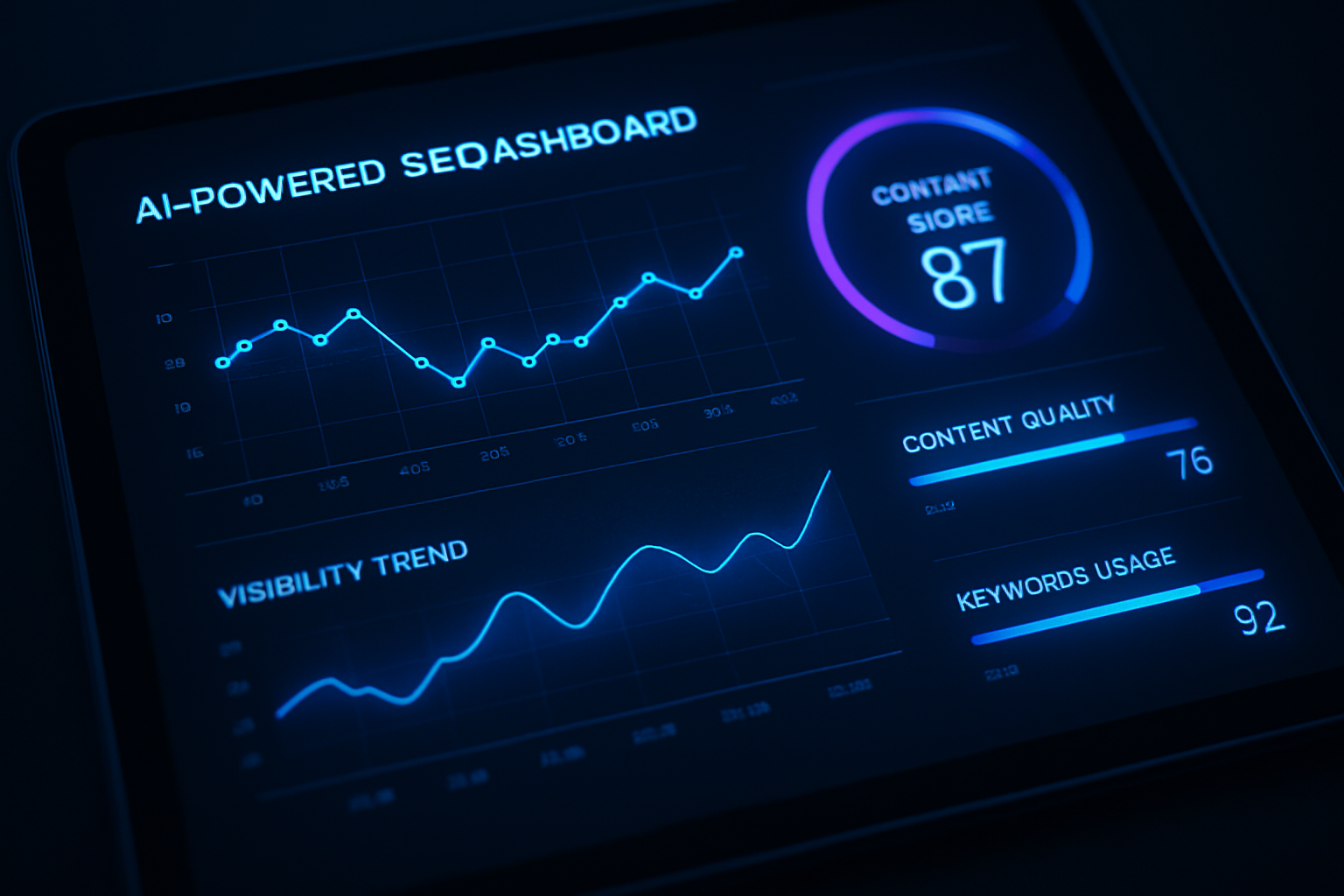
AI-powered optimization dashboards give agencies real-time visibility into how client content performs across both traditional and AI search environments.
Digital Marketing Agency Tools by Agency Size and Growth Stage
Not every agency is at the same stage of growth. Therefore, tool selection should reflect both where your agency is today and where it aims to be in the next 12 to 24 months. The wrong tool at the wrong stage creates unnecessary cost and complexity without delivering proportional value.
Small Agencies (1–10 Employees)
Small agencies benefit most from tools that consolidate multiple functions into a single platform, reducing both cost and operational complexity. For example, a platform like HubSpot handles CRM, email, and light marketing automation in one subscription. Similarly, AgencyAnalytics replaces manual reporting across several tools. Prioritize platforms with strong free tiers or affordable entry-level plans and minimal onboarding complexity.
Mid-Size Agencies (11–50 Employees)
Mid-size agencies, in contrast, typically need deeper specialization. They benefit from dedicated SEO platforms, separate social media management tools, and purpose-built AI optimization software that integrates cleanly with their existing stack. Integration capability becomes critical at this stage — tools that do not communicate create data silos that slow reporting and decision-making. For a detailed comparison of options at this stage, the article on effective tools for digital marketers is a useful reference.
Enterprise Agencies (50+ Employees)
Enterprise agencies, above all, prioritize API access, white-label reporting, multi-seat licensing, and enterprise-grade SLA commitments. They need platforms capable of handling hundreds of client accounts simultaneously without degrading performance or data accuracy. For a forward-looking perspective on where the enterprise tool market is heading, the resource on effective digital marketing tools in 2026 outlines the trajectory clearly.
Key Features to Evaluate Before Choosing Any Agency Tool
Before committing to any platform, every agency should evaluate candidates against a consistent set of criteria. Specifically, the following features separate tools that deliver long-term value from those that create short-term frustration.
- Multi-client account management — can the tool handle separate accounts, projects, and permissions for each client without data bleeding between accounts?
- White-label reporting — can you brand dashboards and automated reports with your agency’s logo and colors for client-facing delivery?
- API and integration availability — does the tool connect via API to your existing stack, CRM, or reporting dashboard?
- Automation depth — how much repetitive work can the platform eliminate? Specifically, look for automated alerts, scheduled reporting, and AI-driven recommendations.
- Scalability — does pricing and performance scale cleanly as you add clients, users, or data volume?
- Support quality — does the vendor offer dedicated agency support, onboarding assistance, or account management?
- Data accuracy and freshness — how frequently does the tool update its data? Stale keyword rankings or social metrics reduce the actionability of insights.
Common Mistakes Agencies Make With Their Tool Stack
Even experienced agencies make predictable errors when building or upgrading their digital marketing agency tools stack. Specifically, the most common mistake is choosing tools based on brand recognition or peer recommendations rather than actual fit for the agency’s specific workflows, client base, and service mix.
Another frequent issue is underestimating integration complexity. Tools that do not communicate create data silos, which ultimately makes reporting harder and reduces the agency’s ability to act on insights quickly. Therefore, always evaluate integration capabilities before committing to any platform — not as an afterthought during onboarding.
Additionally, many agencies over-invest in overlapping tools that serve the same function. For example, subscribing to three separate SEO platforms with significant feature overlap is a common budget waste. Consequently, a thorough tool audit before purchasing eliminates redundancy and frees budget for higher-impact categories.
Finally, many agencies still neglect AI search optimization entirely. This is an increasingly costly oversight. As AI-generated answers capture more user attention, clients whose content is not optimized for these environments will see declining organic reach — and they will hold their agency accountable for it.
How to Measure the ROI of Your Agency Tool Investments
Investing in digital marketing agency tools is a business decision — and like every business decision, it should be measured. However, many agencies fail to establish baseline metrics before adopting new platforms, making it impossible to attribute improvements accurately after implementation.
Metrics That Reflect Tool ROI for Agencies
- Hours saved per month per account — track time spent on reporting, keyword research, and content optimization before and after tool adoption
- Client retention rate — improved results from better tooling often correlate directly with longer client relationships
- Average client campaign performance lift — measure organic traffic growth, conversion rate improvements, or SERP ranking gains attributable to new tools
- Team capacity increase — how many additional accounts can your team handle with automation in place versus manual processes?
- Error rate reduction — automated reporting and data pulls reduce human errors that previously required time to identify and correct
Furthermore, the most compelling ROI case for AI-powered tools is the ability to serve more clients at a higher quality level without a proportional increase in headcount. For growing agencies, that operational leverage is often more valuable than any individual feature.
Frequently Asked Questions About Digital Marketing Agency Tools
What are digital marketing agency tools?
Digital marketing agency tools are software platforms and applications that help agencies plan, execute, automate, and measure campaigns across channels like SEO, social media, email, and paid advertising. They streamline workflows, improve client reporting, and increase overall campaign performance across multiple client accounts simultaneously.
Which digital marketing agency tools are essential in 2025?
In 2025, essential tools include SEO platforms like Semrush and Ahrefs, AI-powered optimization platforms like RankAuthority, social media schedulers like Sprout Social, email automation platforms like HubSpot or ActiveCampaign, and unified analytics dashboards like AgencyAnalytics. AI-driven GEO and AEO tools are increasingly critical as AI search reshapes how users discover content online.
How do AI tools improve digital marketing agency results?
AI tools automate repetitive tasks like keyword research, content optimization, bid management, and performance reporting. This frees agency teams to focus on higher-value strategy and creative work, enabling faster and more consistent results for clients across multiple accounts without requiring a proportional increase in headcount.
What is Generative Engine Optimization (GEO)?
Generative Engine Optimization (GEO) is the practice of optimizing content so it appears in AI-generated search responses from engines like ChatGPT, Google’s AI Overviews, and Perplexity. It extends traditional SEO by addressing how AI models retrieve, evaluate, and surface information in answer formats rather than ranked link lists.
What is Answer Engine Optimization (AEO)?
Answer Engine Optimization (AEO) focuses on structuring content so it directly answers specific user questions in voice search, featured snippets, and AI assistant responses. It prioritizes clarity, directness, and structured data markup to maximize content visibility in answer-first environments where traditional link rankings matter less.
How much do digital marketing agency tools typically cost?
Costs vary widely. Free tiers exist on tools like Google Analytics and Google Search Console. Mid-range plans for platforms like Semrush or Sprout Social typically run $100–$400 per month. Enterprise plans for HubSpot, Semrush, or AgencyAnalytics can exceed $1,000 per month depending on the number of users, client accounts, and data volume processed.
Can small agencies benefit from the same tools as large agencies?
Yes. Most leading digital marketing agency tools offer scalable pricing plans suitable for small teams. Platforms like RankAuthority are specifically designed to give smaller agencies access to advanced AI optimization capabilities without requiring large budgets or deep technical expertise — leveling the playing field against larger competitors.
How do I choose the right digital marketing tools for my agency?
Start by identifying your agency’s core service areas — SEO, paid media, social, email, or content. Then evaluate tools based on integration capabilities, white-label reporting features, multi-client management, ease of use, and pricing scalability. Prioritize platforms offering meaningful automation to maximize team capacity across all client accounts.
What is the difference between SEO tools and GEO tools?
Traditional SEO tools focus on ranking in Google’s blue-link results through keyword tracking, backlink analysis, and on-page optimization signals. GEO tools, in contrast, optimize content for AI-generated answer environments where traditional ranking signals — like backlinks and keyword density — have less direct impact on whether content gets surfaced in an AI response.
How long does it take to see results from agency marketing tools?
Results vary by tool and channel. Paid advertising tools can show measurable performance shifts within days. SEO and GEO optimization typically require three to six months for meaningful organic visibility gains. Reporting and project management tools deliver immediate operational efficiency improvements from day one of implementation.
What common mistakes do agencies make when choosing marketing tools?
Common mistakes include choosing tools based on popularity rather than workflow fit, underestimating integration complexity, investing in overlapping tools with redundant features, and neglecting AI-powered search optimization entirely. Agencies also frequently overlook white-label reporting capabilities, which are essential for professional client-facing deliverables.
Are free digital marketing tools good enough for agencies?
Free tools like Google Analytics and Google Search Console provide valuable baseline data but typically lack the depth, automation, and multi-client management capabilities that growing agencies require. Most agencies benefit significantly from investing in at least a few paid platforms to remain competitive, deliver consistent client results, and scale without adding proportional headcount.
How do digital marketing agency tools help with client retention?
Better tools lead to better client outcomes — faster campaign launches, more consistent results, and clearer ROI reporting. White-label dashboards that give clients real-time visibility into performance build trust and reduce churn. Agencies that demonstrate measurable progress through transparent, automated reporting retain clients significantly longer than those relying on manual monthly spreadsheets.
Conclusion: Build a Tool Stack That Outperforms the Competition
Choosing the right digital marketing agency tools is one of the highest-leverage decisions an agency can make in 2025. The right stack reduces manual work, improves client outcomes measurably, and positions your agency as a forward-thinking partner in an increasingly AI-driven search environment. Furthermore, agencies that invest in GEO and AEO optimization today are building a durable competitive advantage that compounds as AI search continues to reshape user behavior and content discovery.
In summary, start with a clear audit of your agency’s needs, prioritize tools that integrate cleanly across your stack, and make AI-powered optimization a core part of your service offering — not an afterthought. Platforms like RankAuthority make it straightforward to add automated GEO and AEO capabilities to your agency’s services, with a risk-free trial that removes the barrier to getting started immediately.
The agencies that thrive in 2025 and beyond will be those equipped with the digital marketing agency tools needed to serve clients across every search environment — traditional and AI-powered alike. Therefore, now is the time to evaluate, upgrade, and future-proof your agency’s marketing technology stack before competitors do it first.

