

Targeted SEO automation is the strategy smart marketing teams now use to stop drowning in spreadsheets and start ranking faster. Rather than manually auditing every page, tracking every keyword, and editing content one line at a time, targeted SEO automation puts AI-driven software in charge of the repetitive heavy lifting. For small business owners, in-house marketers, and agencies juggling several client sites at once, this matters because it frees up dozens of hours a month that used to go toward manual optimization busywork. Throughout this guide, we will unpack exactly what targeted SEO automation means, how it works behind the scenes, which tasks it should — and should not — handle, and how to choose a platform that fits your goals instead of just your budget. Author: RankAuthority Editorial Team. Last updated: 2026-08-14.
What Is Targeted SEO Automation?
Targeted SEO automation is the use of AI-powered software to automatically identify, prioritize, and fix the specific keywords, pages, and technical issues that carry the most weight for a website’s search visibility. Instead of blasting generic fixes across an entire domain, it concentrates effort exactly where the data says it will move rankings. Notably, this discipline blends classic search engine optimization fundamentals with newer AI-search readiness techniques.
In other words, targeted SEO automation is not simply software that runs audits in the background. Instead, it behaves like a decision engine — one that ranks tasks by expected impact, then executes many of them without waiting on manual sign-off. As a result, teams spend far less time sorting spreadsheets and far more time reviewing recommendations that already matter.
For example, imagine a platform notices that three product pages have thin content but strong search demand. Consequently, it prioritizes rewriting those three pages long before it ever touches a low-traffic blog post. This prioritization logic is the real difference between blanket automation and true targeted SEO automation. For a broader look at how artificial intelligence fits into the bigger picture, see our complete guide to automated SEO with AI.
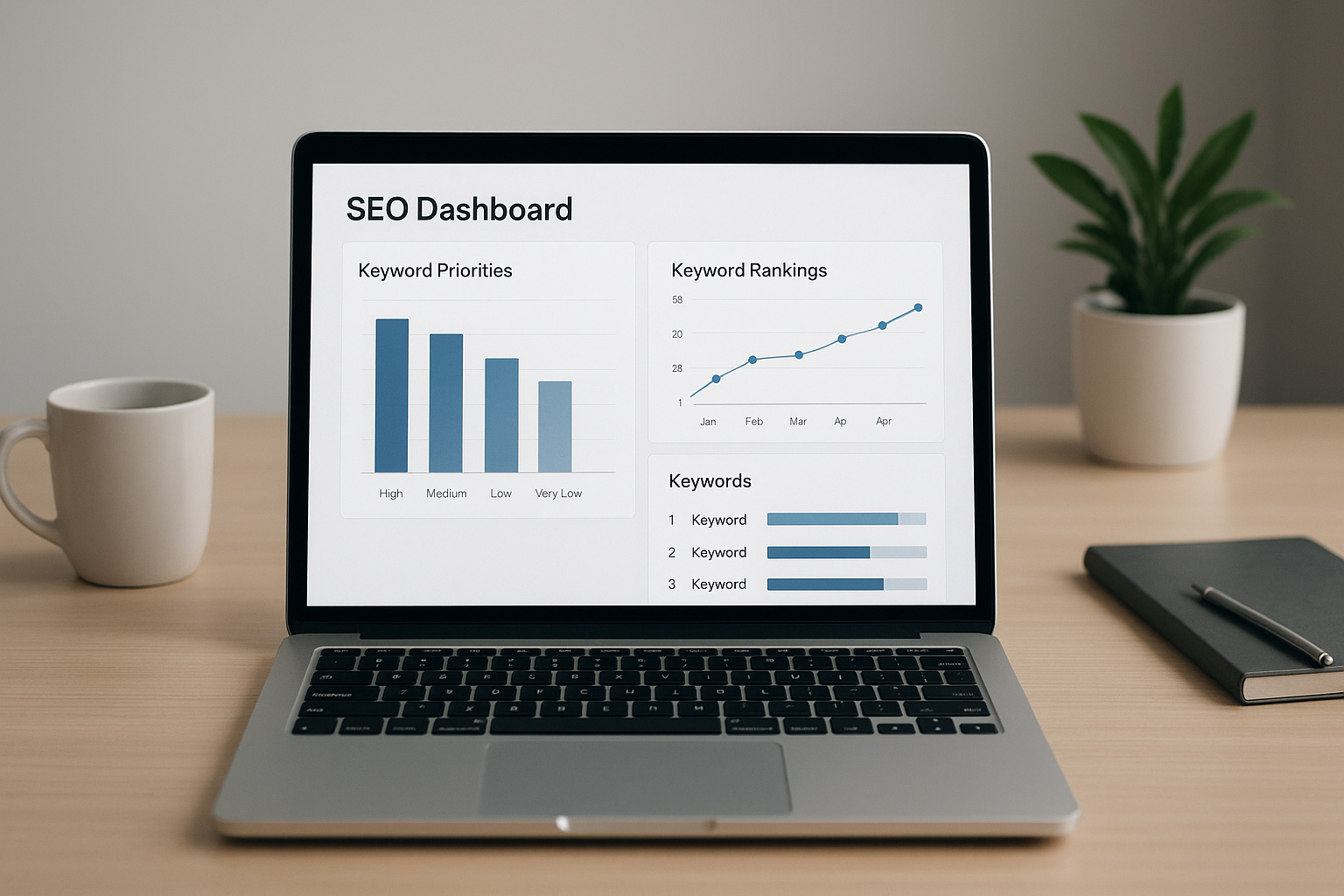
A dashboard view of targeted SEO automation ranking keyword opportunities by impact.
Why “Targeted” Matters More Than Generic Automation
Plenty of tools call themselves “SEO automation,” yet many simply run the same checklist against every page on a site. In contrast, genuinely targeted SEO automation weighs traffic potential, competition, and technical severity before deciding what to fix first. For example, intelligent SEO tools prioritize fixes by expected impact rather than applying a one-size-fits-all checklist. Because of this, two sites with identical technical scores can receive completely different action plans — and that difference is exactly why prioritization, not just automation, drives results.
Which SEO Tasks Can Targeted Automation Handle?
Understandably, one of the first questions teams ask is exactly what targeted SEO automation can take off their plate. Broadly, the tasks fall into three buckets: technical fixes, content optimization, and ongoing monitoring. Below, we break down each category in detail, since this is the piece most guides on SEO automation gloss over.
Technical SEO Tasks Automation Handles Best
- Broken link and redirect detection: Automation continuously scans for 404 errors and redirect chains, then queues fixes automatically.
- XML sitemap and robots.txt maintenance: New and removed pages are reflected instantly, so search engines always crawl an accurate map.
- Schema and structured data markup: Product, FAQ, and article schema get generated and validated without manual JSON editing.
- Core Web Vitals monitoring: Page speed, layout shift, and interactivity metrics are tracked and flagged the moment they slip.
- Duplicate content and canonical tag management: Automation identifies overlapping pages and applies canonical tags to prevent cannibalization.
Content Optimization Tasks
- Meta title and description generation: Bulk rewrites at scale, tuned to click-through rate patterns rather than character-count guesswork.
- Internal linking suggestions: The system identifies relevant pages to cross-link automatically, strengthening topical authority.
- Content gap and keyword clustering: Automation groups related search terms and flags missing subtopics on existing pages.
- Readability and structure scoring: Pages are checked for heading hierarchy, sentence length, and scannability before publishing.
Monitoring, Rank Tracking & Reporting Tasks
Finally, targeted SEO automation keeps watch after the fixes go live. Specifically, it tracks keyword position changes, backlink gains and losses, and competitor movement, then compiles it all into a digestible report. As a result, teams no longer need to manually pull data from four different tools every Monday morning.
How Automated SEO Targeting Improves Search Visibility
Automated SEO targeting typically starts with a full crawl of your site. Then, algorithms compare each page against ranking factors such as page speed, internal linking, and content depth. According to Google’s own search guidance, technical health and content relevance remain foundational ranking signals — exactly what these systems evaluate first.
Once the scan finishes, the platform scores each issue by estimated traffic potential. Therefore, instead of a flat to-do list, you get a ranked queue where the highest-impact fixes appear first. This scoring model is what separates targeted SEO automation from older, blanket-style optimization tools that treated every page the same.
Additionally, many platforms now factor in AI search behavior. Since AI-powered answer engines summarize content rather than simply linking to it, automation tools increasingly check whether a page’s structure and clarity make it easy for AI models to quote and cite accurately. Tools that represent the latest techniques — like cutting-edge SEO automation platforms — often include AI search readiness checks.
Key Benefits of AI-Driven SEO Automation
There are several concrete reasons businesses adopt AI-driven SEO automation instead of managing everything by hand. See Cutting-edge SEO automation for a deep comparison of modern platforms. Above all, time savings tend to be the deciding factor for smaller teams.
- Time efficiency: Routine audits and fixes that once took days can now run continuously in the background.
- Consistency: Automation applies the same quality standard across every page, reducing human oversight gaps.
- Scalability: Agencies can use scalable SEO solutions to manage dozens of client sites from one dashboard without adding headcount.
- AI search readiness: Content gets structured for both classic search engines and generative AI answer tools.
Notably, industry reporting has tied structured, prioritized optimization to measurable gains. For instance, sites that consistently address high-impact technical and content issues often report organic traffic growth in the double digits within the first two quarters, according to trend analysis from Search Engine Land. As a result, prioritization is not a nice-to-have; it is the mechanism that makes automation worth the investment.

Tracking traffic gains after adopting an automated SEO strategy.
Step-by-Step: Launching Your Targeted SEO Automation Process
Setting up targeted SEO automation does not need to be complicated. Below is a straightforward sequence that works whether you manage one site or several.
- Audit your current site. Run a full technical and content audit to identify existing ranking barriers, including slow pages, missing metadata, and thin content that automation can later prioritize for fixes. See how to automate my SEO processes for practical workflow and tool setup guidance.
- Set targeted keyword priorities. Define the specific keywords and page groups that matter most to your business goals so the automation platform knows where to focus its optimization effort first.
- Connect an automation platform. Link your website to a targeted SEO automation platform, such as a one-click AutoPilot tool like the one offered by RankAuthority, so it can begin scanning and applying optimizations automatically.
- Review automated changes. Check the fixes and content suggestions the platform generates on a regular basis to confirm they match your brand voice before they go live.
- Track AI and traditional search visibility. Monitor both classic ranking reports and newer AI search visibility metrics monthly to understand how automated changes influence discoverability.
For a deeper walkthrough of this process, our guide on automating your website’s SEO efforts effectively covers additional configuration tips.
Tasks You Should Never Fully Hand Over to Automation
Even the best targeted SEO automation has limits, and pretending otherwise sets teams up for disappointment. In particular, decisions tied to E-E-A-T (experience, expertise, authoritativeness, and trustworthiness — Google’s framework for judging content quality) still need a human in the loop. Brand voice, legal claims, medical statements, and anything touching YMYL (your-money-or-your-life) topics deserve manual review before publishing, no matter how confident the automation appears.
Similarly, strategic decisions — which markets to target, which products to prioritize, how to position against competitors — remain firmly in human territory. Automation can surface the data, but above all, it should not make the final call on brand-defining choices. Instead, treat targeted SEO automation as a research assistant that hands you a prioritized list, not a replacement decision-maker.
Targeted Automation vs Manual SEO Optimization
Manual SEO optimization gives you full control, but it also demands significant time and specialized knowledge. In contrast, targeted automation trades a small amount of granular control for speed and consistency across large sites.
Manual SEO: Slower rollout, deep customization, higher labor cost, better suited to small, highly specialized sites.
Targeted SEO automation: Faster rollout, prioritized fixes, lower ongoing labor cost, better suited to scaling across many pages or client sites.
Ultimately, most growing businesses find a hybrid approach works best: automation handles the repetitive groundwork, while a strategist steps in periodically for brand-sensitive decisions. If you are still weighing this decision, our article on what to know before starting SEO automation outlines the key trade-offs in more detail.
Choosing the Right SEO Automation Platform
Not every automation tool is built the same way, so it helps to know what separates a genuinely useful platform from a shallow one. Specifically, look for prioritized recommendations rather than a flat checklist of generic issues. For a side-by-side comparison of the leading options, our roundup of SEO automation software, tools, and strategies is a useful next stop.
In particular, a strong platform should cover both technical health and AI search readiness, since generative engines and answer engines now influence a growing share of discovery. RankAuthority’s 1-Click AI AutoPilot technology, for instance, is designed to automate this combined workload while offering a seven-day trial so teams can evaluate results before committing. Learn how to automate my SEO processes for step-by-step setup guidance.
For ecommerce sites specifically, product catalogs add unique complexity, since thousands of pages may need attention simultaneously. Our resource on automating ecommerce SEO tasks addresses that scale challenge directly.

Configuring a targeted SEO automation platform for a growing website.
Common Mistakes to Avoid With SEO Automation Tools
Even reliable automation can underperform if it is set up carelessly. First, avoid running automation without reviewing early results; unchecked changes can occasionally drift from brand tone.
Second, resist the urge to automate everything at once on a brand-new site. Instead, start narrow, confirm the tool’s judgment matches your expectations, and then expand scope gradually. Finally, do not ignore AI search metrics; focusing solely on traditional rankings means missing an increasingly important discovery channel. For more setup guidance, see automating your SEO and how to automate your SEO processes.
How Quickly Can You See Results From Targeted SEO Automation?
Understandably, this is the question most businesses ask before committing budget. In general, technical fixes such as broken redirects or sitemap errors can influence crawling within days. However, content-driven ranking improvements usually take six to twelve weeks, since search engines need time to recrawl and re-evaluate updated pages. We cover this timeline in far more depth, including what factors speed it up or slow it down, in our dedicated piece on how quickly you can see results from SEO automation.
Frequently Asked Questions About Targeted SEO Automation
Final Thoughts on Targeted SEO Automation
In summary, targeted SEO automation gives businesses a practical way to compete for visibility without the massive time investment manual optimization typically demands. By prioritizing high-impact keywords, pages, and technical fixes, it turns a sprawling task list into a manageable, ongoing process. As AI search continues to reshape how people find information, pairing this kind of automation with occasional human review offers the best balance of speed and control. If you want to go further, our guide on how to streamline your SEO strategy using AI is a natural next read. Whether you manage a single site or several client properties, starting with a small trial is a low-risk way to confirm targeted SEO automation fits your workflow before scaling further. Add an author byline and a "Last updated" date, and include a short author bio with credentials and experience to improve credibility and E‑E‑A‑T.

