

RankAuthority Editorial Team · Updated 2025
SEO for AI-Driven Businesses: The Complete 2025 Playbook
SEO for AI-driven businesses is the discipline of optimizing digital content so it ranks in traditional engines like Google while also getting surfaced, quoted, and cited by AI-powered answer tools such as ChatGPT, Perplexity, and Google’s AI Overviews. As search behavior shifts toward conversational, AI-generated answers, companies built around artificial intelligence products face a distinct challenge: proving relevance to systems that read context, not just keywords. In this guide, therefore, you’ll learn exactly what SEO for AI-driven businesses involves, why it differs from conventional SEO and generic SaaS marketing advice, and how to build a strategy — including the technical crawler settings most guides skip — that keeps your brand visible as search keeps evolving.
Quick answer: SEO for AI-driven businesses combines classic search optimization with Generative Engine Optimization (GEO) and Answer Engine Optimization (AEO), plus technical crawler access for AI bots like GPTBot and Google-Extended, so content ranks on Google and gets cited inside AI chat tools. It requires clear entity definitions, structured data, direct-answer formatting, and deliberate control over which AI systems can read your site — not keyword density alone.
What Is SEO for AI-Driven Businesses?
SEO for AI-driven businesses is a specialized approach that blends traditional search optimization with two newer disciplines: GEO and AEO. In short, it focuses on making content clear, structured, and citation-worthy so both search engines and AI models can understand and recommend it accurately.
Unlike older SEO tactics that relied heavily on exact-match keywords, this approach prioritizes context. Consequently, AI-driven companies must explain their products in plain language, define technical terms, and organize pages so a large language model — an AI system trained on massive datasets to predict and generate human-like text — can extract facts without guesswork.
The Core Difference Between SEO for AI-Driven Businesses and Traditional Rankings
Traditional SEO asks, “does this page rank?” SEO for AI-driven businesses asks a second question too: “can an AI system safely quote this page as a fact?” That distinction matters because a page can hold the number-one spot on Google and still never appear inside a ChatGPT response or an AI Overview if it lacks structure, clear definitions, or verifiable authorship. As a result, AI companies especially — whose products are often abstract, technical, and unfamiliar to general audiences — need to double down on plain-language clarity that both humans and machines can parse.
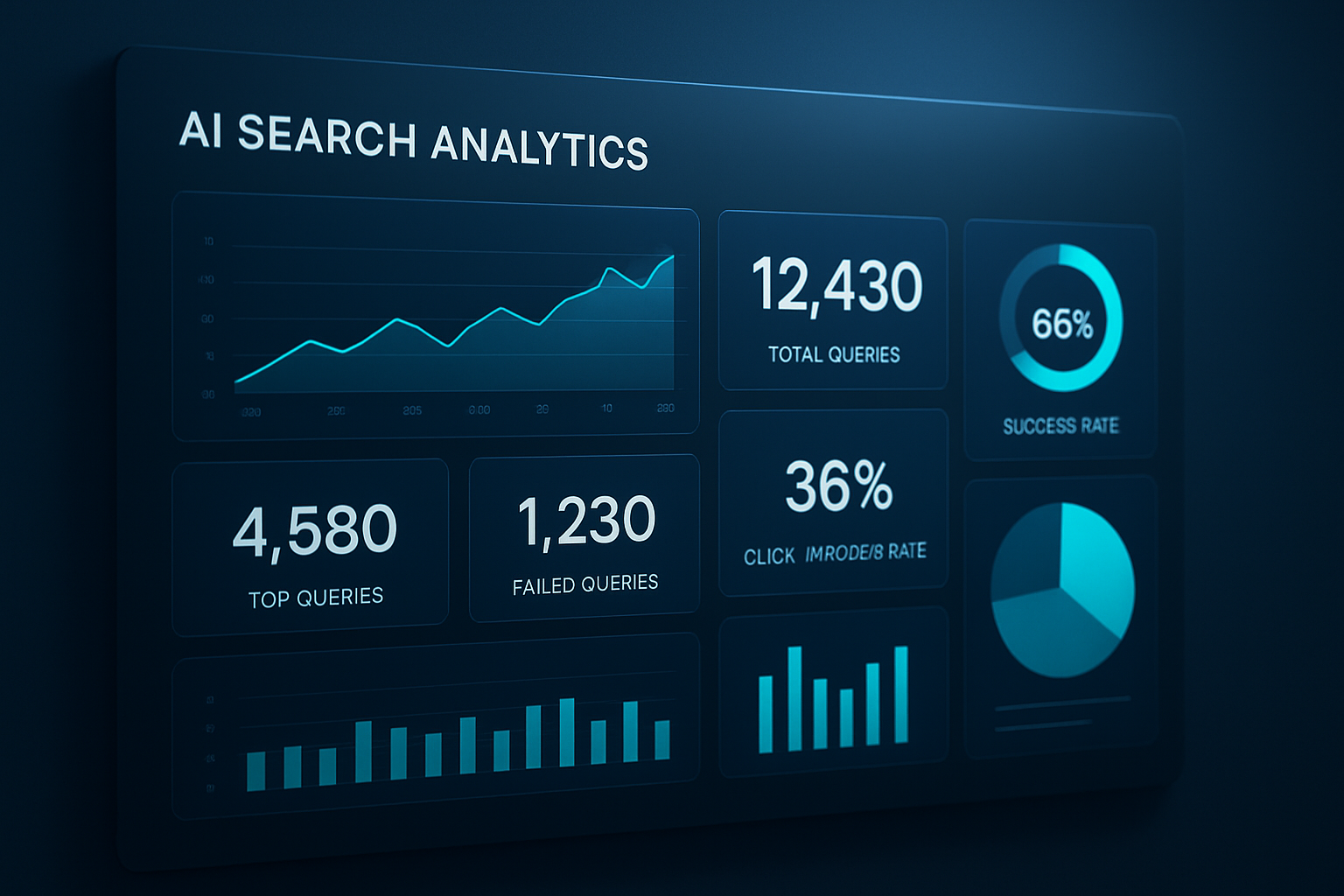
A visual analytics dashboard reflects how SEO for AI-driven businesses tracks both traditional rankings and AI citation performance. Learn how to translate those insights into better ranking signals in our authority ranking guide.
Why Traditional Search Optimization Falls Short for AI Companies
Traditional SEO still matters, but it was never designed for a world where answers appear directly inside a chat window. As a result, AI-driven businesses relying only on backlinks and keyword targeting often miss out on visibility inside generative tools entirely; consider AI-driven website optimization practices.
According to Gartner, search engine volume could drop by as much as 25% by 2026 as users shift toward AI chatbots and virtual agents for answers. In particular, this means a page can rank on page one of Google and still never appear in an AI-generated summary if it lacks structure. For further reading on foundational optimization principles, Wikipedia’s overview of search engine optimization remains a useful baseline. Google’s own product announcement on generative AI in Search is worth reading too, since it explains directly how AI Overviews source their answers.
How AI-Powered Search Actually Works
Most AI answer engines rely on large language models, systems trained on massive text datasets to predict the most likely next word or phrase in a response. These models often pull supporting facts through a process called retrieval-augmented generation, where the model retrieves relevant indexed pages before generating an answer. This is precisely why clean structure, factual consistency, and unambiguous phrasing matter so much for SEO for AI-driven businesses specifically — vague or contradictory copy simply doesn’t survive that retrieval step. You can learn more about the underlying technology through this overview of large language models.
How GEO and AEO Strengthen SEO for AI-Driven Businesses
Generative Engine Optimization, or GEO, structures content so generative AI tools can extract and present it as an answer. Meanwhile, Answer Engine Optimization, or AEO, formats content to directly answer specific questions in one to three sentences right after a heading. Together, these disciplines form the backbone of modern search optimization for AI-native companies.
Generative Engine Optimization (GEO) in Practice
In practice, GEO means writing definitions before diving into detail, labeling comparisons clearly, and avoiding marketing fluff that hides the actual facts. For example, if your AI product performs sentiment analysis, say so in the first sentence rather than three paragraphs of brand story first. Specifically, generative tools reward content that states a claim, backs it with evidence, and moves on.
Answer Engine Optimization (AEO) in Practice
AEO works alongside GEO by targeting the exact phrasing users type into voice assistants and chat tools. Consequently, every important heading in your content should be followed by a compact, self-contained answer — not a teaser sentence that requires reading further. This matters even more for SEO for AI-driven businesses because complex technical concepts are exactly what users ask AI assistants to simplify for them. For a broader look at how AI is reshaping visibility for smaller companies, this guide on how small businesses can benefit from AI in search offers additional context.
A Step-by-Step Framework for SEO for AI-Driven Businesses
Building a strategy that covers both traditional and AI search doesn’t require guesswork. Instead, follow this repeatable seven-step process that strengthens every layer of visibility, from technical foundations to ongoing measurement.
- Audit current search visibility. Review existing rankings, technical health, and structured data to spot gaps before making any changes, so you know exactly where AI citations are already missing.
- Define entities and terms clearly. Write plain-language definitions for products, services, and industry jargon so AI models extract accurate context instead of guessing at unfamiliar terminology.
- Add structured data and schema via website optimization automation. Implement Organization, FAQ, HowTo, and Article schema so crawlers can parse content into discrete, citable facts rather than unstructured prose.
- Create direct-answer content blocks. Place a short, self-contained answer immediately after each heading so answer engines can quote it directly without stitching sentences together.
- Configure crawler access deliberately. Decide which AI bots, such as GPTBot and Google-Extended, may access your content, and document that decision in your robots.txt file rather than leaving it to default settings.
- Build authoritative citations and links. Earn mentions from credible sources, link internally between related pages, and keep author and publisher information consistent across the site.
- Monitor and automate ongoing optimization. Track AI citations and rankings monthly, then automate content refreshes as algorithms and AI retrieval methods continue to evolve.
Because manual upkeep is time-consuming, many teams now rely on automated platforms. For example, an automated AI AutoPilot SEO service can handle much of this process continuously, freeing up time for strategy rather than manual audits. Meanwhile, teams looking to compare broader software options can review this roundup of digital optimization tools for AI-powered search success.
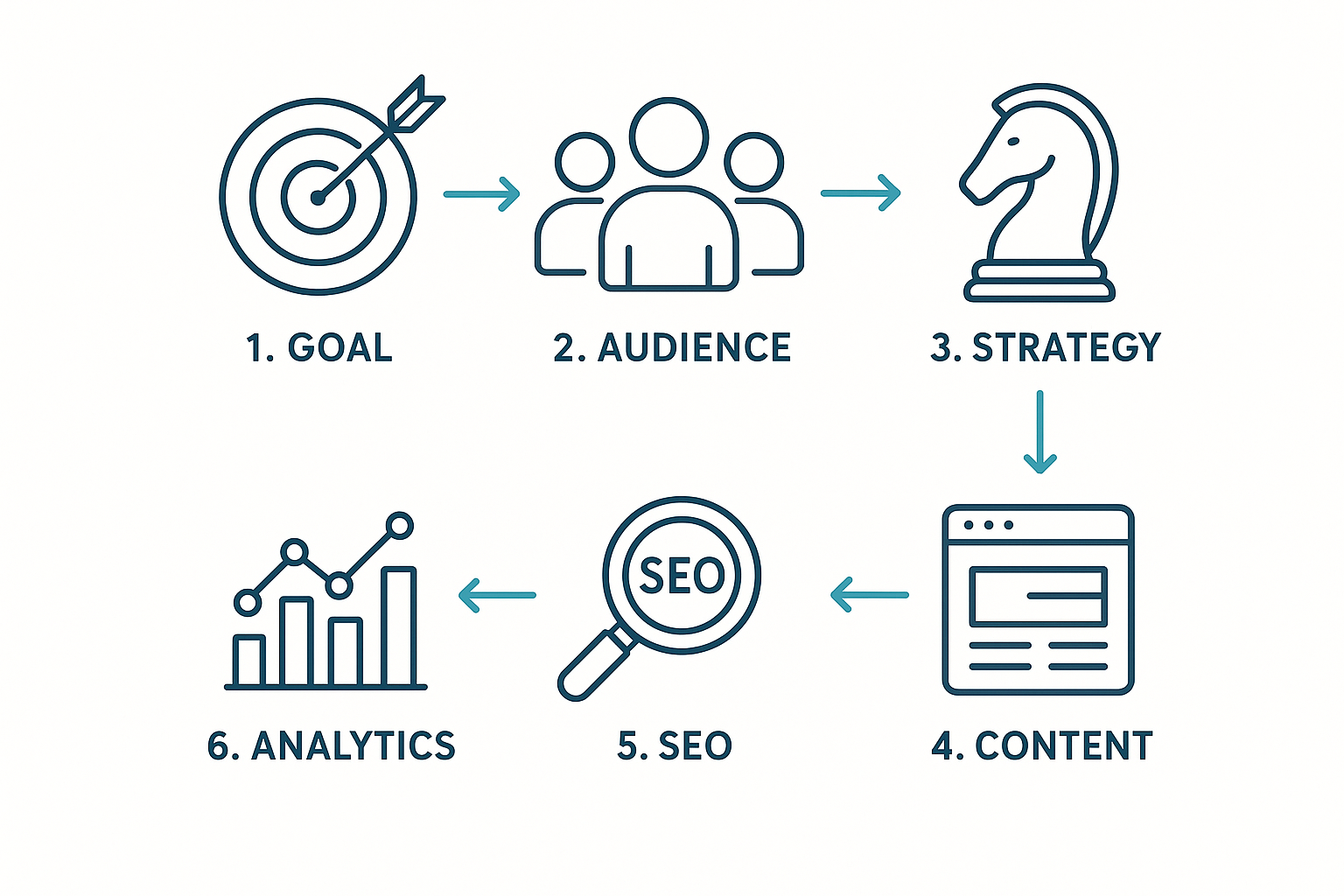
Following a structured process makes SEO for AI-driven businesses far more predictable and repeatable.
Technical Foundations Most AI Companies Overlook
Above all, the biggest blind spot in most AI search optimization advice is technical crawler configuration. Specifically, AI-driven businesses often forget that AI answer engines use dedicated bots — separate from Googlebot — to gather training and retrieval data. If those bots are blocked by accident, or allowed without any strategy, visibility inside AI tools suffers either way.
Should You Block or Allow AI Crawlers?
This depends entirely on your business goals. If citation inside AI tools drives leads and brand awareness, allowing bots like GPTBot and Google-Extended through your robots.txt file makes sense. In contrast, if your content is proprietary research you want gated behind a paywall, blocking select crawlers may be the smarter move. Either way, this should be a deliberate decision documented in your technical SEO checklist, not an afterthought.
In addition to crawler access, page speed and Core Web Vitals still influence whether AI systems can render and parse your pages efficiently. Similarly, using well-formed structured data from Schema.org’s vocabulary gives both Google and AI models a machine-readable map of your content, reducing the guesswork that leads to inaccurate citations.
Content Strategy for AI Product and SaaS Pages
Because AI products are often technical and abstract, content strategy needs extra care. Therefore, prioritize three page types that generic SEO advice frequently ignores: use-case pages that show the product solving a specific problem, comparison pages that honestly position you against alternatives, and documentation pages kept current enough that AI models trust their freshness. For automation best practices, see website optimization automation.
- Use-case pages: Describe a single real-world problem your AI solves, in plain language, before mentioning any technical mechanism.
- Comparison pages: Compare your product against alternatives honestly, since AI models cross-reference multiple sources and penalize one-sided claims with lower trust.
- Living documentation: Keep changelogs and docs updated with visible timestamps, since freshness signals influence which version of a fact an AI model chooses to cite.
Common Mistakes AI-Driven Businesses Make With Search Optimization
Even well-funded AI companies stumble on the basics. Above all, vague content that never clearly defines what a product actually does confuses both readers and AI models alike.
Other frequent issues include skipping schema markup entirely, ignoring page speed, and publishing content without any FAQ structure. In contrast, businesses that fix these issues early tend to see AI citations appear much faster. Google’s own guidance on creating helpful, people-first content reinforces many of these same principles, and it applies just as much to AI-driven businesses as it does to any other niche.
Local and Small Business Considerations
Local businesses face their own version of this challenge, since AI tools increasingly answer “near me” style queries directly. As a result, location-specific structured data and consistent business information matter more than ever. This local business AI search optimization guide walks through the specifics for 2025, while this resource on smarter rankings for local businesses in Perth shows how the same principles apply regionally. If your company serves smaller clients directly, this simple growth guide for small business owners pairs well with the AI-specific tactics covered here.
SEO for AI-Driven Businesses vs. General SaaS SEO: What’s Different
It’s tempting to treat AI companies like any other SaaS business, but that assumption leaves visibility on the table. Below is a direct comparison of where the two approaches diverge.
- Terminology load: General SaaS SEO rarely needs to define basic software concepts, whereas SEO for AI-driven businesses must define terms like “embeddings” or “inference” in plain language for both readers and models.
- Trust signals: AI companies face more skepticism around accuracy claims, so citations, benchmarks, and transparent methodology carry more SEO weight than typical SaaS testimonials.
- Crawler strategy: Standard SaaS sites rarely think about GPTBot or Google-Extended, yet these directives directly shape whether an AI company gets cited as an authority in its own category.
- Content lifespan: AI features change fast, so documentation and comparison pages need far more frequent refreshes than a typical SaaS feature page.
Choosing the Right Platform for AI Search Optimization
Not every tool handles GEO and AEO equally well. Therefore, it’s worth evaluating whether a platform automates technical fixes, generates schema, and produces direct-answer content, rather than just tracking keyword rankings.
RankAuthority’s 1-Click AI AutoPilot technology, for instance, is built specifically to automate this kind of ongoing optimization across both traditional and AI-driven search channels. It’s designed for small business owners, marketers, and agencies who want results without a steep learning curve, and it’s available with a risk-free seven-day trial through RankAuthority’s platform. If you’re comparing options first, this breakdown of the best SEO tool for small business owners is a helpful starting point, alongside this overview of SEO secrets for business owners if you’re new to core concepts.
Measuring Success in AI Search Visibility
Once a strategy is live, tracking the right metrics matters just as much as building it. In particular, organic traffic alone no longer tells the full story for AI-driven companies.
Instead, monitor AI answer citations, featured snippet appearances, branded search volume, and click-through rate together. Similarly, watch for mentions inside AI chat tools by periodically testing relevant queries yourself. Over time, this combined view shows whether SEO for AI-driven businesses is actually working across every channel that matters. Learn more about AI-driven website optimization.
- AI citation rate: How often your brand or content appears when target queries are asked inside AI chat tools.
- Featured snippet share: The percentage of tracked keywords where your page occupies the snippet position.
- Branded search volume: Growth in searches for your company name, which signals rising authority and recall.
- Structured data coverage: The percentage of your pages carrying valid schema markup, checked regularly for errors.
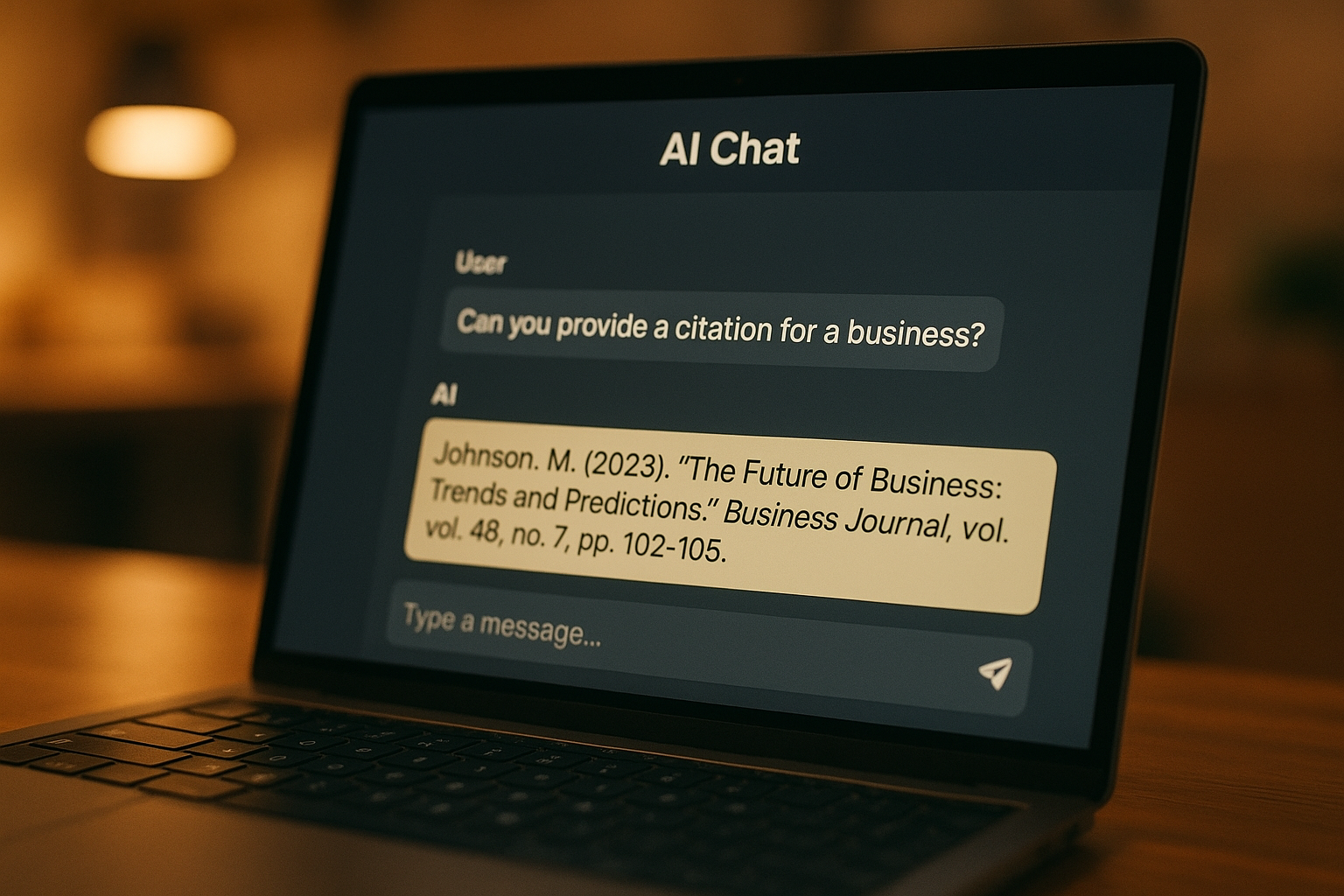
Tracking AI citations has become a core part of measuring SEO for AI-driven businesses success.
Frequently Asked Questions About SEO for AI-Driven Businesses
What is SEO for AI-driven businesses?
SEO for AI-driven businesses is the practice of optimizing content and technical structure so it ranks in traditional search engines and gets referenced by AI answer engines. It blends classic SEO with GEO and AEO techniques.
How is SEO for AI-driven businesses different from traditional SEO?
Traditional SEO focuses mainly on keywords, backlinks, and Google rankings. This approach adds structured data, clear entity definitions, and citation-worthy content so language models can summarize the brand accurately.
What is Generative Engine Optimization (GEO)?
GEO structures content so generative AI tools, such as chatbots and AI Overviews, can accurately extract and present it as an answer. It relies on clear definitions and well-organized headings and can be supported by best AI solutions that automate schema and structure.
What is Answer Engine Optimization (AEO)?
AEO formats content to directly answer specific questions, often in one to three sentences near a heading. It helps voice assistants and AI search tools surface a business as the answer source.
Why do AI-driven businesses need AEO and GEO in addition to SEO?
A growing share of searches never reach a traditional results page. Without AEO and GEO, a company can rank well on Google yet remain invisible inside AI chat and summary tools — learn how to improve online visibility with practical SEO methods.
How long does it take to see results from SEO for AI-driven businesses?
Most businesses see measurable movement within 8 to 12 weeks, though AI citations can appear faster once structured data is in place. Consistent publishing speeds this up.
How much does SEO for AI-driven businesses typically cost?
Costs range from a few hundred dollars monthly for automated platforms to several thousand for full-service agencies. Automated tools usually offer more predictable pricing for smaller companies.
What are the most common SEO mistakes AI companies make?
Common mistakes include vague content that never defines key terms, missing schema markup, and ignoring how AI tools summarize pages. Slow page speed is another frequent, costly error.
Can small businesses benefit from SEO for AI-driven businesses strategies?
Yes, small businesses often benefit the most because AI search levels the playing field for well-structured content. A focused local SEO and AEO strategy helps smaller brands compete with larger competitors.
What tools help automate SEO for AI-driven businesses?
Automated platforms that handle technical audits, schema generation, and content structuring save significant time. Tools like RankAuthority’s 1-Click AI AutoPilot are built specifically for this ongoing work.
How do AI search engines decide which businesses to mention?
AI search engines favor content that is clearly structured, factually consistent, and backed by credible sources. Businesses with organized FAQs and schema markup get cited more often.
Is schema markup important for SEO for AI-driven businesses?
Schema markup is essential because it gives search engines and AI models structured, machine-readable context about a page. Without it, AI tools must guess at meaning, reducing citation accuracy.
Should AI companies block bots like GPTBot from crawling their site?
It depends on your goals. Allowing GPTBot and Google-Extended usually helps AI citation visibility, while blocking them may protect proprietary content that you don’t want summarized elsewhere.
Do AI-driven businesses need different content than a typical SaaS company?
Yes, AI companies generally need more plain-language definitions, more frequent documentation updates, and stronger trust signals since audiences and AI models both scrutinize technical accuracy claims closely.
Final Thoughts on SEO for AI-Driven Businesses
In summary, SEO for AI-driven businesses is no longer optional for companies that want to stay visible as search continues to change. By combining traditional optimization with GEO, AEO, and deliberate crawler strategy, businesses can rank well on Google while also earning citations inside AI chat tools and generative summaries.
Ultimately, the businesses that treat this as an ongoing process, rather than a one-time project, will hold the strongest position. Whether managed manually or through an automated platform, consistent structure, clear definitions, deliberate technical decisions, and reliable citations remain the foundation of lasting SEO for AI-driven businesses success.

