

Automated SEO Software: The Complete 2025 Guide to AI-Powered Rankings
Automated SEO software is the technology that lets a website climb search rankings by running audits, fixing technical errors, and optimizing content on its own schedule, without a human clicking every button. Instead of a person manually crawling pages, tracking keywords, and building links one at a time, automated SEO software uses artificial intelligence (AI, technology built to mimic human-style decision-making) to carry out these repetitive jobs continuously and at a scale no individual could match. As a result, solo founders, in-house marketers, and multi-location agencies can all compete for visibility in classic search engines and in the newer AI-powered answer engines that increasingly sit between a query and a click. This guide breaks down exactly what automated SEO software does, how the technology works under the hood, what separates a strong platform from a shallow one, what it costs, and how to choose the right tool for your specific goals.
Quick answer: Automated SEO software is a platform that uses AI to perform technical audits, content optimization, schema markup, and rank tracking automatically, reducing manual work while improving visibility across search engines and AI answer engines. It suits anyone who wants consistent optimization without becoming a full-time SEO specialist.
What Is Automated SEO Software?
Automated SEO software is a tool that applies artificial intelligence and rule-based logic to handle the recurring, time-consuming work of search optimization. Specifically, it scans a website, identifies weaknesses, and either fixes them directly or generates clear, prioritized recommendations. In addition, many modern platforms now extend beyond Google to support Generative Engine Optimization (GEO, the practice of optimizing content to appear inside AI-generated summaries) and Answer Engine Optimization (AEO, optimizing for direct answers served by chatbots and voice assistants).
Unlike a single-purpose keyword tool, automated SEO software typically combines several functions inside one dashboard. For example, it might track rankings, audit page speed, rewrite thin meta descriptions, and refresh outdated content at the same time. Consequently, teams spend less time switching between disconnected tools and more time reviewing results and making strategic calls.
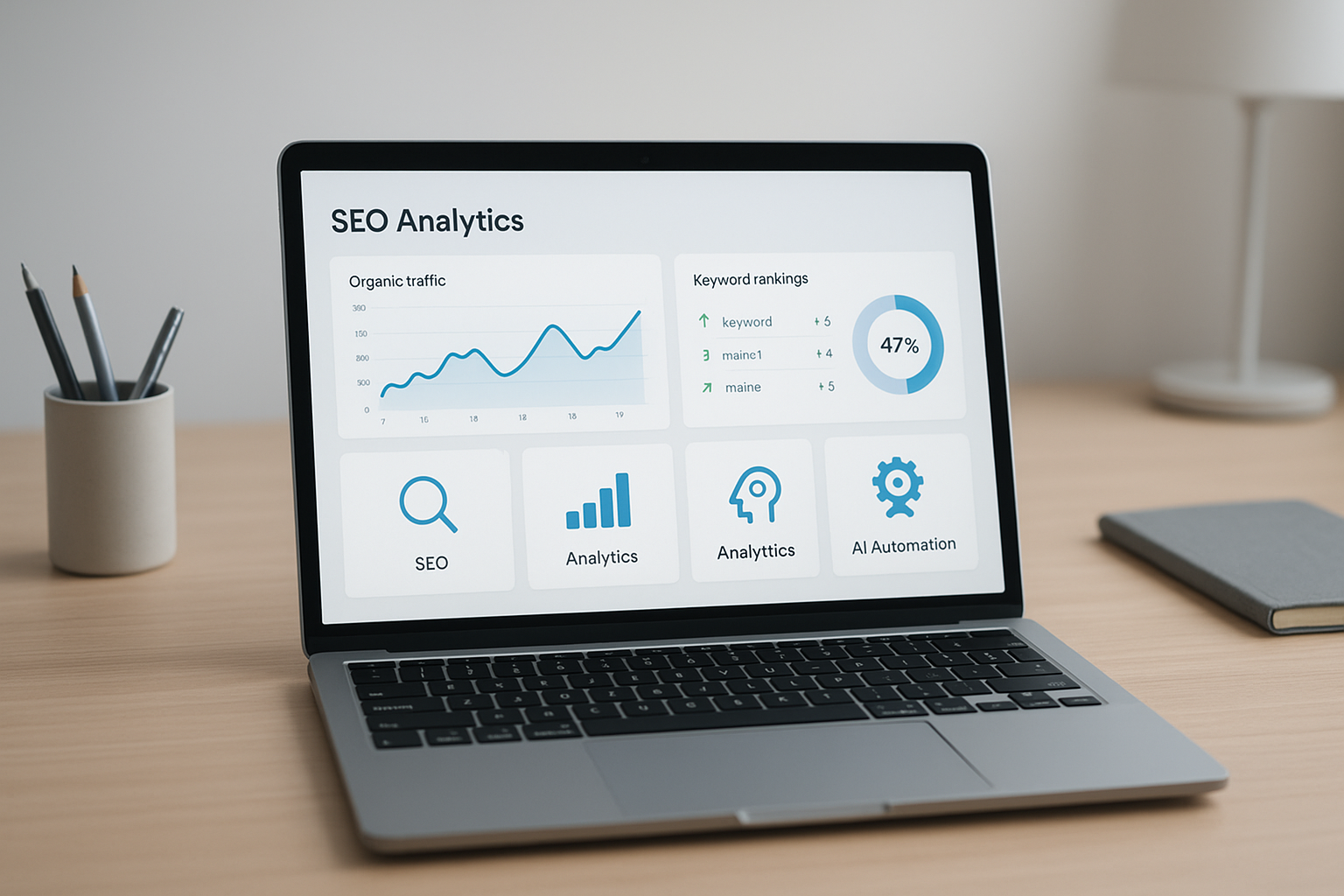
Automated SEO software dashboards consolidate audits, rankings, and content recommendations in one place.
How AI-Powered SEO Automation Works, Step by Step
Most SEO automation tools follow a similar sequence. First, the software crawls your website to build a full technical profile, similar to how Google’s own SEO documentation describes crawlability and indexing. Then, it compares your pages line by line against competitors already ranking for the same terms, identifying gaps in structure, depth, and keyword coverage.
After that initial analysis, the platform applies changes automatically or queues them for one-click approval. For instance, it might add missing structured data, rewrite thin meta descriptions, compress oversized images, or flag broken internal links. Because this process repeats on a schedule rather than a one-time basis, your site keeps improving even when nobody is actively working on it that week.
Search engine optimization itself, as defined by Wikipedia’s overview of SEO, has always involved technical, content, and authority signals working together. Automated platforms simply apply that same framework at machine speed rather than through manual labor spread across weeks or months.
Autopilot Mode: The Engine Behind Modern SEO Automation
A defining feature of leading SEO automation tools is an “autopilot” layer that pushes approved fixes live without waiting on a developer ticket. Rather than emailing a list of recommendations to a web team and hoping it gets actioned, autopilot mode connects directly to your content management system and deploys changes like title tag rewrites, canonical tag corrections, and internal link additions in real time. This matters because delayed implementation is one of the biggest reasons SEO recommendations never actually move rankings.
Naturally, autopilot should never be a black box. The strongest platforms show you exactly what changed, when it changed, and give you the option to roll back any single edit. That transparency is what separates trustworthy automated SEO software from a risky “set it and forget it” gamble.
Technical Audits, Schema Markup, and Core Web Vitals Automation
Technical health is the foundation everything else sits on. Automated SEO software continuously checks for crawl errors, duplicate content, missing alt text, slow-loading pages, and broken redirects. In particular, structured data — the standardized vocabulary defined at Schema.org — helps search engines and AI systems understand exactly what a page is about, so platforms that auto-generate and validate schema markup have a meaningful edge over those that don’t.
Similarly, page experience signals such as Core Web Vitals (Google’s official metrics for loading speed, interactivity, and visual stability, documented at web.dev) are monitored and, in the best tools, automatically remediated through image compression, code minification, and lazy-loading adjustments. Consequently, you get compounding improvements instead of a one-time audit that goes stale within a month.
AI Content Optimization and Real-Time Rewrites
On the content side, automated SEO software analyzes top-ranking pages for a given keyword and scores your existing content against them for depth, topical coverage, and readability. Where gaps appear, the platform suggests — or in more advanced systems, directly drafts — additional sections, updated statistics, or stronger headings. This is especially valuable for large sites where manually refreshing hundreds of aging blog posts simply isn’t realistic. For a deeper look at streamlining this exact workflow, see this guide on how to streamline your SEO strategy using AI.
Key Benefits of Automated SEO Software
The clearest advantage of automated SEO software is time savings. Rather than spending hours each week on manual audits, teams can redirect that effort toward strategy and content creation. Furthermore, automation reduces human error, since the software applies the same optimization rules consistently across every single page, whether your site has fifty pages or fifty thousand.
Consistency
Rules apply the same way across every page, avoiding gaps that manual work often leaves behind.
Scale
Agencies can manage dozens of client sites without proportionally increasing staff hours.
AI readiness
Modern platforms optimize for AI Overviews and chatbot answers, not just classic search results.
Faster implementation
Autopilot deployment removes the developer bottleneck that stalls most manual SEO recommendations.
Additionally, resources like the benefits of automated SEO tools guide go deeper into measurable outcomes such as faster indexing and improved click-through rates. Likewise, this breakdown of how automated tools boost SEO performance covers real-world case data worth reviewing before you commit budget.
Automated SEO Software vs. Manual SEO
Manual SEO relies entirely on a person’s time and attention, which naturally limits how many pages or sites can be optimized at once. In contrast, automated SEO software works continuously in the background, day and night. However, manual oversight still matters for brand voice and high-stakes strategic calls, so the best results usually come from combining both approaches rather than picking one exclusively.
Automated SEO Software vs. Traditional Point Solutions
Traditional SEO tools — think standalone rank trackers or single-purpose audit crawlers — mainly report data and leave implementation entirely to you. Automated SEO software, by comparison, closes that loop. It doesn’t just tell you a title tag is too short; it rewrites it, publishes it, and then tracks whether the change improved click-through rate. That end-to-end execution is the single biggest functional difference between the two categories.
How Much Does Automated SEO Software Cost?
Pricing for automated SEO software typically ranges from $30 to $500 or more per month depending on the number of sites managed, the depth of automation, and whether GEO/AEO features are included. As a general guide, expect the following tiers:
| Tier | Typical Monthly Cost | Best For |
|---|---|---|
| Starter | $30–$99 | Single-site owners and small businesses |
| Growth | $100–$299 | Growing brands needing content + technical automation |
| Agency/Enterprise | $300–$500+ | Multi-site management, white-label reporting, GEO/AEO |
Many providers, including RankAuthority, offer a risk-free trial period so you can validate results before committing to an annual plan. Above all, weigh the monthly cost against the hours it replaces — a $200 monthly plan that saves twenty hours of manual audit work is a straightforward win for most teams.
How to Choose the Best Automated SEO Platform
Choosing the right SEO automation tool takes a bit of planning. Below is a straightforward process you can follow to automate your SEO process, whether you manage one website or several client accounts.
- Audit your current performance. Review existing rankings, traffic, and technical health before comparing tools so you know which gaps automation needs to close.
- Set clear visibility goals. Decide whether you need technical fixes, content scaling, local rankings, or visibility inside AI-generated answers.
- Choose a platform with AI-driven automation. Select automated SEO software that handles both traditional ranking factors and newer AI search signals like structured data.
- Connect your website and content sources. Link your CMS, analytics, and search console accounts so the platform can pull accurate data and apply changes.
- Monitor and refine using built-in analytics. Check weekly reports to confirm automated changes are improving rankings, and adjust settings when needed.
If you want a deeper walkthrough of this process, the guide on automating your SEO processes covers setup in more detail.
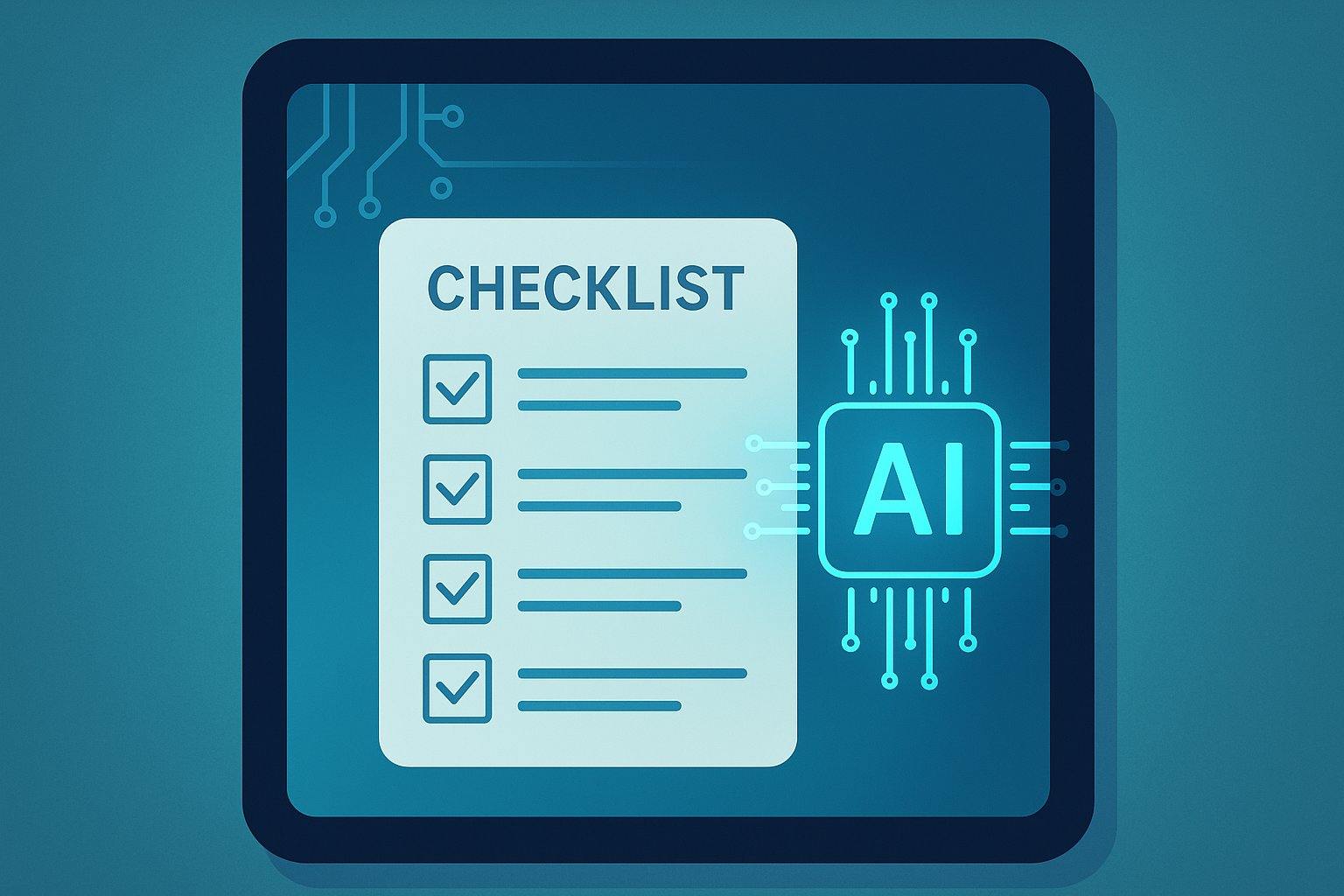
A structured evaluation process helps you pick automated SEO software that matches your goals.
Automated SEO Software and AI Search Visibility
As AI-powered search grows, automated SEO software increasingly needs to address more than Google’s classic ten blue links. Specifically, tools now optimize for AI Overviews, chatbot answers, and voice assistants through GEO and AEO techniques. Google alone processes several billion searches every day, and a growing share of those queries now surface AI-generated summaries instead of standard result pages.
Because of this shift, platforms like RankAuthority build GEO and AEO directly into their automation rather than treating it as an afterthought. The complete guide to smarter rankings with AI explains how this dual focus works in practice. For businesses managing multiple sites, this kind of automation is often the difference between staying visible and slowly disappearing from AI-driven results. For a broader strategic view, this piece on smart SEO solutions winning AI-powered search rankings is worth a read as well.
Common Mistakes When Using SEO Automation Tools
Even reliable automated SEO software can underperform if it is set up carelessly. One common mistake is skipping the initial review of recommendations, since default settings rarely fit every niche perfectly. Similarly, ignoring analytics reports makes it impossible to know whether automation is actually helping.
Another frequent error is expecting instant results. In reality, most sites need several weeks before rankings shift noticeably. Therefore, patience combined with regular monitoring produces far better outcomes than switching tools too quickly. For a broader view on avoiding pitfalls, see this overview of automating your website’s SEO efforts effectively.
Getting the Most From Automated SEO Solutions
To maximize results, treat automated SEO software as a partner rather than a replacement for strategy. Review its suggestions regularly, adjust goals as your business changes, and pair automation with occasional human judgment for brand-sensitive content. The detailed breakdown in the complete guide to automated SEO solutions offers additional tactics worth exploring.
Finally, platforms offering a trial period, such as RankAuthority’s seven-day risk-free trial, let you validate results before committing long term. This lowers the barrier for small businesses testing automation for the first time.

Regularly reviewing automated SEO software reports keeps optimization aligned with real business goals.
Frequently Asked Questions About Automated SEO Software
What is automated SEO software?
Automated SEO software is a platform that uses AI and algorithms to handle keyword research, technical audits, content optimization, and rank tracking without constant manual input. It continuously monitors a website and applies fixes or recommendations in real time.
How does automated SEO software work?
It scans your site for technical issues, analyzes competitor rankings, and applies optimization rules automatically. Most platforms connect directly to your content management system so changes deploy without manual coding.
Is automated SEO software worth the investment?
For most small businesses and agencies, yes, because it saves dozens of hours per month compared to manual optimization. The return improves further when the software also supports AI search visibility, not just traditional Google rankings.
How much does automated SEO software cost?
Pricing typically ranges from $30 to $500 per month depending on the number of sites and automation depth. Many providers, including RankAuthority, offer a risk-free trial period so you can test results before committing.
Can automated SEO software replace an SEO agency?
It can replace much of the routine technical and on-page work an agency performs, but strategic decisions still benefit from human oversight. Many agencies now use automation tools internally to scale client work efficiently.
How long does it take to see results from automated SEO software?
Most sites see measurable technical improvements within two to four weeks. Ranking and traffic gains generally take eight to twelve weeks depending on competition and site history.
What is the difference between automated SEO software and traditional SEO tools?
Traditional SEO tools mainly report data and leave implementation to the user. Automated SEO software goes further by executing changes, generating content suggestions, and adjusting strategy without manual intervention.
Does automated SEO software help with AI search visibility?
Modern automated SEO software increasingly supports Generative Engine Optimization (GEO) and Answer Engine Optimization (AEO), helping content appear in AI Overviews and chatbot answers. This is becoming a core feature rather than an add-on.
What features should I look for in automated SEO software?
Look for automated technical audits, content optimization, rank tracking, schema markup automation, and AI search compatibility. Reporting dashboards and multi-site management are also valuable for agencies.
Are there risks to using automated SEO software?
Poorly configured automation can occasionally apply changes that do not match brand voice or business goals. Reviewing settings during onboarding and monitoring early results minimizes this risk.
Can beginners use automated SEO software without technical skills?
Yes, most platforms are designed for non-technical users through guided setup and one-click automation. This removes the steep learning curve traditionally associated with SEO.
How does automated SEO software handle content optimization?
It analyzes top-ranking pages, identifies content gaps, and suggests or generates optimized copy targeting relevant keywords. Some platforms also refresh outdated content automatically to maintain rankings.
What common mistakes should I avoid when using SEO automation tools?
Avoid running automation without reviewing initial recommendations, since default settings may not fit every niche. Also avoid ignoring analytics reports, which reveal whether automated changes are actually improving performance.
Does automated SEO software work for local businesses?
Yes, many platforms include local SEO features like citation management and location page optimization. This helps small businesses compete in local search results without hiring a dedicated specialist.
Does automated SEO software integrate with Google Search Console and Analytics?
Most established platforms connect directly to Google Search Console and Google Analytics, pulling real ranking, click, and traffic data so automated recommendations are based on your actual performance rather than guesswork.
What is autopilot mode in automated SEO software?
Autopilot mode lets the platform deploy approved fixes, such as title tag rewrites or schema additions, directly to your live site without waiting for a developer, while still logging every change for review or rollback.
How do I choose the best automated SEO software for my website?
Match the platform’s features to your goals, whether that is technical fixes, content scaling, or AI search readiness. Start with a trial period to confirm the automation fits your workflow before committing long term.
Conclusion
Automated SEO software has moved from a nice-to-have to a practical necessity for anyone competing in today’s search landscape. By handling technical audits, schema markup, content optimization, and AI search readiness continuously, it frees teams to focus on strategy instead of repetitive tasks. Above all, the right platform should match your specific goals, whether that means faster technical fixes, scalable content, or stronger visibility inside AI-generated answers.
As AI-powered search continues to reshape how people find information, choosing automated SEO software built for both classic rankings and answer engines will matter more each year. You can explore how this works firsthand through RankAuthority’s platform and its seven-day trial period. Last updated: 2026-07-30. Author: RankAuthority editorial team.

