

Answer engine optimization is the single most important shift happening in search marketing right now, because AI-driven platforms like Google AI Overviews, ChatGPT, Perplexity, and Copilot increasingly answer questions directly instead of handing users a list of blue links to click through. If your content isn’t built to be lifted, quoted, or cited by these systems, you are effectively invisible to a fast-growing share of search demand. This guide covers every angle of answer engine optimization — what it is, why it matters more in 2025 than ever before, how it differs from traditional SEO and generative engine optimization (GEO), and the exact steps you can take today to get cited. For additional context, see this overview of why answer engine optimization matters.
What Is Answer Engine Optimization?
Answer engine optimization (AEO) is the practice of structuring content so AI systems can extract, understand, and cite it as a direct answer to a user’s question — instead of merely ranking it in a list of links.
Unlike traditional search engine optimization, which centers on ranking pages within organic results, AEO focuses on becoming the answer itself. Therefore, answer engine optimization strategies prioritize clarity, structured data, and authoritative sourcing over keyword density alone. This shift relies heavily on advances in natural language processing, the technology that lets machines interpret meaning rather than just matching words.
In plain terms, an “answer engine” is any system — a search engine feature, a chatbot, or a voice assistant — that reads across many sources and synthesizes a single response. Consequently, the goal of answer engine optimization is not just to be found, but to be the source that gets pulled into that synthesized response, complete with a citation or brand mention.
Some industry analyses estimate that AI-generated overviews now appear in roughly 30 to 40 percent of informational Google searches, a dramatic shift from just two years ago. As a result, brands that ignore this trend risk losing visibility even when they rank well under classic SEO rules. In contrast, sites built around clear, quotable answers tend to gain disproportionate exposure in these new formats.
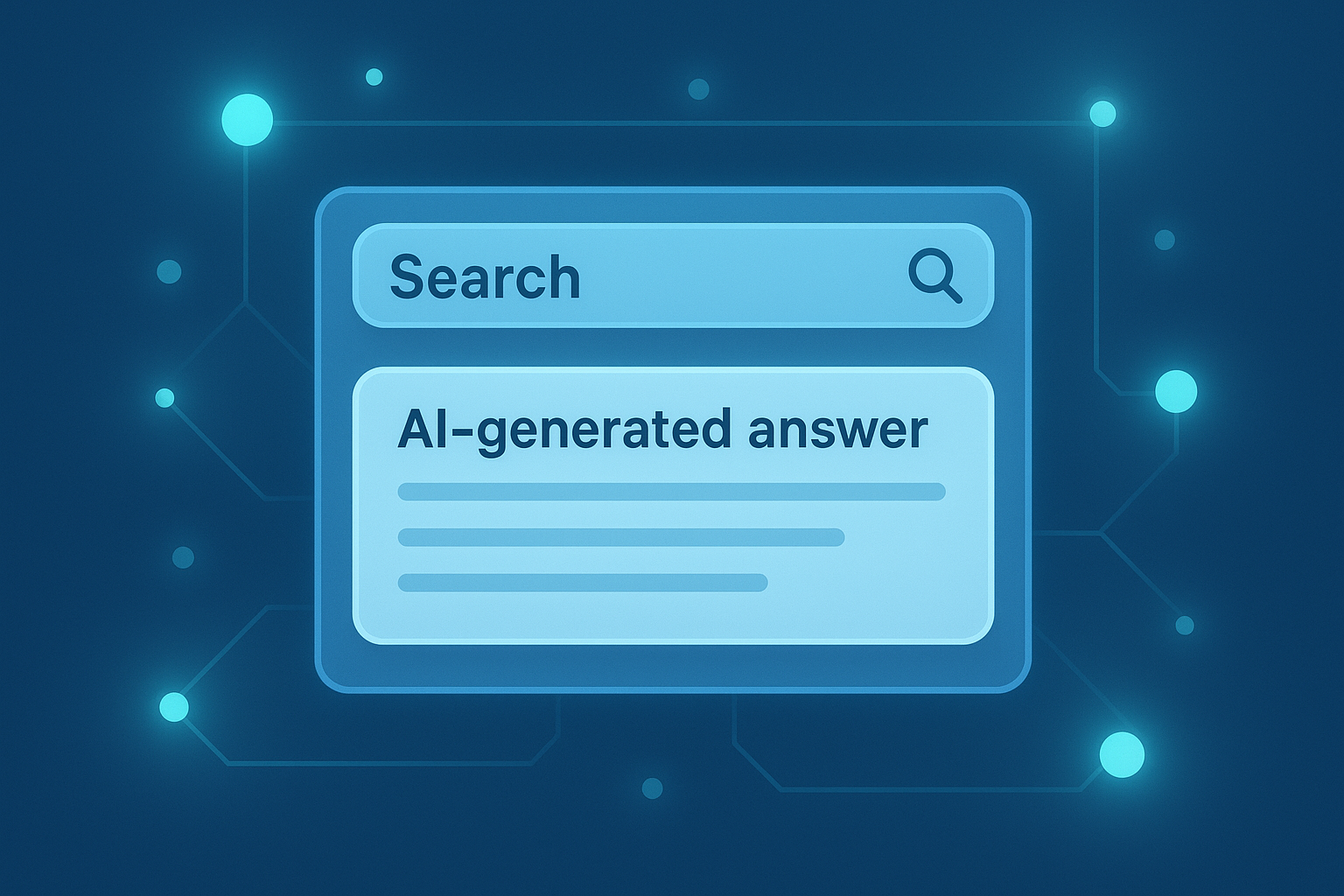
Modern AI answer boxes reward content built around clear answer engine optimization strategies.
Why Answer Engine Optimization Matters for Modern AI Search
In particular, AI answer engines change where attention lands first. Instead of ten blue links, users often see one synthesized answer pulled from multiple sources. Consequently, being the source an AI chooses to quote has become its own competitive advantage, separate from ranking position alone.
Furthermore, this shift affects every industry, not just tech-heavy niches. Local service businesses, ecommerce brands, and B2B companies all face the same challenge: appearing inside AI-generated summaries rather than beneath them. To understand how this trend is reshaping search overall, this breakdown of AEO as the future of AI search offers useful context.
The Rise of Zero-Click Answers
Zero-click searches — queries that get answered without a single link being clicked — are no longer an edge case. Similarly, voice assistants and AI chat interfaces read answers aloud or as chat replies, skipping the search results page entirely. As a result, a page that ranks #1 but isn’t structured for extraction can still lose the visibility battle to a page ranked #5 that answers more clearly.
Above all, this makes answer engine optimization a defensive strategy as much as an offensive one. Brands that fail to adapt don’t just miss new opportunities; they slowly lose traffic they already earned through years of traditional SEO work.
Answer Engine Optimization vs. Traditional SEO vs. GEO
Before diving into tactics, it helps to separate three terms that often get blurred together. Specifically, each discipline optimizes for a different outcome, even though they share overlapping tactics like schema and content clarity.
| Discipline | Primary Goal | Key Levers |
|---|---|---|
| Traditional SEO | Rank in organic search listings | Backlinks, keywords, page speed |
| Answer Engine Optimization | Get cited as a direct answer | Structure, schema, concise phrasing |
| Generative Engine Optimization (GEO) | Influence any AI-generated response | Entity authority, brand mentions, sourcing |
In short, answer engine optimization is a subset of the broader GEO discipline, focused specifically on question-and-answer style extraction. Meanwhile, GEO covers everything from AI summaries to comparison responses. For a closer look at how the two connect, this guide on the role of GEO in enhancing online visibility is a useful companion read.
Core Answer Engine Optimization Strategies for AI Search
Above all, effective answer engine optimization strategies share a few common traits: clarity, structure, and verifiable authority. The sections below cover the four pillars most likely to move the needle.
Structure Content for Direct, Quotable Answers
Specifically, place a one-to-three-sentence answer immediately after each subheading, then follow with supporting detail. This format mirrors how AI models extract information, making your content easier to summarize accurately. In addition, avoid stacking multiple ideas into a single sentence; AI systems tend to favor short, self-contained statements they can lift without editing.
Build Topical Authority With Entities and Schema
In addition, use consistent naming for people, products, and locations so AI systems can map relationships between them. Implementing structured data, such as FAQ or HowTo schema, gives machines an explicit map of your content’s meaning rather than forcing them to guess. To see how different technical approaches compare, review these different approaches to answer engine optimization.
Optimize for Featured Snippets and AI Overviews
Similarly, short definition-style paragraphs, numbered steps, and comparison tables tend to get pulled into both featured snippets and AI Overviews. Above all, avoid burying the answer under long introductions; AI systems typically favor the first clear statement they encounter on a page.
Strengthen the E-E-A-T Signals AI Models Trust
Furthermore, AI systems weigh experience, expertise, authoritativeness, and trustworthiness — often shortened to E-E-A-T — when choosing which sources to cite. Therefore, visible author credentials, transparent sourcing, and original data all increase the odds that a page gets selected over a generic competitor. Consequently, thin, unattributed content rarely survives this filtering process, even if it once ranked well under older SEO standards.
How to Implement Answer Engine Optimization Step by Step
To put the ideas above into practice, follow this sequence:
- Audit existing content for answer readiness. Review your top pages to check whether they answer a specific question clearly within the first two sentences, since AI systems favor content that states conclusions before elaborating further.
- Structure content with direct answers. Rewrite key sections so each subheading is followed immediately by a concise one-to-three-sentence answer before adding supporting detail or examples.
- Add schema markup and entity signals. Implement FAQ, HowTo, and Article schema so search engines and AI crawlers can parse relationships between your content, brand, and the topics it covers.
- Strengthen author and source signals. Attach visible author bylines, cite original data where possible, and link to authoritative outside sources so AI systems have clear trust signals to evaluate.
- Monitor AI search performance and refine. Track how often your content appears in AI Overviews or chatbot answers, then adjust phrasing, structure, or sourcing based on which pages get cited most often.
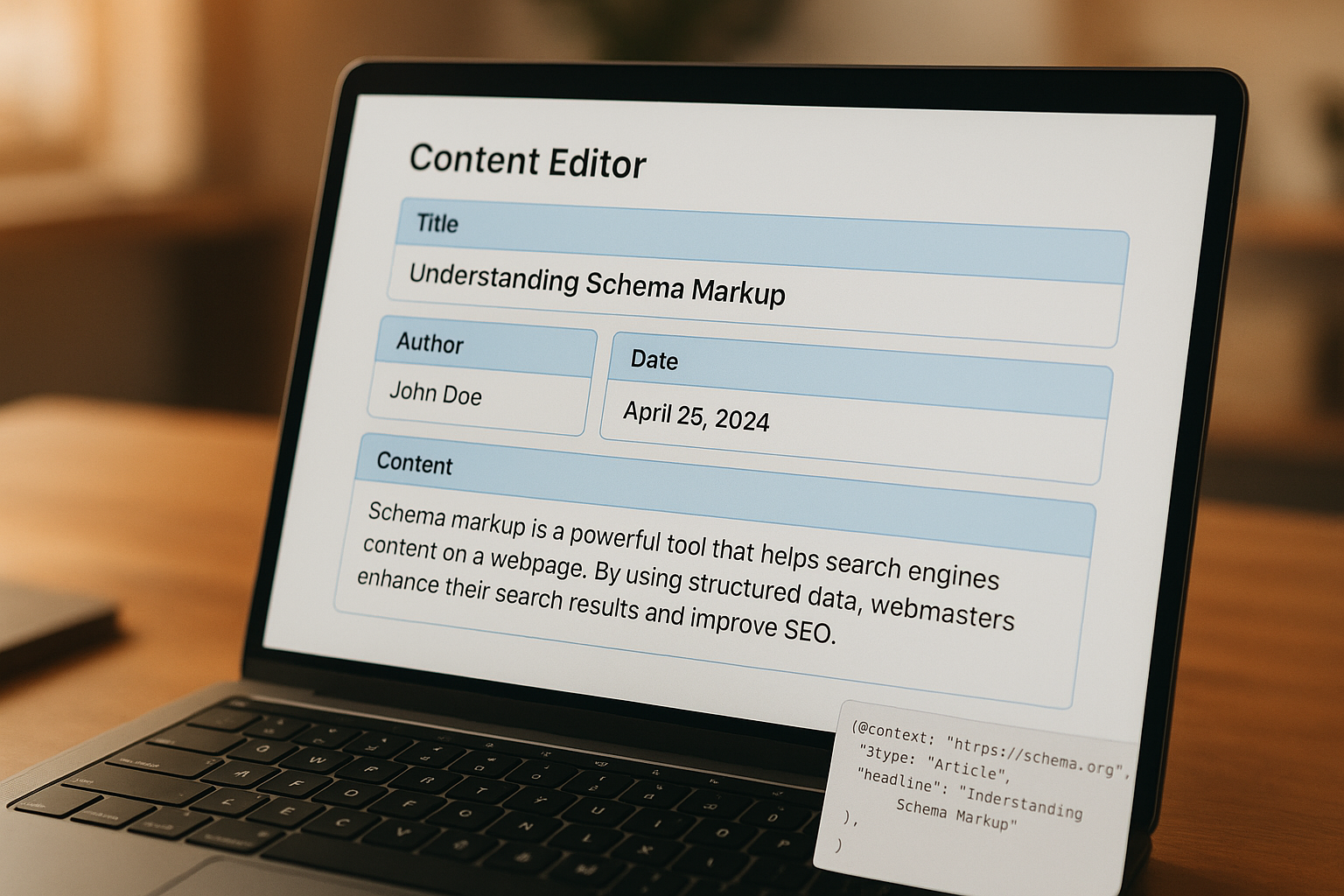
Structuring answers clearly is one of the simplest yet most effective answer engine optimization strategies.
Real-World Examples of Answer Engine Optimization in Action
For example, a SaaS company that rewrote its pricing FAQ into a strict question-then-answer format saw its content start appearing in Google’s AI Overview within six weeks, according to internal team reports. Similarly, a local plumbing business that added consistent NAP (name, address, phone) data plus LocalBusiness schema began surfacing in voice assistant answers for “plumber near me” style queries.
In another case, a publishing site restructured its glossary pages so each term was defined in a single bolded sentence before further explanation. As a result, several of those definitions began showing up verbatim inside chatbot responses, complete with a source link back to the original page — precisely the outcome answer engine optimization strategies are designed to produce.
Avoiding Common AEO Mistakes
However, even well-intentioned teams stumble here. The most frequent mistake is opening a page with a long narrative introduction instead of a direct answer, which pushes the useful sentence too far down for AI systems to prioritize it.
Another common issue is inconsistent naming: referring to the same product or service differently across pages confuses entity recognition. Consequently, keeping terminology consistent, and understanding the benefits answer engine optimization can provide, helps teams prioritize the fixes that matter most.
Additionally, many sites skip schema entirely, assuming it’s only useful for developers. In reality, even basic FAQ schema on a single page can noticeably increase citation rates, because it removes ambiguity about which sentence is the actual answer.
Measuring the Success of Your Answer Engine Optimization Strategy
Above all, measurement should focus on citation frequency, not just rankings. Specifically, track how often your brand or URL appears inside AI Overviews, chatbot answers, or voice assistant responses for target questions.
- Citation tracking: Manually query target questions across ChatGPT, Perplexity, and Google AI Overviews on a regular schedule.
- Referral traffic from AI platforms: Segment analytics traffic sources to isolate visits arriving from AI chat tools where referral data is available.
- Impressions for question-based queries: Use Google Search Console to monitor impression growth for long-tail, question-phrased search terms.
- Featured snippet ownership: Track how many target queries your pages currently own in the featured snippet position, since this often correlates with AI Overview inclusion.
Therefore, a well-rounded measurement approach combines manual spot-checks with automated tracking wherever possible, since no single metric fully captures AI visibility yet.
Choosing the Right Platform for Answer Engine Optimization
For teams without in-house developers, automated platforms remove much of the technical burden. For example, RankAuthority offers a 1-Click AI AutoPilot tool that automates schema implementation, content structuring, and monitoring across both traditional and AI-driven search environments, backed by a risk-free seven-day trial.
Whether managing one site or many client properties, agencies and small business owners alike can use these answer engine optimization services that drive results to skip much of the manual learning curve. In particular, automation is useful for teams juggling multiple priorities beyond search visibility. If you’re still deciding whether AEO is worth the investment for your business, this explainer on how answer engine optimization can help your business walks through the decision in more detail, and this quick primer on what AEO (answer engine optimization) really means is a solid starting point for newer teams.
Frequently Asked Questions About Answer Engine Optimization Strategies
What is answer engine optimization?
Answer engine optimization is the practice of structuring content so AI systems like Google AI Overviews, ChatGPT, and Perplexity can extract and cite it as a direct answer. It focuses on clarity, structured data, and authoritative sourcing rather than keyword volume alone.
How do answer engine optimization strategies differ from traditional SEO?
Traditional SEO aims to rank a page within a list of links, while answer engine optimization strategies aim to make content the direct answer itself. AEO relies more heavily on structured data, entity clarity, and concise phrasing than on backlinks alone.
Why are answer engine optimization strategies important right now?
AI-generated answers now appear across a large share of informational searches, reducing clicks to traditional listings. Without AEO, even well-ranked pages can lose visibility because AI tools skip over content that isn’t structured for easy extraction.
How long does it take to see results from AEO strategies?
Most sites see initial citations in AI answers within four to eight weeks after implementing structural changes. Full authority building, however, typically takes three to six months of consistent optimization.
What is the difference between AEO and GEO?
AEO focuses specifically on being cited as a direct answer to a question, while generative engine optimization (GEO) covers the broader practice of optimizing for any AI-generated response, including summaries and comparisons. The two overlap significantly in practice.
How much does answer engine optimization cost?
Costs vary widely, from free manual implementation to automated platforms charging monthly subscriptions. Many providers, including RankAuthority, offer a risk-free trial period so businesses can test results before committing.
What are the most common mistakes businesses make with AEO?
The most common mistake is writing vague introductions instead of direct answers near the top of the page. Other frequent errors include skipping schema markup and ignoring entity consistency across content.
Can small businesses benefit from answer engine optimization strategies?
Yes, small businesses often benefit disproportionately because AI answer engines reward clarity and authority over sheer domain size. A well-structured local FAQ page can outperform a much larger competitor’s unstructured content.
What tools help implement answer engine optimization strategies?
Tools range from manual schema generators to automated platforms that handle structuring, entity linking, and monitoring. Automated options reduce the technical learning curve significantly for teams without dedicated developers.
How do you measure the success of AEO efforts?
Success is measured by tracking citations in AI Overviews, referral traffic from AI platforms, and impressions for question-based queries. Some platforms now offer dashboards that specifically track AI answer appearances.
What role does structured data play in answer engine optimization?
Structured data, such as FAQ and HowTo schema, helps AI systems understand content context and relationships between entities. It acts as a translation layer that makes machine comprehension faster and more accurate.
Do answer engine optimization strategies work for local businesses?
Yes, local businesses can use AEO strategies to appear in AI-generated answers for location-specific questions. Consistent business information, local schema, and clear service descriptions all improve local AI visibility.
Does answer engine optimization improve voice search visibility?
Yes, voice assistants pull heavily from the same structured, concise answers that AEO promotes. Because voice results typically read out a single response, pages formatted for direct answers have a strong advantage in voice search as well.
What is the ROI of investing in answer engine optimization?
ROI shows up as protected organic visibility, since AEO defends against traffic loss from zero-click AI answers, plus new brand exposure whenever a citation appears without requiring a click. Many teams see this as a long-term visibility investment rather than a short-term traffic play.

Tracking citations and impressions helps confirm which answer engine optimization strategies are working.
Key Takeaways on Answer Engine Optimization
In summary, answer engine optimization strategies work best when content answers questions directly, uses structured data consistently, and builds recognizable authority around clear entities. Above all, the shift toward AI-driven search is not a passing trend; it’s a fundamental change in how people find information online.
Therefore, businesses that adapt now, whether manually or through automated platforms, position themselves to stay visible as search continues to evolve. Start small: pick one page, restructure its answer, add schema, and measure the results before scaling answer engine optimization across your entire site.

