

SEO tools for digital agencies are purpose-built software platforms that let marketing teams manage rankings, technical audits, and reporting across many client websites at once instead of one site at a time. For agencies juggling dozens of accounts, the right toolkit is the difference between drowning in manual spreadsheets and running a smooth, profitable operation. As a result, choosing wisely matters more than ever, especially now that AI-powered search is reshaping how visibility gets measured. Add inbound links from related service and blog pages to improve discoverability.
Quick answer: The best SEO tools for digital agencies combine multi-site rank tracking, automated technical audits, white-label client reporting, and increasingly, generative and answer engine optimization (GEO/AEO) features. Platforms like RankAuthority’s 1-Click AI AutoPilot automate much of this work so agencies can manage more clients without expanding headcount.
What Is an SEO Tool for a Digital Agency?
An SEO tool for a digital agency is software designed specifically to manage search optimization work at scale, rather than for a single website owner. In particular, these platforms centralize rank tracking, site audits, keyword research, and reporting into one dashboard covering multiple client accounts. Consequently, agencies avoid logging into separate tools for every client, which saves considerable time.
Unlike consumer-grade software, agency platforms typically include white-label reporting, role-based user permissions, and bulk automation features. For example, an account manager can pull branded PDF reports for twenty clients in minutes rather than compiling data manually for each one. This distinction is exactly why SEO tools for digital agencies deserve their own category of software.

Agencies rely on best SEO tools for agencies to manage rankings across dozens of client sites simultaneously.
Why Agencies Need Purpose-Built SEO Platforms
Managing SEO for one website is manageable by hand. However, managing multiple website SEO without automation quickly becomes unsustainable. According to industry benchmarks published by Search Engine Journal, agencies that automate reporting and audits typically cut administrative time by 30 to 40 percent, freeing staff for strategy work instead.
Furthermore, client expectations have shifted. Brands now expect visibility not just in traditional Google results but also in AI Overviews, chatbot answers, and voice search responses. As a result, tools that only track classic rankings are no longer sufficient on their own.
The Shift Toward GEO and AEO
Generative Engine Optimization (GEO), which means optimizing content to be cited by AI chat tools, and Answer Engine Optimization (AEO), which means optimizing for direct-answer boxes and voice assistants, are becoming essential alongside traditional SEO. Agencies that adapt early gain a meaningful edge, since fewer competitors are optimizing for these newer surfaces yet.
Key Features of SEO Tools for Digital Agencies
Not every platform marketed toward marketers is truly built for agency-scale work. Therefore, it helps to evaluate options against a clear checklist before signing a contract.
- Multi-site management: One dashboard for all client properties, not separate logins.
- Automated technical audits: Crawl error detection, site speed checks, and schema validation.
- White-label reporting: Branded PDF or dashboard reports clients can view directly.
- AI content optimization: Guidance for ranking in both search engines and AI-generated answers.
- Scalable pricing: Costs that grow reasonably as client count increases.
For a deeper comparison of platforms suited to this kind of work, the guide on the best tools for digital marketing agencies breaks down specific feature sets side by side.
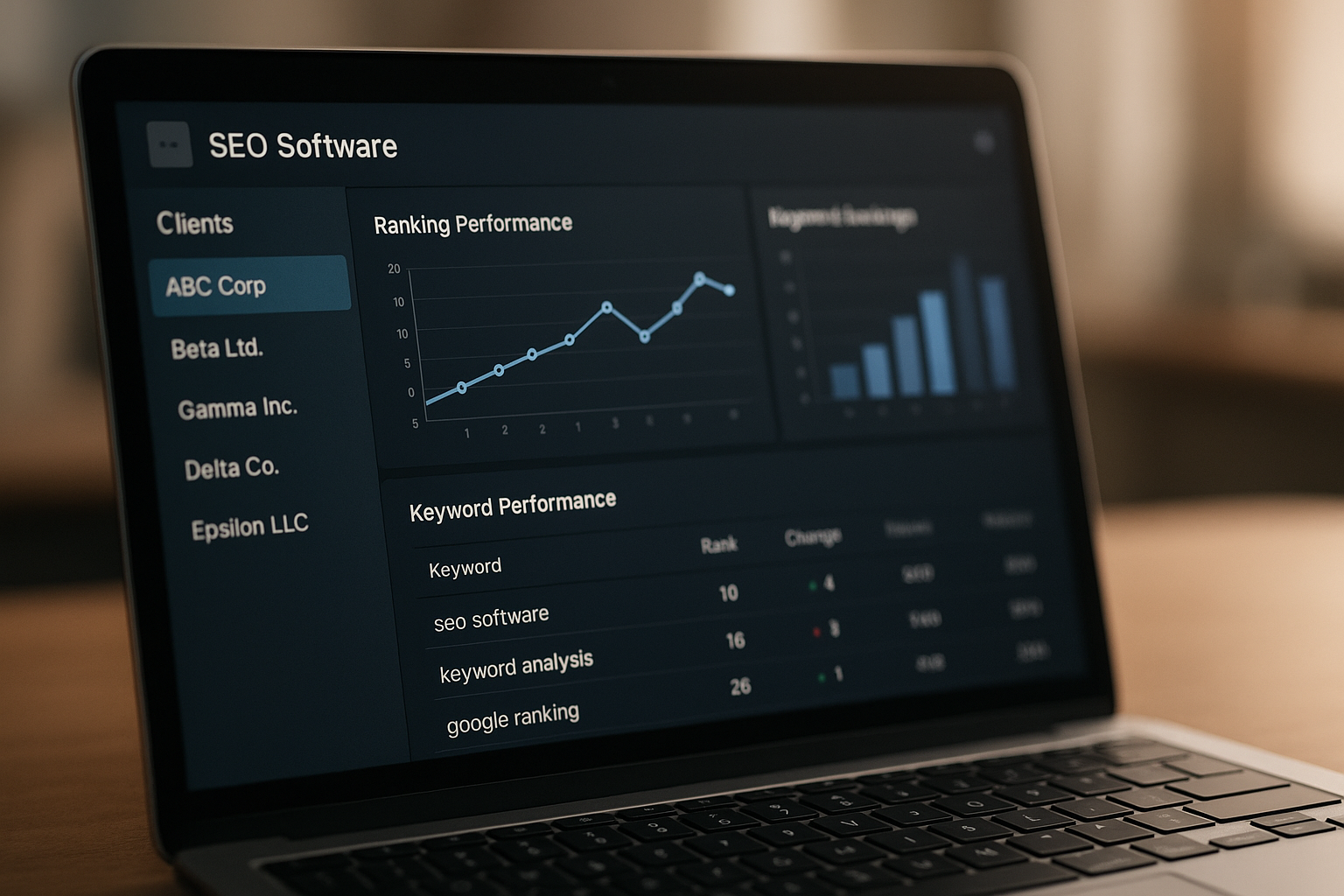
Look for automate your SEO process features, automated audits and white-label reporting when comparing platforms for agency use.
How to Choose SEO Tools for Digital Agencies: A Step-by-Step Process
Selecting the right platform does not have to be overwhelming. Instead, following a structured process helps agencies avoid costly mistakes and wasted trial periods.
- Audit current client workload. List every client account, current SEO tasks, and reporting requirements so you understand exactly what a new platform needs to support before evaluating options.
- Define must-have features. Decide which capabilities matter most, such as multi-site dashboards, automated audits, AI content optimization, and answer engine visibility tracking, then rank them by priority.
- Test platforms with a trial period. Sign up for free trials on shortlisted platforms and run them against two or three real client sites to compare accuracy, speed, and reporting quality firsthand.
- Evaluate scalability and pricing. Check whether pricing scales sensibly as you add more client seats, and confirm the platform can handle your projected growth without major cost jumps.
- Roll out and standardize workflows. Once you select a platform, create standardized onboarding checklists and reporting templates so every team member follows the same process for every client.
Notably, platforms such as RankAuthority offer a risk-free seven-day trial, which fits neatly into step three of this process and lets agencies validate results before committing budget.
Best Practices for Scaling Client SEO Work
Once a platform is in place, execution habits matter just as much as the software itself. Above all, consistency across accounts prevents small errors from becoming client-facing problems.
Agencies managing many properties should establish repeatable onboarding checklists and standardized reporting cadences. Similarly, centralizing keyword tracking and technical audits in one system, rather than mixing tools per client, reduces confusion for the whole team. For agencies specifically overseeing large portfolios, the strategies outlined in this guide to SEO for multi-site management offer additional practical steps for scaling rankings quickly.
Comparing Platforms Before Committing
Because switching platforms mid-contract is disruptive, it pays to compare options thoroughly upfront. Resources like this comparison of the best SEO platform for agencies and this roundup of platforms for managing SEO across clients can help narrow the field before you run any trials.
Common Mistakes Agencies Make With SEO Software
Even experienced agencies stumble when selecting tools. For instance, choosing based on price alone often backfires, since cheaper platforms sometimes lack the automation needed to serve a growing client base efficiently.
In addition, skipping a trial period is a frequent misstep. Consequently, agencies end up locked into annual contracts with software that does not fit their actual workflow. Finally, many agencies underestimate how quickly AI search is changing, and they select tools that only track traditional rankings while ignoring generative and answer engine visibility entirely.
How AI-Powered Automation Is Changing Agency SEO Tools
Search itself is evolving rapidly. Data from Google Search Central confirms that AI-generated summaries now appear across a growing share of search results, which means agencies can no longer optimize for blue links alone.
As a result, platforms with built-in AI automation, such as RankAuthority’s 1-Click AI AutoPilot, are gaining traction because they handle the technical complexity of GEO and AEO without requiring agencies to hire specialized AI search experts. This kind of automation is particularly valuable for smaller agencies competing against larger firms with dedicated technical teams. For a broader look at scaling strategies across many client sites, see this complete guide to SEO for multiple websites.

AI-driven automation is reshaping how SEO tools for digital agencies handle rankings and visibility.
Frequently Asked Questions
What are SEO tools for digital agencies?
SEO tools for digital agencies are software platforms built to manage search optimization tasks across many client websites at once. They typically include rank tracking, technical audits, reporting, and increasingly, generative and answer engine optimization features.
How do SEO tools for digital agencies differ from consumer SEO tools?
Agency-grade platforms support multi-client dashboards, white-label reporting, and role-based access, whereas consumer tools focus on a single site. Agencies also need bulk automation to avoid repeating manual work for every client.
Why do digital agencies need dedicated SEO tools?
Agencies manage dozens or hundreds of accounts, so manual optimization simply does not scale. Dedicated tools automate audits, content recommendations, and reporting, freeing teams to focus on strategy instead of repetitive tasks.
How much do SEO tools for digital agencies typically cost?
Pricing varies widely, from around $100 per month for small toolkits to several thousand dollars for enterprise suites with unlimited client seats. Most reputable platforms, including RankAuthority, offer tiered plans and a trial period before committing.
How long does it take to see results from agency SEO tools?
Technical fixes can show measurable crawl and indexing improvements within a few weeks. However, meaningful ranking and traffic gains generally take three to six months, depending on competition and site history.
What features should agencies look for in SEO software?
Look for multi-site management, automated technical audits, AI content optimization, white-label reports, and support for answer engine visibility. Integration with existing client dashboards is also valuable.
Can SEO tools for digital agencies handle multiple client websites?
Yes, that is one of their core purposes. Platforms designed for agencies allow teams to switch between client properties, apply bulk changes, and generate separate branded reports for each account.
What is the difference between GEO, AEO, and traditional SEO?
Traditional SEO targets classic search engine rankings, while Generative Engine Optimization (GEO) focuses on being cited by AI chat tools, and Answer Engine Optimization (AEO) targets direct-answer boxes and voice assistants. Modern agency tools increasingly combine all three approaches.
Are automated SEO tools for digital agencies reliable?
Automation handles repetitive technical and monitoring work reliably when built on solid algorithms and regularly updated data. That said, human oversight remains important for strategy, client communication, and unusual edge cases.
What common mistakes do agencies make when choosing SEO tools?
Common mistakes include picking tools based on price alone, ignoring scalability, and overlooking AI search readiness. Skipping a trial period before a long-term commitment is another frequent error.
How do SEO tools for digital agencies support AI-powered search?Modern platforms analyze how content appears in AI Overviews, AI content optimization, chatbot answers, and voice search results, then suggest structural and content changes. This helps agencies maintain visibility as search shifts beyond traditional blue links.
Is a free trial worth testing before committing to an SEO platform?
Yes, a trial lets agencies confirm reporting quality, automation accuracy, and ease of use before paying for multiple client seats. A seven-day trial, for example, is usually enough to evaluate core workflows.
How do agencies report SEO results to clients using these tools?
Most platforms generate white-label dashboards and scheduled reports covering rankings, traffic, and technical health. This automation saves agencies hours of manual reporting work every month.
What’s the best way to scale SEO tools for digital agencies across many clients?
Standardize onboarding checklists, use bulk audit and automation features, and centralize reporting templates across all accounts. Choosing a platform built specifically for multi-site management makes this process far easier.
Do agencies still need SEO experts if they use automated tools?
Yes, automation handles execution and monitoring, but strategy, client relationships, and interpreting nuanced results still benefit from human expertise. The best results come from combining skilled specialists with smart automation.
Final Thoughts
Choosing the right SEO tools for digital agencies ultimately comes down to matching software capability with real client workload. In particular, agencies should prioritize multi-site management, automation, and readiness for AI-driven search formats over flashy features that rarely get used. As search continues shifting toward generative and answer engines, tools that adapt quickly will separate thriving agencies from those still stuck on manual spreadsheets. Last updated: 2026-08-14. Author: RankAuthority Editorial Team.
Above all, testing before committing remains the smartest step any agency can take. Platforms offering trial periods, like RankAuthority’s seven-day option, let teams validate results firsthand with the best SEO platforms before scaling across their full client roster. With a thoughtful evaluation process, agencies can confidently select SEO tools for digital agencies that support both current workloads and future growth in an AI-centric search landscape.

